John Wayne Gacy: Crimes, Victims, and Investigation
Background and Double Life
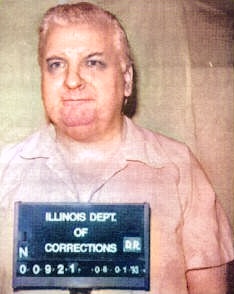
John Wayne Gacy was an American serial killer and sexual predator who murdered 33 teenage boys and young men in the Chicago area between 1972 and 1978. Born in Chicago on March 17, 1942, Gacy eventually became a successful building contractor and lived at 8213 West Summerdale Avenue in unincorporated Norwood Park Township, Cook County, Illinois. To neighbors and business associates, he often appeared outgoing, hardworking, and active in his community. He attended political and civic events, held large parties at his home, and occasionally entertained people while dressed as the clown characters "Pogo" and "Patches." This public image concealed a long history of sexual violence and increasingly serious criminal behavior.
Gacy had already been convicted of sexually assaulting a teenage boy in Iowa in 1968. He received a ten-year prison sentence but was paroled in 1970 after serving approximately eighteen months. After returning to the Chicago area, he established PDM Contractors, a remodeling and construction business that frequently employed teenage boys and young men. Several of his later murder victims either worked for him, believed they were being offered employment, or encountered him while he was looking for young workers.
Methods Used in the Crimes
Gacy used several methods to gain control of victims. Some were approached with offers of construction work or money. Others were encountered at bus stations, on city streets, in bars, or while hitchhiking. At his house, Gacy sometimes demonstrated what he described as a handcuff "trick." After persuading a victim to allow himself to be handcuffed, Gacy could take control of him. Survivor accounts and evidence presented during the investigation established that Gacy sexually assaulted, restrained, tortured, and threatened young men inside his home.
Most of the known murder victims died from strangulation or other forms of asphyxiation. Gacy frequently used rope or another ligature, although forensic examinations showed that some victims had cloth or other material forced into their throats, causing suffocation. His first known victim, Timothy McCoy, was killed with a knife. Because many victims were not discovered until months or years after death, decomposition prevented investigators from determining a precise cause of death in every case.
Gacy concealed most of the bodies beneath or around his Summerdale Avenue house. Numerous victims were placed in shallow graves in the cramped crawl space beneath the building. Others were buried beneath the garage, dining-room area, or backyard. As the available burial space filled, Gacy began disposing of victims in the Des Plaines River. Ultimately, investigators connected 29 victims to remains recovered on or beneath his property and four victims to bodies recovered from the river.
Identified Victims
The following chronology lists the 28 identified victims. The dates are the accepted murder dates or best-supported dates used in case chronologies. In a number of cases, the date corresponds to the victim's last confirmed contact or last-known-alive date; therefore, the precise time of death cannot always be established. Recovery locations refer to where investigators ultimately found the remains.
- Timothy Jack McCoy, 16 — January 3, 1972. McCoy was a teenager traveling through Chicago during a bus trip. He became Gacy's first known murder victim. His remains were recovered beneath the Summerdale Avenue house in the crawl space and were conclusively identified in 1986.
- John Butkovich, 18 — July 31, 1975. Butkovich had worked for Gacy's construction business and had argued with him over unpaid wages. His remains were recovered beneath Gacy's garage in December 1978.
- Darrell Julius Samson, 18 — April 6, 1976. Samson was last seen alive in Chicago. His remains were eventually discovered beneath the dining-room area of Gacy's property.
- Randall Wayne Reffett, 15 — May 14, 1976. Reffett disappeared after returning home from a dental appointment. His body was recovered from the crawl space, where he had been buried with Samuel Stapleton.
- Samuel G. Dodd Stapleton, 14 — May 14, 1976. Stapleton disappeared while walking home from his sister's apartment. He was a friend of Randall Reffett, and investigators concluded that the two were probably murdered during the same period. Stapleton was recovered from the crawl space.
- Michael Lawrence Bonnin, 17 — June 3, 1976. Bonnin disappeared while traveling from Chicago toward Waukegan. His remains were recovered beneath the spare-bedroom area of Gacy's house in the crawl space.
- William Huey Carroll Jr., 16 — June 13, 1976. Carroll was murdered during a period in which Gacy's killings became increasingly frequent. His remains were recovered from a common grave beneath the house's kitchen area.
- James Byron "Jimmie" Haakenson, 16 — August 5, 1976. Haakenson had traveled from St. Paul, Minnesota, to Chicago and telephoned his family on August 5. He was never heard from again. His remains were recovered from Gacy's crawl space in 1978 but remained unidentified until DNA testing confirmed his identity in 2017.
- Rick Louis Johnston, 17 — August 6, 1976. Johnston was last seen in Chicago's Uptown area. His remains were recovered from a common grave in the crawl space.
- Kenneth Ray Parker, 16 — October 24, 1976. Parker disappeared with his friend Michael Marino after the two were last seen along Clark Street in Chicago. Remains identified as Parker's were recovered from a shared grave in the crawl space.
- Michael M. Marino, 14 — October 24, 1976. Marino disappeared with Kenneth Parker on Clark Street. Remains recovered beside Parker were historically identified as Marino's, although later examinations raised questions about whether the remains originally labeled as Marino were correctly identified.
- William George Bundy, 19 — October 26, 1976. Bundy disappeared after telling his family that he was going to a party. His remains were recovered from beneath Gacy's house in 1978 but were not conclusively identified until DNA testing in 2011.
- Francis Wayne Alexander, 21 — approximately 1976. Investigators cannot establish an exact day of death and place Alexander's murder sometime between early 1976 and early 1977. His remains were recovered from the crawl space in December 1978. Genetic genealogy led to his identification in 2021.
- Gregory John Godzik, 17 — December 12, 1976. Godzik had worked for PDM Contractors. His remains were recovered from the crawl space beneath Gacy's home.
- John Alan Szyc, 19 — January 20, 1977. Szyc had also worked for Gacy. After Szyc disappeared, his automobile came into Gacy's possession. His remains were recovered from the crawl space.
- Jon Steven Prestidge, 20 — March 15, 1977. Prestidge disappeared after reportedly mentioning that he had found work with a contractor. His remains were the first set designated during the excavation of Gacy's crawl space.
- Matthew Walter Bowman, 19 — July 5, 1977. Bowman was murdered and buried in the crawl space. Investigators recovered his remains with evidence of a ligature around his neck.
- Robert Edward Gilroy Jr., 18 — September 15, 1977. Gilroy lived only several blocks from Gacy's house. His remains were found beneath the bathroom area in the crawl space.
- John Antheney Mowery, 19 — September 25, 1977. Mowery was a former United States Marine. He disappeared after leaving his mother's home and was buried beneath the master-bedroom section of Gacy's house.
- Russell Lloyd Nelson, 21 — October 17, 1977. Nelson had traveled from Minnesota and was looking for contracting work while in Chicago. His remains were recovered beneath the guest-bedroom area of Gacy's house.
- Robert David Winch, 16 — November 10, 1977. Winch was killed and buried in the central portion of the crawl space. His remains were recovered with a ligature around the neck.
- Tommy Joseph Boling, 20 — November 18, 1977. Boling disappeared after leaving a Chicago bar. His remains were found in the crawl space beside Robert Winch.
- David Paul Talsma, 19 — December 9, 1977. Talsma, a United States Marine, disappeared after telling his mother that he planned to attend a rock concert in Hammond, Indiana. His remains were found in the crawl space near John Mowery.
- William Wayne Kindred, 19 — February 16, 1978. Kindred disappeared after telling his fiancée that he was going to a bar. He was the final known victim buried in Gacy's increasingly crowded crawl space.
- Timothy David O'Rourke, 20 — approximately June 16-23, 1978. The exact date of his murder is uncertain. His body was recovered from the Des Plaines River on June 30, 1978 and was later connected to Gacy.
- Frank William Landingin, 19 — November 4, 1978. Landingin's body was recovered from the Des Plaines River. Investigators connected him to Gacy through evidence including a document belonging to Landingin that was found at Gacy's residence.
- James Mazzara, 20 — November 24, 1978. Mazzara disappeared shortly after Thanksgiving. His body was recovered from the Des Plaines River in December 1978, and investigators determined that he had been strangled with a ligature.
- Robert Jerome Piest, 15 — December 11, 1978. Piest disappeared from Nisson Pharmacy in Des Plaines after telling his mother that he was going to speak with a contractor about a better-paying job. That contractor was Gacy. Piest became Gacy's final known murder victim. His body was eventually discovered along the Des Plaines River in Grundy County on April 9, 1979.
Five Victims Who Remain Unidentified
Five victims recovered from Gacy's property remain unidentified. Investigators have used dental evidence, facial reconstruction, DNA profiling, and forensic genetic genealogy in continuing attempts to determine who they were. Because their exact dates of death are unknown, investigators use estimated ranges based on forensic evidence, burial positions, and the chronology of identified victims.
- Unidentified Body 28 — Estimated murder period: January 3, 1972 to July 31, 1975. Estimated age: approximately 14 to 18. Recovery location: Gacy's backyard.
- Unidentified Body 26 — Estimated murder period: June 13 to August 6, 1976. Estimated age: approximately 23 to 30. Recovery location: crawl space.
- Unidentified Body 13 — Estimated murder period: August 6 to October 5, 1976. Estimated age: approximately 17 to 22. Recovery location: crawl space.
- Unidentified Body 21 — Estimated murder period: August 6 to October 24, 1976. Estimated age: approximately 15 to 24. Recovery location: crawl space.
- Unidentified Body 10 — Estimated murder period: March 15 to July 5, 1977. Estimated age: approximately 17 to 21. Recovery location: crawl space.
The Disappearance of Robert Piest and the Investigation
The case finally began to collapse around Gacy after Robert Piest disappeared on December 11, 1978. Piest worked at Nisson Pharmacy in Des Plaines. Gacy had visited the pharmacy in connection with remodeling work, and Piest told his mother that he wanted to speak with the contractor about a job. When Piest failed to return, investigators quickly learned that Gacy was the man he had intended to meet.
Des Plaines police investigated Gacy's background and discovered his previous sexual-assault conviction as well as allegations from other young men. A search of his home uncovered suspicious property belonging to young males, and investigators placed Gacy under surveillance. Statements from former employees also drew attention to the crawl space beneath his house, where workers had previously been told to dig trenches or spread lime.
Gacy was arrested on December 21, 1978. During the early hours of December 22, he began giving investigators a detailed account of numerous murders. Police started excavating his property and discovered grave after grave beneath the house. Twenty-nine victims were eventually connected to remains concealed on or beneath the Summerdale Avenue property. Four additional victims were recovered from the Des Plaines River.
Trial, Conviction, and Execution
Gacy went on trial in Chicago in February 1980. His defense argued that he was not guilty by reason of insanity, while prosecutors presented extensive physical evidence, witness testimony, forensic findings, and Gacy's own statements. The jury rejected the insanity defense and convicted him of 33 murders on March 12, 1980. At that time, the case represented an extraordinary number of murder convictions against a single defendant.
Gacy received death sentences for murders committed after Illinois had restored capital punishment and life sentences for the earlier killings. He spent approximately fourteen years on death row while his convictions and sentences were reviewed through the appeals process. John Wayne Gacy was executed by lethal injection at Stateville Correctional Center in Illinois shortly before 1:00 a.m. on May 10, 1994. He was 52 years old.
Legacy of the Case
The Gacy investigation remains significant not simply because of the number of murders, but because the victims disappeared over a period of years without the crimes being connected soon enough to stop him. Several victims had never formally been reported missing, while others came from different communities or had traveled to Chicago. Gacy's respectable public image and his ability to offer young men employment also helped him conceal his predatory behavior.
Modern DNA technology has continued to change what is known about the case. William Bundy was identified in 2011, James Haakenson in 2017, and Francis Wayne Alexander in 2021, decades after their remains were recovered. Cook County investigators continue efforts to identify the five remaining unnamed victims. Their unresolved identities are a reminder that the Gacy case is not merely the story of a notorious murderer; it is also the story of dozens of individual boys and young men whose lives were taken and of families who spent years, and sometimes decades, waiting to learn what happened to them.