Thomas Silverstein: The Leader of the Aryan Brotherhood
Overview
Thomas Edward Silverstein, known as "Terrible Tom," was one of the most feared and isolated inmates in the history of the U.S. federal prison system. Already serving time for armed robbery, Silverstein's notoriety skyrocketed after he was convicted of three brutal murders behind bars between 1981 and 1983, including the killing of a federal correctional officer. As a high-ranking leader of the white supremacist prison gang, the Aryan Brotherhood, Silverstein's violence was often rooted in gang warfare. The murder of Officer Merle Clutts at the United States Penitentiary (USP) in Marion, Illinois, led to an unprecedented response from the Bureau of Prisons. Silverstein was placed in solitary confinement under a "no human contact" order, where he would remain for the next 36 years until his death. His extreme and prolonged isolation sparked legal challenges and debates about cruel and unusual punishment, and his actions directly contributed to the creation of the nation's first "supermax" prison.
Early Life and Criminal Beginnings
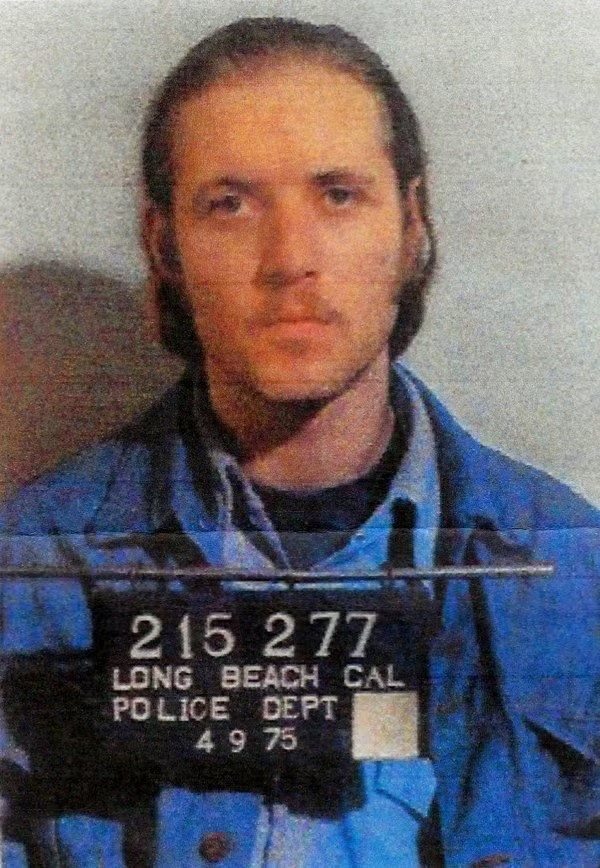
Thomas Edward Conway was born on February 4, 1952, in Long Beach, California, to Virginia Conway. His mother divorced while pregnant and married Thomas Conway, whom Silverstein believed to be his biological father. After that marriage ended, Virginia married Sid Silverstein, who legally adopted the young boy. Silverstein described his childhood in a middle-class neighborhood as difficult; he was shy, awkward, and frequently bullied, partly because his peers mistakenly believed he was Jewish. His mother urged him to fight back, instilling in him a violent response to conflict from a young age.
Silverstein's criminal behavior began in his teens. At 14, he was sent to a California Youth Authority reformatory, an experience he said reinforced his violent attitudes. By age 19, in 1971, he was incarcerated at San Quentin State Prison for armed robbery. He was paroled four years later but quickly returned to crime. In 1977, he was arrested along with his father and cousin for three armed robberies that netted less than $11,000. This crime earned him a 15-year sentence in the federal prison system, and he was sent to USP Leavenworth in Kansas. It was at Leavenworth that Silverstein's path took a fateful turn as he became affiliated with the Aryan Brotherhood, a violent white supremacist prison gang, seeking protection within the racially divided and dangerous prison environment.
The Murder of Danny Atwell
In 1980, while at Leavenworth, Silverstein was convicted of murdering fellow inmate Danny Atwell. Prosecutors alleged that Atwell had refused to act as a mule for a heroin smuggling operation within the prison. Following this conviction, Silverstein was given a life sentence and transferred to the nation's highest-security prison at the time, USP Marion in Illinois. He was placed in the "Control Unit," a section of the prison with a solitary confinement regime for inmates deemed extreme management problems.
However, the conviction for Atwell's murder would not stand. In 1985, the conviction was overturned after it was discovered that the jailhouse informants who testified against Silverstein had committed perjury. Despite his legal vindication in this case, it came too late. By then, Silverstein was already deeply enmeshed in the violent world of Marion's Control Unit and had been convicted of other, more shocking crimes.
A Prison Gang War: Murders of Chappelle and Smith
The environment at USP Marion was a tinderbox of racial tension and gang rivalry. On November 22, 1981, Robert M. Chappelle, a member of the rival D.C. Blacks prison gang, was found dead in his cell. He had been strangled with a wire by someone who reached through the cell bars while he slept. Based on the testimony of inmates, Silverstein and fellow Aryan Brotherhood member Clayton Fountain were convicted of the murder. Silverstein received another life sentence but always maintained his innocence in Chappelle's death.
The conviction only escalated the war between the Aryan Brotherhood and the D.C. Blacks. In a move that proved fatal, the Bureau of Prisons transferred Raymond Lee "Cadillac" Smith, the national leader of the D.C. Blacks, into the same control unit at Marion, housing him near Silverstein. Smith had vowed revenge for Chappelle's death and, according to prison records and Silverstein, made several attempts on Silverstein's life. Silverstein claimed that guards were aware of the threats but did nothing to separate them, hoping for a violent outcome.
On September 27, 1982, Silverstein and Clayton Fountain took matters into their own hands. They attacked Smith, stabbing him 67 times with improvised knives. After Smith was dead, they dragged his bloody body up and down the catwalk in front of other cells as a gruesome warning to their rivals. For the murder of Raymond Smith, Silverstein was convicted and handed yet another life sentence.
The Murder of Officer Merle Clutts
The act that would define the rest of Thomas Silverstein's life occurred on October 22, 1983. The target was Merle E. Clutts, a 51-year-old correctional officer who had been tasked with restoring order to the volatile cellblock. Silverstein alleged that Clutts had been harassing him for an extended period, including destroying his personal artwork. An investigation by the FBI and the Bureau of Prisons later cleared Clutts of any wrongdoing.
Silverstein spent months plotting his revenge. While being escorted from the showers by three guards, he enacted his plan. As they walked past the cell of inmate Randy Gometz, Gometz passed Silverstein a homemade shank and a key to unlock his handcuffs. Freed from his restraints, Silverstein charged at Clutts, who was unarmed. He stabbed the officer repeatedly, shouting, "This is between me and Clutts!" Clutts suffered dozens of stab wounds and died from the ferocious attack. Hours later, in a coordinated attack, Silverstein's accomplice Clayton Fountain used a similar tactic to murder another correctional officer, Robert Hoffmann.
The Victims
- Robert M. Chappelle, age unknown — November 22, 1981, at USP Marion. A member of the D.C. Blacks prison gang, he was strangled in his cell. Silverstein was convicted of his murder but maintained his innocence.
- Raymond Lee Smith, age unknown — September 27, 1982, at USP Marion. Known as "Cadillac," he was the national leader of the D.C. Blacks gang. He was stabbed to death by Silverstein and an accomplice in an act of gang warfare.
- Merle E. Clutts, 51 — October 22, 1983, at USP Marion. A veteran correctional officer, he was murdered by Silverstein in a planned attack while on duty. His death had a profound and lasting impact on the federal prison system.
Investigation and Capture
As all of Silverstein's murders were committed while he was already a federal prisoner, the investigations were conducted within the prison system by the FBI. For the murders of Chappelle and Smith, the cases were built primarily on the testimony of other inmates. Silverstein was already in custody and simply remained in the high-security Control Unit at USP Marion following these killings.
The murder of Officer Clutts was a direct and public assault on the prison staff. There was no question of Silverstein's guilt, as the attack was witnessed by other officers. His capture was immediate; he was subdued in the aftermath of the stabbing. The primary question was not who did it, but how the prison system would respond to an inmate who had proven he could kill even under the tightest security.
Trial and Sentence
For the murders of Robert Chappelle and Raymond Smith, Silverstein was tried and convicted, adding two life sentences to his existing prison term. For the murder of Officer Merle Clutts, he received a third life sentence. At the time of Clutts's murder in 1983, there was no federal death penalty, leaving a life sentence as the maximum possible punishment. This fact fueled the Bureau of Prisons' decision to create a new, more severe form of incarceration for an inmate they felt had nothing left to lose. Silverstein was ultimately serving three consecutive life sentences plus 45 years.
Life in Solitary Confinement
The murder of Officer Clutts prompted an immediate and unprecedented lockdown of USP Marion, which would last for 23 years. For Silverstein, the consequences were even more personal and extreme. The Bureau of Prisons placed him under a special "no human contact" order. He was transferred first to USP Atlanta, where he was held in a small, windowless underground cell. After a riot at that facility in 1987, during which Cuban detainees turned him over to the FBI as a gesture of good faith, he was moved to a specially constructed, isolated cell in the basement of USP Leavenworth known as the "Silverstein Suite." The lights in his cell were kept on 24 hours a day, and he was under constant video surveillance.
In 2005, Silverstein was transferred to the newly opened Administrative Maximum Facility (ADX) in Florence, Colorado—the nation's first "supermax" prison, which was designed in direct response to the murders committed by Silverstein and Fountain. He spent the remainder of his life in extreme isolation. Over the years, his conditions were slightly relaxed; he was eventually allowed a television and art supplies. He became a self-taught artist, practiced yoga, and studied Buddhism. In 2011, he expressed remorse and apologized to Clutts's family. His lawyers filed lawsuits arguing that his decades of isolation constituted cruel and unusual punishment, but courts repeatedly deferred to the Bureau of Prisons' judgment that he remained a significant security risk.
Death and Legacy
After spending 36 years in solitary confinement—believed to be the longest period for any inmate in the federal system—Thomas Silverstein died on May 11, 2019, at the age of 67. He had been transferred to a hospital in Lakewood, Colorado, for complications following heart surgery.
Silverstein's legacy is inextricably linked to the evolution of the American prison system. The murders of Officers Clutts and Hoffmann at USP Marion served as the direct impetus for a new era of corrections, defined by the "supermax" model of permanent lockdown and extreme isolation. He became a symbol of both the dangers posed by violent prison gangs and the profound ethical questions surrounding long-term solitary confinement. While prison officials described him as a brutal killer who had to be isolated for the safety of others, Silverstein and his supporters argued that the dehumanizing conditions of the prison system itself contributed to his violent actions. His life and death continue to fuel the debate over punishment, rehabilitation, and the limits of humane treatment within the nation's correctional facilities.