Mary Eleanor Smith and the Murder of James Eugene Bassett
Background
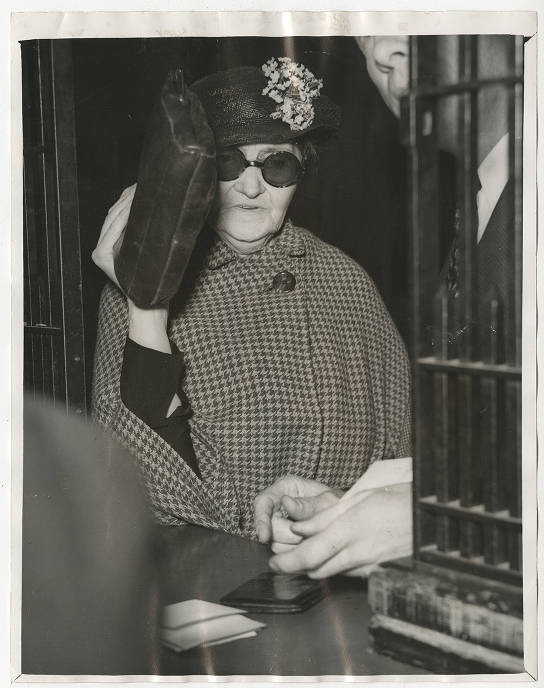
Mary Eleanor Smith was an American murderer who became associated with one of the most sensational criminal mysteries in the Pacific Northwest during the 1920s. She committed her known crimes with her adult son, Decasto Earl Mayer, who was also called Earl and occasionally identified in records as Decasto Eugene Mayer. Although Smith and Mayer have sometimes been described as a serial-killing team, only one victim, James Eugene Bassett, was conclusively connected to them. Smith later claimed that her son had killed three other people in Montana and Idaho, but those alleged victims were never publicly identified and the accusations did not result in additional murder convictions.
Smith was born in New York in approximately 1866. By the late 1920s, she was living with Mayer in the Seattle area. Contemporary descriptions portrayed her as an older, gray-haired woman whose appearance did not immediately suggest danger. Mayer, who had a physical disability and walked with difficulty, had already accumulated a criminal record. Together, mother and son presented themselves as prospective automobile buyers while apparently planning to obtain a valuable car through robbery and murder.
The Targeting of James Eugene Bassett
James Eugene Bassett was a 34-year-old civilian employee connected to the United States Navy. Originally associated with Annapolis, Maryland, he had traveled across the country and was temporarily staying with relatives in Bremerton, Washington. Bassett owned a nearly new 1929 Chrysler 75 roadster, an expensive automobile valued at approximately $1,600 at the time.
In September 1928, Bassett advertised the Chrysler for sale in a Seattle newspaper. A supposed buyer using the name “Mr. Clark” responded to the advertisement. On September 5, Bassett left his sister’s home in Bremerton, traveled by ferry to Seattle and arranged to demonstrate the automobile to the prospective purchaser. He intended to return that evening. His relatives never saw him alive again.
The purported buyer was connected to Smith and Mayer. According to the confession Smith gave nearly ten years later, Bassett was induced to drive to a rented residence in King County under the belief that he was completing a legitimate automobile transaction. Smith occupied Bassett’s attention while Mayer approached him from behind. Mayer then struck Bassett in the head with a hammer, inflicting the fatal injuries.
The Murder and Destruction of the Body
Smith’s confession described an extensive effort to eliminate all physical evidence of the killing. After Bassett was attacked, his body was carried into the house and dismembered. Reports of the confession stated that the body was cut apart in a bathtub. Portions of the remains were burned, while other parts were buried or discarded in isolated locations north of Seattle.
Smith claimed that she and Mayer transported pieces of Bassett’s remains through rural areas between Cathcart and Bothell, Washington. Bassett’s teeth were reportedly removed and scattered along roads to make identification more difficult. His clothing was burned, and the house was cleaned in an attempt to remove evidence of the violence. Despite numerous searches and excavations, investigators never recovered a complete body or any remains that could be conclusively identified as Bassett’s.
The destruction and dispersal of the body created a major legal obstacle. Prosecutors strongly suspected that Bassett had been murdered, but in 1928 they lacked the physical evidence generally considered necessary to prove that a homicide had occurred. Smith and Mayer repeatedly changed their accounts and claimed that Bassett had voluntarily sold them the automobile before disappearing.
Victims
- James Eugene Bassett, 34 — September 5, 1928 — King County, Washington: Bassett disappeared after traveling from Bremerton to Seattle to meet a supposed buyer for his 1929 Chrysler roadster. Smith later admitted that she helped lure and distract him while Mayer struck him with a hammer. His body was dismembered, burned, buried and scattered in rural locations north of Seattle. His identifiable remains were never recovered.
- Two unidentified men — Dates unknown during the 1920s — Montana and possibly Idaho: Smith alleged that Mayer had killed two additional men before the Bassett murder. Contemporary reports placed the suspected crimes in Montana and Idaho, but the men were never publicly identified and no reliable dates of death were established.
- One unidentified woman — Date unknown during the 1920s — Montana or Idaho: Smith also claimed that Mayer had murdered an unidentified woman. Authorities investigated the allegation, but no confirmed identity, exact location or verified date of death became available.
Arrest in California
Eight days after Bassett disappeared, Smith and Mayer were arrested in Oakland, California, on September 13, 1928. They were traveling in Bassett’s Chrysler and possessed several of his personal belongings. Investigators found his watch, papers and other property in their possession. The discovery strongly indicated that the pair had robbed Bassett, but they insisted that the automobile had been purchased through a legitimate transaction.
Smith and Mayer were returned to Washington. Police searched the property where Bassett was believed to have been killed and examined rural disposal sites. Investigators dug in several locations and followed reports of suspicious fires, discarded material and possible remains. Because Bassett’s body had been so thoroughly destroyed and dispersed, the searches failed to produce definitive proof of his death.
Authorities initially hoped to prosecute both suspects for murder. Without a body or conclusive forensic evidence, however, the state proceeded with charges involving Bassett’s automobile and personal property. The prosecution argued that Smith and Mayer had obtained the Chrysler through fraud and had stolen valuables directly from Bassett.
Grand-Larceny Convictions
Smith and Mayer were convicted of grand larceny in King County. Mayer was declared a habitual criminal because of his previous convictions and received a life sentence. Smith received a prison term of approximately eight and one-half years. An appellate ruling later granted Smith a new trial on technical grounds, but she was convicted again and remained incarcerated at the Washington State Penitentiary in Walla Walla.
The Bassett case attracted widespread attention because investigators experimented with techniques that were considered controversial at the time. Smith and Mayer were reportedly subjected to early lie-detector examinations and questioning involving so-called truth serum. Statements produced during those procedures were challenged, and public criticism arose over the coercive and scientifically uncertain methods. The resulting legal disputes prevented the statements from immediately resolving the murder investigation.
For nearly a decade, Smith and Mayer maintained that Bassett had sold them his automobile. Investigators did not accept their story and continued attempting to obtain a reliable confession. Mayer was held under severe conditions for periods of his imprisonment, but he resisted implicating himself in the killing.
The 1938 Confession
In 1937, Smith reportedly began describing the Bassett murder to another prisoner, Margaret Helen Fawcett, a confidence criminal serving a lengthy sentence for grand larceny. Fawcett relayed the information to prison officials, hoping that her assistance might improve her own chances of receiving clemency. Authorities then developed a plan to persuade Smith to confess formally.
A Washington State Patrol officer approached Smith while posing as a clergyman. During repeated conversations, he encouraged her to consider religion, guilt and the possibility of making peace with God. With her larceny sentence nearing completion, Smith finally provided investigators with a written statement in May 1938. She admitted that Bassett had been killed and described Mayer’s hammer attack, the dismemberment and the disposal of the remains.
Smith portrayed Mayer as the person who delivered the fatal blows but admitted that she had been present and had participated in the plan and its aftermath. Her account established that Bassett had not voluntarily disappeared and that the automobile transaction had been a trap. She accompanied investigators to rural areas north of Seattle and attempted to identify locations where pieces of the body had been buried or discarded.
Search teams carried shovels and excavated several places indicated by Smith. A decade had passed, the landscape had changed and Smith’s memory of the precise locations was uncertain. Investigators were unable to recover remains that could be positively connected to Bassett. Nevertheless, prosecutors considered the confession sufficiently detailed and consistent with the known evidence to file murder charges.
Claims of Additional Murders
Smith’s 1938 statements expanded the case beyond Bassett’s death. She alleged that Mayer had previously killed two men and one woman while the pair lived or traveled in Montana and Idaho. Some accounts associated the suspected crimes with the Anaconda, Montana, area. Reports circulated that neighbors had once noticed disturbing odors coming from a residence occupied by Smith and Mayer, raising suspicions that bodies might have been dismembered or chemically destroyed.
The allegations were never substantiated through the discovery of identifiable remains or surviving documentation that established the victims’ names. It was also unclear whether Smith had directly participated in the three alleged murders, had merely learned about them from Mayer or had invented portions of the story. For that reason, describing Smith as a confirmed serial killer is questionable. The historical record establishes her involvement in Bassett’s murder, while the additional deaths remain unverified suspicions.
Murder Charges and Mayer’s Death
On May 12, 1938, Smith and Mayer were formally charged with the 1928 murder of James Eugene Bassett. Mayer initially questioned his mother’s mental condition when confronted with her accusations, but reports stated that he later made admissions of his own. Both were transferred to King County to face prosecution.
The case remained legally complicated because Bassett’s remains had never been recovered. Prosecutors prepared to use Smith’s confession, the possession of Bassett’s property, the false automobile-purchase story and the defendants’ efforts to conceal the crime as proof of murder. The prosecution would have required the court to accept that Bassett’s death could be established through circumstantial evidence even without a body.
Mayer never stood trial for murder. On December 11, 1938, while confined in the King County Jail in Seattle, he died by suicide by hanging himself in his cell. His death prevented a jury from determining his guilt and removed the person Smith had identified as the principal attacker.
Smith’s Guilty Plea and Life Sentence
Following Mayer’s death, Smith faced the murder case alone. She ultimately pleaded guilty to Bassett’s homicide rather than proceeding to a full trial. The court sentenced her to life imprisonment. Her plea legally confirmed her responsibility for the murder, even though Bassett’s body was never found and the exact location of his death remained uncertain.
Smith spent many years in Washington’s prison system. She lived to an advanced age and died in Spokane, Washington, on March 2, 1966. Her death ended the life of one of the central figures in a case that had remained notorious for almost four decades.
Legacy of the Case
The Bassett murder became an important example of the difficulties involved in prosecuting a homicide without recovering the victim’s body. Smith and Mayer were caught with Bassett’s automobile and property only days after his disappearance, yet authorities initially secured convictions solely for theft. It took Smith’s confession nearly ten years later to produce formal murder charges.
The case also demonstrated the limitations and dangers of early interrogation technology. Lie detectors, truth serum and psychological pressure were used during the investigation, but the resulting statements generated legal controversy rather than a swift resolution. The eventual confession was obtained through religious persuasion and Smith’s desire to relieve her conscience shortly before her expected release.
Mary Eleanor Smith was not conclusively proven to have killed multiple people. Her participation in the planned robbery and murder of James Eugene Bassett, however, was established through her detailed confession and guilty plea. The accusations involving three unidentified victims remain part of the case’s disturbing history, but without names, verified dates, remains or convictions, they cannot be presented as confirmed murders. Smith is therefore most accurately described as a convicted murderer and suspected member of a serial-killing partnership whose full number of victims may never be known.