Morris Solomon Jr.: The Sacramento Slayer
Overview
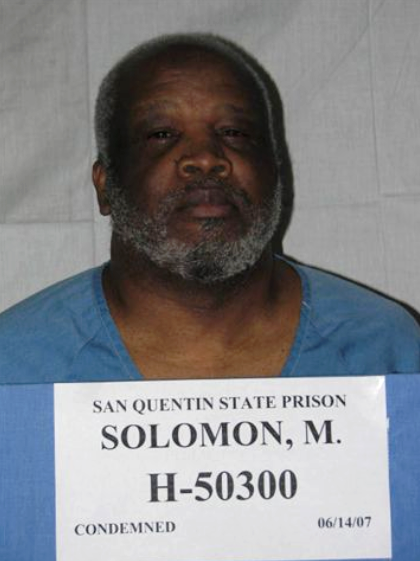
Morris Solomon Jr. was an American serial killer and repeat sexual offender who murdered six women in Sacramento, California, during the mid-1980s. A seventh woman, Angela Polidore, was also found dead at a property connected to him, although prosecutors ultimately dismissed the murder charge involving her. Solomon became known as the “Sacramento Slayer” and the “Homicidal Handyman of Oak Park” because numerous victims were hidden or buried at houses where he had lived or performed repair work.
The murders occurred primarily in and around Oak Park, a working-class Sacramento neighborhood where Solomon earned money as a handyman. He appeared helpful and familiar to local residents, which allowed him to move through homes and abandoned properties without immediately attracting suspicion. Behind that ordinary appearance was a long history of violence against women, including choking, sexual assault, rape, false imprisonment and attacks involving weapons.
Many of the women connected to Solomon were living in vulnerable circumstances. Some struggled with drug addiction or engaged in sex work. Their disappearances did not initially produce a coordinated investigation, allowing Solomon to continue offending while bodies remained concealed in closets, yards and shallow graves. The eventual discovery of several victims at properties associated with the same handyman exposed the disturbing pattern.
Early History of Violence
Solomon was born on March 15, 1944, in Albany, Georgia. Accounts presented during his trial described a childhood marked by severe physical abuse. He later served in the United States military during the Vietnam era and eventually settled in California. Although his attorneys later argued that childhood trauma, military experiences, psychological problems and cocaine use contributed to his behavior, the prosecution emphasized the calculated and repetitive nature of his violence.
His attacks on women began long before the Sacramento murders. In September 1969, he attacked an 18-year-old woman with a knife. On January 12, 1971, another woman was reportedly threatened with a firearm, forced into a vehicle and sexually assaulted. In May 1971, Solomon kicked a woman in the face during an attack and was convicted of assault with intent to commit rape.
On October 18, 1975, Solomon placed a chain around a woman’s neck, choked her until she lost consciousness, humiliated her and sexually assaulted her. He was convicted of aggravated assault and false imprisonment. In December 1976, he choked another 18-year-old woman unconscious and was again convicted of assault with intent to commit rape and false imprisonment. Despite this established history of predatory violence, he was eventually released and returned to the Sacramento area.
The Sacramento Murders
By 1986, Solomon was working as a handyman in Sacramento. He repaired fire-damaged houses, stayed inside vacant buildings and accepted jobs at properties whose owners sometimes allowed him to live on the premises. These locations later became central to the murder investigation. Five convicted victims were buried outside houses where Solomon had lived or worked. Another victim was found inside a closet in a duplex where he had performed repairs.
Because several bodies were badly decomposed, medical examiners could not establish precise dates or causes of death in every case. The dates below therefore distinguish between confirmed discovery dates, last-known-alive dates and estimated periods of death. A discovery date should not necessarily be interpreted as the exact day the victim was killed.
Known and Suspected Victims
- Yolanda Johnson, 22 — body discovered June 18, 1986 — 4th Avenue, Oak Park, Sacramento: Johnson’s decomposing body was found inside an upstairs closet in an abandoned duplex. She was partially unclothed and had been bound. Solomon placed the telephone call that led police to the property, presenting himself as the person who had discovered her. Investigators later suspected that he reported the body in an attempt to distance himself from the killing. Evidence collected from Johnson’s body was consistent with Solomon’s blood characteristics. The condition of her remains made the precise time of death difficult to determine, although evidence indicated that she had been killed before her body was reported on June 18.
- Angela Polidore, 25 — body discovered July 20, 1986 — Sacramento: Polidore was found partially unclothed and bound in a manner resembling other women linked to Solomon. Her remains were discovered at a location associated with him. Prosecutors initially charged Solomon with her murder, but the charge was later dismissed because the available evidence was considered insufficient to prove his responsibility beyond a reasonable doubt. She is commonly listed as a suspected seventh victim, but Solomon was not convicted of killing her. Her precise date of death was not conclusively established.
- Maria Apodaca, 18 — last confirmed alive September 8, 1986; body discovered March 19, 1987 — 19th Avenue, South Sacramento: Apodaca was last documented alive when she was released from custody following a prostitution arrest on September 8, 1986. Several months later, workers digging a drainage ditch behind an abandoned house uncovered her body approximately three feet below the ground. A piece of plywood had been placed over the grave and covered with dirt. Apodaca was clothed but tightly bound in a fetal position, with a cloth belt restraining her wrists behind her knees. Discoloration around her neck suggested that she may have been suffocated or strangled with a broad ligature. Her exact date of death could not be determined, but she was killed sometime after September 8, 1986, and before March 19, 1987.
- Cherie Washington, 26 — body discovered April 20, 1987 — former Solomon residence on 44th Street, Oak Park, Sacramento: Detectives investigating Apodaca’s murder visited a house where Solomon had previously lived. During a search of the yard, they found Washington’s remains in a shallow grave. She had been wrapped in bedding, and evidence suggested that she may have been restrained before her death. Decomposition prevented investigators from fixing an exact date of death or determining a definitive cause. Her discovery directly intensified police scrutiny of Solomon and his connection to multiple properties containing concealed bodies.
- Linda Vitela, 24 — last seen alive in February 1986; body discovered April 22, 1987 — backyard of a Broadway residence, Sacramento: Vitela’s body was unearthed behind a fire-damaged house that Solomon had remodeled and occupied. She was nude, tightly bound and wrapped in bedding. Investigators concluded that she had probably been dead for approximately a year by the time her remains were found. Her precise death date remains unknown, but available evidence places her disappearance and probable murder around February 1986. Solomon had lived at the Broadway property from late 1985 until June 18, 1986.
- Sheila La Rose Jacox, 17 or 18 — missing since March 20, 1986; body discovered April 22, 1987 — backyard of the same Broadway residence, Sacramento: Jacox’s remains were discovered near Vitela’s grave. Her body was severely decomposed, tightly bound and wrapped in bedding, and her mouth had been sealed with duct tape. She had been missing since March 20, 1986, and investigators believed she had also been dead for approximately one year. Some contemporary case records listed her as 17, while burial records indicate that she had turned 18 before her remains were recovered. The exact date on which Solomon killed her was never established.
- Sharon Massey, 29 — last heard from September 14, 1986; body discovered April 28 or April 29, 1987 — backyard of the 19th Avenue property, South Sacramento: Massey was found buried at the same property where Maria Apodaca had been uncovered. Her wrists and ankles had been tied, forcing her body into a fetal position, and a red sock had been placed in her mouth. Investigators estimated that she had been dead for roughly six months. Her exact date of death was unknown, but she was killed sometime after she was last heard from on September 14, 1986. Records differ by one day regarding whether her remains were fully recovered on April 28 or officially recorded on April 29, 1987.
The Investigation and Arrest
The investigation accelerated after Maria Apodaca’s body was uncovered in March 1987. Detectives learned that Solomon had connections to the property and began examining other houses where he had lived or worked. When Cherie Washington was discovered in the yard of his former 44th Street residence on April 20, police had strong reason to believe that the handyman’s movements were linked to the concealed bodies.
Two days later, investigators searched the Broadway house that Solomon had remodeled and occupied. The discovery of Linda Vitela and Sheila Jacox in the backyard confirmed that the deaths were not isolated incidents. A neighbor told police that she had seen Solomon digging in several locations behind the house. The way the women had been bound, wrapped and buried also resembled the treatment of other victims.
Solomon was arrested on April 22, 1987. Police continued searching properties associated with him after his arrest, leading to the recovery of Sharon Massey later that month. Prosecutors formally charged Solomon with six murders on April 27, 1987. Additional charges were eventually added as investigators connected him to the remaining victims and surviving women described earlier sexual assaults.
Evidence Against Solomon
The prosecution’s murder case was largely circumstantial because the bodies had decomposed and forensic DNA testing was not yet widely available. Nevertheless, the physical locations of the remains created a powerful pattern. Nearly every convicted victim was discovered at a house where Solomon had lived, worked or maintained regular access. Several witnesses also connected him socially to the women or placed him near the relevant properties.
Biological material recovered from Yolanda Johnson was consistent with Solomon’s blood type and genetic markers available through testing at the time. Although the evidence could not identify him with the precision of modern DNA analysis, it supported the prosecution’s argument that he had sexually assaulted Johnson before her death.
The binding and concealment methods were also significant. Victims were discovered with their wrists or ankles restrained, their bodies folded into fetal positions, their mouths covered or stuffed and their remains wrapped in household materials. The prosecution argued that these repeated features demonstrated the work of the same offender rather than unrelated deaths occurring by coincidence at properties connected to Solomon.
Trial and Convictions
A jury convicted Morris Solomon Jr. of murdering six women. He was found guilty of four counts of first-degree murder and two counts of second-degree murder. The jury also found a multiple-murder special circumstance to be true. Solomon was additionally convicted of sexually assaulting two surviving women.
The murder charge involving Angela Polidore was dismissed, leaving six murder convictions. Prosecutors did not argue that Polidore’s death was unrelated to the series; instead, they concluded that the evidence specifically tying Solomon to her killing was not strong enough to take that charge to a final verdict.
The first penalty proceeding ended without a unanimous decision. During a second penalty trial, prosecutors presented extensive evidence of Solomon’s earlier attacks on women. Survivors described being beaten, strangled, threatened, forcibly confined and sexually assaulted. Their testimony demonstrated that his violence was not limited to the brief period during which the bodies were discovered.
Death Sentence and Appeals
In July 1992, the second penalty jury unanimously recommended death. Solomon was formally sentenced to death on September 16, 1992, and transferred to California’s condemned population later that month. He spent much of his imprisonment at San Quentin State Prison.
Solomon’s attorneys appealed the convictions and death sentence, challenging aspects of the trial, the evidence, jury selection and the presentation of aggravating material. On July 15, 2010, the California Supreme Court affirmed the judgment. Despite receiving a death sentence, Solomon was never executed because California’s capital punishment system remained tied up in legal and administrative delays.
Death in Prison
Morris Solomon Jr. died on August 1, 2024, at the California Health Care Facility in Stockton. He was 80 years old and remained under a condemned sentence at the time of his death. Prison officials reported that he was found unresponsive in his cell, although the immediate public announcement did not provide a detailed cause of death.
His death closed the legal chapter of a case that had remained active for decades, but it did not erase the lasting impact of the murders. The women he targeted were frequently described through their struggles with drugs or sex work, yet each was an individual whose disappearance and death affected relatives, friends and the surrounding community.
Legacy of the Case
The Morris Solomon investigation demonstrated how a predatory offender could exploit abandoned houses, temporary employment and the social invisibility of vulnerable women. He had access to buildings that appeared empty or were under renovation, providing locations where he could commit violence and conceal remains. His reputation as a neighborhood handyman gave him a reason to enter properties and dig in yards without immediately alarming residents.
The case also exposed the dangers of treating disappearances involving sex workers or people with addictions as unrelated or less urgent. Had the early missing-person reports and violent incidents been viewed collectively, authorities might have recognized the pattern sooner. Instead, some victims remained buried for approximately a year before the discovery of one body led investigators from property to property.
Solomon was ultimately held responsible for six murders, while Angela Polidore continued to be regarded as a probable or suspected seventh victim. The exact dates of several deaths remain unknown because the victims were concealed until decomposition destroyed crucial evidence. What investigators could establish was a pattern of sexual violence, restraint, killing and burial centered on the houses where Solomon lived and worked in Sacramento.