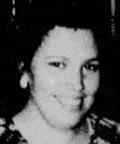
On June 18, 1986, the decomposing body of 22-year-old African American female Yolanda Johnson was discovered in the closet of an abandoned duplex on Fourth Avenue in the Oak Park neighborhood of Sacramento, California. Her remains were found by police after a 911 call reported a foul odor emanating from the building. The condition of the body suggested she had been dead for two to three days.
Investigators noted ligature marks on her neck and wrists, indicating she had likely been bound and strangled. The advanced state of decomposition made it difficult to determine the exact cause of death.
Yolanda Johnson, a 22-year-old African American woman, was the first known victim in a series of murders later attributed to Morris Solomon Jr., a handyman who lived and worked in the same area. Solomon had previously resided at the duplex where Johnson’s body was found. Despite being a suspect early in the investigation, Solomon was not immediately arrested due to insufficient evidence. At the time, he had several outstanding misdemeanor warrants, including one for solicitation of prostitution, but authorities released him.
Over the following months, additional bodies of young women were discovered in and around properties where Solomon had lived or worked. These included women who, like Yolanda Johnson, were African American and had histories of drug use or sex work. The pattern of the killings—victims often bound, partially clothed, and buried in shallow graves—pointed to a serial offender.
Solomon was finally arrested on April 22, 1987, after the discovery of more victims at his current residence. He was charged with multiple counts of murder and sexual assault. In 1992, he was convicted of four counts of first-degree murder, two counts of second-degree murder, and several sexual assaults. He was sentenced to death and remained on death row for decades.
The case of 22-year-old African American female Yolanda Johnson marked the beginning of a chilling series of homicides that terrorized Sacramento in the mid-1980s. Her death, initially overlooked in the broader media landscape, later became a critical piece in the prosecution of one of California’s most notorious serial killers.