Andrew Wessel Six: The Iowa and Missouri Murders
Overview
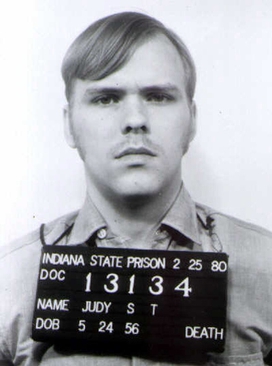
Andrew Wessel Six was an American serial killer responsible for four murders committed in Iowa and Missouri between April 1984 and April 1987. Six was convicted and sentenced to death for the abduction and murder of 12-year-old Kathy Annette Allen. Many years after his execution, DNA evidence also identified him as the perpetrator of an unsolved triple homicide involving Justin Alfred Hook Jr., Hook's fiancée, Tina Marie Lade, and Hook's mother, Sarah Lee Link.
The two cases were separated by approximately three years. The first involved three related victims killed near the communities of Drakesville and Eldon in southeastern Iowa. The second began with a violent invasion of the Allen family home in Ottumwa, Iowa, and ended with Kathy Allen being killed after she was transported across the state line into rural Missouri.
Six was never brought to trial for the 1984 triple homicide because the scientific evidence connecting him to those killings was not developed until long after his death. Nevertheless, investigators eventually concluded that the same man executed for Kathy Allen's murder had also killed three people in Iowa before Kathy's abduction.
Victims
- Justin Alfred Hook Jr., 20 — Killed on April 12, 1984, in southeastern Iowa. His body was discovered on April 13 outside his burned mobile home near rural Drakesville in Davis County.
- Sarah Lee Link, 41 — Killed on April 12, 1984. She was Justin Hook Jr.'s mother. Her body was found on April 16 in a farm field near Eldon, Iowa.
- Tina Marie Lade, 19 — Killed on April 12, 1984. She was Justin Hook Jr.'s fiancée. Her body was discovered on April 18 in a ravine near the location where Sarah Link had been found.
- Kathy Annette Allen, 12 — Abducted and killed on April 10, 1987. She was taken from her family's home in Ottumwa, Iowa, and murdered in rural Schuyler County, Missouri.
The 1984 Triple Homicide
On April 12, 1984, Justin Hook Jr., Tina Lade and Sarah Link were killed in southeastern Iowa. The three victims were closely connected: Sarah was Justin's mother, while Tina was his fiancée. Their deaths became one of the region's most disturbing unsolved cases and remained unresolved for nearly three decades.
Justin Hook lived in a mobile home near Drakesville, a small community in Davis County. On April 13, 1984, his body was discovered outside the burned remains of the residence. Although the trailer had been set on fire, investigators determined that Justin had not died in the blaze. He had suffered fatal injuries to his head before the fire was started.
The fire appeared to have been an attempt to destroy evidence or conceal what had taken place. Investigators searched the area and began trying to locate two other people connected to Justin: his mother, Sarah Link, and his fiancée, Tina Lade. Their disappearances immediately raised fears that the violence had extended beyond the burned mobile home.
On April 16, Sarah Link's body was discovered in a farm field near Eldon, approximately several miles from the location of Justin's trailer. Like her son, she had suffered fatal head injuries. The discovery confirmed that the case involved at least two related murders rather than an isolated attack followed by an accidental fire.
Tina Lade remained missing while authorities investigated the deaths of Justin and Sarah. At first, investigators hoped to locate her as a possible witness who might be able to explain what had happened. On April 18, however, Tina's body was found in a ravine approximately half a mile from the field where Sarah had been discovered. She had also been killed by severe blows to the head.
The similar injuries, close geographical locations and personal relationships among the victims convinced investigators that the three deaths were part of the same violent episode. The exact order in which the victims were attacked was never publicly established, and the motive remained uncertain.
Andrew Six quickly emerged as a person of interest. Investigators learned that he had been involved in a disagreement with Justin Hook concerning the purchase of a vehicle. That dispute supplied a possible connection between Six and the victims, but investigators did not possess enough physical evidence to charge him.
Despite extensive interviews and evidence collection, no arrest was made. Six continued to live freely, and the killings of Justin, Sarah and Tina remained officially unsolved. The lack of a prosecution would later take on greater significance after Six committed another murder in 1987.
The Allen Family Attack
In April 1987, Andrew Six and his uncle, Donald Eugene Petary, became interested in a pickup truck being sold by the Allen family of Ottumwa. Don Allen suffered from a serious heart condition, and the family hoped that money from the truck's sale would help pay for his travel and medical treatment connected to open-heart surgery.
Six and Petary first visited the family's trailer on April 7, claiming that they might purchase the vehicle. Their apparent interest in the truck allowed them to observe the family and the layout of the home. On April 10, the men bought duct tape and plastic gloves before returning to the Allen residence late that night.
Inside the home were Don and Stella Allen and their daughters, 17-year-old Christine and 12-year-old Kathy. Kathy was a special-education student who was preparing to participate in a Special Olympics event. Six and Petary again presented themselves as prospective buyers and persuaded Stella to accompany them on a test drive.
During the drive, the men stopped on an isolated gravel road. Stella was overpowered, restrained with duct tape and taken back to her home. Six and Petary entered the residence armed with knives, restrained Don Allen and terrorized the family. Money and personal property were taken, and Christine was sexually assaulted during the invasion.
The attackers attempted to move members of the family outside. During the confusion, Don Allen escaped and ran for help. Stella was attacked with a knife and suffered a severe wound to her throat, but she survived. Christine was also able to escape. Kathy, however, remained trapped inside the vehicle with Six and Petary.
The Kidnapping and Murder of Kathy Allen
Six and Petary drove away from Ottumwa with Kathy as their captive. By taking her from Iowa into Missouri, they turned the abduction into a federal kidnapping offense. The men traveled south while law-enforcement agencies began a rapidly expanding search.
Kathy was taken to a remote area in Schuyler County in northern Missouri. There, she was killed with a knife wound to her neck. Her body was abandoned in a roadside ditch, leaving investigators with the urgent task of locating both the child and her abductors.
Six and Petary continued traveling and were apprehended in Texas on April 11, 1987, one day after the attack. The arrests ended their flight but did not immediately reveal what had happened to Kathy. After investigators informed Petary that Stella Allen had survived, he provided information leading authorities to the location of Kathy's body.
Kathy was found on April 13, three days after her abduction and murder. The medical examination established that she had died from the knife wound inflicted on April 10. The location of her body in Missouri gave state authorities jurisdiction over the murder, while her transportation across state lines allowed federal prosecutors to pursue kidnapping charges.
Federal Kidnapping Conviction
On April 22, 1987, Andrew Six and Donald Petary were indicted under federal law for kidnapping Kathy Allen. The defendants were tried separately, and both were convicted. The federal prosecution focused on the abduction in Iowa and the movement of Kathy across the state line into Missouri.
On October 23, 1987, Six was sentenced to 200 years in federal prison. The unusually lengthy sentence reflected the violence of the kidnapping and ensured that he would have remained imprisoned even without the later Missouri death sentence.
Petary also received a 200-year federal sentence. Their federal convictions were later upheld on appeal, with the courts rejecting arguments concerning evidence of the crimes committed against the Allen family before Kathy was taken from the home.
Missouri Murder Trial
Missouri prosecutors separately charged Six with first-degree murder for Kathy's death. During his trial, the prosecution presented evidence describing the calculated preparations for the home invasion, including the purchase of duct tape and plastic gloves. The state also established that Kathy was kidnapped, transported to Missouri and killed because she could identify her abductors.
On July 28, 1988, a Schuyler County jury found Six guilty of first-degree murder. During the punishment phase, jurors were unable to reach the necessary agreement on whether to impose death. The final sentencing decision was therefore made by Circuit Judge E. Richard Webber.
On July 29, 1988, the judge sentenced Six to death. The court found multiple aggravating circumstances, including that Kathy was murdered during a kidnapping, that the killing was intended to prevent Six's arrest and that she was eliminated because she was a potential witness to her own abduction and the crimes against her family.
Petary was tried separately and was also convicted of first-degree murder. He received a death sentence in November 1988. Both men were eventually housed on Missouri's death row, although only Six would be executed.
Appeals and Execution
Six spent years appealing his conviction and sentence through Missouri and federal courts. His attorneys raised questions concerning trial evidence, jury instructions, legal representation and the judge's decision to impose death after the jury failed to agree on punishment.
The Missouri Supreme Court affirmed his conviction and death sentence in 1991. Federal courts also rejected his attempts to overturn the judgment. In June 1997, the United States Supreme Court declined to intervene, leaving his execution date in place.
Andrew Wessel Six was executed by lethal injection at the Potosi Correctional Center in Missouri on August 20, 1997. He was 32 years old. Kathy Allen's mother witnessed the execution and stated that she believed the punishment provided a measure of justice for her daughter.
Donald Petary remained on death row but died in prison on May 12, 1998, before his execution could be carried out.
The Cold Case Investigation
Although Six had been suspected in the murders of Justin Hook, Sarah Link and Tina Lade, he was never charged while he was alive. Investigators attempted to question him about the case before his execution, but he refused to provide useful information.
The triple homicide remained open after Six's death. Advances in DNA technology eventually allowed authorities to reconsider physical evidence that had been collected in 1984. In August 2011, the Iowa Division of Criminal Investigation Cold Case Unit joined the Davis County Sheriff's Office and the Wapello County Sheriff's Office in conducting a new review.
Evidence that had been stored for decades was located and reexamined. Investigators selected items with the greatest potential to contain biological material and submitted them to the Iowa Division of Criminal Investigation laboratory for modern forensic testing.
A DNA profile was developed from evidence associated with a pair of jeans worn by Tina Lade. In March 2012, investigators learned that the profile matched Andrew Wessel Six. The result supplied the physical connection that detectives had lacked during the original investigation.
Authorities continued reviewing the evidence before publicly announcing their conclusion. On January 10, 2014, Iowa investigators stated that Andrew Six was responsible for the murders of Justin Hook, Sarah Link and Tina Lade. Six had been dead for more than 16 years and therefore could not be prosecuted, but the DNA evidence allowed the case to be officially resolved.
Motive and Unanswered Questions
The full motive for the 1984 killings has never been conclusively established. The known disagreement between Six and Justin Hook over a vehicle provided a possible source of conflict, but it did not completely explain the killing of three people, the movement of two bodies or the burning of Justin's home.
Because Six never confessed and refused to cooperate with investigators, many details remain unknown. It is unclear precisely where each victim was attacked, whether another person assisted him or how he transported Sarah and Tina to the locations where their bodies were discovered.
Investigators nevertheless considered the DNA match, the earlier dispute and the accumulated case evidence sufficient to identify Six as the perpetrator. Authorities stated that the forensic evidence demonstrated his responsibility for the triple homicide.
Legacy of the Cases
The crimes of Andrew Wessel Six left four victims across two states and devastated several families. The 1984 murders showed how a suspect could remain beyond the reach of prosecution when investigators lacked the forensic technology needed to connect him to physical evidence.
The murder of Kathy Allen demonstrated the consequences of that unresolved case. Had investigators been able to prove Six's involvement in the 1984 killings, he might have been imprisoned before he and Petary attacked the Allen family three years later.
The eventual identification of Six in 2014 did not lead to another trial, but it provided long-delayed answers to the relatives of Justin Hook, Sarah Link and Tina Lade. It also transformed the public understanding of Six from a convicted child murderer into a serial killer responsible for four confirmed deaths.
Andrew Wessel Six's known murders began with the April 12, 1984, triple homicide in southeastern Iowa and ended with the April 10, 1987, abduction and murder of Kathy Allen. His execution resolved the sentence imposed for Kathy's murder, while DNA testing completed the investigative record of the three earlier killings decades after they occurred.