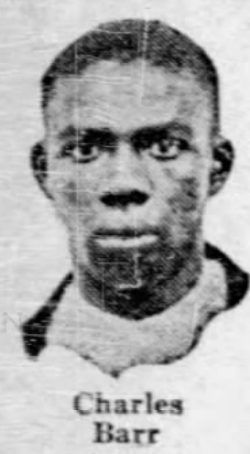
Charles Barr: The Memphis Roadside Killer
Charles Barr was an American serial killer responsible for a series of roadside attacks in the Memphis, Tennessee, area during the early 1920s. Newspapers and later historical accounts referred to him by such names as the "Petting Party Bandit" and the "Roadside Slayer," reflecting the manner in which he targeted people sitting in automobiles on secluded roads. Barr was linked to the murders of three people—Duncan Waller, Ruth McElwaine Tucker, and William Obediah "W. Obe" Spencer—and to the shooting of Spencer's companion, Laura Wheaton Johnson, who survived.
The crimes frightened motorists around Memphis because the victims appeared to have been selected largely because they were isolated and vulnerable. Barr approached parked automobiles under cover of darkness, opened fire, and robbed his victims of money, jewelry, watches, and other valuables. The investigation remained stalled for more than a year before stolen property eventually led detectives to Barr.
Background
Barr was born in Memphis around 1903. Historical accounts describe him as the son of a Baptist minister. As a young adult, he worked as a chauffeur and domestic employee and was married to a woman generally identified in contemporary accounts as Luada or Luoda Barr.
There was little in Barr's outward life that initially drew police attention toward him. Investigators later said robbery was the motive he gave for the roadside killings. Rather than confronting victims in busy public areas, Barr traveled to isolated roads where couples frequently parked their automobiles, allowing him to attack with comparatively little risk of being observed.
The Murder of Duncan Waller and Ruth McElwaine Tucker
On the night of January 27, 1923, 19-year-old Duncan Waller, a traveling salesman from Mayfield, Kentucky, was in an automobile with 20-year-old Ruth McElwaine Tucker, who was originally from Bowling Green, Kentucky. They were parked along a roadway near Berclair, then a community outside Memphis, in the area of Summer Avenue and Highland.
According to the confession later attributed to Barr, he had borrowed an automobile and driven along Summer Avenue looking for an opportunity to commit a robbery. After seeing Waller's automobile parked beside the highway, Barr stopped some distance behind it and approached on foot.
Barr opened fire on the occupants at close range. Waller was shot while still inside the automobile. Tucker attempted to escape, running away from the vehicle and into the surrounding area, but she too was shot. Contemporary reports described both victims as suffering fatal gunshot wounds to the head.
The following morning, January 28, their bodies were discovered. Waller was found inside the automobile while Tucker's body was located in a nearby field. Money reportedly carried by Waller was missing, as were diamond rings belonging to Tucker. The missing property caused investigators to consider robbery as a major motive almost immediately.
Later descriptions of the case have also stated that Tucker was sexually assaulted. Historical accounts are inconsistent on this point: some later sources describe an assault, while a 1924 newspaper publication of Barr's alleged confession reported that he denied sexually assaulting Tucker. His responsibility for the shootings and robbery, however, became part of the murder case attributed to him.
The double murder generated extensive attention throughout the region. Memphis city and county detectives investigated numerous possible suspects and motives. Because there had been no surviving eyewitness to identify the gunman, however, the investigation produced no immediate arrest.
The Killing of W. Obe Spencer
Several months later, Barr allegedly returned to the same general method of attack. William Obediah "W. Obe" Spencer, a Memphis chain-store or grocery-store manager, was sitting in an automobile with schoolteacher Laura Wheaton Johnson on Highland Avenue when a gunman approached them.
Many modern summaries give Spencer's date of death as May 29, 1923. However, the archived Memphis Police Department homicide-report index records that W. O. Spencer was killed on May 24, 1923, on Highland Avenue between the railroad tracks and Poplar Avenue. Genealogical information concerning William Obediah Spencer independently gives the same May 24 date. For that reason, May 24, 1923, is used here.
As in the Waller-Tucker murders, Barr approached the parked automobile from behind or from the side. Johnson reportedly noticed the approaching stranger and screamed. The gunman opened fire. Spencer was fatally shot, while Johnson was wounded.
Johnson survived the attack. Despite being injured, she managed to get away and obtain help. Property was taken during the crime, including a wristwatch associated with Johnson. That watch would eventually become one of the most important pieces of evidence in identifying the killer.
Confirmed Victims
- Duncan Waller — Age 19. Killed January 27, 1923, on a roadway near Berclair in the Memphis, Tennessee, area. Waller, a traveling salesman from Mayfield, Kentucky, was shot while sitting in an automobile. His body was discovered inside the vehicle the following morning.
- Ruth McElwaine Tucker — Age 20. Killed January 27, 1923, near Berclair in the Memphis, Tennessee, area. Tucker attempted to escape from the automobile but was shot and killed. Her body was found in a nearby field. Jewelry, including diamond rings, was taken from her.
- William Obediah "W. Obe" Spencer — Approximately 26 or 27 years old. Killed May 24, 1923, on Highland Avenue between the railroad tracks and Poplar Avenue in Memphis, Tennessee. Spencer was shot while sitting in an automobile with Laura Wheaton Johnson. The Memphis Police Department's archived homicide-report index records May 24 as the date of his killing, despite May 29 appearing in numerous later summaries.
Surviving Victim: Laura Wheaton Johnson
Laura Wheaton Johnson was the only known survivor of Barr's confirmed series of roadside attacks. She was with Spencer when the gunman approached their automobile and began shooting. Johnson was wounded but survived and was able to provide investigators with information about the attack.
Her survival became especially important after Barr was arrested. Johnson was able to identify property associated with the crime, including a wristwatch recovered during the investigation. Her testimony helped prosecutors connect Barr directly to the Spencer attack.
The Stolen Jewelry Breaks the Case
For more than a year after the killings, police followed numerous leads without finding enough evidence to charge anyone. The breakthrough came in July 1924 when Detective Sergeant John Long encountered a wristwatch at a Memphis pawnshop that appeared connected to the roadside crimes.
Investigators determined that the watch had been pawned by Barr's wife. Detectives subsequently connected additional jewelry associated with the murdered victims to Barr's household. One of the recovered pieces was reported to be a diamond ring belonging to Ruth Tucker.
The discovery transformed an investigation that had depended largely upon circumstantial clues. Instead of searching for an unknown roadside gunman, detectives now had a specific suspect whose household was connected to property taken during the murders.
Barr's Confession
Barr was taken into custody and subjected to several days of questioning. Police announced in July 1924 that he had confessed to killing Ruth Tucker, Duncan Waller, and W. Obe Spencer. According to the account released by investigators, Barr described borrowing an automobile, traveling along Summer Avenue, locating parked couples, approaching their vehicles on foot, shooting the occupants, and taking valuables.
Police said Barr described robbery as his motive. His alleged statement contained details concerning the stolen jewelry and the manner in which the victims were approached. Investigators also believed physical evidence and recovered property supported significant portions of his confession.
The confession later became controversial. Barr's attorneys argued that it had been forced from him. During subsequent legal proceedings, Barr alleged that police questioned him for extended periods without adequate rest and subjected him to physical abuse. Police rejected accusations that the confession had been improperly obtained.
Possible Additional Attacks
Once Barr was identified as the man responsible for the three roadside murders, newspapers questioned whether he could have committed other similar attacks around Memphis. Two incidents in particular were discussed in later accounts.
One involved the October 27, 1922, shooting of Aubrey Thomas, who was reportedly killed while with Zelda Foster. Foster survived. Another involved DeWitt Sink and his fiancée, Thelma Cunningham, during an attack in January 1923 in which Cunningham was seriously wounded.
The circumstances attracted attention because they resembled the later roadside shootings attributed to Barr. Barr denied responsibility for those attacks, however, and investigators did not establish sufficient evidence to prove that he committed them. Aubrey Thomas therefore should not be counted among Barr's confirmed murder victims, and the Sink-Cunningham attack should likewise be treated as an unproven possible connection.
The Murder Trial
Although Barr was accused of all three killings, prosecutors placed him on trial specifically for the murder of W. Obe Spencer. Jury selection proved difficult, and the proceedings attracted considerable public attention because the roadside crimes had frightened Memphis motorists for more than a year.
The prosecution presented Barr's confession along with evidence concerning property recovered during the investigation. Laura Wheaton Johnson's survival gave the state something prosecutors had lacked in the Waller-Tucker case: a living victim who could testify about the attack and identify property connected with it.
The defense attacked the confession, arguing that Barr had been subjected to coercive police interrogation. Despite those arguments, the jury found him guilty of first-degree murder on October 28, 1924.
On November 6, 1924, Barr was sentenced to death.
Appeals and Allegations of Police Abuse
Barr's case continued through the courts for nearly two years after his conviction. His attorneys challenged the circumstances surrounding the confession and attempted to stop the execution through state and federal proceedings.
In 1925, a federal judge temporarily delayed an execution date while Barr's habeas corpus claims were considered. Barr alleged that he had been deprived of his constitutional rights during interrogation and claimed that investigators used abusive tactics to obtain his confession. Those allegations became an important part of his attempts to overturn the sentence, although they ultimately did not prevent his execution.
The case eventually reached the United States Supreme Court through proceedings involving Tennessee State Penitentiary warden A. A. McCorkle. In April 1926, the Supreme Court dismissed Barr's appeal for lack of jurisdiction. Additional efforts to prevent the execution were unsuccessful.
Execution
Charles Barr was executed in the electric chair at the Tennessee State Prison on August 20, 1926. The execution brought a legal end to a case that had begun with the discovery of Duncan Waller and Ruth Tucker beside a lonely Memphis roadway more than three years earlier.
Barr's crimes were unusual for their period because of the repetitive method used against unrelated victims. He selected isolated motorists, approached their vehicles under cover of darkness, used gunfire to quickly incapacitate the occupants, and stole property before disappearing. The similarity between the Waller-Tucker murders and the Spencer-Johnson attack allowed authorities to recognize that the same offender could be responsible, although identifying him remained difficult until the stolen property resurfaced.
Legacy of the Memphis Roadside Murders
The Barr investigation demonstrates how seemingly ordinary stolen property can become crucial evidence in a murder investigation. The killer had escaped identification after leaving relatively little information at the scenes, but jewelry and a wristwatch taken from his victims created a trail that remained long after the shootings.
Duncan Waller, Ruth McElwaine Tucker, and William Obediah Spencer are the three murders historically attributed to Charles Barr. Laura Wheaton Johnson survived his final known attack and later became an important witness in the prosecution that resulted in his conviction. Although other Memphis roadside crimes were suspected of being connected to Barr, those allegations were never proved and should remain separate from his confirmed victim count.
The historical record also illustrates the importance of checking original archival information when reconstructing crimes from the early twentieth century. In particular, W. Obe Spencer's death has frequently been reproduced as May 29, 1923, in modern accounts, while the surviving Memphis Police Department homicide records and family historical information identify May 24, 1923. Barr's confirmed series therefore extended from the double murder on January 27, 1923, through the Spencer killing and Johnson shooting on May 24, 1923.