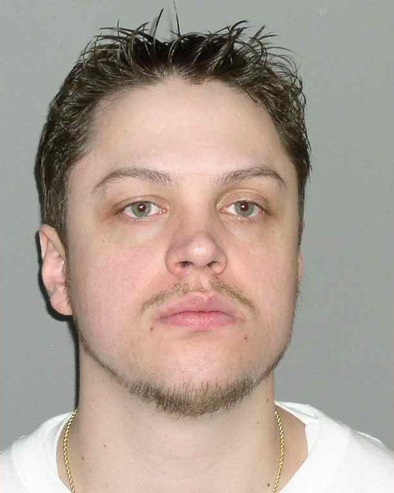
Joshua Alan Wade: The Alaska Serial Killer Who Admitted to Five Murders
Joshua Alan Wade was an American serial killer whose crimes terrorized Anchorage, Alaska, and the surrounding region over a period spanning more than a decade. Born on March 18, 1980, in Great Falls, Montana, Wade moved to Anchorage as a child and accumulated a lengthy history of juvenile detention, violence and criminal behavior. He ultimately admitted responsibility for killing five people between 1994 and 2007, although he was formally convicted for only two of the murders.
Wade’s victims included men and women, several of whom were living with mental illness or other vulnerabilities. His crimes were frequently opportunistic and involved robbery, abduction, severe physical violence and firearms. Two of his victims, Della Brown and Mindy Schloss, became the central figures in the prosecutions that eventually ensured Wade would never be released from prison.
Known and Admitted Victims
- John Michael Martin — May 11, 1994 — Anchorage, Alaska: Martin was 38 years old when he was shot and killed near a bicycle path along East Northern Lights Boulevard. He had reportedly been drinking coffee at the Village Inn restaurant before leaving on foot during the early morning hours. His body was discovered near the trail at approximately 3:00 a.m. Martin had schizophrenia and had no known prior relationship with Wade. Wade was only 14 years old at the time. He did not admit responsibility until 2014, and investigators stated that they believed his confession referred to Martin’s unsolved homicide.
- Henry Ongtowasruk — November 29, 1999 — Anchorage, Alaska: Ongtowasruk was 30 years old when he was found dead inside a room at the Alaska Budget Motel. Motel management discovered his body after checking the room. Ongtowasruk had been staying at the motel and was reportedly living with mental illness. Wade later claimed responsibility for killing a man in Anchorage in 1999, and authorities concluded that he was referring to Ongtowasruk. Wade was not prosecuted for the murder because his confession was made under an agreement with investigators and because authorities were still attempting to independently verify the details.
- Della Brown — September 2, 2000 — Anchorage, Alaska: Brown was a 33-year-old Alaska Native woman whose body was found inside an abandoned shed in Anchorage’s Spenard neighborhood. She had suffered devastating injuries after being struck repeatedly in the head with a large rock. Wade later admitted that he encountered Brown, attempted to rob her and killed her during the confrontation. He left her partially undressed body in the filthy, trash-filled structure and later took acquaintances to the shed to show them what he had done.
- Unidentified man — September 2, 2000 — Matanuska-Susitna Valley, Alaska: Wade claimed that he killed an unidentified man on the same night he murdered Della Brown. According to his account, the man accompanied him to the shed where Brown’s body had been left. Wade said he knocked the man unconscious, placed him inside the trunk of a vehicle and temporarily left the area. When he returned and heard the victim struggling inside the trunk, Wade drove him to an isolated location outside Anchorage. He claimed that he removed the man from the vehicle, beat and stomped him, stripped off his clothing and shot him twice in the head. The victim’s identity and the location of his remains have never been conclusively established.
- Mindy Schloss — August 3, 2007 — Anchorage and the Wasilla area, Alaska: Schloss was a 52-year-old nurse practitioner and Wade’s neighbor in Anchorage’s Sand Lake neighborhood. Wade entered her home, restrained her with plastic ties and forced her to surrender her bank card and personal identification number. He placed her in her own red Acura Integra and drove her north toward an isolated wooded area near Wasilla. Wade shot Schloss in the back of the head and attempted to burn her body. Her remains were discovered on September 13, 2007, more than a month after she disappeared.
The Murder of John Michael Martin
John Michael Martin’s killing remained unsolved for approximately 20 years. During the early morning of May 11, 1994, Martin left the Village Inn on East Northern Lights Boulevard and began walking away from the restaurant. His body was found beside a nearby bicycle trail shortly afterward. He had been fatally shot.
There was no apparent robbery motive, personal dispute or known connection between Martin and his killer. When Wade confessed in 2014, he claimed that he had committed his first murder in Anchorage in 1994. Investigators believed that the details he provided corresponded with Martin’s death. The admission was particularly disturbing because Wade would have been only 14 at the time, making the homicide one of the earliest known acts in his progression toward serial murder.
The Killing of Henry Ongtowasruk
Henry Ongtowasruk was found dead at the Alaska Budget Motel on November 29, 1999. He had reportedly been living at the motel for a short period when an employee entered his room and discovered him. The killing received limited public attention and remained unresolved for years.
Wade later told Anchorage detectives and FBI agents that he had killed a man in Anchorage in 1999. Authorities believed his victim was Ongtowasruk because the circumstances and time period matched the information Wade disclosed. Like Martin, Ongtowasruk reportedly struggled with mental illness and had no known relationship with Wade. Investigators continued evaluating Wade’s claim but did not publicly disclose all of the details he provided.
The Murder of Della Brown
Della Brown’s death was the crime that first placed Wade at the center of a murder prosecution. On September 2, 2000, Brown was found in an abandoned shed in the Spenard neighborhood. She had been subjected to extreme violence, and investigators concluded that a large rock had been used to crush her skull.
Witnesses told police that Wade had bragged about killing Brown and had taken people to the shed to see her body. Wade reportedly described the killing and behaved as though displaying the body would enhance his reputation among his associates. Police arrested him and charged him with murder, sexual assault, evidence tampering and witness tampering.
Despite the testimony against him, prosecutors faced serious evidentiary problems. The witnesses had criminal histories, had used drugs and sometimes gave inconsistent accounts. Wade’s defense portrayed him as a boastful liar who falsely claimed responsibility for violent acts in order to frighten or impress others. The defense argued that his disturbing statements were not proof that he had committed the murder.
In 2003, a jury acquitted Wade of murder and sexual assault. He was convicted only of witness tampering and received a sentence of approximately six and a half years. Because he had already spent considerable time in custody, he was eventually released under supervision. The verdict devastated Brown’s relatives and became an example of the difficulties involved in prosecuting crimes against vulnerable and marginalized victims.
The Second Murder on the Night Della Brown Died
Wade later claimed that Della Brown was not his only victim on September 2, 2000. He told investigators that another man accompanied him to the abandoned shed. Wade said he became concerned about the man’s knowledge of Brown’s murder and attacked him.
According to Wade, he rendered the man unconscious and locked him in a vehicle’s trunk. He then left for a period of time. After returning, he allegedly heard the man pounding on the trunk and calling for help. Wade drove to a remote location in the Matanuska-Susitna Valley, removed the victim and violently assaulted him. He claimed that he stomped on the man’s head and then shot him twice.
No body matching Wade’s description was definitively located, and Wade did not provide investigators with enough information to conclusively identify the victim. Authorities appealed to the public for information concerning any man who disappeared from the Anchorage area at approximately the same time. The identity of the alleged victim remains unknown.
The Abduction and Murder of Mindy Schloss
After completing his sentence and probation connected to the Brown investigation, Wade returned to Anchorage. By 2007, he was living next door to Mindy Schloss, a respected nurse practitioner who worked in Fairbanks and maintained a residence in Anchorage.
On August 3, 2007, Wade entered Schloss’s home and overpowered her. He restrained her, demanded her ATM card and forced her to reveal the PIN. Wade then forced Schloss into her own vehicle and drove away from Anchorage. He transported her to an isolated area near Wasilla, led her into the woods and shot her in the back of the head. He attempted to destroy evidence by burning her remains.
Schloss was reported missing when friends and coworkers could not contact her and she failed to appear as expected. Investigators quickly discovered that her vehicle was missing and that someone was using her bank card to withdraw money. Surveillance cameras captured a man conducting transactions at an ATM, and additional footage showed a similar man abandoning Schloss’s car near the Anchorage airport.
People familiar with Wade identified him as the person recorded by the cameras. Investigators also connected him with clothing seen in the footage. Evidence recovered during the investigation included information concerning Schloss’s PIN, images of Wade with a handgun and biological evidence associated with Schloss’s vehicle.
Manhunt and Arrest
As investigators focused on Wade, he attempted to avoid arrest. On September 2, 2007, police received information that he had appeared near the home of a woman he knew. Wade later entered another residence and held people inside at gunpoint.
A tense standoff followed. Police surrounded the residence and negotiated for several hours. Wade eventually surrendered after communicating with authorities and an attorney. At that time, Schloss’s body had not yet been recovered, but the financial records, surveillance images and forensic evidence already made Wade the primary suspect.
On September 13, 2007, searchers found Schloss’s partially burned remains in a wooded area near Wasilla, approximately 40 miles from Anchorage. The discovery transformed the missing-person investigation into a homicide case and strengthened the prosecution’s evidence against Wade.
State and Federal Prosecution
Wade faced charges in both state and federal court. Alaska did not authorize capital punishment, but federal prosecutors charged him with carjacking resulting in death, an offense that made him eligible for the federal death penalty. The threat of a death sentence created substantial pressure for Wade to accept a plea agreement.
In 2009, Wade pleaded guilty to federal charges related to Schloss’s abduction, carjacking and murder. As part of the agreement, he also admitted that he had murdered Della Brown in 2000, despite having previously been acquitted of that crime. Because the second prosecution arose under a separate jurisdiction and involved negotiated admissions, the agreement did not simply retry the original state case.
On February 17, 2010, an Alaska court sentenced Wade to 99 years in prison. A federal court imposed an additional consecutive life sentence without the possibility of parole. The combined sentences ensured that he would remain incarcerated for the rest of his life.
Confessions to Three Additional Murders
During Wade’s 2010 sentencing proceedings, a judge condemned him for murdering Brown and Schloss. Wade reacted by referring to men he had killed, suggesting that the two known female victims did not represent the full extent of his crimes.
In 2014, Wade contacted authorities and offered information about additional murders. He agreed to describe three killings in exchange for being transferred from Alaska’s prison system to a maximum-security federal facility outside the state.
Wade then claimed responsibility for the 1994 murder believed to be that of John Michael Martin, the 1999 murder believed to be that of Henry Ongtowasruk and the killing of the unidentified man on the same night Della Brown died. The FBI, Anchorage Police Department, Alaska Department of Law and federal prosecutors jointly announced the admissions on June 20, 2014.
Authorities emphasized that Wade’s statements were claims that still required investigation and corroboration. Nevertheless, the confessions were considered sufficiently detailed and credible for law enforcement to notify the families of Martin and Ongtowasruk that Wade had identified himself as their killer.
Victim Selection and Criminal Pattern
Wade did not follow one completely consistent method. His known and admitted crimes included shootings, blunt-force trauma, abduction, confinement, robbery and attempted destruction of evidence. Some attacks appeared random, while others were motivated by financial gain or Wade’s desire to eliminate witnesses.
Several victims were especially vulnerable. Martin and Ongtowasruk reportedly experienced serious mental illness. Brown struggled with addiction and was an Alaska Native woman living in circumstances that made her vulnerable to predatory violence. Schloss was targeted because she lived near Wade and possessed a vehicle and bank account he could exploit.
Wade’s crimes also demonstrated escalating efforts to conceal evidence. Brown’s body was abandoned in a shed, the unidentified man was allegedly taken to a remote area, and Schloss’s remains were burned and hidden outside Anchorage. He also used stolen financial information and abandoned Schloss’s vehicle in an attempt to distance himself from the crime.
Impact of the Della Brown Case
The failed initial prosecution for Brown’s murder remained one of the most controversial elements of Wade’s history. Witnesses had directly implicated him, but their backgrounds and inconsistencies allowed the defense to create reasonable doubt. Wade’s acquittal meant that he eventually returned to the community, where he killed Schloss.
Brown’s case became associated with broader concerns about violence against Alaska Native women and the way victims from marginalized communities were treated within the criminal justice system. Wade’s eventual confession confirmed what Brown’s family and many investigators had believed for years: he had killed her and escaped a murder conviction because the available evidence had not been sufficient to persuade the jury.
Imprisonment and Death
After his additional confessions, Wade was transferred out of Alaska. He was initially placed in a high-security federal prison in Terre Haute, Indiana, and was later held at the Indiana State Prison in Michigan City.
On June 14, 2024, correctional personnel found Wade unresponsive in his cell. Staff members attempted life-saving measures, but he was pronounced dead. He was 44 years old. His death ended any possibility that investigators could obtain further information directly from him about the unidentified victim or other unsolved crimes that might have been connected to him.
Legacy and Unanswered Questions
Joshua Alan Wade admitted to five murders, but the true number of his victims remains uncertain. Authorities continued examining unsolved Alaska homicides and disappearances for possible connections to him, particularly cases involving vulnerable people in and around Anchorage.
The greatest unresolved question concerns the unidentified man Wade claimed to have killed in September 2000. Without a name, body or confirmed crime scene, investigators were unable to provide a family with definitive answers. It also remains possible that Wade exaggerated portions of his account, although law enforcement considered his information credible enough to pursue extensive follow-up investigations.
Wade’s case illustrates how a violent offender can avoid accountability when witnesses are discredited, physical evidence is limited and victims come from populations that have historically received inadequate attention. His acquittal in Della Brown’s murder allowed him to return to society, and seven years later he abducted and murdered Mindy Schloss. His eventual state and federal sentences permanently removed him from the community, but they came only after five people had reportedly lost their lives.