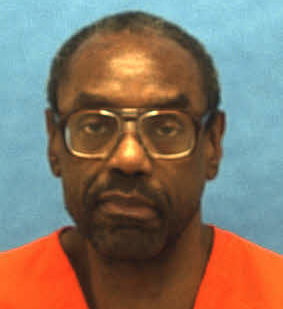
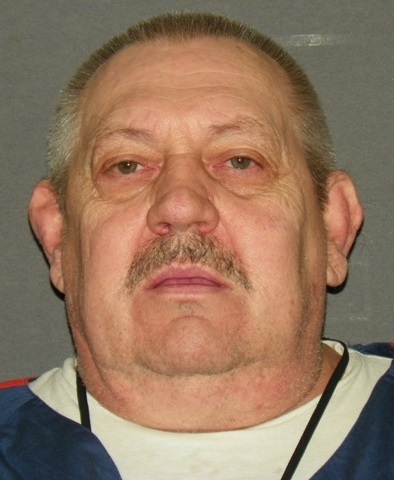
Robert Joseph Silveria Jr.: The Boxcar Killer
Background and Early Life
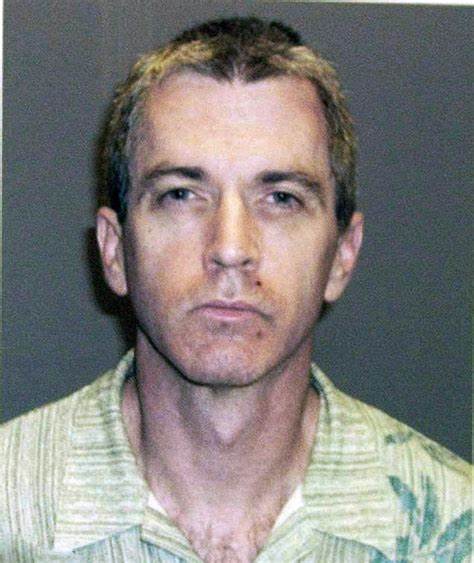
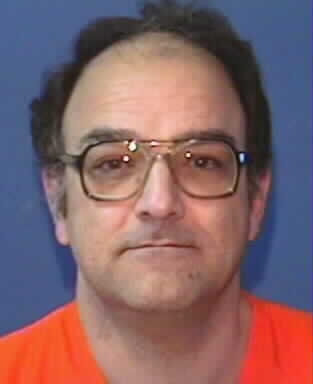
Robert Joseph Silveria Jr. was born on March 3, 1959, in Redwood City, California. He became known by the nicknames “The Boxcar Killer” and “Sidetrack” after investigators connected him to a series of murders committed along American freight-rail routes. His known and suspected crimes extended from the 1980s through his arrest in 1996, with cases examined in California, Oregon, Utah, Arizona, Kansas, Washington, Florida, Montana, and other states.
Silveria reportedly experienced behavioral and criminal problems from an early age. As an adult, he accumulated a history of burglary, theft, drug abuse, and other offenses. He eventually abandoned a conventional lifestyle and began traveling illegally aboard freight trains. This placed him within a loosely connected population of transient railroad riders who moved between rail yards, homeless camps, temporary shelters, and isolated areas throughout the country.
Silveria was associated with the Freight Train Riders of America, commonly abbreviated as the FTRA. The organization was described by investigators and journalists as a loose railroad gang whose members traveled on freight trains and were suspected of robberies, assaults, and killings. Silveria’s precise role within the group has sometimes been disputed, but his familiarity with railroad routes and transient encampments allowed him to move rapidly between jurisdictions while attracting little official attention.
Life Along the Railroad
Freight trains provided Silveria with transportation across enormous distances without the records created by airline tickets, automobile registrations, hotel stays, or credit-card purchases. He could leave one community and appear hundreds of miles away within days. Investigators later found it difficult to reconstruct his movements because he frequently used nicknames and aliases rather than his legal identity.
Many of the people Silveria encountered were homeless men, drifters, day laborers, and other freight-train riders. Some had limited contact with relatives and carried few official documents. When one of these individuals disappeared, it could take days or weeks before anyone noticed. Bodies found near railroad tracks were sometimes unidentified, and deaths investigated in one state were not automatically compared with similar cases elsewhere.
Silveria exploited these conditions. He lived among the same vulnerable population he targeted, learned where individuals slept, and waited until victims were isolated or unable to defend themselves. He reportedly attacked during arguments in some cases, while in others he approached men who were asleep, intoxicated, or resting inside tents, makeshift shelters, sleeping bags, or freight cars.
Methods and Motives
Silveria most often killed through blunt-force trauma to the head. He used objects that could be found or carried around railroad property, including pipes, rocks, heavy pieces of wood, and modified axe handles sometimes called “goon sticks.” Several victims were struck repeatedly with such force that they suffered devastating injuries to the skull and brain. Other victims were stabbed or subjected to a combination of beating and stabbing.
Robbery was a recurring element of the murders. Silveria stole money, clothing, backpacks, identification documents, food stamps, credit cards, and other property. The possessions of homeless victims might have appeared financially insignificant, but they supplied Silveria with food, identification, government benefits, and goods that could be exchanged while he continued traveling.
The stolen property later became crucial evidence. When Silveria was arrested, investigators discovered identification cards and other belongings connected to several murdered men. Those discoveries allowed detectives to link deaths that had initially been investigated as unrelated local crimes. Silveria also possessed a firearm reportedly stolen from one of his victims.
Known, Confessed, and Linked Victims
- Anthony Garcia, 62 — April 9, 1989 — West Sacramento, California: Garcia was found near the railroad yards in West Sacramento. He had suffered fatal blunt-force injuries to the head. Garcia was a transient rail rider who reportedly traveled in search of temporary employment. His death was later included among the killings connected to Silveria.
- Darren Royal Miller, 19 — July 8, 1992 — near Thompson Springs, Utah: Miller was traveling with two friends when they stopped near a pond outside Thompson Springs. He was found dead in his sleeping bag the following morning with severe head injuries. Silveria was linked to the killing after his arrest, although he was not separately prosecuted for Miller’s murder.
- Willie James Clark, 54 — April 28, 1994 — Tallahassee, Florida: Clark was a homeless man who occasionally worked as a Salvation Army bell ringer. He was found near a railroad corridor after suffering a fatal blow to the head. His money and belongings had been taken. Silveria eventually pleaded guilty to first-degree murder for killing Clark.
- Michael A. Garfinkle, 20 — August 2, 1994 — Emeryville, California: Garfinkle was found bludgeoned to death near railroad tracks in Emeryville. Originally from Tarzana, California, he had recently graduated from Pierce College and planned to ride freight trains with a friend to Santa Cruz. Investigators said Silveria later revealed details about the killing that indicated firsthand knowledge of the crime.
- Roger Lee Bowman, 38 — April 21, 1995 — Salt Lake City, Utah: Bowman was last seen walking his dog along railroad tracks. He was beaten and stabbed, and his dog was also attacked. Investigators had already identified a railroad traveler using the alias Brad Foster as a possible suspect before Silveria confessed to killing Bowman.
- James E. McLean, 50 — July 23, 1995 — Albany, Oregon: McLean lived in a plywood shack at a homeless encampment near Albany’s railroad tracks and waterfront. He was found stabbed to death inside the shelter. Silveria said he encountered McLean near the tracks, killed him, and stole his money.
- Charles Randall Boyd, 46 — killed July 27, 1995, and discovered July 28, 1995 — Kanopolis State Park, Kansas: Boyd was attacked while sleeping inside a zipped sleeping bag in a tent at a campground near Kanopolis Lake. He had met Silveria in El Paso, Texas, where Boyd had been helping construct a bunkhouse for a youth ranch. The two later traveled together to Kansas. Boyd was bludgeoned to death, and his credit cards were eventually found among property associated with Silveria. Silveria pleaded guilty to Boyd’s first-degree murder.
- Paul Wayne Matthews, 43 — October 15, 1995 — outside Whitefish, Montana: Matthews was found dead at a homeless encampment outside Whitefish. Following his arrest, Silveria confessed to killing him. Matthews’s identification card and food-stamp documents were found among the stolen property in Silveria’s possession.
- William Avis Pettit Jr., 39 — believed killed December 1, 1995, in Salem, Oregon; discovered December 3, 1995, in Millersburg, Oregon: Pettit was bludgeoned to death, and his body was placed inside a freight car. The railcar traveled north before the body was discovered in Millersburg. Silveria was later found with Pettit’s backpack, Social Security card, birth certificate, food stamps, hair beads, and other belongings. He pleaded guilty to Pettit’s aggravated murder.
- Michael Andrew Clites, 24 — December 5, 1995 — Portland, Oregon: Clites was found bludgeoned to death in Portland. Witness information helped investigators identify Silveria, who was known among railroad riders as Sidetrack. Silveria also possessed identification and personal property associated with Clites. He pleaded guilty to Clites’s aggravated murder.
Other Suspected Murders
Silveria claimed responsibility for many more murders than the ten named victims commonly connected to him. Investigators examined suspicious deaths along railroad routes in several western and southern states. Some reports referred to an unidentified drug dealer killed in Arizona during October 1995, while other possible victims were believed to have been attacked in California, Oregon, Utah, Arizona, Kansas, Washington, and additional locations.
Not every confession could be verified. In certain cases, Silveria gave only a general description of a victim or location. Some bodies had never been identified, while other remains may not have been discovered. Records from transient camps were limited, and witnesses frequently knew one another only by railroad nicknames. These circumstances made it extremely difficult to determine whether every killing Silveria described had actually occurred.
Published estimates of his victim count vary. He was linked to at least nine or ten named victims, confessed to approximately 28 killings, and was at times suspected of an even larger number of deaths. Investigators treated some of his statements as credible because he disclosed information that had not been publicly released, but other claims lacked enough evidence for prosecution.
The Oregon Breakthrough
The investigation that ultimately exposed Silveria’s wider pattern of violence developed from the Oregon murders of William Pettit and Michael Clites. Pettit’s body had traveled inside a freight car before its discovery, forcing investigators to determine where he had actually been killed. Evidence suggested that his death occurred in Salem before the railcar carried him to Millersburg.
Only days later, Clites was found murdered in Portland. Witnesses helped authorities identify a man known as Sidetrack who had recently been seen with him. Detectives compared descriptions, aliases, railroad movements, and stolen property. They eventually determined that Sidetrack was Robert Joseph Silveria Jr.
Investigators in Salem began sharing information with police departments, prosecutors, and railroad authorities throughout the country. Similar deaths appeared in records from multiple states: transient men found bludgeoned or stabbed near railroad property, personal belongings missing, and a suspect who disappeared aboard freight trains. What had looked like isolated local homicides began to form a recognizable interstate series.
Arrest in California
Silveria was arrested on March 2, 1996, in the railroad yards at Roseville, California, northeast of Sacramento. A railroad police officer recognized him as a wanted suspect and took him into custody without a major confrontation. The arrest ended a period of approximately 15 years during which Silveria had traveled throughout the country and allegedly committed murders along numerous rail routes.
At the time of his arrest, Silveria possessed items belonging to several dead men. Pettit’s backpack contained Pettit’s official documents and personal property, as well as Matthews’s identification and food-stamp records and Boyd’s credit cards. The combined collection of belongings provided investigators with direct links to victims in Oregon, Montana, and Kansas.
The recovery of this property was particularly important because Silveria’s constant travel made conventional physical evidence difficult to preserve. Railroad camps were temporary, crime scenes were exposed to weather, and freight cars could move across jurisdictional boundaries before a body was discovered. The stolen documents created a tangible record of his encounters with the victims.
Confessions and Interstate Investigation
After his arrest, Silveria was questioned by investigators from several states. He described numerous killings and eventually confessed to approximately 28 murders. His statements included accounts of attacks, weapons, victims, locations, and property he had stolen afterward.
Some confessions contained specific details known only to law-enforcement officials or someone present during the crime. These statements helped resolve previously unexplained deaths and provided families with information about what had happened. Silveria’s confessions were nevertheless inconsistent at times, and he later changed or withdrew parts of his accounts.
Police agencies were required to compare his claims with unidentified remains, missing-person reports, homicide files, and records from railroad communities. In many instances, too much time had passed to recover physical evidence. Some jurisdictions could establish that Silveria had been present in the region but could not prove beyond a reasonable doubt that he had committed a particular murder.
Oregon Convictions
On January 30, 1998, Silveria pleaded guilty in Oregon to the aggravated murders of William Avis Pettit Jr. and Michael Andrew Clites. The plea agreement allowed him to avoid a possible death sentence. He received two consecutive life sentences, meaning the punishment for one murder would be followed by the sentence imposed for the other.
The Oregon convictions were supported by witness testimony, Silveria’s statements, and the victims’ belongings found in his possession. Pettit’s official identification records and personal effects created a particularly strong connection between Silveria and the victim. Evidence linking him to Clites included personal property and accounts from people who had seen the two men together.
Although Silveria confessed to killing James McLean in Albany, his principal Oregon convictions were for the murders of Pettit and Clites. The plea arrangement concentrated on the cases prosecutors believed could be proven most effectively while still ensuring that Silveria would remain imprisoned.
Kansas and Florida Convictions
After the Oregon proceedings, Silveria faced additional cases in Kansas and Florida. In Kansas, he pleaded guilty to first-degree murder for killing Charles Randall Boyd at Kanopolis State Park. Boyd’s credit cards had been recovered among Silveria’s possessions, and Silveria knew the circumstances under which Boyd had been attacked while asleep in the campground.
In Florida, Silveria pleaded guilty to first-degree murder for the April 28, 1994, killing of Willie James Clark in Tallahassee. Clark had been robbed and struck fatally in the head. The Florida conviction added another life sentence to those already imposed in Oregon and Kansas.
Silveria was therefore convicted of four murders: William Pettit and Michael Clites in Oregon, Charles Boyd in Kansas, and Willie Clark in Florida. The number of convictions was much smaller than the number of killings he confessed to committing, but the multiple life sentences ensured that he would remain incarcerated.
Imprisonment
Silveria has been held at the Wyoming Medium Correctional Institution in Torrington, Wyoming. Reports have stated that he worked as a head cook while incarcerated. His punishment is commonly described as double or multiple life sentences because of the consecutive Oregon terms and the additional sentences imposed in Kansas and Florida.
His transfer and placement within the correctional system reflected the fact that several states had legal claims against him. Each jurisdiction had to coordinate extradition, plea negotiations, court proceedings, and sentencing while avoiding unnecessary duplication and ensuring that the strongest murder cases reached a legal resolution.
The Uncertain Final Victim Count
The full number of Silveria’s victims may never be established. Authorities have connected him to at least ten named victims, but he confessed to approximately 28 murders and was investigated in connection with additional deaths. Estimates ranging from nine victims to more than 30 have appeared in accounts of the case.
The uncertainty was created partly by the environment in which the crimes occurred. Many victims lived outside conventional systems, traveled under nicknames, and maintained limited contact with family members. Their bodies could be carried to different cities aboard freight trains, discovered far from the location of death, or remain unidentified for years.
Silveria’s own credibility also complicated the investigation. A serial offender may exaggerate, minimize, confuse, or deliberately falsify details. Detectives therefore required corroborating evidence before treating a confession as solved. Possession of a victim’s property, knowledge of an unreleased crime-scene detail, witness testimony, and proof of Silveria’s presence in a particular location were among the factors used to evaluate his statements.
Impact and Legacy
Robert Joseph Silveria’s crimes exposed the extreme vulnerability of homeless people and transient railroad riders. Many of his victims lived beyond the attention of institutions that might quickly notice a disappearance. Their deaths could initially be dismissed as isolated violence among drifters rather than recognized as the work of a mobile serial killer.
The case demonstrated the importance of communication between police departments in different states. Silveria relied on jurisdictional separation, but investigators eventually defeated that advantage by sharing aliases, descriptions, crime patterns, victim information, and lists of stolen property. The cooperation transformed disconnected homicide files into a coordinated interstate investigation.
Silveria also brought national attention to criminal activity associated with certain members of the Freight Train Riders of America. Although not every railroad rider or person associated with the FTRA was involved in violence, investigators believed the culture of secrecy, nicknames, constant movement, and distrust of authorities made it easier for violent offenders to avoid detection.
The confirmed and suspected victims were more than anonymous transients found beside railroad tracks. They were men with names, families, personal histories, and individual reasons for traveling. The convictions established Silveria’s responsibility for four murders, while his confessions and links to additional victims revealed a much broader pattern of violence that may never be completely documented.