Gerard John Schaefer: The “Killer Cop” of Florida
Background and Early Life
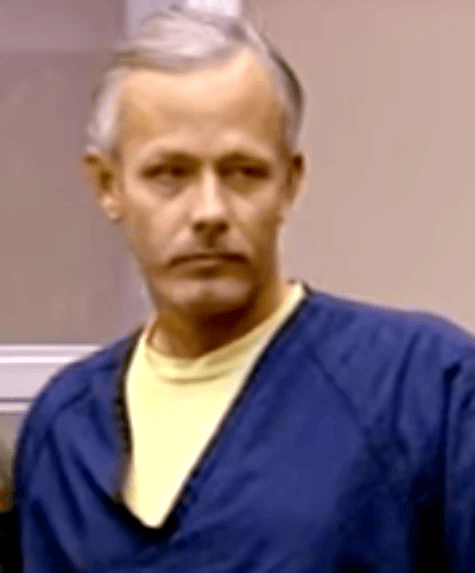
Gerard John Schaefer Jr. was born on March 26, 1946, in Neenah, Wisconsin. He later lived in Georgia and Florida, where he developed a public image that sharply contrasted with the violent behavior investigators eventually attributed to him. As a young man, Schaefer briefly considered entering the priesthood and worked as a teacher before pursuing a career in law enforcement. Behind this outwardly respectable appearance, he reportedly developed increasingly disturbing fantasies involving the abduction, restraint, humiliation and murder of young women.
Schaefer attempted to join several law-enforcement agencies. The Broward County Sheriff’s Office rejected him after psychological testing, but he was hired by the Wilton Manors Police Department in September 1969. He was dismissed approximately six months later, reportedly because supervisors believed he showed poor judgment. Despite this setback, Schaefer obtained another law-enforcement position in 1971 when he became a deputy with the Martin County Sheriff’s Office.
His position as a uniformed deputy gave him authority, mobility and an appearance of trustworthiness. Investigators later believed he used those advantages to approach young women, particularly hitchhikers, without immediately alarming them. Schaefer became known in the press as the “Killer Cop,” the “Hangman” and the “Butcher of Blind Creek.” He was ultimately convicted of two murders, although authorities investigated him in connection with numerous additional disappearances and killings.
The Abduction of Nancy Trotter and Paula Wells
The incident that exposed Schaefer occurred in July 1972. While working as a Martin County deputy, he encountered 18-year-old Nancy Ellen Trotter and 17-year-old Paula Sue Wells, two young women who were hitchhiking through Florida. Schaefer initially presented himself as a helpful police officer and warned them about the dangers of accepting rides from strangers. He then offered to transport them to Jensen Beach the following day.
On July 22, 1972, Schaefer met the young women while off duty and dressed in civilian clothing. He claimed that he was performing undercover work and persuaded them to enter his personal vehicle. Instead of taking them directly to their intended destination, he drove them to an isolated area near Hutchinson Island and Blind Creek.
Schaefer restrained Trotter and Wells near trees and placed ropes or nooses around their necks. He threatened them and told them that he intended to teach them a lesson about hitchhiking. He temporarily left the area after receiving a police radio call or realizing that he needed to report for duty. During his absence, the two women managed to escape their restraints and reach safety.
Trotter and Wells immediately reported the attack. Schaefer was arrested and charged with aggravated assault and false imprisonment. He attempted to portray the incident as an unauthorized effort to frighten the women into abandoning hitchhiking. His explanation did not prevent his dismissal from the sheriff’s office, but he was released on bond while the criminal case was pending.
The Murders of Susan Place and Georgia Jessup
While free on bond, Schaefer encountered 17-year-old Susan Carol Place and 16-year-old Georgia Marie Jessup. The teenagers knew him through an adult education center in Fort Lauderdale. Schaefer introduced himself as “Jerry Shepherd” and reportedly claimed that he was from Colorado and planned to travel to Mexico. He gained the girls’ confidence by appearing interested in their lives and personal interests.
On September 27, 1972, Place and Jessup left with Schaefer. Before departing, Schaefer visited the Place family home, where Susan’s mother saw and spoke with him. He represented himself as a friend who intended to accompany the girls to the beach. Susan Place and Georgia Jessup were never seen alive by their families again.
The precise time and manner of their deaths could not be established with certainty because their remains were not found until several months later. Evidence presented by prosecutors indicated that Schaefer took the teenagers to an isolated wooded area near Oak Hammock Park in Port St. Lucie. There, investigators believed he restrained, killed and mutilated them before placing their remains in or around a shallow grave.
On April 1, 1973, a father and son looking for discarded aluminum cans discovered human remains in the wooded area. The bodies had been disturbed by decomposition and wildlife. Investigators found evidence that at least one victim had been tied to a nearby tree. Dental records and evidence of previously healed injuries were used to identify the victims as Susan Place and Georgia Jessup on April 5, 1973.
Confirmed Victims
- Susan Carol Place, 17: Last seen alive on September 27, 1972, after leaving her Fort Lauderdale-area home with Gerard Schaefer and Georgia Jessup. She was believed to have been killed shortly after her disappearance in a wooded area near Oak Hammock Park in Port St. Lucie, Florida. Her remains were discovered on April 1, 1973, and identified on April 5. The exact date of death could not be medically established.
- Georgia Marie Jessup, 16: Last seen alive on September 27, 1972, when she accompanied Susan Place and Schaefer. Investigators believed she was killed in the same wooded Port St. Lucie area as Place. Her remains were found on April 1, 1973, and identified on April 5. Because of decomposition, authorities could not determine an exact date of death.
The Search of Schaefer’s Property
After Place and Jessup were identified, Susan’s mother recognized Schaefer as the man who had left with the teenagers. Police searched Schaefer’s residence, vehicle and a locked room at his mother’s home. The discoveries greatly expanded the investigation and caused authorities to examine whether he had been responsible for other unresolved murders and disappearances.
Investigators recovered women’s jewelry, clothing, photographs, identification documents, personal possessions and human teeth. Several objects were reportedly connected to missing or murdered young women. Police also discovered hundreds of pages of stories and illustrations written by Schaefer. These writings described fictionalized abductions, restraints, hangings, mutilations and other forms of violence against women.
Prosecutors argued that the writings revealed Schaefer’s fantasies and closely resembled the circumstances surrounding the victims. His defense maintained that the stories were fiction and did not prove that he had committed additional crimes. Investigators nevertheless considered the collection important because some stories contained details resembling actual unsolved cases.
Suspected and Alleged Victims
Schaefer was never convicted of killing anyone other than Place and Jessup. Several additional victims were linked to him through recovered possessions, geographical proximity, personal contact or similarities in the circumstances of their disappearances. In many cases, an exact date of death was never established. The dates below therefore identify verified disappearances, discoveries or estimated periods rather than presenting uncertain dates as confirmed death dates.
- Leigh Hainline, 13: Disappeared from Fort Lauderdale, Florida, on October 2, 1966. Her body has never been recovered, and her date of death is unknown. Photographs or personal items reportedly associated with her were found among Schaefer’s possessions, causing investigators to consider him a possible suspect.
- Mary Alice Briscolina, 14: Disappeared with Elsie Farmer from Broward County, Florida, on October 23, 1972. Their skeletal remains were discovered near Indiantown in January 1973. The condition of the remains prevented authorities from establishing exact dates or causes of death. Jewelry connected to the girls was reportedly recovered during the Schaefer investigation.
- Elsie Lina Farmer, 13: Disappeared with Mary Briscolina on October 23, 1972. Her remains were found near Indiantown, Florida, in January 1973. Her exact date and cause of death were not determined. Investigators examined Schaefer because possessions associated with the girls were reportedly found among his belongings.
- Belinda Hutchens, 22: Last seen on January 4, 1972, leaving or entering a vehicle near her Fort Lauderdale-area residence. Her body has never been found, and her death has not been conclusively established. Hutchens had reportedly known or dated Schaefer, and an address book belonging to her was recovered from his property.
- Debora Sue Lowe, 13: Disappeared while walking to Rickards Middle School in Fort Lauderdale on February 29, 1972. Her schoolbooks were later found in a trash container near her home. Her body has never been located, and her date of death remains unknown. Schaefer had worked with her father and had previously visited the Lowe family home.
- Bonnie Taylor, 20: Disappeared from the Wilton Manors area on March 19, 1972. Schaefer had reportedly stopped her for a traffic violation before she vanished. Her remains have never been conclusively identified, and her date of death is unknown.
- Carmen Marie Hallock, 22: Disappeared from Broward County in December 1969. Her body was later found in a canal in January 1970. Authorities investigated whether Schaefer was connected to Hallock because of personal property and writings associated with women named Carmen, but he was never charged with her death.
- Gloria Jean Smit, 20: Disappeared from Broward County in January 1970. Her body was found in a canal several days later. Investigators considered a possible connection to Schaefer, although the evidence was insufficient to bring charges.
Trial and Conviction
Schaefer was formally charged on May 18, 1973, with the first-degree murders of Susan Place and Georgia Jessup. His trial began in St. Lucie County on September 17, 1973. Prosecutors relied on the testimony of Susan Place’s mother, evidence found in Schaefer’s possession and the similarities between the murders and his earlier attack on Nancy Trotter and Paula Wells.
The physical evidence included personal belongings identified as having belonged to Place and Jessup. Investigators had recovered jewelry, identification material and other objects connecting Schaefer to the teenagers. The prosecution argued that these possessions could not reasonably have come into his hands unless he had been involved in their deaths.
On October 4, 1973, Schaefer was convicted of two counts of first-degree murder. He received two concurrent life sentences. Florida’s death penalty was unavailable for the crimes because of the legal status of capital punishment at the time the murders were committed.
Behavior in Prison and Claims About Other Murders
Schaefer spent the remainder of his life denying that he murdered Place and Jessup. He claimed that the evidence had been misunderstood or planted and insisted that his violent writings were fantasies rather than confessions. At other times, he encouraged speculation about his possible involvement in numerous murders and made unverified statements suggesting that he knew more than he publicly admitted.
Estimates of Schaefer’s possible victim count varied widely. Some investigators examined approximately two dozen cases, while Schaefer himself occasionally made extravagant claims involving scores of victims. Many of those claims were unsupported, and some people once listed as possible victims were later found alive or shown to have died under unrelated circumstances. For that reason, only the murders of Susan Place and Georgia Jessup are considered legally confirmed.
During his imprisonment, Schaefer corresponded with writers and true-crime researchers. Collections of his violent stories were eventually published. These writings contributed to his notoriety but also created difficulty in separating fantasy, exaggeration and possible autobiographical material.
Death in Prison
Gerard Schaefer died on December 3, 1995, at Florida State Prison. He was found stabbed in his cell after a confrontation with fellow inmate Vincent Faustino Rivera. Schaefer suffered numerous wounds to his head, face, neck and body, including a fatal wound to his throat.
Rivera was convicted of Schaefer’s murder and received an additional prison sentence. Schaefer’s death ended any realistic possibility that he might provide reliable information about the unidentified women whose belongings had been recovered or about the unresolved cases investigators had associated with him.
Legacy of the Investigation
Gerard Schaefer remains one of the most disturbing examples of a violent offender using a law-enforcement position to gain trust and control. The escape of Nancy Trotter and Paula Wells exposed his methods, but his release on bond allowed him to remain free when Susan Place and Georgia Jessup disappeared. Their murders demonstrated the consequences of his ability to appear respectable while concealing violent intentions.
The evidence discovered in Schaefer’s home suggested a far broader pattern than the two murders for which he was convicted. However, missing bodies, deteriorated remains, uncertain death dates and the limited forensic technology of the period prevented prosecutors from proving additional cases beyond a reasonable doubt.
Susan Place and Georgia Jessup remain Schaefer’s only confirmed murder victims. The names of the other missing and murdered young women associated with him must be treated carefully because suspicion is not the same as proof. Schaefer’s full victim count may never be known, leaving investigators and victims’ families with unanswered questions long after his conviction and violent death in prison.