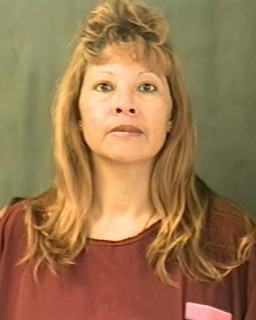
Winona Ola Freeman: The Crimes of the Woman Known as the “Cat Woman”
Winona Ola Freeman, more commonly identified in historical records as Winnie Ola Freeman, Winona Green, or Winnie Ola Spriggs, was an American murderer whose violent history stretched across several decades and three states. She was born Winnie Ola Spriggs on October 21, 1900, in Blue Mountain, Arkansas. Modern accounts frequently describe her as a serial killer because she was connected to four shooting deaths between 1924 and 1953. The historical record is more complicated than that label suggests: Freeman was convicted of two murders, confessed to a third, and was formally accused but never convicted in connection with a fourth.
The 1924 Murder of J.R. Green
Freeman married Leroy P. Green in Oklahoma City in 1922 and became part of the Green family. The first known killing connected to her occurred in Little Rock, Arkansas, during the early morning hours of August 17, 1924. Her father-in-law, J.R. Green, was a railroad employee who had been working at a Little Rock rail yard. Shortly after midnight, he left work and began making his way home. He was shot and killed before reaching his destination.
The killing initially offered investigators few obvious answers. Freeman later became a central suspect, however, particularly after another member of the same family disappeared. When questioned, she eventually admitted responsibility for J.R. Green's death. Contemporary accounts described financial disagreements within the family, although reports differed over the precise nature of those disputes. What became far more significant was Freeman's own confession and the subsequent murder case brought against her.
A jury found Freeman guilty of murdering J.R. Green on January 19, 1925. She was formally sentenced later that month to life imprisonment. The conviction established beyond the criminal standard of proof that Freeman had deliberately killed her father-in-law.
The Murder of Lena Green
Freeman also confessed to killing her mother-in-law, Lena Green. The murder occurred in August 1924, after the death of J.R. Green. Historical records do not establish a sufficiently reliable exact day of death for Lena, so only the verified month and year should be stated.
According to Freeman's confession, she persuaded Lena to travel with her from Arkansas into Oklahoma. Accounts of the case state that Freeman used a story involving property or oil interests to encourage the trip. Once they reached a secluded area near Fisher, Oklahoma, Freeman shot Lena and concealed her body in a wooded location.
Lena's unexplained disappearance increased suspicion surrounding the Green family. After prolonged questioning in October 1924, Freeman confessed to killing both of her in-laws. She provided investigators with information about the location of Lena's remains, and authorities subsequently recovered the body. Newspapers at the time treated the discovery as confirmation of a remarkable double-murder confession. Some investigators reportedly wondered whether Freeman had received assistance, but she maintained responsibility for the killings herself.
Freeman was also reported to have discussed or considered killing her husband, Leroy Green, during this period. He survived, and the allegation never became another homicide case. Leroy later divorced her following her murder conviction.
Prison, Furloughs and Financial Crimes
Freeman's life sentence did not result in uninterrupted confinement. She received releases and furloughs at different points and repeatedly came to the attention of authorities for financial offenses. She was paroled or furloughed in 1931 but soon returned to custody after becoming involved in check-related crime. In November 1935, an indefinite furlough was revoked after she was arrested in connection with an alleged forged check.
Another furlough began on April 26, 1939, after prison officials reported that she suffered from health problems requiring treatment unavailable in the penitentiary. The furlough was extended in 1940. By January 1948, however, Arkansas authorities ordered her returned to prison after an arrest in Muskogee, Oklahoma, involving accusations that she had issued or cashed fictitious checks. The recurring combination of deception, forged financial documents and access to other people's money became especially important when investigators examined her later murder cases.
The 1946 Death of Robert Sheldon Wilkinson
Robert Sheldon Wilkinson, a 33-year-old war veteran, died on August 27, 1946, in the Grand Lake area near Miami, Oklahoma. His death was unmistakably suspicious. Wilkinson had been shot, and his body was found in Grand Lake after being weighted down in an apparent effort to prevent its discovery.
Freeman was later linked to Wilkinson's death, but this case must be distinguished from the murders for which she was convicted. Oklahoma authorities did not establish her guilt in court. Years after Wilkinson's death, investigators learned of Freeman's criminal history and her later prosecution in California. Officials came to believe that financial circumstances surrounding Wilkinson were consistent with the pattern they associated with Freeman.
In 1954, while Freeman was facing trial for another killing in California, Oklahoma authorities pursued a murder accusation connected to Wilkinson. Her husband at the time also came under investigation. The Oklahoma case relied heavily on circumstantial evidence rather than a confession or a completed murder prosecution. The murder charge relating to Wilkinson was ultimately dropped in April 1954. For that reason, Wilkinson is frequently listed as a Freeman victim in modern serial-killer summaries, but it is more accurate to describe her as a suspect who was accused of involvement in his killing rather than as his legally proven murderer.
The Murder of Harold Jonassen
The strongest later case against Freeman involved Harold Jonassen, a 78-year-old man living in the Salinas, California, area. By 1953, Freeman was married again and was managing apartments near Salinas. She became acquainted with Jonassen and gained his confidence. Investigators later determined that she had forged checks bearing his name, giving prosecutors a financial motive for what followed.
Jonassen was shot to death on November 25, 1953. Freeman took him to an isolated area, and his body was concealed in brush after the shooting. When Jonassen disappeared, investigators began looking into his finances and the people who had recently been associated with him. Their investigation brought Freeman's history of forged checks and murder to the surface.
During questioning, Freeman eventually admitted that she had shot Jonassen and led officers to his concealed body approximately nine days after his death. Her defense did not simply deny that she fired the gun. Instead, Freeman claimed the shooting had been accidental. She maintained that she and Jonassen had been engaged in target shooting with a .22-caliber firearm and that the fatal shot was unintended. She said fear of being returned to prison caused her to hide the body rather than report the death.
Prosecutors rejected that explanation. They argued that the killing was deliberate and connected it to forged checks and Freeman's efforts to gain access to Jonassen's money. A California jury agreed with the prosecution and convicted her of murder in March 1954. She received another life sentence. The judge made clear that he regarded Freeman as a continuing danger and believed she was fortunate not to have received a death sentence.
Known and Suspected Victims
- J.R. Green — August 17, 1924 — Little Rock, Arkansas: Freeman's father-in-law and a railroad employee. He was shot after leaving the rail yard shortly after midnight. Freeman confessed and was convicted of his murder in January 1925.
- Lena Green — August 1924 — near Fisher, Oklahoma: Freeman's mother-in-law. Freeman admitted taking Lena into Oklahoma, shooting her in a secluded area and concealing her remains. Authorities recovered the body after Freeman provided information about its location. Available historical records verify August 1924 but do not provide a sufficiently certain exact day of death.
- Robert Sheldon Wilkinson — August 27, 1946 — Grand Lake near Miami, Oklahoma: A 33-year-old war veteran who was shot and whose body was found weighted down in the lake. Freeman was later accused in connection with the killing, but the case was based on circumstantial evidence and the murder charge was eventually dropped. She was never convicted of Wilkinson's death.
- Harold Jonassen — November 25, 1953 — Salinas area, California: A 78-year-old man whose trust Freeman had gained. She had forged checks using his name. Jonassen was shot and his body was hidden in brush. Freeman admitted firing the fatal shot but claimed it was accidental. A jury rejected her account and convicted her of murder in March 1954.
Death and Criminal Legacy
Freeman's criminal history was unusually long. The first murders associated with her occurred when she was in her early twenties, yet nearly three decades later she was again convicted of killing a man in circumstances involving money and deception. Her record also contained repeated check and forgery offenses, periods of imprisonment, furloughs and returns to custody.
The nickname “Cat Woman” became attached to Freeman during the publicity surrounding the Jonassen trial after reporters learned that she kept numerous cats. The colorful nickname sometimes overshadowed the more important facts of the case: two murder convictions separated by almost thirty years, a confession to another killing, and an unresolved Oklahoma homicide in which she became a suspect.
Freeman eventually returned to Arkansas. She died on October 30, 1974, reportedly in a nursing home. Her case remains notable because of the extraordinary length of time between her proven murders and because the surviving record contains different levels of evidence for the four deaths traditionally attributed to her. J.R. Green and Harold Jonassen were the subjects of murder convictions; Freeman confessed to killing Lena Green; and Robert Sheldon Wilkinson's death remained an accusation that never produced a conviction. That distinction is essential when describing the crimes of the woman remembered as Winona Green, Winnie Ola Freeman, and the “Cat Woman.”