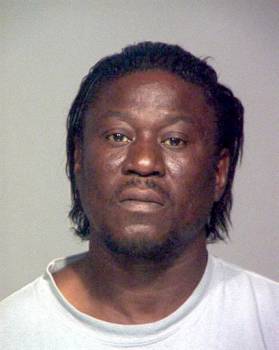
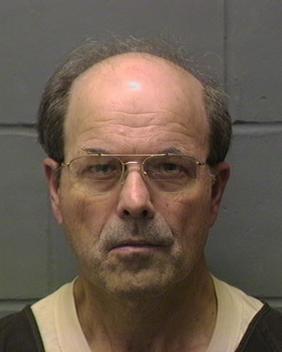
Walter Earl Ellis: The Milwaukee North Side Strangler
Overview
Walter Earl Ellis was an American serial killer whose crimes terrorized Milwaukee, Wisconsin, across a period of more than two decades. Known in the media as the "Milwaukee North Side Strangler" or "North Side Strangler," Ellis was convicted of murdering seven women between 1986 and 2007. DNA evidence also connected him to additional homicide investigations, making the complete extent of his violence difficult to determine with certainty.
Ellis primarily targeted Black women living in economically troubled neighborhoods on Milwaukee's north side. Several of the women were involved in street-level sex work or struggled with drug addiction, circumstances that investigators later acknowledged made the murders more difficult to solve and contributed to the cases remaining disconnected for years. The victims were often strangled and left in vacant buildings, secluded spaces, or locations only a short distance from neighborhoods where Ellis lived or had family connections.
Early Life and Criminal History
Walter Earl Ellis was born on June 24, 1960, in Holmes County, Mississippi. His family moved to Milwaukee while he was young, and Ellis grew up on the city's north side. His encounters with law enforcement began during his youth and continued throughout most of his adult life. By his late teens and early twenties, he had accumulated arrests and convictions involving burglary, drugs, theft, and other offenses.
Ellis repeatedly entered and left correctional institutions during the years in which the murders occurred. He was also accused on several occasions of serious violence against women. Court records described incidents in which girlfriends said Ellis assaulted, threatened, or choked them. In one later case, he was convicted after violently attacking a girlfriend and received a five-year prison sentence.
These periods of incarceration help explain some of the lengthy gaps between his known murders. Ellis could disappear from the homicide timeline for years, only for another woman to be found murdered after he was once again living in the community.
The First Known Murders
The first murders for which Ellis was ultimately convicted occurred on consecutive days in October 1986. Deborah L. Harris, 31, was found dead on October 10. Her body had been placed in the Menomonee River. The following day, 19-year-old Tanya L. Miller was found between a house and garage in Milwaukee. Both women had been strangled.
The close timing and similarities between the deaths caused investigators to consider whether the murders might be connected. However, forensic DNA technology was still in its early stages, and police did not have the scientific tools that would eventually identify Ellis.
Irene Smith and the 1992 Murder
On November 28, 1992, 25-year-old Irene Smith was found dead in the 3000 block of North 7th Street in Milwaukee. She had been strangled and also suffered a stab wound. The location was close to an area associated with Ellis and his family.
Smith's murder became particularly disturbing in retrospect because Ellis was supposed to be under correctional supervision at the time. He had been placed in a Milwaukee halfway house following a federal drug conviction. Investigators later learned that inmates could improperly obtain unauthorized passes from corrupt halfway-house employees. Prosecutors maintained that Ellis was able to leave the facility during the period in which Smith was killed.
The 1995 Murders
By 1995, women were again being found strangled in abandoned or vacant properties on Milwaukee's north side. Two of these murders eventually became part of the criminal case against Ellis.
Florence McCormick, 28, was found on April 24, 1995. Workers repairing a vacant house discovered her body in its basement. The residence had been boarded but had a broken window that allowed access. McCormick had been strangled.
On June 27, 1995, 37-year-old Sheila Farrior was discovered inside another vacant Milwaukee residence. The owner had gone to inspect remodeling work when Farrior's body was found in a bedroom. She also had been strangled.
The repeated use of abandoned properties became one of the notable characteristics of the Milwaukee murders. Such buildings provided isolated locations where a killer could enter without attracting substantial attention and where victims might remain undiscovered until owners, inspectors, or construction workers entered.
The Murder of Joyce Mims
Joyce Mims, 41, was found murdered on June 20, 1997. Renovation workers entered a vacant Milwaukee house and discovered her body on the second floor. Mims had been strangled and reportedly had last been seen by relatives approximately two days before her body was found.
Mims' case contained another connection that became significant years later. Members of her family said she had known people in Ellis' family circle, and her body was found only blocks from an area where Ellis had lived. Despite those circumstances, there was not enough evidence at the time to identify him as her killer.
A Ten-Year Gap and the Murder of Ouithreaun Stokes
Nearly ten years passed after the discovery of Joyce Mims before another murder that would become part of Ellis' conviction. On April 27, 2007, 28-year-old Ouithreaun C. Stokes was found dead inside a vacant, boarded-up building in Milwaukee that previously had been used as a rooming house.
Stokes had been strangled. The discovery became crucial because forensic technology had improved considerably since the earlier murders. DNA recovered in the Stokes investigation could be compared with genetic evidence preserved from older cases.
Confirmed Victims
- Deborah L. Harris, 31 — October 10, 1986, Milwaukee, Wisconsin. Harris was strangled and found in the Menomonee River. Her death is considered Ellis' earliest confirmed murder.
- Tanya L. Miller, 19 — October 11, 1986, Milwaukee, Wisconsin. Miller was strangled and found between a house and garage in the 2100 block of North 28th Street, one day after Harris was discovered.
- Irene Smith, 25 — November 28, 1992, Milwaukee, Wisconsin. Smith was found in the 3000 block of North 7th Street. She had been strangled and stabbed. Ellis was supposed to be residing at a halfway house during this period.
- Florence McCormick, 28 — April 24, 1995, Milwaukee, Wisconsin. McCormick was strangled and discovered by workers in the basement of a vacant residence.
- Sheila Farrior, 37 — June 27, 1995, Milwaukee, Wisconsin. Farrior was strangled and found in a bedroom of a vacant residence when the property's owner arrived to inspect remodeling work.
- Joyce Mims, 41 — June 20, 1997, Milwaukee, Wisconsin. Mims was strangled and found by renovators on the second floor of a vacant house.
- Ouithreaun C. Stokes, 28 — April 27, 2007, Milwaukee, Wisconsin. Stokes was strangled and discovered inside a vacant, boarded residence that previously had served as a rooming house.
Other Homicides Connected to Ellis
Investigators discovered Ellis' DNA in connection with additional murdered women, but the legal circumstances surrounding these cases differed from the seven murders for which he was convicted. Prosecutors were careful not to automatically equate the presence of Ellis' DNA with proof that he committed every homicide.
- Carron D. Kilpatrick, 32 — October 13, 1994, Milwaukee, Wisconsin. Kilpatrick was found murdered in a garbage container on Milwaukee's north side. She had been strangled and stabbed. Ellis' DNA was later connected to the investigation. Another man, Curtis McCoy, had originally been prosecuted for Kilpatrick's murder but was acquitted. Ellis was never convicted of Kilpatrick's homicide.
- Jessica Payne, 16 — August 30, 1995, Milwaukee, Wisconsin. Payne, a runaway from South Milwaukee, was found murdered behind residences on Milwaukee's north side. Ellis' DNA was found on her, but her method of death differed from the strangulations attributed to him. Prosecutors said the DNA demonstrated contact between Ellis and Payne but did not provide sufficient proof that he was the person who killed her. Chaunte Ott had previously been wrongfully convicted of Payne's murder and spent approximately 13 years imprisoned before being cleared.
- Maryetta Griffin — February 17, 1998, Milwaukee, Wisconsin. Griffin was strangled and left in an abandoned garage on Milwaukee's north side. William Avery was convicted of her killing and spent years in prison. Later DNA testing excluded Avery and matched Ellis. Avery's conviction was vacated and he was released. Subsequent federal court opinions described the DNA evidence as establishing Ellis' responsibility for Griffin's murder, although Griffin was not among the seven murders covered by Ellis' 2011 convictions.
The DNA Connection
The breakthrough in the investigation came through the gradual development of DNA profiling. Biological evidence had been preserved from multiple victims, but older testing techniques could not initially identify the person responsible. As forensic science improved, investigators began resubmitting evidence from Milwaukee's unsolved homicides.
By May 2009, Milwaukee police announced that DNA evidence had connected a series of murders occurring between 1986 and 2007 to the same unidentified man. Detectives realized that what had once appeared to be separate killings committed across different decades was actually a serial homicide investigation.
A task force involving Milwaukee police, prosecutors, and forensic specialists began reviewing old homicide reports and identifying possible suspects. Investigators examined approximately two decades of murders involving women whose circumstances resembled those in the established series.
The Missing DNA Sample
One of the most controversial aspects of the Ellis investigation was the discovery that his genetic profile should have been available to authorities years earlier. Wisconsin required qualifying convicted offenders to provide DNA samples, and Ellis had extensive contact with the criminal justice system.
Yet when investigators searched DNA databases for the profile recovered from the murdered women, Ellis did not appear. Authorities later determined that the system responsible for collecting and processing his DNA had failed. Evidence emerged that a required sample associated with Ellis had never been properly entered under his genetic identity.
The failure meant that investigators searching for the North Side killer could repeatedly compare the unknown profile against state and national databases without receiving a match, even though Ellis had already spent substantial time in prison.
Investigators Focus on Walter Ellis
As detectives reviewed old police records in 2009, Ellis' name repeatedly surfaced in connection with areas, people, and investigations surrounding the murders. His criminal history and geographic connection to several body-disposal locations increased investigators' interest in him.
Police obtained a search warrant for Ellis' residence in the 2800 block of West Bobolink Avenue. During the August 2009 search, investigators collected personal items, including a toothbrush. Forensic scientists extracted DNA from the toothbrush and compared it with the genetic profile preserved from the homicide evidence.
The comparison produced the breakthrough detectives had sought for years: the DNA matched the evidence connected to the murdered women.
Arrest
After authorities moved to arrest Ellis, he was no longer at his residence. Police distributed information concerning a vehicle associated with him, and officers eventually located him at the Park Motel on South 27th Street in Franklin, Wisconsin, just outside Milwaukee.
Ellis was taken into custody in September 2009. Prosecutors initially charged him with the murders of Joyce Mims and Ouithreaun Stokes. Additional homicide charges quickly followed as investigators and prosecutors organized the DNA evidence from the older cases.
Within days, Ellis faced seven homicide charges covering murders committed across a span of approximately 21 years.
How the Murders Remained Unsolved
The Ellis case exposed several weaknesses in the investigation of long-term serial murder. The killings took place over decades, and Ellis spent portions of that period incarcerated. These interruptions made the series less obvious than a concentrated group of murders occurring over several months.
Many victims also lived on society's margins. Several struggled with addiction or participated in street-level sex work. Their deaths occurred during an era when Milwaukee police handled a large number of homicides, and individual cases were initially investigated separately rather than as the work of one offender.
There were nevertheless indications that detectives suspected a serial predator long before Ellis was identified. The strangulation of multiple women, similarities in victim profiles, geographic concentration of body locations, and repeated use of vacant structures caused investigators at different times to examine whether the murders were related.
Wrongful Prosecutions and the Wider Impact
Ellis' crimes had consequences beyond the women he killed. Men were accused or convicted in homicide cases later connected to Ellis' DNA.
Chaunte Ott was convicted in the murder of Jessica Payne and spent more than a decade imprisoned. Later DNA testing excluded Ott and linked the biological evidence to the same profile associated with other Milwaukee murders. Ott was eventually released and the case against him was dismissed.
William Avery suffered a similar fate in the murder of Maryetta Griffin. He was convicted and imprisoned until improved DNA testing linked evidence from Griffin's killing to Ellis. Avery was released in 2010 and his conviction was overturned.
Curtis McCoy had also been prosecuted for the murder of Carron Kilpatrick. Unlike Ott and Avery, McCoy was acquitted at trial. Years afterward, Ellis' DNA was connected with evidence in Kilpatrick's case.
Plea and Conviction
Ellis originally fought the homicide charges, but the case never went through a full murder trial. On February 18, 2011, he entered no-contest pleas to seven murder counts. A no-contest plea did not require Ellis to personally describe or admit each killing, but it allowed the court to find him guilty based upon the prosecution's evidence.
During the proceeding, the judge reviewed the murders and established that Ellis understood the state possessed evidence sufficient to prove the seven offenses. He was formally convicted of killing Deborah Harris, Tanya Miller, Irene Smith, Florence McCormick, Sheila Farrior, Joyce Mims, and Ouithreaun Stokes.
Seven Consecutive Life Sentences
On February 24, 2011, Milwaukee County Circuit Judge Dennis Cimpl sentenced Walter Ellis to seven consecutive life sentences without the possibility of parole. The consecutive sentences ensured that, regardless of any later legal changes involving an individual count, Ellis would never legitimately return to society.
Relatives of the murdered women attended the sentencing and spoke about the lives that had been lost. Some expressed anger that Ellis refused to explain why he committed the murders. Ellis remained largely silent, leaving the victims' families without answers about his motives or whether there were additional women whose deaths had never been connected to him.
Death in Prison
Following his conviction, Ellis was eventually transferred from Wisconsin to the South Dakota prison system under an interstate arrangement. His imprisonment was much shorter than his enormous sentence suggested it would be.
Walter Earl Ellis died at a hospital in Sioux Falls, South Dakota, on December 1, 2013. He was 53 years old. South Dakota correctional authorities reported that his death appeared to be from natural causes.
Legacy of the Case
Walter Ellis' murder series remains one of Milwaukee's most significant serial homicide investigations. The seven murders for which he was convicted stretched from October 10, 1986, to April 27, 2007, an extraordinary period in which advances in forensic science eventually transformed seemingly separate cold cases into evidence against a single offender.
The investigation also became a warning about failures in DNA collection and record keeping. Had Ellis' genetic profile been properly collected and entered into the appropriate database when required, investigators might have identified him considerably earlier. Instead, the unidentified DNA profile existed for years while Ellis remained outside the murder investigation.
The case is equally remembered for the wrongful prosecutions associated with murders carrying Ellis' DNA. Improved forensic testing eventually helped free men who had been blamed for crimes they did not commit, while at the same time exposing Ellis' connections to a larger group of murdered women.
Although the courts conclusively convicted Walter Earl Ellis of seven murders, later DNA evidence and judicial findings connected him to additional cases, most notably the 1998 murder of Maryetta Griffin. Because Ellis refused to provide investigators with a complete account of his activities before his death in 2013, the precise number of people he killed may never be known.