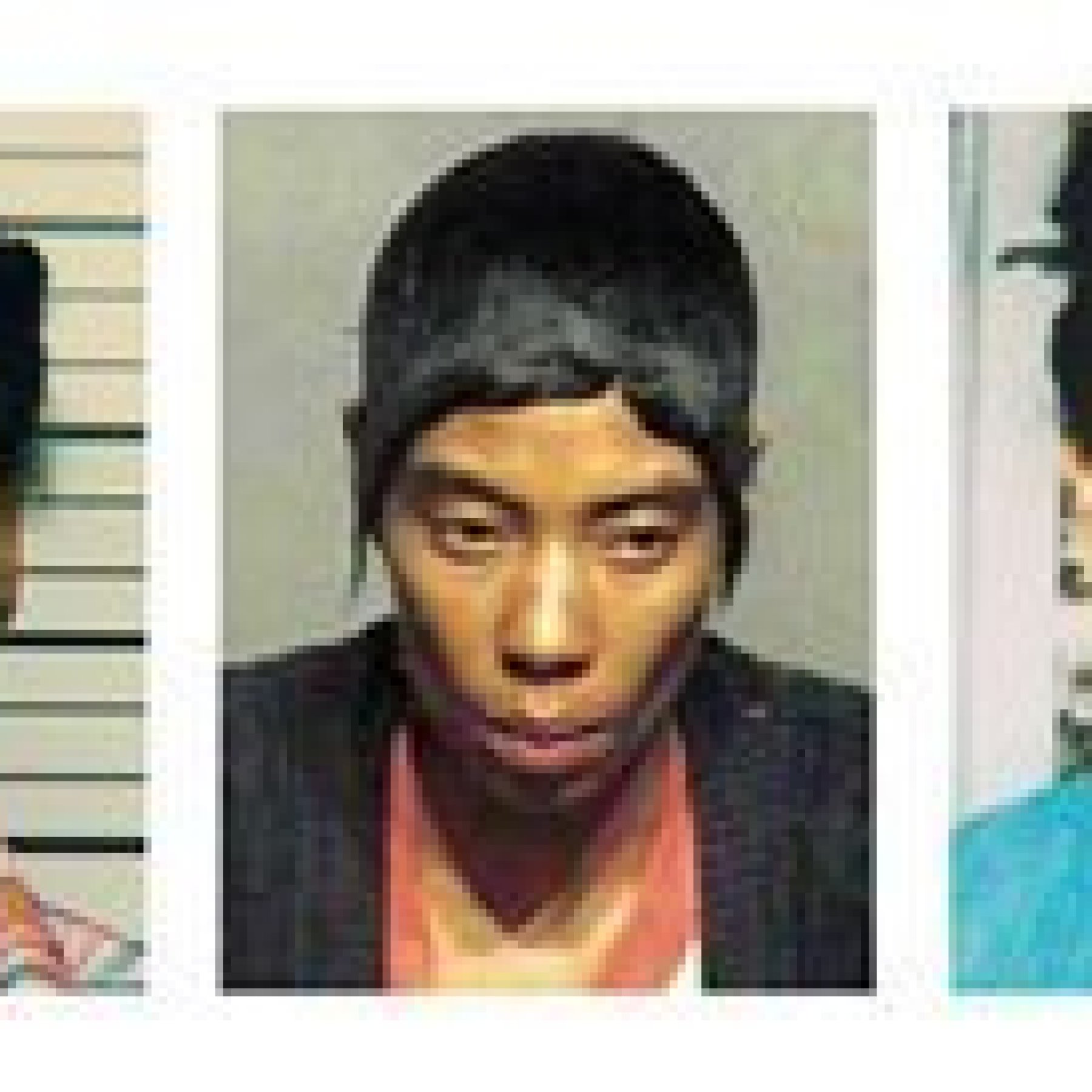
Sheila Farrior was a 37-year-old Black woman and mother of five whose life ended violently in Milwaukee on June 27, 1995. Her body was discovered inside the bedroom of a vacant residence in the 1400 block of West Chambers Street. The owner of the building had gone to the property to inspect remodeling work when Farrior was found. Investigators determined that she had been strangled, leaving police with a homicide in a vacant north-side property and, at the time, no publicly identified
killer.
Farrior's personal circumstances later became a point of disagreement between police accounts and her family. Authorities grouped her with several women they described as having been involved in prostitution. Her daughter, Shannon Farrior, strongly disputed describing her mother that way. Shannon acknowledged that her mother had once been arrested for solicitation but said she had regularly held jobs while raising five children as a single mother and had only been unemployed during the final year of her life. Shannon was 17 when her mother was killed.
For years, Farrior's killing remained unsolved. Investigators had not yet recognized the full significance of biological evidence recovered in her case or its connection to other strangulation homicides on Milwaukee's north side. Farrior had spent time at the Friendship Club, a gathering place for recovering alcoholics, as had Joyce Mims and George L. "Mule" Jones. Jones later became a suspect in Mims' 1997 strangulation and had previously served time for manslaughter. Police compared Jones' DNA with evidence from eight murdered women, but his genetic profile matched only Shameika Carter, whose strangulation he admitted committing. It did not match the evidence associated with Farrior or Mims.
The investigation gradually revealed that Farrior's death was not an isolated crime. When investigators eventually compared genetic evidence from her case with evidence recovered in other unsolved homicides, they discovered that the same unidentified DNA profile appeared in multiple cases. Advances in DNA testing were crucial; earlier technology had not allowed police to establish all of the connections. By May 2009, Milwaukee police publicly announced that Farrior's killing and a series of other murders spanning more than two decades were genetically linked to the same offender.
The announcement reopened painful memories for Farrior's family. Shannon Farrior said police had not contacted the family for years before informing them about the serial-homicide connection. Milwaukee police maintained that investigators had continued working the cases but said they could not establish the DNA links until testing technology improved. The discovery transformed Farrior's long-unsolved death into part of one of Milwaukee's most significant serial-murder investigations.
Attention eventually turned to Walter E. Ellis, a Milwaukee resident whose name had surfaced during earlier investigations partly because he lived near areas where several victims had been found. In the 1990s, however, Ellis had been only one of many people investigators considered, and there was not enough evidence at that time to identify him as Farrior's killer. Years later, Milwaukee's cold-case investigators focused on him again. Police searched his residence and collected a toothbrush, and laboratory testing produced a DNA profile that matched evidence associated with the linked homicide investigation. Ellis was arrested at a motel in Franklin in early September 2009.
The case also exposed a major missed opportunity involving Wisconsin's DNA databank. Authorities said Ellis should have supplied a DNA sample while incarcerated in 2001, but another inmate submitted a sample in his name. The discrepancy was noticed but was not corrected, leaving Ellis' actual genetic profile out of the database. Consequently, when evidence from the murders was checked against the databank, investigators did not receive the match that might otherwise have identified him years earlier.
After Ellis' arrest, prosecutors expanded the case against him. An amended criminal complaint charged him with Farrior's killing as well as the murders of Deborah Harris, Tanya Miller, Irene Smith, Florence McCormick, Joyce Mims and Ouithreaun Stokes. DNA evidence was central to the prosecution, linking Ellis to the seven murders for which he was ultimately charged. Farrior's death, which had remained unresolved for approximately fourteen years, was finally attributed by prosecutors to the same man responsible for a series of strangulations stretching from 1986 through 2007.
Ellis initially pleaded not guilty and appeared headed for trial. On February 18, 2011, however, he unexpectedly entered no-contest pleas in Milwaukee County Circuit Court. A no-contest plea did not require Ellis to personally admit committing the murders, but it allowed Judge Dennis Cimpl to find him guilty as if he had entered guilty pleas. Ellis was convicted on five counts of first-degree intentional homicide and two counts of first-degree murder, including the charge arising from Sheila Farrior's killing.
Six days later, on February 24, 2011, Judge Cimpl sentenced Ellis to seven consecutive life sentences with no possibility of parole. Relatives of the victims filled the courtroom and several spoke before sentencing. Sheila's sister, Zola Farrior, described the devastating effect the murder had on their family, saying their mother's grief following Sheila's death had been profound. Ellis chose not to address the court or explain the killings.
The conviction finally established legal responsibility for a homicide that had remained without an answer for more than a decade. Sheila Farrior's death began as the discovery of a strangled woman inside a vacant Milwaukee house, but improvements in forensic science ultimately connected her case to a much larger pattern. The DNA evidence that investigators had been unable to fully exploit in 1995 eventually identified Walter Ellis, leading to his arrest, conviction and a sentence ensuring that he would never be released from prison.