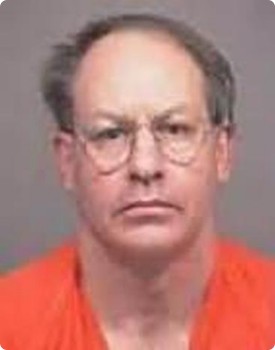
Eugene Blake: The Parolee Killer
Overview
Eugene Blake is a convicted American serial killer whose crimes span two states and nearly two decades, marked by a shocking failure of the justice system. In 1967, he murdered a young woman in West Virginia and was sentenced to life without mercy. Yet, through manipulation and the support of unsuspecting community members, he secured a commutation of his sentence and was paroled in 1979. Free to kill again, Blake went on to murder a young man in Ohio in 1982 and a teenage girl in West Virginia in 1984. The 1982 murder remained a cold case for over a quarter-century until DNA evidence definitively identified Blake, who was already back in prison for his third murder. His case is a chilling study in recidivism and a stark reminder of the potential consequences of clemency for a remorseless killer. He is now serving multiple life sentences, his name synonymous with the betrayal of a second chance.
Early Life and First Murder
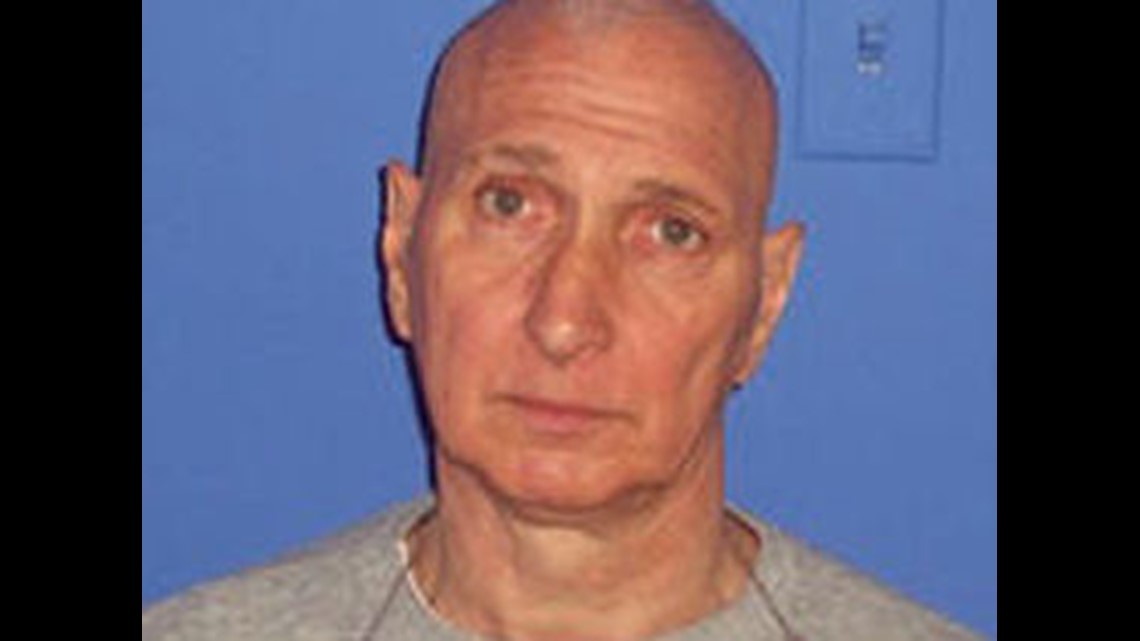
Eugene Blake was born on February 11, 1945, in Huntington, West Virginia. Little is publicly known about his upbringing or family life. His documented path of violence began in his early twenties. Just before his first murder, Blake, then a 21-year-old truck driver, had received a suspended one-to-ten-year sentence for burglary, a sign of the criminality that would soon escalate to horrific violence.
On the evening of January 16, 1967, 18-year-old Donna Jean Ball, a telephone operator for C&P Telephone, was driving on West Virginia Route 75 near the town of Ceredo. Suddenly, a 1958 Chevrolet driven by Blake forced her car off the road. Blake got out, approached her vehicle, and demanded money. After she handed some over, he inexplicably attacked her, stabbing her eight times in the chest and face.
Despite her grievous injuries, Ball managed to escape and run down the road for help. She was found by two local men, who rushed her to Cabell Huntington Hospital, but she succumbed to her wounds. The seemingly random and brutal nature of the attack shocked the community. The investigation quickly led to Blake, who was arrested the following day. In 1968, he was tried, convicted of first-degree murder, and sentenced to life in prison without the possibility of parole.
A Model Inmate and a Controversial Parole
Blake was incarcerated at the West Virginia Penitentiary in Moundsville, where he cultivated the image of a model prisoner. He was reportedly so well-behaved and trusted by guards that he was even permitted to visit the warden's home. Behind the scenes, Blake began a calculated campaign for his freedom. With the help of his fiancée, a former clerk in the prison's business office whom he later married, he organized an extensive letter-writing campaign and petition for executive clemency.
Dozens of prominent citizens, including clergy members and business owners who believed in his rehabilitation, wrote to the governor on his behalf. Blake himself wrote that he had volunteered for community functions and participated in stage productions at a local theater. Despite the West Virginia Board of Probation and Parole unanimously recommending against clemency, Governor Arch A. Moore Jr. was persuaded. On December 23, 1976, Moore commuted Blake's sentence from "life without mercy" to "life with mercy," making him eligible for parole.
In February 1979, after serving just over a decade for Donna Jean Ball's murder, Eugene Blake was released from prison. He relocated to Morgantown, West Virginia, and later, in March 1982, to Wheeling. Despite being a convicted felon, he managed to obtain a license to run a bar. He had successfully conned the system, and the consequences would prove deadly.
The Second and Third Murders
Freedom for Eugene Blake meant a return to violence. On March 19, 1982, only about a week after moving to Wheeling, he drove across the state line to Gould Park in Bridgeport, Ohio. There, he came upon a parked car occupied by 21-year-old Mark Withers and his 17-year-old female companion. Blake approached the car, demanded money, and when Withers rolled down the window, Blake shot him in the head, killing him instantly. He then pulled Withers' body from the car and threw it over a nearby fence. Blake proceeded to rape the terrified 17-year-old girl before fleeing the scene. The survivor was able to get help and provide a statement to police, and a rape kit was collected, but with no known connection between the attacker and the victims, the case went cold.
Two and a half years later, Blake struck again. On or around October 23, 1984, 13-year-old Maryann Hope Helmbright disappeared in Wheeling. Witnesses later reported seeing her with Blake. Her body was discovered on October 26 in a wooded area in Osage, just outside of Morgantown. She had been raped and strangled. Some reports state she was also shot. The investigation led to Blake, and in June 1985, he was indicted for her murder and two counts of statutory rape.
The Victims
- Donna Jean Ball, 18 — January 16, 1967, near Ceredo, WV. An 18-year-old telephone operator, she was driving home when she was forced off the road, robbed, and brutally stabbed to death.
- Mark Withers, 21 — March 19, 1982, in Bridgeport, OH. A young man from Lansing, Ohio, he was shot and killed during an attack in a local park while sitting in his car with a companion.
- Maryann Hope Helmbright, 13 — October 1984, in Wheeling, WV. A young teenager who disappeared while with Blake and was later found raped and murdered in a wooded area.
Investigation and Capture
Following Maryann Helmbright's murder in 1984, Eugene Blake was quickly identified as the primary suspect and arrested. He was already a known quantity to law enforcement, a paroled murderer living in the area. His conviction for this crime, however, would take years.
The murder of Mark Withers remained unsolved for decades. The case was a chilling mystery for the Bridgeport police and a source of unending anguish for the Withers family and for the young woman who survived the attack. The crucial evidence—semen samples collected from the rape victim in 1982—was carefully preserved.
For years, Blake sat in a West Virginia prison for the Helmbright murder, even as investigators in Ohio were no closer to finding Mark Withers' killer. The breakthrough came in 2008 with the advancement of DNA technology. Investigators resubmitted the evidence from the 1982 crime scene to the state crime lab. The DNA profile was entered into the national database, and it returned a direct hit: Eugene Blake.
At the time of the match, Blake was approaching eligibility for parole in West Virginia for the Helmbright murder. The DNA link brought a sudden and dramatic end to the 26-year-old cold case. Blake was extradited to Ohio to finally face charges for the crimes he committed at Gould Park.
Trial and Sentence
Blake's legal reckoning came in three distinct phases. After his first conviction in 1968 for the murder of Donna Jean Ball, he was given a sentence of life without parole, which was later tragically commuted.
For the 1984 murder of Maryann Hope Helmbright, the legal process was drawn out. Blake was indicted in 1985, but it was not until 1997 that he pleaded guilty to first-degree murder and two counts of statutory rape. For these crimes, he was sentenced to a term of 15 years to life and incarcerated at the Huttonsville Correctional Center.
Following his 2008 extradition to Ohio for the murder of Mark Withers, Belmont County prosecutors, aware of his history, sought the death penalty, charging him with three counts of aggravated murder. To avoid execution, Blake, then in his mid-60s, pleaded guilty in 2010 to aggravated murder. On March 30, 2010, he was sentenced to 20 years to life in prison. At the time, prosecutors and the victim's family believed the sentence would ensure he would die behind bars.
Aftermath and Legacy
The sentencing in Ohio did not end the legal drama. Due to a clerical error that recorded his sentence as "20 years to life" instead of "20 full years to life," combined with changes in Ohio sentencing laws and credits for time served, Blake became eligible for parole in 2022, far earlier than anyone anticipated.
The news of his parole hearing sparked outrage from the families of his victims and prosecutors in both Ohio and West Virginia. Belmont County Prosecutor Kevin Flanagan wrote a letter to the parole board calling Blake a "monster" and "the epitome of evil," detailing his history of committing murder after being granted parole. The families of his victims voiced their profound fear and disbelief that the man who had caused them so much pain could be released.
In June 2022, the Ohio Parole Board voted unanimously to deny Blake's parole. In their decision, they noted he was a "multi-state offender with multiple murder convictions" and that his release would not "further the interest of justice." Eugene Blake remains incarcerated at the Chillicothe Correctional Institution. His next parole hearing is scheduled for 2032, at which time he will be 87 years old. His case stands as a powerful and painful argument against clemency for violent offenders and a testament to the decades-long fight for justice by his victims' families.