John Frank Hickey: The Postcard Killer
Overview
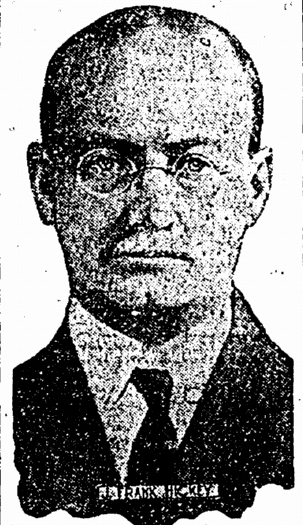
John Frank Hickey was an American murderer, child molester, and confessed serial killer whose known crimes stretched across nearly three decades. Born in Lowell, Massachusetts, on October 29, 1865, Hickey outwardly presented himself as a respectable and religious man. During his youth, he participated in church organizations, became associated with the YMCA, and later joined a Masonic lodge. Behind this respectable appearance, however, he struggled with alcoholism, dishonesty, and violent sexual impulses toward children.
Hickey confessed to three murders committed between 1883 and 1911 in Massachusetts and New York. His victims included an adult coworker and two young boys. He became known as the “Postcard Killer” because he mailed disturbing postcards and letters concerning his crimes. Some messages were sent to police officers, newspapers, and the family of his final known victim. These communications supplied information about the hidden body and eventually helped investigators identify him.
Confirmed Victims
- Edwin W. Morey, age 34 — Fatally poisoned during the night of September 1–2, 1883, at McGibbon’s Drugstore in Lowell, Massachusetts. Historical summaries commonly record September 1 as the date of the crime, although accounts state that Morey died shortly after 3:00 a.m. following midnight.
- Michael R. Kruck, age 11 — Murdered on December 10, 1902, in Central Park, Manhattan, New York City. He was strangled after being lured into the park while selling newspapers.
- Joseph “Joey” Joseph, age 7 — Disappeared and was killed on October 11, 1911, in Lackawanna, New York. Some later accounts describe the murder as occurring on October 12, but contemporary case descriptions place his disappearance on October 11. His body was hidden in an outhouse pit near Ridge Road.
The Poisoning of Edwin W. Morey
Hickey’s first confessed murder occurred while he was approximately eighteen years old and employed at McGibbon’s Drugstore in Lowell. His coworker, Edwin W. Morey, was a 34-year-old pharmacist who reportedly had serious problems with alcohol. On September 1, 1883, Hickey contacted the authorities and claimed that he had discovered Morey collapsed on the drugstore floor.
A physician believed Morey had taken poison and attempted to save him with a stomach pump. Morey briefly showed signs of life around midnight but died shortly after 3:00 a.m. The death was initially treated as an apparent poisoning connected to Morey’s personal difficulties rather than as a deliberate homicide.
Years later, Hickey admitted that he had given Morey laudanum, a powerful preparation containing opium. Hickey claimed that he feared their employer would discover Morey intoxicated and dismiss both men. Instead of helping his coworker or accepting the possibility of losing his position, Hickey chose to poison him and then attempted to disguise the killing as a self-inflicted or accidental death.
The Murder of Michael R. Kruck
By 1902, Hickey had left Lowell and spent years moving through the northeastern United States and Canada. On December 10, 1902, he encountered 11-year-old Michael R. Kruck, a newspaper seller working near Central Park in New York City. Children who sold newspapers often worked alone on busy streets, making them vulnerable to adults who approached them with seemingly harmless offers.
Hickey told Michael that he would buy all of the boy’s newspapers if Michael followed him into Central Park. Once the child was in a more isolated location, Hickey strangled him. Michael’s body was left in the park with his bundle of newspapers placed beneath his head. The arrangement made the scene especially haunting because the newspapers represented the work that had brought the child into contact with his killer.
A medical examination determined that Michael had died by strangulation. The coroner reportedly found no evidence that he had been sexually assaulted. At the time, investigators were unable to identify the murderer, and the inquest concluded that Michael had been killed by an unknown person. His body was released from the morgue on December 12, 1902, and he was buried at Washington Jewish Cemetery in Brooklyn.
The Murder of Joey Joseph
Hickey’s final confirmed victim was seven-year-old Joseph “Joey” Joseph, the son of a Lackawanna family. Joey disappeared from the streets of Lackawanna on October 11, 1911. Hickey was then employed as a supervisor at a steel plant and had observed Joey near the boy’s father’s clothing and furnishing store.
Hickey later approached Joey while the child was playing with a friend. He gave Joey money to purchase candy for himself and the other boy. When Joey returned, Hickey sent the friend away and led Joey by the hand toward an outhouse behind a saloon near Ridge Road.
Inside the secluded structure, Hickey strangled Joey until he lost consciousness, sexually assaulted him, and then strangled him to death. He disposed of the child’s body in the waste pit beneath the outhouse. The concealed location made the remains extremely difficult to find, and the initial search for Joey produced few useful clues.
The Postcards
After Joey’s disappearance, Hickey began sending written messages concerning the case. On October 30, 1911, a postcard addressed to the Lackawanna police chief described an outhouse with three seats behind a saloon near Ridge Road. The writer stated that Joey could be found at the bottom of the pit and blamed the crime on a mind crazed by alcohol.
The messages combined apparent remorse with manipulation. Hickey presented the killer as a helpless victim of whiskey while also demonstrating that he possessed private knowledge of the murder. By revealing selected details, he controlled the investigation, prolonged the suffering of Joey’s family, and ensured that attention remained focused on the unknown writer.
Authorities eventually published reproductions of the handwriting. People familiar with Hickey recognized his distinctive writing style and identified him as a possible suspect. Investigators compared his known correspondence with the postcards and gathered evidence connecting him to the messages. Hickey’s desire to communicate about the crime had helped create the trail that led police to him.
Confession, Trial, and Imprisonment
Hickey was arrested in November 1912. During questioning, he confessed not only to Joey Joseph’s murder but also to killing Michael Kruck and Edwin Morey. He also admitted to sexually assaulting children. Although he referred to additional possible victims and his postcard mentioned a total of four deaths, only three murders have been firmly attributed to him.
Prosecutors charged Hickey with first-degree murder for killing Joey Joseph. His defense argued that he was mentally ill and unable to control his behavior. The jury ultimately convicted him of second-degree murder rather than first-degree murder. Two jurors reportedly believed that he was insane and should not be executed. He received a sentence of twenty years to life and was confined at Auburn Prison in Auburn, New York.
Death and Legacy
John Frank Hickey died at Auburn Prison on May 8, 1922, at the age of 56. He had spent the final years of his life incarcerated and was never prosecuted separately for the deaths of Morey or Kruck.
The Hickey investigation is remembered as an early example of behavioral profiling and handwriting evidence being used in the pursuit of a serial offender. His crimes also revealed how a killer could maintain a respectable public identity while repeatedly exploiting vulnerable victims. The postcards that gave Hickey his nickname were intended to manipulate the police and torment a grieving family, but they ultimately exposed the author and brought his known series of murders to an end.