Joseph Taborsky and the “Mad Dog” Murders
Early Life and Criminal History
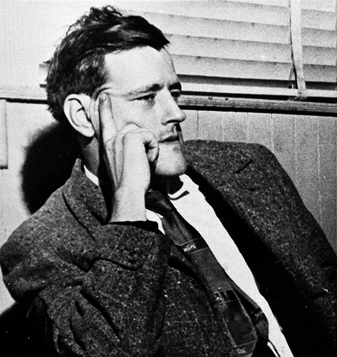
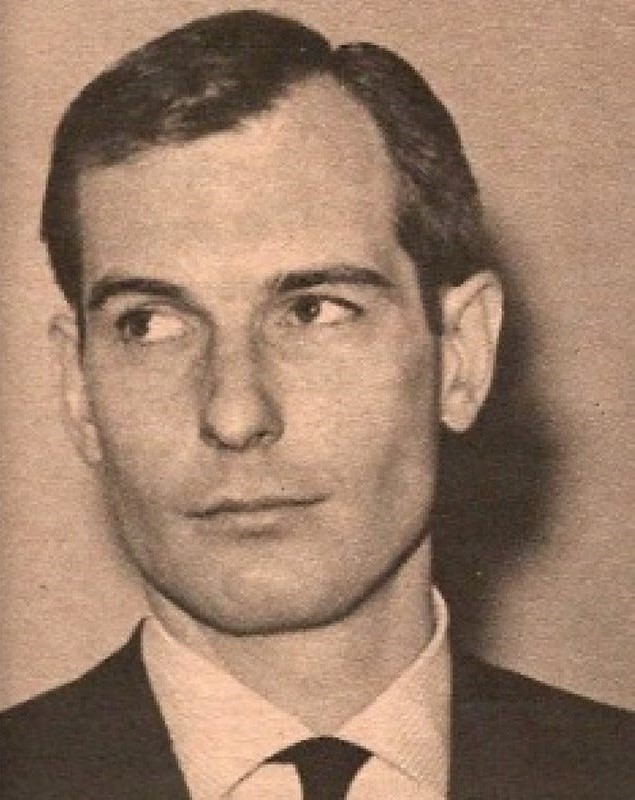
Joseph Louis Taborsky was born on March 23, 1924, in Hartford, Connecticut. He grew up in Hartford’s North End and began stealing when he was still a child. His early offenses included theft, burglary and shoplifting, followed by repeated stays in juvenile institutions and prisons. As a young man, he was also convicted of armed robbery and attempted to escape from custody. Standing approximately six feet four inches tall, with dark hair and a prominent jaw, Taborsky was sometimes called “The Chin.” His distinctive appearance would later contribute to his decision to murder robbery witnesses.
Taborsky met Arthur Joseph Culombe while the two men worked at a freight-handling facility in East Hartford. Culombe had an intellectual disability and a history of crime and institutionalization. Authorities later believed that he was easily influenced by the more dominant Taborsky. The men committed burglaries together before Taborsky became involved in the murder that first placed him on Connecticut’s death row.
The Murder of Louis Wolfson
On March 23, 1950, Taborsky’s 26th birthday, he and his younger brother, Albert Taborsky, entered Cooper’s Package Store in West Hartford. The store was operated by Louis L. Wolfson. During the robbery, Wolfson was shot in the face with a small-caliber handgun. He remained alive for approximately three days and reportedly regained consciousness several times before dying from his injuries on March 26, 1950.
The case remained unsolved for nearly a year. Albert eventually confessed and identified Joseph as his accomplice. Joseph Taborsky was arrested in January 1951 and convicted of first-degree murder that June. Albert was convicted of second-degree murder and sentenced to life imprisonment, while Joseph received a death sentence.
Albert later experienced a severe mental breakdown and was declared mentally incompetent. Because his testimony had been the central evidence against Joseph, Joseph’s attorneys successfully challenged the conviction. After spending more than four years on death row, Taborsky was granted a new trial. Prosecutors concluded that they could not proceed without Albert’s testimony, and Joseph was released from prison on October 6, 1955. He publicly claimed that he had been innocent and promised to avoid further trouble.
Return to Armed Robbery
Following his release, Taborsky moved to Brooklyn, New York, but frequently returned to the Hartford area. He had difficulty maintaining employment and resumed committing robberies during 1956. By December, he had reunited with Arthur Culombe. Together, they began targeting liquor stores, service stations, grocery stores and other small businesses where employees or owners were often working alone.
Before the murders began, the pair committed several violent robberies. On December 4, 1956, Hartford liquor-store owner Jack Rosen was severely pistol-whipped. On December 11, they attacked Peter Barone during a robbery at the Silas Deane Package Store in Rocky Hill. Barone survived after being struck in the head, and the robbers escaped with more than $100.
The December 15 Double Murder
On December 15, 1956, Taborsky and Culombe attacked 67-year-old tailor Nickola Leone inside his shop. Leone was shot in the face, and the bullet lodged in his neck. Although seriously wounded, he survived and later described one of the attackers as wearing a red, polka-dotted handkerchief over his face.
Approximately one hour later, Taborsky and Culombe arrived at Kurp’s service station in New Britain. The station was owned by 30-year-old Edward J. Kurpiewski. After Kurpiewski serviced their automobile, he was forced into the station’s boiler room, shot and robbed. While the killers searched the office and cash register, 30-year-old Daniel J. Janowski drove into the station with his infant daughter in the car.
Taborsky and Culombe waited for Janowski to leave, but when he remained at the pumps, they approached his vehicle. Janowski was robbed and forced into the station’s restroom. He was then shot twice in the head. The killers left his infant daughter unharmed in the automobile because they believed she was too young to identify them. A passing bus driver discovered the child about an hour later. Both Kurpiewski and Janowski died on December 15, 1956.
The Coventry Grocery-Store Attack
On December 21, 1956, Taborsky and Culombe entered a grocery store in Coventry owned by 64-year-old Arthur Vinton and his 62-year-old wife. The couple’s three-year-old granddaughter, Lorry, was also inside. The robbers pistol-whipped Arthur and Mrs. Vinton and stole approximately $100.
According to Culombe’s later confession, Taborsky ordered him to kill the child. Culombe took Lorry to another section of the store, told her to remain quiet and fired a shot into the floor so Taborsky would believe she had been killed. The Vintons and their granddaughter survived. The attack demonstrated that Taborsky was willing to eliminate even a very young child who might have been considered a witness.
The Murder of Samuel Cohn
On the evening of December 26, 1956, Taborsky and Culombe entered a liquor store in East Hartford owned by 65-year-old Samuel H. Cohn. Cohn was shot twice in the head and killed. The killers emptied the cash register, left its drawer open and searched Cohn’s pockets for additional money. A customer later discovered his body behind the counter.
Investigators quickly connected Cohn’s murder to the New Britain killings because of the similar methods. The victims had been shot at close range, their pockets and registers had been searched, and the killers had fled without leaving an obvious trail. Rewards were offered as police agencies assembled a special force to identify the men newspapers had begun calling the “Mad Dog” killers.
The Murders of Bernard and Ruth Speyer
On January 5, 1957, Taborsky and Culombe entered a shoe store in North Haven operated by 44-year-old Frank Adinolfi. Taborsky reportedly asked to see a pair of size 12 shoes. The robbers forced Adinolfi into a back room, where Culombe beat him with a pistol. Believing that Adinolfi was dead, the men took money from his wallet and the cash register.
Bernard Speyer, 48, and his wife, Ruth Speyer, 45, were customers inside the store and witnessed the attack. The couple was robbed and forced to kneel on the floor. Taborsky then shot each of them in the back of the head with a .38-caliber handgun. Bernard and Ruth Speyer died at the North Haven store on January 5, 1957.
Adinolfi survived despite his serious injuries. He later recalled Taborsky’s request for size 12 shoes, an important detail because prison records showed that Taborsky wore that size. Adinolfi also identified Culombe from a photograph as the man who had beaten him.
The Murder of John Rosenthal
On January 26, 1957, Taborsky and Culombe targeted Rosenthal’s Drug Store in Hartford. The business was owned by 69-year-old John M. Rosenthal. His son, Henry Rosenthal, was working in the basement when Taborsky entered the main floor of the store.
Taborsky shot John Rosenthal twice in the chest with a 9-millimeter Luger pistol. Hearing the gunfire, Henry came upstairs and saw Taborsky near the cash register. Henry threw a medicine bottle at him. Taborsky fired at Henry but missed, sending the bullet into a wall. He then ran outside and escaped in a dark-colored automobile driven by an accomplice. John Rosenthal died from his wounds on January 26, 1957.
Confirmed Victims
- Louis L. Wolfson, age unavailable: Shot during a robbery at Cooper’s Package Store in West Hartford, Connecticut, on March 23, 1950. He died from his injuries on March 26, 1950.
- Edward J. Kurpiewski, 30: Shot and robbed inside his service station in New Britain, Connecticut, on December 15, 1956.
- Daniel J. Janowski, 30: Robbed and shot in the head at Kurp’s service station in New Britain, Connecticut, on December 15, 1956.
- Samuel H. Cohn, 65: Shot twice in the head during a liquor-store robbery in East Hartford, Connecticut, on December 26, 1956.
- Bernard Speyer, 48: Robbed, forced to kneel and shot in the back of the head inside a North Haven, Connecticut, shoe store on January 5, 1957.
- Ruth Speyer, 45: Murdered alongside her husband inside the North Haven shoe store on January 5, 1957.
- John M. Rosenthal, 69: Shot twice in the chest during a robbery at his Hartford, Connecticut, drug store on January 26, 1957.
Surviving Victims
- Jack Rosen: Pistol-whipped during a Hartford liquor-store robbery on December 4, 1956.
- Peter Barone: Beaten during the robbery of the Silas Deane Package Store in Rocky Hill on December 11, 1956.
- Nickola Leone, 67: Shot in the face inside his tailor shop on December 15, 1956.
- Arthur Vinton, 64: Pistol-whipped during the Coventry grocery-store robbery on December 21, 1956.
- Mrs. Arthur Vinton, 62: Beaten during the Coventry robbery on December 21, 1956.
- Lorry, 3: The Vintons’ granddaughter, whom Taborsky allegedly ordered Culombe to kill on December 21, 1956. Culombe secretly spared her.
- Frank Adinolfi, 44: Severely beaten and left for dead in his North Haven shoe store on January 5, 1957.
- Henry Rosenthal: Fired upon after confronting Taborsky at his father’s Hartford drug store on January 26, 1957.
Arrest and Confessions
Police arrested Taborsky and Culombe on February 23, 1957. The men were held separately while investigators examined their possible connection to the robbery and murder spree. Culombe began confessing several days later, admitting involvement in multiple holdups and six murders. He guided detectives to crime scenes and locations where the pair had discarded weapons, including a shallow pond containing the revolver used in the Kurpiewski and Janowski murders.
Culombe initially claimed that Taborsky fired the fatal shots during the murder spree, although evidence indicated that Culombe had directly participated in at least some of the shootings and beatings. Taborsky first denied involvement. After learning how much Culombe had revealed, he began confessing. He admitted responsibility for the six murders committed during the 1956 and 1957 spree and also acknowledged his role in Louis Wolfson’s 1950 murder.
Taborsky reportedly believed that shooting victims in the head would damage the bullets and prevent firearms examiners from identifying the weapons. His belief was incorrect. Investigators recovered firearms, compared ballistic evidence and combined the physical evidence with witness identifications and the confessions. Despite the violence of the crimes, the series of robberies produced less than $400 for Taborsky and Culombe.
Trial and Death Sentences
Taborsky and Culombe went on trial together in May 1957. Prosecutors tried them specifically for the murders of Edward Kurpiewski and Daniel Janowski. The defense attempted to argue that both men suffered from serious mental limitations or illnesses. Taborsky’s attorneys suggested that his years on death row had contributed to his violent behavior, while Culombe’s attorneys emphasized his intellectual disability.
The jury rejected the defenses and convicted both men of first-degree murder. Each received a death sentence. Taborsky had now become the only person in Connecticut history known to have been sent to death row twice for separate capital convictions. Culombe’s death sentence was eventually commuted to life imprisonment because of concerns about his mental capacity.
Execution and Legacy
Joseph Taborsky was executed in Connecticut’s electric chair at the state prison in Wethersfield shortly after midnight on May 17, 1960. He was 36 years old. His execution was Connecticut’s last for 45 years, until the execution of Michael Bruce Ross in 2005.
The “Mad Dog” murders generated intense fear across Connecticut. Small-business owners changed their hours, armed themselves and brought guard dogs to work. Law-enforcement agencies created specialized investigative teams, and state and local officials offered thousands of dollars in reward money. The brutality of the killings also strengthened public support for capital punishment in Connecticut during a period when other New England states were moving toward abolition.
Taborsky’s case remains especially notable because he was released after his first murder conviction was overturned, only to commit six additional murders within approximately fifteen months. His later confession established that his original claim of innocence in the Wolfson case had been false. The seven deaths, combined with the numerous people who were shot, beaten or threatened, made Taborsky one of the most feared killers in Connecticut history.