Faryion Wardrip: The Wichita Falls Serial Killer
Overview
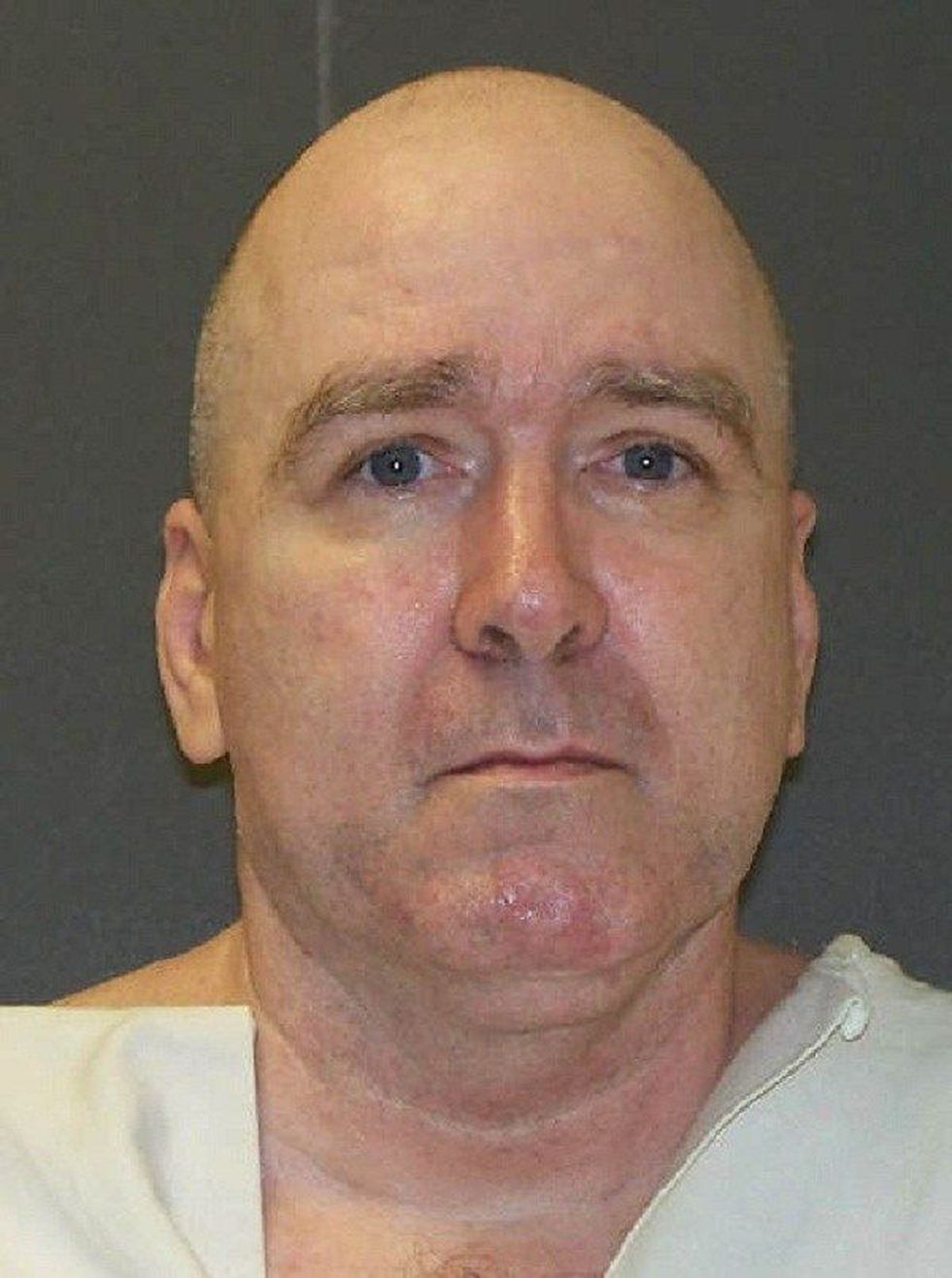
Faryion Edward Wardrip is an American serial killer and sexual predator responsible for murdering five young women in Texas between December 1984 and May 1986. Four of the killings occurred in Wichita Falls or the surrounding area, while another took place in Fort Worth. His victims were between 20 and 25 years old, and several had connections to local hospitals, apartment complexes or workplaces that Wardrip knew.
Wardrip used different methods to overpower and kill his victims, including stabbing, strangulation and suffocation. Sexual violence was a significant component of several attacks. Although the murders occurred within a relatively limited period, they were originally investigated by different law-enforcement agencies and were not immediately recognized as the work of one offender. Wardrip confessed to one murder in 1986, but his responsibility for the other four killings remained undiscovered until advances in DNA testing helped investigators reopen the cases more than a decade later.
Early Life and Criminal Background
Wardrip was born on March 6, 1959, in Salem, Indiana. As an adult, he moved through periods of instability, substance abuse and criminal conduct. He spent time in prison before arriving in the Wichita Falls area, where he found employment as a hospital orderly. His work brought him into proximity with nurses and other medical employees, including at least one of the women he later murdered.
Wardrip was physically larger than the women he targeted. Investigators eventually recognized that his victims shared several characteristics: they were young, small in stature and vulnerable to being physically overpowered. Some were attacked after completing late-night work shifts, while others encountered him in residential or entertainment settings.
The Murder of Terry Lee Sims
Terry Lee Sims, a 20-year-old Midwestern State University student, worked part time as an electrocardiogram technician at Bethania Hospital in Wichita Falls. During the night of December 20, 1984, Sims finished her hospital shift and went with a coworker to exchange Christmas gifts. She was later taken to the coworker’s apartment on Bell Street, where she planned to spend the night and study for an examination.
After the coworker was unexpectedly called back to the hospital, Sims remained alone in the apartment. Wardrip was wandering through the neighborhood during the early morning hours of December 21, shouting and causing a disturbance. Sims reportedly stepped outside to see what was happening. When Wardrip approached her, she retreated into the apartment and locked the door.
Wardrip forced his way inside, assaulted Sims and restrained her hands with an electrical cord. He sexually assaulted her and stabbed her repeatedly. When the coworker returned at approximately 7:30 that morning, she was unable to enter the locked apartment. After obtaining assistance, Sims was found dead on the bathroom floor.
Investigators recovered physical evidence, including biological material and a fingerprint from Sims’s shoe. At the time, forensic technology could not identify the killer. The preserved evidence later became essential in connecting Wardrip to the murder.
The Murder of Toni Jean Gibbs
Toni Jean Gibbs was a 23-year-old registered nurse employed at Wichita General Hospital, where Wardrip had worked as an orderly. During the early morning of January 19, 1985, Gibbs encountered Wardrip after completing work. Because she recognized him as a fellow hospital employee, she agreed to give him a ride.
Once inside Gibbs’s vehicle, Wardrip became violent and forced her to drive away from the hospital. He directed her toward an isolated rural area in Archer County. There, he sexually assaulted and stabbed her. Gibbs suffered multiple wounds, including injuries indicating that she had attempted to defend herself.
Gibbs was reported missing after she failed to return home. Her abandoned vehicle was located near the hospital two days later, but her body was not discovered until February 15, 1985. Utility workers found her remains in a field near West Jentsch Road and U.S. Highway 281, south of the Wichita County line.
Biological evidence collected during the investigation would eventually be linked to the evidence from the Sims murder. That connection established that the same unidentified man had killed both women.
The Murder of Debra Sue Taylor
On March 24, 1985, Wardrip was in Fort Worth while looking for employment. During the early morning hours, he met 25-year-old Debra Sue Taylor at a bar on East Lancaster Street. Taylor had visited the establishment with her husband, but he left before she did. Wardrip approached Taylor, danced with her and later offered to drive her home.
After leaving the bar, Wardrip made sexual advances toward Taylor. When she rejected him, he attacked and killed her. Wardrip left her body at a construction site in eastern Fort Worth. Taylor’s husband reported her missing when she failed to return home.
Construction workers discovered Taylor’s body on March 29, 1985. For years, suspicion remained focused on her husband despite his denials and his reportedly passing several polygraph examinations. The investigation damaged his relationships with relatives and members of Taylor’s family. Wardrip was not connected to the case until he confessed following his 1999 arrest.
The Murder of Ellen Blau
Ellen Blau was a 21-year-old Midwestern State University student who also worked as a waitress. On September 20, 1985, she disappeared after completing an evening shift in Wichita Falls. Wardrip abducted her as she was walking toward her vehicle.
Wardrip forced Blau to drive to a secluded location outside the city. He killed her by strangulation and left her body in a field. He then drove her vehicle back into Wichita Falls and abandoned it along with her purse. Investigators found blood inside the vehicle, but the available evidence did not immediately reveal the killer’s identity.
A county road worker discovered Blau’s body in Wichita County on October 10, 1985. Her remains were badly decomposed, requiring investigators to identify her through dental records. The condition of her body also limited the amount of physical evidence that could be recovered.
Blau’s connection to Wardrip was overlooked during the original investigation. Authorities later learned that he knew her and that one of her friends had lived in the same apartment complex as him. This information became important when detectives reviewed the unsolved cases in the late 1990s.
The Murder of Tina Elizabeth Kimbrew
Tina Elizabeth Kimbrew was a 21-year-old waitress whom Wardrip had recently befriended. On May 6, 1986, Wardrip went to her apartment in Wichita Falls. He later claimed that Kimbrew reminded him of his former wife and that this association contributed to his decision to attack her.
Wardrip suffocated Kimbrew with a pillow inside her apartment. Witnesses reported seeing a tall white man with dark hair and a baseball cap leaving the area. The description helped eliminate another man who had previously attracted suspicion in one of the area’s unsolved killings.
Three days later, on May 9, Wardrip contacted police from Galveston and threatened to take his own life. When officers arrived, he confessed to killing Kimbrew. He was returned to Wichita Falls, prosecuted for her murder and sentenced to 35 years in prison.
Confirmed Victims
- Terry Lee Sims, 20 — Murdered on December 21, 1984, inside an apartment on Bell Street in Wichita Falls, Wichita County, Texas. She was sexually assaulted, restrained and stabbed.
- Toni Jean Gibbs, 23 — Abducted and murdered on January 19, 1985, after leaving Wichita General Hospital in Wichita Falls. Her body was found on February 15, 1985, near West Jentsch Road and U.S. Highway 281 in Archer County, Texas.
- Debra Sue Taylor, 25 — Murdered on March 24, 1985, after leaving a bar on East Lancaster Street in Fort Worth, Tarrant County, Texas. Her body was discovered at an eastern Fort Worth construction site on March 29.
- Ellen Blau, 21 — Abducted and murdered on September 20, 1985, after leaving work in Wichita Falls. Her body was discovered in a Wichita County field on October 10, 1985.
- Tina Elizabeth Kimbrew, 21 — Suffocated inside her Wichita Falls apartment on May 6, 1986. Wardrip confessed to her murder three days later.
Imprisonment and Release
Wardrip’s confession to Kimbrew’s murder ended the immediate investigation into her death, but authorities did not connect him to the four earlier killings. He entered prison in 1986 under a 35-year sentence. Despite the seriousness of the crime, he served approximately 11 years before being released under mandatory supervision on December 11, 1997.
After his release, Wardrip moved to Olney, Texas. He obtained factory employment, attended church and cultivated the appearance of a reformed and dependable community member. He married in October 1998 and was known to participate in church activities. Behind that public identity, his involvement in four additional murders remained undiscovered.
The Cold-Case Investigation
In January 1999, Wichita Falls detective John Little began reviewing the unsolved murders of Sims, Gibbs and Blau. DNA testing showed that biological evidence from the Sims and Gibbs crime scenes came from the same man. Investigators then examined possible links among the victims and discovered that Wardrip had lived or worked near several of them.
Wardrip had worked at the same hospital as Gibbs. Blau had social connections to an apartment complex where he had lived, and she had resided near the location of the Sims attack. Detectives also learned that Wardrip had previously admitted knowing Blau, but that information had not been fully investigated during the original cases.
Investigators needed a current DNA sample from Wardrip. Detective Little approached him during a break at the factory where he worked and obtained a discarded drinking cup. DNA recovered from the cup matched the biological evidence preserved from the Sims and Gibbs murders.
Arrest and Confessions
Wardrip was arrested on February 14, 1999. Confronted with the DNA evidence, he confessed to murdering Sims, Gibbs and Blau. He also revealed his responsibility for Debra Taylor’s previously unrelated murder in Fort Worth.
The confessions finally explained a series of killings that had remained unresolved for approximately 14 years. They also cleared individuals who had lived under suspicion, including Taylor’s husband and other men examined during the original investigations.
Convictions and Death Sentence
Wardrip pleaded guilty to the capital murder of Terry Sims. During the punishment proceedings, prosecutors introduced evidence of the other four murders to demonstrate his continuing danger and the calculated pattern of violence. On November 9, 1999, he was sentenced to death for Sims’s murder.
Wardrip also received life sentences for the murders of Toni Gibbs, Ellen Blau and Debra Taylor. His earlier conviction for Tina Kimbrew’s murder had already resulted in the prison sentence from which he had been released in 1997.
Wardrip pursued numerous appeals challenging his death sentence, including arguments concerning the quality of his legal representation. Although lower-court decisions temporarily raised the possibility of a new punishment hearing, appellate rulings preserved his capital sentence. He remains under a sentence of death in the Texas prison system.
Failures in the Original Investigations
The Wardrip case demonstrated the difficulties created when related crimes are investigated by separate agencies. The Sims murder occurred in Wichita Falls, Gibbs’s body was found in Archer County and Blau’s remains were recovered elsewhere in Wichita County. Debra Taylor was killed in Fort Worth, far enough away that her death appeared completely separate.
Because the investigations were divided among different jurisdictions, information was not always combined effectively. Wardrip’s known connection to Blau and his employment at the same hospital as Gibbs did not initially result in a comprehensive examination of his movements or background. Even after he confessed to Kimbrew’s murder, investigators did not identify him as a suspect in the earlier cases.
The eventual solution depended on preserved crime-scene evidence, improvements in forensic DNA analysis and a detective willing to reconsider the apparent boundaries between separate investigations. The evidence collected from Sims and Gibbs survived long enough to expose Wardrip after he had already returned to the community.
Legacy of the Case
Faryion Wardrip’s crimes left five families without daughters, wives, relatives and friends. Several victims were young women building careers or pursuing higher education when their lives were taken. The long delay in identifying their killer prolonged the uncertainty endured by their families and allowed innocent people to remain under suspicion.
The investigation is frequently cited as an example of the value of preserving biological evidence in unsolved cases. Material collected in 1984 and 1985 could not immediately identify an offender, but it later provided the decisive link between Wardrip and multiple murders. His arrest showed how cold-case review, interagency cooperation and forensic science can expose a killer many years after the original crimes.