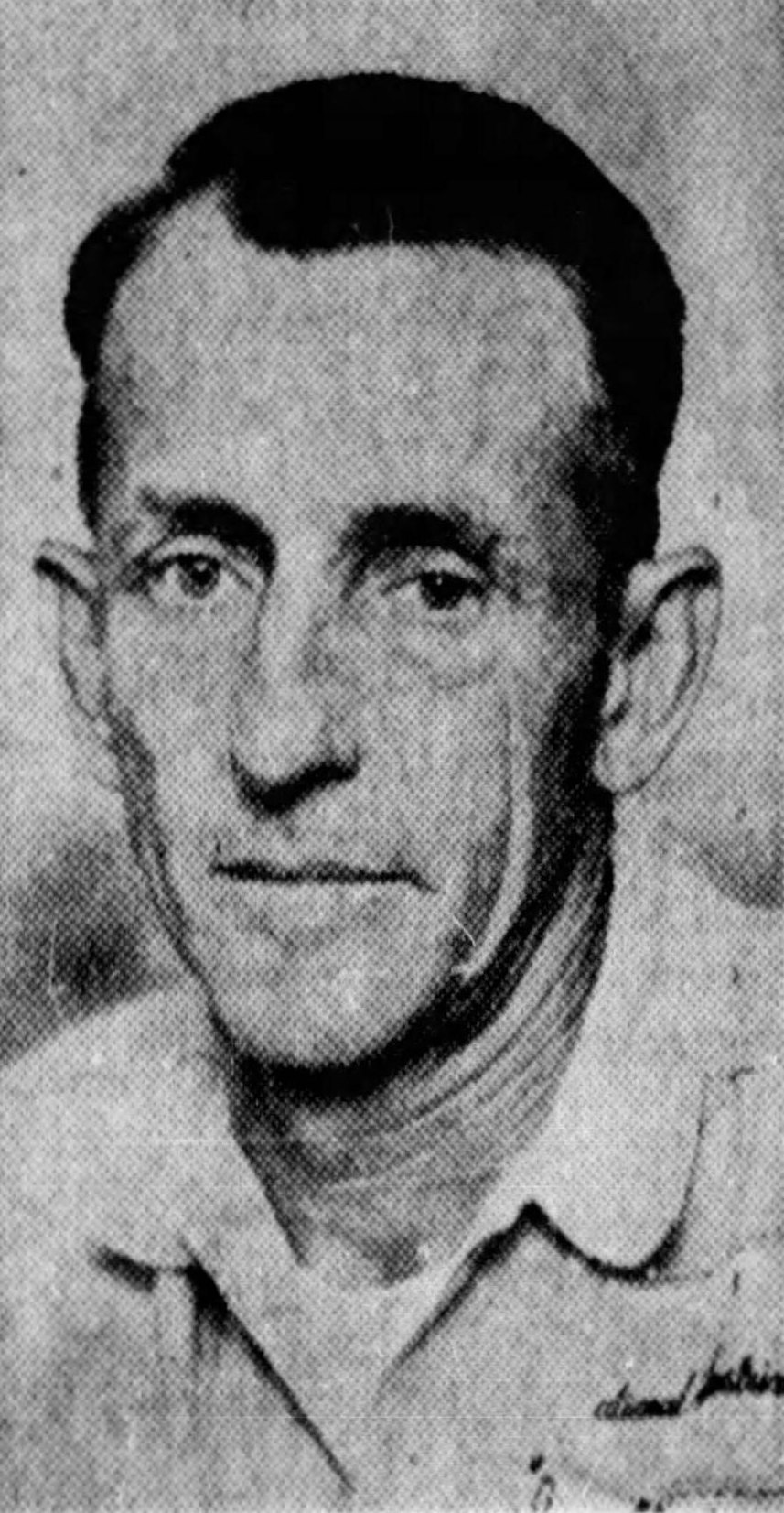
Phillip Lee Ingle: The Murders of Two Elderly North Carolina Couples
Phillip Lee Ingle was an American serial killer responsible for murdering four elderly people in western North Carolina during the summer of 1991. His victims were two married couples living in quiet rural homes near Cherryville. The attacks were separated by approximately six weeks and were strikingly similar: Ingle entered each residence without permission, surprised the occupants, and beat them to death with a heavy blunt object.
Ingle knew the first couple and had previously rented a mobile home from them. No clear financial, sexual, or personal motive explained the killings. He later made disturbing statements about enjoying the suffering of dying people, while at other times claiming that he had imagined his victims as demons. His mental condition became a major issue at trial, but a jury rejected his insanity defense and convicted him of four murders.
Early Life and Personal Problems
Phillip Lee Ingle was born on August 7, 1961, in Lincoln County, North Carolina. Accounts of his childhood described an unstable family environment, exposure to attempted suicide and substance abuse, and sexual abuse by an older relative. He reportedly attempted suicide when he was very young and later shot himself in the stomach as a teenager or young adult.
As an adult, Ingle repeatedly abused alcohol and drugs. He received treatment at hospitals and mental-health facilities and had previous legal trouble involving offenses such as breaking and entering and assault. During his murder trial, defense witnesses described him as having serious emotional and psychological problems. Prosecutors, however, emphasized his deliberate actions before and after the killings, including obtaining weapons, entering the victims’ homes quietly, disposing of evidence, and attempting to conceal his involvement.
The Victims
- William Fred Davis — age 68; killed July 28, 1991, at his rural home in Rutherford County, North Carolina.
- Margaret Shufford Davis — age 67; killed July 28, 1991, at the same Rutherford County residence.
- E.Z. Willis — age 70; killed September 8, 1991, at his home near Cherryville in Gaston County, North Carolina.
- Sarah Willis — age 67; killed September 8, 1991, at the same Gaston County residence. The couple’s bodies were discovered the following day.
The Murders of William and Margaret Davis
On Sunday, July 28, 1991, William and Margaret Davis returned to their rural Rutherford County home after attending church. Relatives saw and spoke with them during the afternoon. At approximately 6:00 p.m., their daughter visited the house to borrow a vacuum cleaner. She found no one in the immediate area, but the back door was unlocked.
Sometime between approximately 6:00 p.m. and 8:45 p.m., Ingle drove to the property. He was familiar with the Davises because he had rented a nearby mobile home from them in 1987. Ingle parked behind the house, removed an axe handle from his vehicle, and entered through the unlocked back door.
Margaret Davis was in the kitchen. Ingle approached her from behind and repeatedly struck her in the head with the axe handle. He then entered the den, where William Davis was sitting in a reclining chair and watching television. William was hard of hearing, and the television was playing loudly. Evidence suggested that he did not realize his wife had been attacked in the adjoining room. Ingle surprised him and beat him repeatedly with the same weapon.
Both victims suffered massive head injuries. Margaret had multiple wounds to her scalp and face, severe bleeding around the brain, and numerous skull fractures. Injuries to her hand and elbow suggested that she may have attempted to protect herself. William suffered extensive fractures, numerous facial and scalp wounds, and injuries to his fingers that may also have been defensive wounds.
After the murders, Ingle took Margaret’s pocketbook and a floral-patterned dress. He drove several miles away, discarded the dress, and attempted to burn the pocketbook and its contents. He later returned, retrieved the damaged pocketbook, and threw it and the axe handle into a creek. Investigators eventually recovered the pocketbook, but the murder weapon was never found.
The Murders of E.Z. and Sarah Willis
Approximately six weeks later, on September 8, 1991, Ingle targeted the home of E.Z. and Sarah Willis in rural Gaston County, near Cherryville. He entered the residence through an unsecured window and carried a tire iron as his weapon.
Ingle attacked the couple inside their home, striking them repeatedly with the tire iron. Unlike the Davises, the Willises apparently had some warning of the assault. E.Z. Willis attempted to defend himself and his wife with a cane. During the struggle, he struck Ingle in the head, producing a black eye and a cut on Ingle’s face. Despite his resistance, E.Z. was overwhelmed and killed. Sarah was also beaten to death.
The couple’s daughter discovered their bodies on September 9, 1991. The injuries Ingle received during the struggle later became important evidence. Shortly after the murders, acquaintances noticed his damaged eye and questioned him about it. Ingle claimed that he had fallen against a doorknob, but they did not believe his explanation.
Confessions and Arrest
Before the Willis murders, Ingle had already spoken to his friend Jeff Houser about killing the Davises. Ingle reportedly admitted that he had beaten two people to death and asked whether Houser wanted anyone killed. When Houser jokingly mentioned a neighbor, Ingle began asking serious questions about the proposed target and said that an axe handle was all he needed.
After the Willis murders, Ingle returned to Houser’s residence with the visible black eye. In the presence of Houser and another man, Steve White, Ingle again discussed killing people. He offered to murder Houser’s neighbor and made a chilling statement about enjoying the agony, pain, and suffering of dying victims.
Houser and White contacted the State Bureau of Investigation. Law-enforcement officers initially questioned Ingle about the Willis killings. During the interview, he also admitted killing William and Margaret Davis. He provided details of both crime scenes and later directed investigators to the area where he had discarded property taken from the Davis home.
Trial and Mental-Health Defense
Ingle was charged with four counts of first-degree murder and related offenses. His defense argued that he had been experiencing a psychotic episode and could not understand the nature or wrongfulness of his actions. A psychiatrist testified about Ingle’s troubled childhood, personality disorder, substance abuse, suicide attempts, and history of psychiatric treatment.
Prosecutors argued that his conduct demonstrated planning and awareness. Ingle selected weapons, approached the homes without warning, attacked multiple victims in separate rooms, removed evidence, attempted to burn stolen property, and concealed the weapons. He also behaved normally for periods between the crimes and told a friend that he had too much to lose by being caught.
In February 1993, a jury found Ingle guilty of the Davis murders. The Willis killings were prosecuted separately, and he was ultimately held responsible for all four deaths. The jury rejected the claim that he was legally insane. He received death sentences for the murders.
Execution
Ingle eventually stopped pursuing further appeals. He stated that he wanted the legal proceedings to end so that the victims’ families might find peace. Members of his family attempted to prevent the execution, arguing that his decision was connected to his long history of suicidal behavior, but the courts found him competent to abandon his appeals.
Phillip Lee Ingle was executed by lethal injection at Central Prison in Raleigh, North Carolina, on September 22, 1995. He was 34 years old. In his final statement, he expressed opposition to capital punishment, spoke about religious repentance, and again said that ending his appeals might help the victims’ relatives. His execution concluded a case remembered for the apparently motiveless and exceptionally violent murders of four elderly people inside their own homes.