John Tornow: The Wild Man of the Wynoochee
Early Life and Isolation
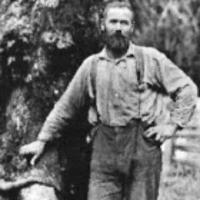
John Tornow was born on September 4, 1880, and grew up near the Satsop and Wynoochee river valleys in western Washington. He belonged to a farming and logging family, but from childhood he appeared far more comfortable in the wilderness than in the company of other people. He frequently disappeared into the forest for extended periods, surviving by hunting, trapping, and gathering what he needed from the land.
Tornow became known as an unusually skilled tracker and marksman. Accounts described him as a physically imposing man with an intimate knowledge of the dense forests, rivers, swamps, and mountain trails of the Olympic Peninsula. He occasionally worked in logging camps, but he increasingly rejected settled life and withdrew into remote areas. Local residents regarded him as eccentric, although many initially considered him harmless.
His relatives eventually became concerned about his mental condition. In approximately 1909, Tornow was committed to a private institution in Oregon. He escaped after about a year and returned to the Washington wilderness. He reportedly blamed his brothers for having him confined and avoided most members of his family afterward. He did, however, occasionally visit his sister and her household, which included her 19-year-old twin sons, John and William Bauer.
The Deaths of the Bauer Twins
On September 3, 1911, John and William Bauer were found shot to death near their family home on the Olympic Peninsula. Each young man had suffered a fatal gunshot wound. Their weapons were missing, and suspicion quickly centered on their uncle.
The precise circumstances of the shooting were never established in court because Tornow fled and was never captured alive. One account held that Tornow had killed a cow and was preparing the carcass when the Bauer brothers fired in his direction, possibly believing that they were shooting at a bear. Tornow may have believed that the shots were intended for him and returned fire. Another theory was that the brothers had deliberately gone into the woods to confront or capture their uncle.
Whatever caused the encounter, the deaths marked the beginning of one of the longest and most dangerous manhunts in the history of the Pacific Northwest. Tornow disappeared into the Wynoochee Valley, where the rugged terrain gave him an enormous advantage over the posses searching for him.
The Manhunt
More than 50 men participated in the initial search for Tornow. Loggers, farmers, hunters, and law-enforcement officers moved through the Satsop and Wynoochee regions, but they found only abandoned shelters and signs that Tornow had recently occupied certain camps. His ability to travel silently, hide his tracks, and survive without regular supplies allowed him to remain beyond the reach of authorities.
Newspapers gave Tornow frightening names that included the “Wild Man of the Wynoochee,” the “Cougar Man,” the “Beast-Man,” and the “Mad Daniel Boone.” Reports portrayed him as a nearly supernatural figure who moved through the forest undetected and watched search parties from hidden positions. Some stories were plainly exaggerated, but the fear surrounding the fugitive was genuine. Logging operations were disrupted, hunters avoided the area, and families living near the wilderness kept firearms close at hand.
Tornow was also suspected of breaking into cabins and stores for food, clothing, ammunition, and other supplies. One widely repeated account accused him of stealing a strongbox containing a substantial amount of money from a rural store that also served as a bank. The possibility that Tornow possessed the missing money increased public interest in the hunt and attracted men hoping to collect both the stolen cash and the reward offered for his capture.
The Murders of Colin McKenzie and Albert V. Elmer
In early 1912, Deputy Sheriff Colin McKenzie and Game Warden Albert V. Elmer entered the Oxbow country while investigating reports that Tornow had been seen in the area. The men traveled with a bloodhound and searched the rough country for several days. On March 9, 1912, the dog returned to camp without them.
A search party later discovered McKenzie and Elmer buried together in a shallow grave. Both men had been shot several times. Their clothing, weapons, jewelry, and other belongings had been removed. Items later recovered from Tornow’s final camp reportedly included property connected to the dead officers, strengthening the belief that he had killed them.
The murders transformed the pursuit from a search for a suspected family killer into a determined campaign to capture a man believed to have deliberately ambushed law-enforcement officers. The reward increased, and numerous posses entered the wilderness. Tornow continued to evade them for more than a year.
The Final Pursuit
Louis Blair, a trapper and friend of Deputy McKenzie, became personally committed to finding Tornow. Blair was eventually accompanied by Charles James Lathrop, who had known Tornow earlier in life, and Deputy Sheriff Giles Quimby. On April 16, 1913, the three men followed tracks through snow and difficult terrain to a crude shelter near a swamp west of Matlock.
The cabin was positioned in a location that was difficult to approach without being seen. Quimby reportedly wanted to return with additional officers, but Blair and Lathrop continued toward the shelter. Tornow was concealed behind a tree or within the surrounding vegetation and opened fire as the men advanced.
Louis Blair was struck and fell near the cabin. Charles Lathrop attempted to return fire but was fatally shot in the neck. Quimby, who was positioned farther away, exchanged several shots with Tornow. The dense forest and limited visibility made it impossible for Quimby to immediately determine whether Tornow had been hit.
Quimby withdrew through the wilderness and traveled many miles to obtain assistance. When a larger party reached the site the following day, Tornow was found dead near the tree from which he had fired. He had been struck during the gun battle. Blair and Lathrop were also found dead nearby.
Known and Attributed Victims
- John Bauer, 19 — Killed on September 3, 1911, near the Bauer family property in the Satsop-Wynoochee region of Washington. He was Tornow’s nephew and the twin brother of William Bauer. He was killed by gunfire during an encounter in the woods.
- William “Will” Bauer, 19 — Killed on September 3, 1911, near the Bauer family property in the Satsop-Wynoochee region of Washington. He was Tornow’s nephew and John Bauer’s twin brother. The exact reason for the confrontation remains disputed.
- Deputy Sheriff Colin McKenzie, 33 — Killed on March 9, 1912, in the Oxbow country near Montesano, Washington. McKenzie was searching for Tornow when he and Albert Elmer were shot. Their bodies were concealed in a shallow grave.
- Albert V. Elmer, 44 — Killed on March 9, 1912, in the Oxbow country near Montesano, Washington. Elmer, a game warden who was also recognized as a deputy, accompanied McKenzie during the search. He was shot and buried beside him.
- Louis Blair — Killed on April 16, 1913, near Tornow’s remote shelter west of Matlock, Washington. Blair was a trapper and deputized civilian who had spent considerable time pursuing Tornow after McKenzie’s murder.
- Charles James Lathrop, 40 — Killed on April 16, 1913, near Tornow’s shelter west of Matlock, Washington. Lathrop was a deputized civilian and an acquaintance of Tornow who joined Blair and Deputy Giles Quimby in the final pursuit.
Death of John Tornow
John Tornow died during the gun battle on April 16, 1913. His body was recovered on April 17 and transported to Montesano. News of his death drew enormous crowds. Hundreds of people attempted to view his remains, and deputies were required to control the gathering at the local morgue.
Authorities found Tornow dressed in heavily patched clothing that had been adapted for wilderness survival. His shelter contained bedding, cooking equipment, food, and other supplies believed to have been taken from cabins or provided by people sympathetic to him. He had apparently lived largely on wild game and other food obtained from the surrounding forest.
His death ended a manhunt that had lasted approximately 19 months. Deputy Giles Quimby was widely praised for surviving the final encounter and firing the shots that brought down the fugitive. Tornow was buried at the family cemetery near Matlock, Washington.
Disputed Classification and Legacy
John Tornow is frequently described as a serial killer because six deaths were attributed to him in three separate incidents between 1911 and 1913. However, his classification differs from that of a conventional predatory serial murderer. His alleged killings occurred during family conflict, efforts to capture him, and armed confrontations with lawmen and bounty hunters. No evidence established that he hunted strangers for pleasure or followed a recurring ritualistic pattern.
Tornow was never arrested, formally tried, or convicted of murder. Much of the account was reconstructed from physical evidence, statements made by surviving participants, contemporary newspaper reports, and later historical research. Some writers have argued that the Bauer shootings may have resulted from a misunderstanding or an act of perceived self-defense. Others maintain that the deaths of the deputies and the concealment of their bodies demonstrate deliberate and calculated murder.
The sensational reporting surrounding the case also blurred the line between fact and folklore. Newspapers portrayed Tornow as a monstrous wilderness creature, while later retellings sometimes presented him as a persecuted recluse driven to violence. The documented deaths of six men remain at the center of his story, but the motives behind several of the shootings cannot be known with certainty.
More than a century later, Tornow remains one of Washington’s most controversial historical outlaws. His story reflects the isolation of the early Pacific Northwest, the difficulties of law enforcement in an immense wilderness, and the ability of newspapers and public fear to transform a fugitive into a legend. Whether remembered as a serial killer, a violent outlaw, or a mentally troubled recluse, John Tornow left behind a record of death that permanently shaped the history and folklore of the Wynoochee Valley.