Mack Ray Edwards: Child Serial Killer of Los Angeles County
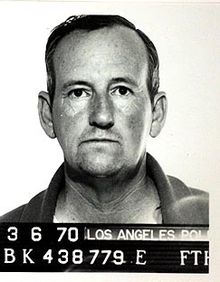
Mack Ray Edwards was an American serial killer and child molester who confessed to murdering six children in Southern California between 1953 and 1969. Born on October 17, 1918, in Montgomery County, Arkansas, Edwards moved to the Los Angeles area in the early 1940s and eventually became a heavy-equipment operator. His work placed him on numerous freeway and road-construction projects throughout Southern California, giving him familiarity with isolated construction areas, deep excavations, embankments and stretches of undeveloped land.
Edwards was ultimately convicted of three murders, but he separately confessed to three additional killings in which the victims' bodies were never recovered. Years later, investigators also examined him as a possible suspect in several other unsolved disappearances and murders of children. The true number of people he killed remains unknown.
The Murder of Stella Darlene Nolan
Edwards' first known victim was eight-year-old Stella Darlene Nolan. Stella disappeared from Auction City, a large market and entertainment area in Norwalk, California, on the evening of June 20, 1953. Her mother worked at a refreshment stand there, and Stella had been spending time nearby before suddenly vanishing.
According to Edwards' later confession, he abducted Stella and sexually assaulted her. He strangled the child and, believing he had killed her, abandoned her near a remote bridge. When Edwards returned the following morning, he discovered that Stella had survived the initial attack and had managed to move some distance from the location where he had left her. Edwards then stabbed her to death. His account therefore places Stella's actual death on June 21, 1953, although she had disappeared the previous evening.
For nearly seventeen years, Stella's disappearance remained unresolved. After Edwards surrendered in 1970, he led investigators to an embankment near the Santa Ana Freeway in Downey. Stella's skeletal remains were recovered beneath several feet of earth near a freeway abutment. Edwards later pleaded guilty to her murder.
The Disappearance of Donald Lee Baker and Brenda Jo Howell
On August 6, 1956, Donald Lee Baker and Brenda Jo Howell disappeared while riding bicycles in the San Gabriel Canyon area near Glendora Mountain Road. Current missing-person records list both children as twelve years old at the time, although older newspaper and crime accounts frequently gave different ages.
Brenda was particularly close to Edwards' family because she was the younger sister of his wife. Donald was a neighborhood child. The two had gone bicycle riding toward the canyon and Morris Dam but failed to return.
A few days after their disappearance, Donald's jacket and Brenda's bicycle were discovered near Morris Dam. Donald's bicycle was found approximately a month later. Despite extensive searches, neither child was ever located.
When Edwards confessed in 1970, he admitted killing both children and directed investigators toward an area where he claimed he had disposed of their bodies. Searches failed to locate human remains. Because Donald and Brenda have never been recovered, their precise dates and causes of death cannot be independently verified. Edwards' confession placed their killings in connection with their August 6, 1956 disappearance.
The Murder of Gary Rocha
Gary Rocha, whose surname has also appeared as "Rochet" in some accounts, was sixteen years old when he was shot to death at his family's home in the Granada Hills area on November 26, 1968. Unlike several of Edwards' other victims, Gary was found shortly after his death and his murder date is established.
Edwards later confessed that Gary had not originally been the person he intended to attack. According to his statement, Edwards entered the residence intending to abduct Gary's younger sister. When he encountered Gary instead, Edwards shot the teenager.
The apparently isolated killing remained unsolved until Edwards walked into a police station more than a year later and began describing his crimes. Gary's murder became one of the three killings to which Edwards eventually pleaded guilty.
The Disappearance and Murder of Roger Dale Madison
Roger Dale Madison was fifteen years old when he disappeared from Sylmar in December 1968. Current missing-person records list him as last seen on December 16, 1968, leaving his home in the 14500 block of Sayre Street on his motorcycle. Roger was a friend and classmate of Edwards' son, and Edwards was familiar to the Madison family.
Edwards confessed that he lured Roger into an orange grove and stabbed him to death. He said he later transported Roger's body to a freeway-construction project in the Thousand Oaks area and used his access to heavy equipment and the work site to bury the teenager beneath or beside what became State Route 23.
Roger's body has never been recovered, so the exact date of his death cannot be independently established. Law-enforcement descriptions have sometimes placed the killing around December 14, while missing-person records identify December 16 as Roger's last-seen date.
Decades after Edwards died, investigators returned to the case. In October 2008, local, state and federal authorities excavated an area near the 23 Freeway and Tierra Rejada Road in Ventura County. The operation was based partly on Edwards' description of the burial and research into the construction projects on which he had worked. Despite an extensive excavation, Roger's remains were not located.
The Murder of Donald Allen Todd Jr.
Donald Allen Todd Jr., thirteen, disappeared in Pacoima on May 16, 1969. Donald had left school after being suspended following a fight and was on his way home when he disappeared.
Donald was sexually assaulted and shot with a .22-caliber firearm. His body was discovered beneath or near a bridge approximately a mile and a half from his home. Edwards later admitted responsibility for the killing, and May 16, 1969 is consistently identified as the date of Donald's death.
Donald's murder was one of the cases that prosecutors could directly pursue after Edwards surrendered. Along with the murders of Stella Nolan and Gary Rocha, it formed the basis of the three murder convictions that sent Edwards to death row.
Known and Confessed Victims
- Stella Darlene Nolan, 8 — Abducted from Auction City in Norwalk, California, on June 20, 1953. According to Edwards' confession, she survived his initial attack before he returned and killed her on June 21, 1953. Her remains were recovered near a Santa Ana Freeway abutment in Downey in March 1970. Edwards was convicted of her murder.
- Donald Lee Baker, 12 — Disappeared August 6, 1956, while bicycling in the San Gabriel Canyon area of Los Angeles County. Edwards confessed to killing him. His remains have never been found, so an exact death date cannot be independently verified.
- Brenda Jo Howell, 12 — Disappeared with Donald Baker on August 6, 1956, near Glendora Mountain Road and Morris Dam in the San Gabriel Canyon area. She was Edwards' sister-in-law. Edwards confessed to killing her, but her remains have never been recovered and an exact death date is unverified.
- Gary Rocha, 16 — Shot to death at his home in the Granada Hills area on November 26, 1968. His surname is also frequently reported as "Rochet." Edwards confessed and was convicted of Gary's murder.
- Roger Dale Madison, 15 — Last seen in Sylmar on December 16, 1968. Edwards confessed to stabbing Roger and claimed to have buried him at a Route 23 construction site in the Thousand Oaks area. Roger remains missing, preventing independent confirmation of the precise death date.
- Donald Allen Todd Jr., 13 — Murdered May 16, 1969, after disappearing from Pacoima. He was sexually assaulted and shot with a .22-caliber weapon, and his body was found near a bridge not far from his home. Edwards was convicted of his murder.
The 1970 Kidnapping That Ended the Killing
Edwards' crimes came to light after a kidnapping in March 1970. Edwards and a fifteen-year-old male accomplice entered the Sylmar home of three sisters between the ages of twelve and fourteen. The girls were forced to leave with the kidnappers and were taken toward a remote area north of Los Angeles.
The plan quickly collapsed. Because the girls had previously lived near Edwards, they recognized him. Two escaped, while the remaining sister was later recovered safely. Realizing that the surviving victims could identify him, Edwards went to the LAPD's Foothill Division station on March 6, 1970.
He surrendered a loaded handgun and initially admitted involvement in the kidnapping. He then astonished investigators by beginning to discuss unsolved murders dating back to the 1950s. The statement transformed what had appeared to be a failed kidnapping case into an investigation of one of Southern California's most disturbing series of crimes against children.
Confession and Recovery of Stella Nolan
Edwards gave police information about six children he said he had murdered: Stella Nolan, Donald Baker, Brenda Howell, Gary Rocha, Roger Madison and Donald Todd. His knowledge of the crimes, combined with evidence already available in several cases, gave investigators reason to take the confessions seriously.
Most importantly, Edwards was able to direct authorities to the long-hidden remains of Stella Nolan. Her recovery provided physical confirmation that Edwards possessed information only someone closely connected to the crime would have known.
The other cases were more complicated. Gary Rocha and Donald Todd had already been found, but the remains of Baker, Howell and Madison could not be located despite Edwards' descriptions. Prosecutors therefore concentrated on the three murders for which sufficient evidence existed.
Conviction and Death Sentence
Edwards pleaded guilty to the murders of Stella Darlene Nolan, Gary Rocha and Donald Allen Todd Jr. He was sentenced to death in 1970 and transferred to San Quentin State Prison.
Edwards appeared to want a death sentence and spoke openly about wanting to be executed. He made suicide attempts while in custody and, on October 30, 1971, succeeded in killing himself by hanging himself with an electrical television cord in his San Quentin cell. He was fifty-three years old.
His suicide prevented investigators from fully exploring later statements suggesting that the number of victims might have been considerably higher than six.
Claims of Additional Murders
One of the greatest uncertainties surrounding Mack Ray Edwards concerns the true number of his victims. During his official confession, Edwards identified six murdered children. At other times, however, he reportedly told a jailer or fellow inmates that he had killed approximately eighteen children, with some accounts placing his claims even higher.
He later backed away from those statements and again insisted that there had been only six victims. Investigators were skeptical, particularly because of the enormous gap between the 1956 disappearance of Baker and Howell and the murders that resumed in 1968. Detectives questioned whether a man who had already killed three children by 1956 had actually stopped for approximately twelve years.
Thomas Eldon Bowman - Suspected Victim
Eight-year-old Thomas "Tommy" Eldon Bowman disappeared on March 23, 1957, while hiking with relatives in the Arroyo Seco Canyon area near Pasadena and Altadena. Tommy had walked ahead of his family toward their vehicle and vanished before the others reached it.
The case acquired a significant possible connection to Edwards decades later. A letter written by Edwards from prison to his wife surfaced in which he referred to the "Tommy Bowman boy" and wrote that he had considered adding the boy to his original statement to police but decided against it.
Investigators regarded the letter as potentially important evidence connecting Edwards to Tommy's disappearance. Nevertheless, Tommy's body has never been found and Edwards was never charged, so there is no verified date of death and his case remains officially unresolved.
Bruce Howard Kremen - Suspected Victim
Bruce Howard Kremen was six years old when he disappeared from Buckhorn Flat in the Angeles National Forest on July 12, 1960. Bruce was attending a YMCA camping trip involving dozens of children and adults when he became separated from two other children only a short distance from the campsite.
An enormous search failed to find him. The rugged mountain environment initially supported the possibility that Bruce had become lost or suffered an accident, but investigators later considered foul play.
Edwards became a suspect because of his known crimes against children, his familiarity with the Angeles National Forest and his movements around Southern California during the period. Bruce has never been recovered, and there is no verified date or cause of death.
Karen Lynn Tompkins - Suspected Victim
Karen Lynn Tompkins, eleven, disappeared in Torrance, California, on August 18, 1961. She was reportedly walking home from school when she vanished. She was never found.
When detectives reopened several old child-disappearance cases decades later, Karen's case was among those examined for a possible connection to Edwards. Investigators noted similarities between her age and circumstances and those of children Edwards was known to have targeted.
No physical evidence has publicly established that Edwards killed Karen. She remains missing, meaning no verified date or cause of death can be given.
Ramona Irene Price - Suspected Victim
Seven-year-old Ramona Irene Price disappeared near Santa Barbara on September 2, 1961. She had gone for a walk while her family was preparing to move and was never seen by her family again.
Decades later, investigators discovered that Edwards had worked as a heavy-equipment operator on a freeway bridge project in the Santa Barbara area around the time Ramona disappeared. Witness information from 1961 also described Ramona interacting with a man in a vehicle, creating additional interest in whether Edwards could have been involved.
In 2011, investigators searched near the Winchester Canyon Road bridge over U.S. 101 after cadaver dogs showed interest in an area connected to the old construction project. Excavation did not produce Ramona's remains. Edwards remains only a possible suspect in her disappearance, and there is no verified date or cause of death.
Dorothy Gale Brown - Suspected Victim
Dorothy Gale Brown was eleven years old when she disappeared from Torrance in July 1962 while riding her bicycle. Her body was discovered the following day, July 4, in the ocean off the Corona del Mar area of Orange County.
The death was investigated as a homicide. Contemporary records reported asphyxia from drowning as the cause of death, while later accounts also described evidence that Dorothy had been assaulted. The precise time of her death was not publicly established beyond the period between her disappearance and the recovery of her body.
Detectives later considered whether Edwards might have been involved because Dorothy fit the age range of his known victims and disappeared during the unexplained gap in his admitted killing history. No evidence has conclusively established him as Dorothy's killer.
The Freeway Connection
One of the most unusual features of the Edwards investigation was his occupation. As a heavy-equipment operator, he had access to road-building projects at a time when Southern California's freeway network was expanding rapidly. Construction zones could contain enormous excavations that were filled, compacted and eventually covered by pavement or massive concrete structures.
At least one connection was proven: Stella Nolan's remains were recovered from an embankment beside the Santa Ana Freeway after Edwards directed police to the location. Edwards also specifically claimed that Roger Madison had been buried at a Route 23 construction project where Edwards had worked.
These circumstances led investigators to consider the disturbing possibility that other victims could have been buried at construction sites and permanently covered during freeway development. Edwards reportedly suggested while incarcerated that some of his undisclosed victims would never be found because recovering them would require tearing apart completed roads.
Later Investigations
Edwards' death did not end the investigation. Beginning decades later, detectives, researchers and relatives of missing children reconstructed Edwards' movements through employment records, addresses, construction contracts and old case files.
Investigators used cadaver dogs, ground-penetrating equipment and excavation machinery at locations connected to Edwards. His former property in Sylmar was examined. Authorities dug beside Route 23 while searching for Roger Madison. Police in Santa Barbara excavated near a freeway construction site while investigating the disappearance of Ramona Price.
None of those later searches produced the definitive discoveries investigators hoped for, but they demonstrated that Edwards remained a serious suspect in unresolved cases long after his death.
Legacy of the Case
Mack Ray Edwards died without providing a complete and reliable account of everything he had done. Three murders were proven in court, three additional killings were specifically confessed to by Edwards but involved victims whose remains remain missing, and several other child disappearances and murders have been investigated for possible connections to him.
The uncertainty surrounding his victim count is an important part of the case. It would be inaccurate to describe every missing child examined by investigators as a confirmed Edwards victim. Thomas Bowman, Bruce Kremen, Karen Tompkins, Ramona Price and Dorothy Brown remain suspected or possible victims rather than proven ones.
What is established is that Edwards preyed upon children across many years, exploited familiarity and trust in several cases, and used his knowledge of Southern California's isolated areas and construction landscape to conceal crimes. His March 1970 surrender solved murders that had remained mysteries for years, but his suicide on October 30, 1971 ensured that many questions about his activities would remain unanswered.