Bobby Jack Fowler: Convicted Violent Offender and Suspected Serial Killer
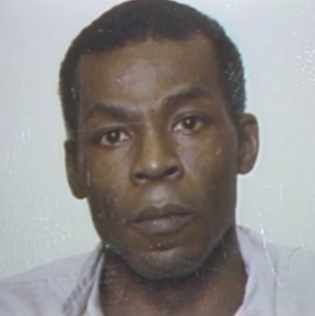
Bobby Jack Fowler was an American violent sex offender and suspected serial killer whose movements through the United States and Canada placed him near several unsolved murders of young women. Born on June 12, 1939, in Texas, Fowler spent much of his adult life moving from place to place, working temporary construction and roofing jobs and frequently staying in motels. His criminal history included sexual violence, assault, kidnapping, and attempted murder. Although he was never convicted of murder, Canadian police eventually concluded through DNA evidence that Fowler was responsible for the 1974 murder of 16-year-old Colleen MacMillen. He was also considered a strong suspect in the murders of Gale Weys and Pamela Darlington in British Columbia and was investigated in connection with several unsolved killings in Oregon.
A Transient and Violent Offender
Fowler was difficult for investigators to track because he traveled extensively and frequently changed jobs and residences. He worked as a general laborer and roofer and spent periods of time in numerous American states as well as British Columbia. Investigators learned that he had worked for Happy's Roofing in Prince George, British Columbia, during 1974. He commonly traveled in older automobiles, stayed in inexpensive motels, visited bars, and was known to pick up hitchhikers. Those circumstances later became important because several women connected to cases in which he was investigated disappeared while hitchhiking or traveling near major highways.
His documented history of violence against women extended for decades. Investigators described Fowler as capable of sudden and extreme violence, particularly during encounters involving women, alcohol, and sexual aggression. The clearest example occurred in Newport, Oregon, in 1995 and ultimately resulted in the imprisonment that ended his freedom permanently.
The June 28, 1995 Newport Attack
On June 28, 1995, Fowler was arrested following a violent attack at the Tides Inn motel in Newport, Oregon. The victim, whose name has generally been withheld publicly, escaped from Fowler by jumping from a second-story motel window. She was unclothed and still had a rope tied around her ankle when she escaped. Fowler had assaulted and restrained her and threatened her during an attempted sexual attack. The extraordinary escape allowed the victim to survive and provided police with a living witness who could describe what Fowler had done.
On January 8, 1996, Fowler was convicted of first-degree kidnapping, attempted first-degree rape, first-degree sexual abuse, coercion, fourth-degree assault, and menacing. He received a total sentence of 195 months, or 16 years and three months. The conviction was especially significant to later cold-case investigations because authorities obtained identifying information and DNA from Fowler while he was in the criminal justice system.
The DNA Breakthrough in British Columbia
Years after Fowler was imprisoned, the Royal Canadian Mounted Police's Project E-PANA was examining a series of murders and disappearances associated with major highways in British Columbia. The cases are frequently discussed in connection with the broader "Highway of Tears" tragedy, although the E-PANA investigation included cases along Highways 5 and 97 as well as Highway 16.
One of those cases was the murder of 16-year-old Colleen MacMillen. Colleen disappeared in August 1974 after leaving her home in Lac La Hache and intending to hitchhike to visit a friend. Investigators had preserved evidence from her clothing for decades. Advances in forensic testing eventually allowed investigators to obtain a useful male DNA profile. In 2012, that DNA was matched to Bobby Jack Fowler. The RCMP publicly stated that the evidence allowed investigators to conclude that Fowler was responsible for Colleen's murder.
The discovery came too late for Fowler to be prosecuted. He had died in Oregon custody on May 20, 2006, at age 66 from end-stage lung cancer. As a result, no murder trial could take place and investigators could not interrogate him about Colleen or the numerous other cases in which his name had surfaced.
Victims Linked to or Investigated in Connection With Fowler
For several of these victims, an exact medical date of death has never been publicly established because their bodies were discovered days, weeks, or months after they disappeared. The dates below therefore distinguish between the last confirmed sighting and the date the victim's remains were recovered rather than presenting an uncertain date as a confirmed date of death.
- Gale Weys, 19 — Clearwater, British Columbia: Gale Weys was last seen on October 19, 1973. She was attempting to travel from Clearwater to Kamloops and was believed to have been hitchhiking. Her remains were discovered on April 6, 1974, in a roadside ditch along Highway 5 south of Clearwater. Because of the long period between her disappearance and the discovery of her remains, an exact date of death has not been publicly established. In 2012, the RCMP identified Fowler as a strong suspect in Gale's murder. Fowler's movements, his violent history, and similarities to other cases were among the factors investigators considered, but he was never charged and the case did not receive the same conclusive DNA identification as the MacMillen murder.
- Pamela Darlington, 19 — Kamloops, British Columbia: Pamela Darlington disappeared on November 6, 1973, after telling friends that she intended to travel to a local bar. She was believed to have been hitchhiking. Her body was discovered the following day, November 7, in the Kamloops area near the Thompson River and Pioneer Park. Contemporary police accounts described a violent assault. The RCMP later identified Fowler as a strong suspect in Pamela's homicide. As with Gale Weys, however, authorities did not possess the conclusive forensic evidence necessary to prove the case against him in court.
- Colleen MacMillen, 16 — Lac La Hache/100 Mile House, British Columbia: Colleen was last seen on August 9, 1974, after leaving her home at Lac La Hache and planning to hitchhike to a friend's residence. Her remains were discovered on September 5, 1974, off a logging road in the 100 Mile House area. The precise day on which she was killed was not independently established, so her August 9 disappearance and September 5 recovery are the verified dates associated with the case. Decades later, male DNA recovered from evidence associated with Colleen's clothing was matched to Fowler. In September 2012, the RCMP announced that investigators considered Fowler responsible for her murder.
- Sheila Swanson, 19 — Lincoln County, Oregon: Sheila Swanson and her friend Melissa Sanders were last seen at approximately 1:00 a.m. on May 3, 1992, near Beverly Beach State Park on the Oregon coast. Their remains were not discovered until October 10, 1992, when they were found in a wooded area near Eddyville. The condition of the remains prevented investigators from determining a precise time or cause of death. In 2012, Lincoln County authorities described Fowler as a person of interest in the double homicide. His involvement was never proven.
- Melissa Sanders, 17 — Lincoln County, Oregon: Melissa disappeared with Sheila Swanson on May 3, 1992, after the two had been near Beverly Beach State Park. Her remains were recovered with Sheila's on October 10, 1992, near Eddyville. Investigators could not establish an exact date of death from the remains. Fowler was examined as a person of interest because of his history, movements in Oregon, and the circumstances of the case, but no charge or definitive forensic link to Melissa's death was established.
- Jennifer Kari Esson, 15 — Newport, Oregon: Jennifer Esson and Kara Leas were last seen at about 1:00 a.m. on January 28, 1995, while hitchhiking in the Agate Beach area of Newport. Their bodies were discovered on February 15, 1995, near a logging road approximately three miles north of Newport. Oregon State Police records identify strangulation and asphyxiation as the causes of death. The precise date between January 28 and February 15 on which Jennifer died has not been publicly established. Lincoln County investigators later named Fowler as a suspect in the killings, emphasizing his violent history, his presence in the area, and similarities to his known behavior. No murder charge was filed.
- Kara Christine Leas, 16 — Newport, Oregon: Kara disappeared with Jennifer Esson during the early morning of January 28, 1995. Her body was found with Jennifer's on February 15 in the wooded area north of Newport. Investigators determined that Kara had died from strangulation and asphyxiation, although the exact date of death was not established publicly. Fowler became a suspect in the double homicide. Five months after the girls disappeared, he committed the Newport motel attack that led to his arrest and eventual imprisonment. Despite investigators' suspicions, the murders of Kara Leas and Jennifer Esson remain unsolved.
Why Fowler Drew Investigators' Attention
The cases connected to Fowler shared several characteristics that drew the attention of investigators. A number of victims were young women traveling alone or hitchhiking. Fowler was highly mobile and could appear in one community and then leave it quickly. His employment in construction and roofing allowed him to move without attracting much attention, and investigators found major gaps in the record of his whereabouts. Most importantly, his known crimes demonstrated that he was willing to restrain, sexually attack, severely assault, and threaten women.
Investigators nevertheless emphasized the difference between suspicion and proof. The DNA evidence in Colleen MacMillen's case was strong enough for the RCMP to declare Fowler responsible for her murder. The cases of Gale Weys and Pamela Darlington involved strong police suspicion but lacked the same conclusive forensic link. In Oregon, Fowler's status was weaker still: he was described as a suspect in the 1995 Esson-Leas murders and a person of interest in the 1992 Swanson-Sanders murders. None of those four Oregon homicides resulted in charges against him.
Fowler and the Highway of Tears Investigation
Fowler's identification did not solve the wider series of murders and disappearances in British Columbia. Project E-PANA investigators have repeatedly stated that they do not believe one offender was responsible for every case. Fowler was eliminated as a suspect in a number of E-PANA investigations, while other cases remained open. His presence in British Columbia during the 1970s was nevertheless important because it demonstrated that a violent transient offender with a history of attacking women had been traveling and working in the same general region during the period when several young women disappeared or were murdered.
His case also illustrated the importance of preserving physical evidence. Colleen MacMillen was killed in 1974, decades before modern DNA profiling existed. The preservation of evidence from her clothing eventually allowed investigators to identify Fowler long after both the crime and Fowler's death. That forensic connection transformed him from one of many possible suspects into the person police officially held responsible for Colleen's murder.
Death and Unanswered Questions
Bobby Jack Fowler remained imprisoned after his 1996 conviction and died on May 20, 2006. Six years later, the DNA result in the MacMillen investigation exposed a part of his criminal history that had remained hidden for almost four decades. Because he was already dead, investigators lost the possibility of questioning him about Gale Weys, Pamela Darlington, the Oregon double homicides, or unexplained periods in his travels across North America.
For that reason, Fowler occupies an unusual place in serial-murder investigations. He was a proven violent sexual offender, was identified by police through DNA as the killer of Colleen MacMillen, and became a major suspect in several additional homicides, yet he was never convicted of murder and the full number of people he may have killed remains unknown. The most accurate description of him is therefore a convicted violent offender and suspected serial killer whose known history strongly suggests that his documented crimes represented only part of the violence he committed during decades of travel through the United States and Canada.