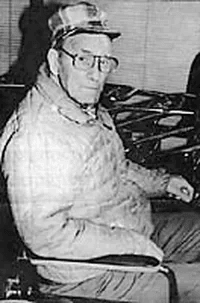
James Edward Pough: The Jacksonville Killer
Overview
James Edward “Pop” Pough was an American killer responsible for twelve deaths in Jacksonville, Florida, between 1971 and 1990. His crimes included the fatal shooting of a close friend, two apparently random street murders, and a mass shooting inside a General Motors Acceptance Corporation office. He also wounded six people before taking his own life.
Pough is most accurately described as both a serial killer and a spree killer. His first known murder occurred in 1971, nearly nineteen years before his final attacks. During the last two days of his life, he killed eleven people in a rapidly unfolding series of shootings at several locations around Jacksonville.
His final attack on June 18, 1990, was one of the deadliest mass shootings in Florida history at the time. Armed with an M1 carbine and a .38-caliber revolver, Pough entered the office of the company that had handled the repossession of his automobile and began shooting customers and employees without warning.
Early Life and Criminal History
James Edward Pough was born on February 16, 1948, in Jacksonville, Florida. He was the oldest of nine children. His father left the family when Pough was young, and Pough reportedly developed a particularly close relationship with his mother.
He suffered from asthma as a child and attended vocational school before leaving during his sophomore year. As an adult, he generally worked as a laborer. During the final year of his life, he performed construction and maintenance work at a Jacksonville brewery.
Pough had repeated encounters with law enforcement beginning in his teenage years. He was arrested for offenses that included vagrancy, attempted robbery, assault, displaying a knife, gambling and suspected vehicle theft. Although many of these incidents did not result in serious punishment, they revealed a history of impulsive behavior and violence.
The Murder of David Lee Pender
Pough committed his first known killing on May 8, 1971. The victim was his 27-year-old friend, David Lee Pender. The two men became involved in an argument after Pender made an insulting remark about Pough’s girlfriend.
During the confrontation, Pough took a .38-caliber revolver from his girlfriend’s purse and shot Pender three times. Pender was transported to a hospital but died from his injuries.
Pough was initially charged with murder. The charge was later reduced to manslaughter, and he ultimately pleaded guilty to aggravated assault. He received five years of probation rather than a prison sentence. The court withheld a formal adjudication of guilt after the plea, meaning Pough was not legally treated as a convicted felon.
This legal outcome later became significant because it allowed Pough to purchase firearms. Although there were indications that he should not possess a gun because of his violent conduct, the restriction was not effectively entered into the records used during firearms purchases.
Relatives later said that Pough was deeply affected by killing Pender and never fully recovered emotionally. When investigators searched Pough’s home after the 1990 massacre, they found a calendar on which May 8, the anniversary of Pender’s death, had been circled in red.
Personal and Financial Decline
During the years before the 1990 shootings, Pough became increasingly isolated. Relatives described him as a withdrawn man with few or no close friends. Neighbors remembered that he could appear quiet and pleasant but could also become angry during disagreements, particularly those involving money.
The death of Pough’s mother approximately three years before the massacre reportedly had a severe emotional effect on him. Family members recalled that he began making statements suggesting that he had nothing left to live for. He allegedly said that when he left the world, he intended to take someone with him.
Pough was also violent toward his wife, Theresa. He reportedly placed a gun against her head on two occasions and threatened to kill her. She separated from him in January 1990 and obtained a court injunction on March 2, 1990, prohibiting him from contacting her for one year.
Financial problems added to Pough’s deterioration. In December 1988, he obtained a red 1988 Pontiac Grand Am. He soon fell behind on the payments, and the vehicle was voluntarily repossessed by the General Motors Acceptance Corporation in January 1990.
GMAC later billed Pough for more than $6,000 in remaining charges. He was reportedly furious about the debt and frequently complained about the repossession. Approximately two months before the massacre, he purchased a Universal M1 carbine from a Jacksonville pawnshop.
The First Attacks of June 17, 1990
Pough began his final killing spree shortly after midnight on June 17, 1990. Carrying the M1 carbine wrapped in a blanket, he approached a group of men standing near a street corner in northwestern Jacksonville.
At approximately 12:50 a.m., Pough shot 39-year-old Louis Carl Bacon twice in the chest. Bacon, who was described by relatives as a disabled military veteran, died at the scene or shortly afterward. There was no established personal dispute between the men, and the attack appeared to have been random.
Only minutes later, Pough drove approximately two blocks and encountered 30-year-old Doretta Elaine Drake in a vacant parking area. Drake was standing and talking with two other women when Pough struck her with his automobile, knocking her onto the sidewalk.
Pough then got out of the vehicle and shot Drake in the head. She died from the wound. Contemporary reports initially characterized Bacon and Drake as a prostitute and her pimp, but Bacon’s relatives disputed that description and identified him as a disabled veteran.
A short time later, Pough approached 17-year-old Christopher Jerome Shorter and 18-year-old Lynette Patrice Johnson. He asked the teenagers for directions and then shot both of them in the shoulder. The two survived.
The Convenience Store Robbery
On the morning of June 18, 1990, Pough entered a Jacksonville convenience store carrying a handgun. He threatened the clerk and announced that he had nothing to lose. He demanded the money from the cash register and left after receiving it.
Following the robbery, Pough reportedly visited his mother’s grave. He then telephoned his supervisor and said that he would not be coming to work because he had something else to do.
His actions suggest that he understood that the day would end in his death. Investigators later found that June 18 had also been circled in red on a calendar inside his residence.
The GMAC Office Massacre
At approximately 10:44 a.m. on June 18, 1990, Pough arrived at the General Motors Acceptance Corporation office at 7870 Baymeadows Way in Jacksonville. The office handled automobile financing, payments, collections and repossessions. It was the company that had repossessed Pough’s Pontiac several months earlier.
Pough entered through the front door armed with his M1 carbine and a .38-caliber revolver. He carried several loaded magazines, and additional ammunition was stuffed into his pockets.
Without giving a warning or making a demand, Pough opened fire on two customers standing near the front counter. He killed 42-year-old Julia White Burgess, who had come to the office to make a payment on her son’s vehicle. Customer David Hendrix was struck several times but survived.
Pough then moved through the large, open office area, firing at employees seated at their desks and at people attempting to hide. Witnesses said that he appeared calm and deliberate. He fired under desks and into workstations where employees had taken cover.
Drew Winston Woods, a 38-year-old credit representative, was among the first employees shot. Pough continued through the office, shooting Cynthia Leigh Perry, Barbara Jean Holland and Phylis Griggs. Griggs survived despite suffering multiple gunshot wounds.
As employees realized what was happening, some ran toward a rear exit. Others hid beneath desks or attempted to help wounded coworkers. Pough continued firing as people fled or tried to conceal themselves.
Janice Faye David, Sharon Louise Hall, Denise Diane Highfill, Lee Merlin Simonton, Jewel Louise Belote, Nancy Dill and F.R. “Ron” Echevarria were also shot. Dill was struck numerous times but survived, as did Echevarria.
The attack lasted less than two minutes. Pough fired at least 28 rounds from the carbine, striking two customers and eleven of the approximately 85 employees in the building. Eight victims died on June 18. A ninth GMAC victim, Jewel Belote, remained hospitalized for nine days before dying on June 27, 1990.
Pough’s Suicide
After completing his path through the office, Pough used the .38-caliber revolver to shoot himself in the head. He died inside the GMAC building on June 18, 1990, at the age of 42.
Police found additional weapons and supplies inside his vehicle. These included a loaded 9mm semiautomatic pistol, magazines and ammunition. Investigators also discovered twelve pieces of nylon rope, each approximately two feet long.
The presence of the rope led authorities to consider whether Pough had originally planned to take hostages. Because he killed himself and left no detailed explanation, his complete intentions could not be established.
Confirmed Victims
- David Lee Pender, 27 — Shot three times by Pough during an argument on May 8, 1971, in Jacksonville, Florida. Pender died at a hospital.
- Louis Carl Bacon, 39 — Shot twice in the chest shortly after midnight on June 17, 1990, near a street corner in northwestern Jacksonville, Florida.
- Doretta Elaine Drake, 30 — Struck by Pough’s automobile and then fatally shot in the head on June 17, 1990, in a vacant parking area in Jacksonville, Florida.
- Julia White Burgess, 42 — A customer who was fatally shot near the front counter of the GMAC office at 7870 Baymeadows Way in Jacksonville on June 18, 1990.
- Drew Winston Woods, 38 — A GMAC credit representative who was shot at his workplace in Jacksonville on June 18, 1990.
- Cynthia Leigh Perry, 30 — A GMAC employee who was fatally shot inside the Baymeadows Way office on June 18, 1990.
- Barbara Jean Holland, 45 — A longtime GMAC employee who was killed inside the Jacksonville office on June 18, 1990.
- Janice Faye David, 40 — A supervisor in GMAC’s claims and collections departments who was fatally shot on June 18, 1990, in Jacksonville.
- Sharon Louise Hall, 45 — A GMAC employee who was killed during the office shooting on June 18, 1990, in Jacksonville.
- Lee Merlin Simonton, 33 — A GMAC customer relations manager who was fatally shot inside the Baymeadows Way office on June 18, 1990.
- Denise Diane Highfill, 36 — A GMAC employee and the wife of a Jacksonville sheriff’s detective who was killed at the office on June 18, 1990.
- Jewel Louise Belote, 50 — A GMAC stenographer who was critically wounded during the June 18 attack and died from her injuries on June 27, 1990, in Jacksonville.
Survivors of the 1990 Attacks
- Christopher Jerome Shorter, 17 — Shot in the shoulder after Pough asked him for directions on June 17, 1990.
- Lynette Patrice Johnson, 18 — Shot in the shoulder alongside Shorter on June 17, 1990.
- David Hendrix, 25 — A GMAC customer who was shot several times near the front counter on June 18, 1990.
- Phylis Griggs, 42 — A GMAC repossession department employee who suffered multiple gunshot wounds but survived.
- F.R. “Ron” Echevarria, 49 — A GMAC employee who was found wounded beneath a desk following the shooting.
- Nancy Dill, 31 — A GMAC credit clerk who was struck repeatedly in the abdomen, arms and legs but survived.
Motive and Aftermath
Pough left no clear written confession explaining every aspect of his crimes. Investigators believed that a combination of depression, personal loss, marital separation, financial problems and anger over his repossessed car contributed to the massacre.
The selection of the GMAC office strongly suggested a revenge motive. Pough had been angry about the repossession and the remaining debt, although none of the people he killed had been shown to be personally responsible for his financial difficulties.
The murders of Bacon and Drake, the shootings of the two teenagers and the convenience store robbery indicated that Pough’s violence was broader than a single act of revenge against GMAC. By the time he entered the office, he had already spent more than a day attacking apparently unrelated people.
The massacre devastated Jacksonville and led to renewed debate about workplace security and access to firearms. Particular attention focused on the earlier court decision that allowed Pough to avoid a felony conviction after killing David Pender. Because he was not legally classified as a felon, he had been able to purchase the firearms later used in his final attacks.
James Edward Pough died without facing trial for the 1990 murders. His confirmed record consisted of twelve victims killed and six survivors wounded. The extended period between the 1971 murder and the 1990 attacks places him within some definitions of a serial killer, while the rapid sequence of his final crimes is more commonly classified as a spree killing culminating in a mass shooting.