Anna Marie Hahn: The “Arsenic Anna” Murders
Who Was Anna Marie Hahn?
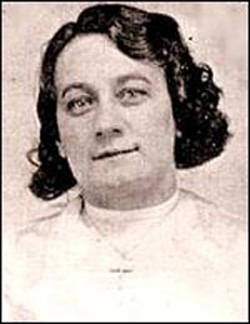
Anna Marie Hahn was a German-born American serial killer who preyed primarily on elderly men in Cincinnati, Ohio, during the 1930s. Born Anna Marie Filser on July 7, 1906, in Bavaria, Germany, she immigrated to the United States and eventually settled in Cincinnati. Hahn presented herself as a helpful caretaker or companion to older men, many of whom were German immigrants like herself. Behind that friendly appearance, investigators later concluded that she was systematically obtaining money, property, loans, or inheritances from men who then became seriously ill and died.
Hahn became known in newspapers by nicknames such as “Arsenic Anna” and the “Blonde Borgia.” Her crimes attracted enormous attention because she appeared to use caregiving and personal trust as a way to gain access to her victims. Poisoning was central to the prosecution’s case, particularly arsenic poisoning. Investigators eventually connected several suspicious deaths to Hahn after one of her victims died far from Cincinnati under circumstances that prompted an autopsy.
The Pattern of Her Crimes
Hahn frequently became acquainted with elderly men who lived alone or possessed savings and property. She would enter their lives as a friend, nurse, housekeeper, or caretaker. Financial transactions often followed. Some men reportedly loaned her money, while others named her as a beneficiary or transferred property to her. Their deaths initially attracted relatively little suspicion because of their ages and apparent illnesses.
The pattern became much more disturbing when investigators compared the cases. Several men had suffered sudden illnesses after Hahn became involved with them, and she had financially benefited from their deaths. Authorities eventually exhumed bodies and conducted chemical examinations. Evidence of poison strengthened suspicions that the deaths were connected rather than natural coincidences.
Known and Suspected Victims
- Ernest Koch, also identified in some records as Ernst Kohler — May 6, 1933 — Cincinnati, Ohio: Koch is generally regarded as Hahn’s earliest known victim. Sources disagree on some details of his name and age, but his death date is consistently reported as May 6, 1933. Hahn had befriended him before his death, and he reportedly left her a house. His sudden death did not initially produce the type of investigation that would later surround Hahn’s other patients.
- Albert Parker — exact date of death not reliably established in available accounts — Cincinnati, Ohio: Parker was approximately 72 years old and was another elderly man whom Hahn reportedly cared for. Before his death, Hahn borrowed approximately $1,000 from him and signed an IOU. After Parker died, the document reportedly disappeared. Because a specific death date is not consistently documented in reliable surviving accounts, no exact date is given here.
- Jacob Wagner — June 3, 1937 — Cincinnati, Ohio: Wagner was approximately 78 years old. He died on June 3, 1937, after Hahn had become involved in his care. Wagner reportedly left approximately $17,000 to Hahn and referred to her as his “beloved niece,” although she was not actually his niece. Investigators later examined Wagner’s death as part of the widening poisoning investigation. His case became especially important because Hahn was ultimately convicted of his murder.
- George Gsellman — July 6, 1937 — 1717 Elm Street, Cincinnati, Ohio: Gsellman was approximately 67 years old. He became suddenly ill following Hahn’s involvement with him and died on July 6, 1937. Accounts of the case state that Hahn received a substantial amount of money connected to Gsellman, commonly reported as approximately $15,000 to $17,000. His death occurred only about a month after Jacob Wagner’s.
- Georg “George” Obendoerfer — August 1, 1937 — Colorado Springs, Colorado: Obendoerfer, a retired cobbler approximately 67 years old, was the final known victim associated with Hahn’s murder series. He traveled by train from Cincinnati toward Colorado with Hahn and her son. During the journey he became seriously ill. He died in Colorado Springs on August 1, 1937. An autopsy detected arsenic in his body, creating the major breakthrough that brought police attention directly onto Hahn.
The Death of Georg Obendoerfer
Obendoerfer’s death proved particularly damaging to Hahn because it occurred while he was traveling with her. Hahn had reportedly persuaded him to accompany her on a trip to Colorado, where she claimed to have property or financial interests. During the train journey, Obendoerfer became increasingly sick. By the time the party reached Colorado Springs, his condition had deteriorated severely.
After Obendoerfer died on August 1, 1937, the circumstances raised questions that had not been seriously investigated after Hahn’s earlier associates died. Authorities ordered an autopsy. Chemical testing revealed arsenic, giving investigators concrete evidence that Obendoerfer had been poisoned. Police then began examining Hahn’s history and discovered the remarkable number of elderly men who had died after becoming financially involved with her.
Investigators Reopen Earlier Deaths
The discovery of arsenic in Obendoerfer caused Cincinnati investigators to reconsider earlier deaths associated with Hahn. Authorities examined the records of her former patients and associates and ordered bodies exhumed in order to search for poison. The investigation uncovered evidence that supported the theory that Hahn had repeatedly poisoned men while benefiting from their money or property.
The case also attracted testimony from people who had survived encounters with Hahn. One frequently reported incident involved an elderly man named George Heiss. Heiss said he became suspicious after Hahn brought him beer and he noticed that flies which came into contact with the drink died. According to accounts of the investigation, he demanded that Hahn drink from the same container. She refused, and Heiss dismissed her. He survived and later supplied investigators with information about his experience.
Money and Manipulation
Financial gain was considered the principal motive behind Hahn’s crimes. The amounts involved were substantial for the Depression era. One victim left her a house, another reportedly loaned her $1,000, and Jacob Wagner and George Gsellman were associated with payments or estates worth many thousands of dollars. Prosecutors portrayed Hahn as someone who deliberately cultivated relationships with vulnerable men, gained their confidence, obtained access to their finances, and then eliminated them when the relationship had become financially useful.
Some accounts of Hahn’s life also describe heavy gambling and chronic financial problems. Investigators and later writers argued that her desire for money helped drive the killings. Whatever her precise personal motivation, the repeated combination of an elderly acquaintance, financial benefit, sudden illness, and death became central to the prosecution’s reconstruction of her activities.
Trial and Conviction
Hahn was prosecuted in Ohio for the murder of Jacob Wagner. Her trial began in 1937 and lasted approximately four weeks. Prosecutors presented the deaths of other men as evidence demonstrating a pattern surrounding Hahn, while chemical and medical testimony addressed the use of poison. The sensational nature of the allegations drew extensive newspaper attention.
In November 1937, Hahn was convicted of first-degree murder for Wagner’s death. The conviction carried a death sentence. Although several deaths were attributed to her, prosecutors did not need separate murder convictions for every suspected victim once the Wagner case resulted in a capital conviction.
Execution
Anna Marie Hahn was executed in the electric chair at the Ohio State Penitentiary in Columbus on December 7, 1938. She was 32 years old. Her execution made her the first woman executed in Ohio’s electric chair. She was later buried at Mount Calvary Cemetery in Columbus.
Legacy of the Case
The Hahn case remains one of the best-known American poisoning cases of the early twentieth century. Its notoriety came partly from the contrast between Hahn’s role as an apparently attentive caregiver and the prosecution’s portrayal of her as a calculated poisoner. Her victims were generally older men who had trusted her with intimate access to their homes, food, health, and finances.
Historical accounts occasionally disagree about details such as the exact spelling of certain victims’ names, their ages, and the amounts of money Hahn obtained. The firmly reported death dates for her principal known victims include May 6, 1933 for Ernest Koch or Ernst Kohler, June 3, 1937 for Jacob Wagner, July 6, 1937 for George Gsellman, and August 1, 1937 for Georg Obendoerfer. Albert Parker is regularly identified as another victim, but surviving summaries do not provide a consistently verifiable exact date for his death. Hahn’s crimes ultimately came to an end because Obendoerfer’s arsenic poisoning prompted authorities to examine what had previously appeared to be a series of unrelated deaths.