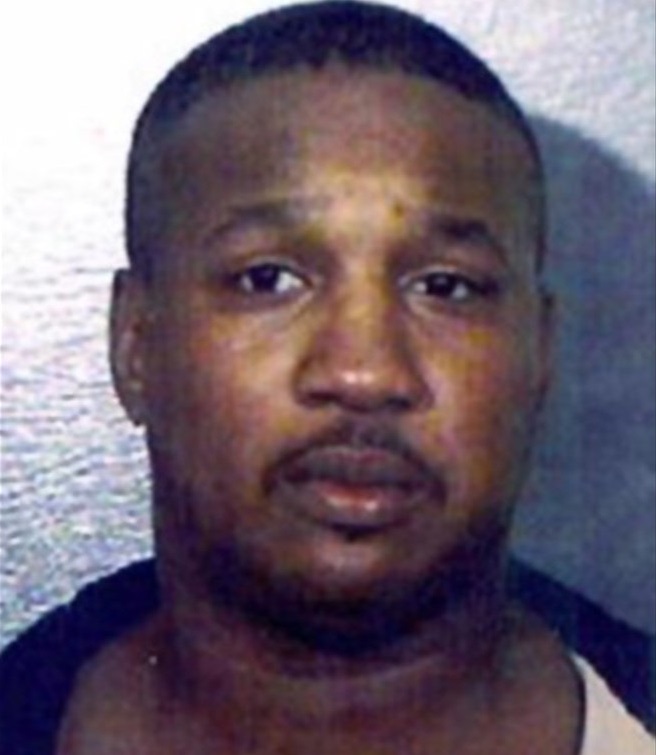
Karl Lee Myers: Convicted Murderer and Suspected Serial Killer
Background and Early Criminal History
Karl Lee Myers was born on March 29, 1948, in Picher, Oklahoma, a small mining community near the borders of Kansas and Missouri. During his adult life, he accumulated a record of property crimes, sexual violence and murder allegations that eventually led investigators to examine whether he had been killing women for many years. Although Myers was convicted of murdering two women in separate attacks, authorities also investigated him in connection with several older disappearances and unsolved deaths in Oklahoma and Kansas.
Myers entered the criminal justice system as a young man. He was arrested for grand larceny in Miami, Oklahoma, in 1965 and was later convicted of burglary in Sedalia, Missouri. His crimes became increasingly violent during the 1970s. In 1976, he attacked a 12-year-old girl in Picher and attempted to sexually assault her. He also sexually assaulted a 13-year-old relative. Myers was eventually convicted of rape and sentenced to 20 years in prison. His later murders demonstrated a similar pattern of sexual violence against vulnerable women.
The Disappearance and Murder of Ellen Deann Rowden
One of the earliest homicide cases associated with Myers involved 23-year-old Ellen Deann Rowden. She disappeared on August 1, 1977, after visiting a bar in Picher, Oklahoma. Myers was reportedly among the people at the establishment that night. Rowden was never seen alive again. Her skeletal remains were discovered in April 1978 near Treece, Kansas, only a few miles from Picher. An examination of the remains indicated that she had suffered fatal blunt-force injuries to her head.
Myers initially attempted to direct suspicion toward other people. He accused Rowden’s brother-in-law and a woman named Imogene Butterbaugh of participating in the murder. Authorities investigated the allegations, but Myers’s account was determined to be unreliable. The charges against the people he had accused were dismissed, and Myers himself was eventually charged with first-degree murder.
Myers was tried for Rowden’s killing in 1982 but was acquitted because prosecutors could not establish his guilt beyond a reasonable doubt. The acquittal prevented him from being tried again for the same offense. Investigators in both Oklahoma and Kansas continued to regard him as a serious suspect, but Ellen Rowden’s murder officially remained unsolved.
The Murder of Shawn Marie Williams
On April 13, 1993, 22-year-old Shawn Marie Williams left her home in Catoosa, Oklahoma, to make a short trip to a convenience store. Williams was a young mother of four children. When she failed to return, her family reported her missing. Her pickup truck was found abandoned along U.S. Route 412, less than a mile from her residence. The vehicle had run out of fuel, but there was no immediate sign of Williams.
Searchers spent several days looking through the surrounding countryside. On April 16, Williams’s body was discovered in a marshy area near Rocky Point, Oklahoma. Investigators determined that she had been beaten, sexually assaulted and shot five times. One of the bullets entered her chest and ruptured her aorta, causing fatal internal bleeding. The circumstances suggested that the killer had encountered Williams after her truck became disabled and had taken advantage of her vulnerable situation.
The murder remained unsolved for approximately three years. After Myers became a suspect in the 1996 murder of Cindy Marzano, investigators obtained biological evidence from him. DNA testing connected Myers to the sexual assaults of both Marzano and Williams. The genetic evidence, together with the circumstances of the attack, provided prosecutors with the foundation for a murder case against him.
The Murder of Cindy Michelle Marzano
Cindy Michelle Marzano was a 29-year-old woman who knew Myers socially. On March 14, 1996, she went to work at a delicatessen in Broken Arrow, Oklahoma. During her shift, she spoke with Myers and agreed to meet him after she finished working. Marzano checked out shortly after 9:00 p.m. Witnesses later saw her at a restaurant with a man matching Myers’s appearance.
Marzano did not return home. Her body was subsequently recovered from the Verdigris River near Catoosa. She had been sexually assaulted, beaten and strangled. Investigators found evidence that her killer had bound her wrists and ankles. The injuries to her head and face showed that she had been subjected to a prolonged and violent assault before she was killed and placed in the river.
Myers became a suspect almost immediately because witnesses had seen him interacting with Marzano on the night she disappeared. Investigators also discovered that he possessed a firearm despite being prohibited from doing so as a convicted felon. He was arrested for violating the conditions of his release, giving authorities an opportunity to investigate his possible involvement in Marzano’s death.
DNA testing conclusively connected Myers to the sexual assault of Marzano. The same testing linked him to the previously unsolved murder of Shawn Williams. The similarities between the two crimes were significant: both women had been sexually assaulted, violently murdered and abandoned near water in the Catoosa area. Myers was prosecuted separately for each killing.
Confirmed Victims
- Shawn Marie Williams, 22 — April 13, 1993 — Catoosa and Rocky Point, Oklahoma: Williams disappeared after leaving her home for a convenience store. Her disabled pickup was found along U.S. Route 412. Her body was recovered near Rocky Point on April 16. She had been beaten, sexually assaulted and shot five times. DNA evidence linked Myers to the crime, and he was convicted of her murder.
- Cindy Michelle Marzano, 29 — March 14, 1996 — Broken Arrow and Catoosa, Oklahoma: Marzano met Myers after finishing her work shift in Broken Arrow. She was sexually assaulted, beaten, bound and strangled. Her body was recovered from the Verdigris River near Catoosa. Witness testimony and DNA evidence identified Myers as her killer.
Suspected and Unproven Victims
- Tina Duffell — October 17, 1974 — Quapaw, Oklahoma: Duffell’s body was discovered submerged in a mining pond. Myers lived in the surrounding area and was later considered a possible suspect, but he was never charged with her death.
- Julia Miller, 14 — 1977 — Picher, Oklahoma, and Treece, Kansas: Miller disappeared from the Picher area, and her skeletal remains were later found near Treece. Investigators considered Myers a leading suspect because of his presence in the region and the similarities to other cases, but no murder charge was filed against him.
- Ellen Deann Rowden, 23 — August 1, 1977 — Picher, Oklahoma, and Treece, Kansas: Rowden disappeared after being seen at a Picher bar. Her remains were discovered near Treece in April 1978, and she had suffered blunt-force trauma to her head. Myers was charged with her murder but acquitted in 1982. Authorities continued to suspect him afterward.
- Charles E. “Chink” Enders — August 1978 — Baxter Springs, Kansas: Enders’s skeletal remains were found in a collapsed mine shaft. Myers claimed to have witnessed the killing and provided conflicting accounts about the crime. He was never convicted or formally established as Enders’s killer.
- Ginger Hudson — Disappeared August 19, 1993 — Pittsburg, Kansas: Hudson vanished after leaving her residence and has never been located. Myers was examined as a possible suspect because of his criminal activity in the Oklahoma-Kansas border region, but no conclusive evidence connected him to her disappearance.
Trials and Death Sentences
Myers was first convicted of the murder of Cindy Marzano. The jury found that the killing involved aggravating circumstances, including Myers’s previous violent criminal history and the especially cruel nature of the crime. He was sentenced to death. His conviction and sentence were upheld during the appellate process.
Myers was later tried for the murder of Shawn Williams. The prosecution relied heavily on DNA evidence connecting him to the sexual assault, along with evidence establishing that Williams had been abducted after her vehicle ran out of gas. He was convicted of first-degree murder and received a second death sentence.
The two convictions established Myers as the perpetrator of separate sexually motivated murders committed nearly three years apart. Because investigators believed that he may have committed additional murders before the 1990s, representatives from several law-enforcement agencies compared unresolved cases from Oklahoma, Kansas and neighboring states. Despite those efforts, no additional homicide was conclusively attributed to him.
Possible Connections to Other Crimes
Myers’s name was occasionally mentioned in connection with the 1977 Oklahoma Girl Scout murders, in which three children were killed at Camp Scott near Locust Grove. However, investigators did not establish a credible evidentiary connection between Myers and those murders. He was not charged in that case, and the accusation remains unsupported.
Authorities also examined whether Myers might have been involved in unsolved killings around Joplin and Rolla, Missouri. His history of traveling through the region, his sexual offenses and his connection to crimes near the Oklahoma-Kansas border made him a person of interest. Nevertheless, investigators did not find sufficient physical or testimonial evidence to link him to those deaths.
Death in Prison and Legacy
Karl Lee Myers remained on Oklahoma’s death row while his convictions and sentences moved through the courts. On December 28, 2012, correctional officers found him unresponsive in the medical unit of the Oklahoma State Penitentiary in McAlester. He was pronounced dead at the age of 64. His death was attributed to suspected natural causes, and he was never executed.
Myers is most accurately described as a convicted double murderer and suspected serial killer. DNA evidence established his responsibility for the murders of Shawn Marie Williams and Cindy Michelle Marzano, while his possible involvement in several earlier crimes was never proven. The unresolved cases surrounding him continue to raise questions about how long he may have been committing acts of sexual and homicidal violence before investigators finally connected him to his confirmed victims.