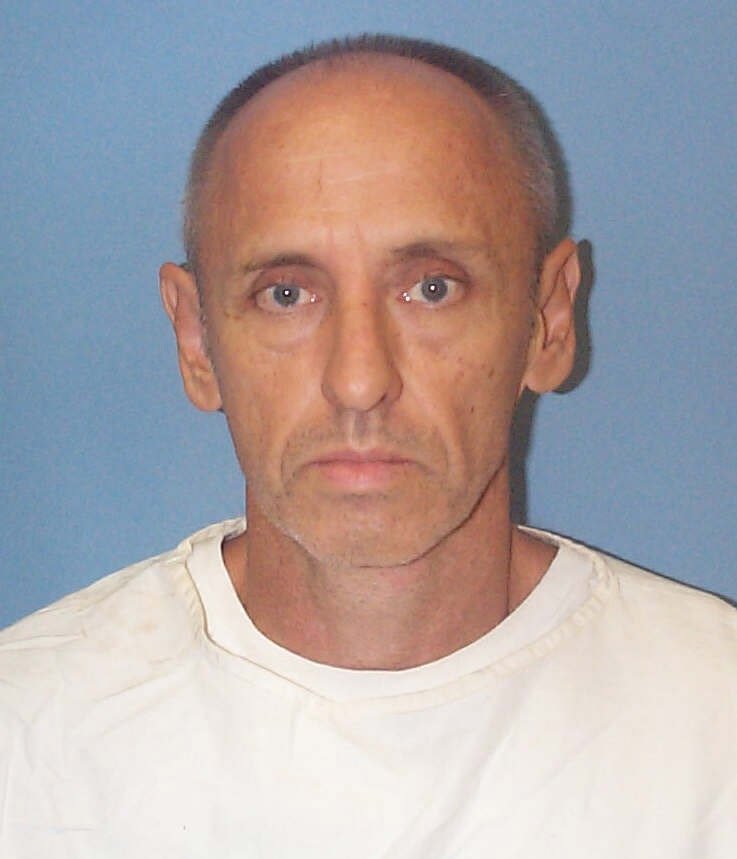
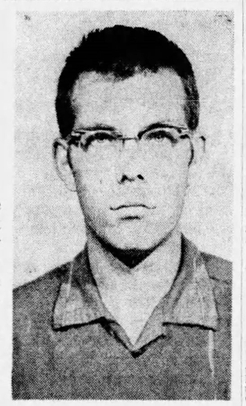
Thomas Warren Whisenhant: The Mobile County Serial Killer
Early Life and the Beginning of a Violent History
Thomas Warren Whisenhant was born on January 29, 1947, in Prichard, Alabama, a community located in Mobile County. He was the youngest of four children and grew up in a troubled household marked by poverty, alcoholism and frequent conflict between his parents. Accounts presented during later legal proceedings described him as increasingly moody, resentful and violent during adolescence.
Whisenhant’s suspected involvement in murder began when he was only 16 years old. On May 6, 1963, 72-year-old widow Lexie Haynes was shot and killed in Prichard. The murder weapon was reportedly recovered from an empty lot near the Whisenhant family home. Investigators immediately considered the teenager a suspect, particularly because he and several friends had recently been handling a stolen handgun.
A witness later recalled that Whisenhant had removed a cartridge from the gun, displayed it and suggested that it would soon be used to kill someone. Haynes had reportedly confronted or spoken to him about his behavior before her death. Despite the suspicious circumstances, Whisenhant’s family provided an alibi claiming he had been home at the time of the shooting. He was not prosecuted for the murder, although he confessed to killing Haynes many years later after his arrest for additional crimes.
The Attack at Ent Air Force Base
After leaving Alabama, Whisenhant joined the United States Air Force and was stationed at Ent Air Force Base near Colorado Springs, Colorado. On October 25, 1965, he attacked 22-year-old Air Force servicewoman Rose Covington inside a finance office at the base.
Covington was struck repeatedly in the head and face with a heavy metal ashtray and left unconscious. She survived but suffered severe injuries requiring approximately two months of hospitalization. Covington testified that she had never met Whisenhant and did not recognize him as someone she knew. Investigators connected him to the attack partly through shoe impressions found at the scene.
On March 14, 1966, a military court convicted Whisenhant of assault with intent to commit murder. He was sentenced to 20 years of imprisonment with hard labor, reduced in rank, ordered to forfeit his military pay and dishonorably discharged. His sentence was later reduced to ten years, and he was paroled on November 28, 1973. His release allowed him to return to the Mobile area, where a series of murders soon followed.
The Murder of Patricia Hitt
On November 21, 1975, 28-year-old Patricia Hitt was working at a convenience store in Mobile County. Hitt was a mother of two who was alone or vulnerable during her work shift when Whisenhant approached her. He attacked her, beat her and fatally shot her in the head.
The investigation initially moved in the wrong direction, and two other men were reportedly arrested in connection with Hitt’s death. Whisenhant remained unidentified as her killer until after his eventual capture in 1976. During questioning, he confessed to killing Hitt and provided information linking himself to the crime.
The Abduction and Murder of Venora Hyatt
On April 16, 1976, Whisenhant targeted another convenience-store employee, 44-year-old Venora Hyatt, whose first name has also appeared in some records as Verona. He abducted Hyatt from the store where she was working in the Mobile area and transported her to an isolated location near an abandoned house or shack surrounded by heavy vegetation.
Whisenhant killed Hyatt and abandoned her body near the deteriorating structure. His conduct did not end with the murder. He returned to the location the following day and mutilated her remains. He also removed Hyatt’s wristwatch and later gave it to his wife as a gift, concealing the fact that it had been taken from a murder victim.
Hyatt’s disappearance and death frightened residents and store employees throughout the Mobile area. At the time, investigators had not yet established that her murder was connected to Hitt’s death or to the earlier killing of Haynes.
The Murder of Cheryl Lynn Payton
Whisenhant committed the crime that led to his capture on October 16, 1976. His victim was 23-year-old Cheryl Lynn Payton, who was working at a Compact convenience store near the intersection of Nan Gray Davis Road and Sweedtown Road in Mobile County.
Whisenhant entered the store and abducted Payton at gunpoint. He forced her into his pickup truck and drove her to a remote wooded area. There, he sexually assaulted her inside the vehicle and then shot her in the head with a .32-caliber handgun. He dragged her body away from the truck and concealed it in the surrounding woods before leaving the area.
Rather than permanently distancing himself from the scene, Whisenhant returned on October 17, 1976. He mutilated Payton’s body, cutting her breast and slashing her abdomen. His return proved to be a critical mistake. He was seen near the location, and police pursued and captured him after a chase.
Confession and Connection to the Other Murders
Following his arrest, Whisenhant gave investigators a detailed confession. He admitted abducting, sexually assaulting and murdering Cheryl Payton and acknowledged returning to mutilate her body. He also confessed to killing Patricia Hitt and Venora Hyatt during the preceding year.
Whisenhant later admitted that he had killed Lexie Haynes in 1963, confirming the suspicions investigators had held when he was a teenager. He also acknowledged attacking Rose Covington and assaulting other women, including his wife. Although he confessed to multiple murders, the capital prosecution that ultimately resulted in his execution centered on the murder of Cheryl Payton.
Known and Confessed Victims
- Lexie Haynes, 72 – May 6, 1963 – Prichard, Alabama: Haynes, a widowed woman, was fatally shot. The murder weapon was recovered near Whisenhant’s family residence. He was suspected at the time but was not charged. After his 1976 arrest, he confessed to killing her.
- Patricia Hitt, 28 – November 21, 1975 – Mobile County, Alabama: Hitt, a convenience-store clerk and mother of two, was beaten and shot in the head while working. Two other men were initially arrested before Whisenhant confessed to the murder.
- Venora Hyatt, 44 – April 16, 1976 – Mobile, Alabama: Hyatt was abducted from a convenience store and taken to an isolated location near an abandoned structure. Whisenhant killed her, returned the following day to mutilate her body and stole her watch.
- Cheryl Lynn Payton, 23 – October 16, 1976 – Mobile County, Alabama: Payton was abducted at gunpoint from the Compact Store near Nan Gray Davis Road and Sweedtown Road. Whisenhant drove her to a wooded area, sexually assaulted her and shot her in the head. He was captured after returning to her body the following day.
Surviving Victim
- Rose Covington, 22 – Attacked October 25, 1965 – Ent Air Force Base, Colorado: Covington was beaten unconscious with a metal ashtray inside a military finance office. She suffered serious injuries but survived. Whisenhant was convicted by a military court of assault with intent to commit murder.
Trial and Death Sentence
Because Whisenhant’s crimes had received extensive publicity in Mobile County, his first trial for the murder of Cheryl Payton was moved to Birmingham. Proceedings began in August 1977. His defense entered a plea of not guilty by reason of insanity, presenting evidence concerning his childhood, mental condition and abnormal behavior.
The jury rejected the insanity defense and found him guilty of capital murder on August 9, 1977. He was sentenced to death on September 7, 1977. That conviction was later reversed because of legal errors, requiring a second trial.
Whisenhant was tried again in 1981 and once more convicted of Payton’s murder. Although the conviction was upheld, the death sentence was overturned because of an improper statement made by the prosecutor during the sentencing phase. After additional hearings and appeals, Whisenhant was sentenced to death again in 1987.
Decades of Appeals
Whisenhant remained on Alabama’s death row for more than three decades as state and federal courts reviewed questions involving trial procedure, sentencing, prosecutorial conduct and his mental condition. His repeated appeals made his case one of the longest-running capital cases in Alabama history.
The delays were especially painful for the families of his victims, who had already endured years of uncertainty before Whisenhant’s confessions connected the murders. By the time the state obtained authorization to carry out the sentence, several decades had passed since Cheryl Payton was abducted and killed.
Execution
Thomas Warren Whisenhant was executed by lethal injection at Holman Correctional Facility near Atmore, Alabama, on May 27, 2010. He declined to make a final statement. At the time of his execution, he had spent approximately 32 years, eight months and twenty days under a death sentence, making him Alabama’s longest-serving death-row prisoner at that time.
Whisenhant was executed specifically for the capital murder of Cheryl Lynn Payton. However, his confessions and the evidence surrounding the other cases established a pattern of violence spanning from his teenage years through his capture in 1976. His known crimes included four murders, a nearly fatal assault and additional attacks against women.
Legacy of the Case
The Whisenhant case demonstrated how a violent offender could escape accountability for an early suspected murder, receive parole after a later attempted killing and then continue committing increasingly brutal crimes. His victims were frequently women working alone or otherwise placed in vulnerable situations, particularly convenience-store clerks during isolated shifts.
His habit of returning to the bodies of his victims added a disturbing ritualistic element to the murders of Venora Hyatt and Cheryl Payton. That compulsion ultimately contributed to his identification and arrest. The case remains one of Mobile County’s most notorious serial-murder investigations and a lasting reminder of the lives taken by an offender whose violent behavior stretched across more than thirteen years.