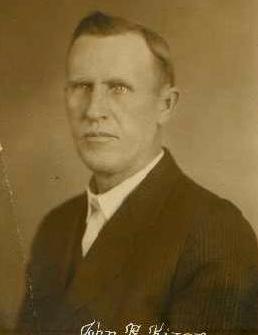
Keith Hunter Jesperson: The “Happy Face Killer”
A Murderer Traveling America’s Highways
Keith Hunter Jesperson was a Canadian-American serial killer and long-haul truck driver who murdered at least eight women between January 1990 and March 1995. His work allowed him to travel across the United States for extended periods, giving him access to isolated highways, truck stops and rural dumping grounds in several states. Many of the women he targeted were living vulnerable or transient lives, making their disappearances and deaths more difficult for investigators in different jurisdictions to connect.
Jesperson became known as the “Happy Face Killer” because he drew smiley faces on anonymous confessions that he left in public places or mailed to newspapers and law-enforcement agencies. The cheerful symbol stood in disturbing contrast to the violence described in his messages. His letters were also a way of demanding recognition, particularly after two innocent people were convicted of his first known murder.
Early Life and Violent Behavior
Jesperson was born on April 6, 1955, in Chilliwack, British Columbia, Canada. His family later moved to Washington state. Accounts of his childhood describe an isolated boy who was bullied because of his large size and who developed a troubling fascination with cruelty. He later admitted abusing and killing animals, behavior that continued as he grew older.
As an adult, Jesperson married and had three children. He supported his family by driving trucks, but his marriage deteriorated and ended in divorce in 1990. That same year, he committed his first confirmed murder. Standing approximately six feet six inches tall and weighing more than 250 pounds, Jesperson possessed a major physical advantage over many of the women he encountered. Strangulation became his most frequently documented method of killing.
The Murder of Taunja Bennett
On January 21, 1990, Jesperson met 23-year-old Taunja Bennett at a bar in the Portland, Oregon, area. He took her to the house he was renting, where an argument developed. Jesperson beat Bennett and strangled her before transporting her body away from the residence. Her remains were found near the Columbia River Gorge east of Portland.
The investigation soon took an extraordinary and damaging turn. Laverne Pavlinac falsely claimed that her boyfriend, John Sosnovske, had forced her to help him commit the murder. Pavlinac and Sosnovske were convicted even though Pavlinac later tried to withdraw her story. Jesperson was angered that other people were receiving attention for his crime. He wrote a confession on the wall of a truck-stop restroom and signed it with a smiling face, but the message did not immediately free the innocent pair or expose him as the killer.
A Series of Murders Across State Lines
With Pavlinac and Sosnovske imprisoned for Bennett’s murder, Jesperson continued traveling and killing. His occupation enabled him to move between jurisdictions without establishing an obvious pattern. Bodies were discovered in California, Oregon, Florida, Wyoming and Washington, but several victims remained unidentified for decades. Investigators initially classified some of the deaths as overdoses or undetermined cases because of decomposition, limited evidence or the isolated places where the women were found.
Jesperson generally approached women at bars, truck stops or locations frequented by travelers. He later attempted to justify his violence by accusing his victims of angering, threatening or inconveniencing him. These explanations shifted blame onto the women and minimized his deliberate decisions. His confessions and later court cases established that he repeatedly used his truck, his physical strength and the anonymity of interstate travel to isolate and overpower his victims.
Confirmed Victims
- Taunja Bennett — January 21, 1990 — Portland and the Columbia River Gorge, Oregon: Bennett, 23, met Jesperson at a Portland-area bar. He took her to his rented residence, beat and strangled her, and disposed of her body near the Columbia River Gorge. Laverne Pavlinac and John Sosnovske were wrongfully convicted before Jesperson supplied information proving that he was responsible.
- Unidentified woman known as “Claudia” — August 1992 — near Blythe, Riverside County, California: Jesperson said that the woman told him her name was Claudia. He admitted sexually assaulting and strangling her before leaving her body beside a rural road. Her body was found on August 30, 1992. Her exact date of death has not been publicly established, and she remains the only confirmed Jesperson victim who has not been identified by her legal name.
- Cynthia Lyn Rose — August 1992 — Turlock, California: Rose, 32, was found behind the Blueberry Hill Café in Turlock on August 27, 1992. Jesperson claimed that she entered his truck while he was sleeping at a truck stop. He strangled her and abandoned her body. Her death was initially believed to have resulted from a drug overdose before his confession connected him to the case.
- Laurie Ann Pentland — November 8–9, 1992 — Salem, Oregon: Pentland, 23, was killed during the night of November 8 or the early hours of November 9. Jesperson admitted strangling her after a dispute. Her body was found behind a business in east Salem. He was later convicted of her murder and received another life sentence.
- Patricia “Patsy” Skiple — shortly before June 3, 1993 — near Gilroy, Santa Clara County, California: Skiple was approximately 45 when she was killed. Her body was found beside California State Route 152 on June 3, 1993. Jesperson referred to her as “Carla” or “Cindy” and confessed that he had sexually assaulted and killed her. Known for years as “Blue Pacheco” because of her clothing, she was identified through investigative genetic genealogy in April 2022. Her precise date of death remains uncertain.
- Suzanne L. Kjellenberg — August 1994 — near Holt, Okaloosa County, Florida: Kjellenberg, 34, met Jesperson near Tampa and traveled with him in his truck. He admitted killing her at a Florida Panhandle rest area and disposing of her body near the Holt exit on Interstate 10. Her remains were found on September 14, 1994. She remained unidentified until genetic genealogy restored her name in 2023; the exact day of her death in August 1994 has not been publicly confirmed.
- Angela May Subrize — January 27, 1995 — Nebraska and Cheyenne, Wyoming: Subrize, 21, encountered Jesperson during his travels. He killed her during a trip through Nebraska and later transported her body into Wyoming. Her remains were discarded near Cheyenne. Jesperson gave changing accounts of the crime, but his knowledge of the route and disposal location connected him to her death.
- Julie Ann Winningham — March 16, 1995 — near Washougal, Washington: Winningham, 41, had been in a relationship with Jesperson and had traveled with him after leaving Utah. Unlike his other confirmed victims, she had a direct and traceable personal connection to him. Jesperson strangled her and left her body near Washington State Route 14. The investigation into her death led directly to his identification and arrest.
The Letters and the Happy-Face Signature
Jesperson’s desire for recognition became an important part of the case. After the wrongful convictions in the Bennett investigation, he began leaving or sending written confessions. One message appeared in a restroom, while another lengthy letter was mailed to The Oregonian. He signed the communications with a simple smiley face, prompting journalist Phil Stanford to describe him as the “Happy Face Killer.”
The letters contained details about several murders, but Jesperson also lied, exaggerated and changed portions of his stories. He appeared to enjoy controlling the flow of information, forcing investigators to separate genuine knowledge from self-serving claims. His willingness to confess did not represent remorse. Instead, his correspondence frequently displayed arrogance, a desire for publicity and an effort to dictate how his crimes were understood.
The Murder That Led to His Capture
Jesperson’s killing of Julie Winningham finally destroyed the anonymity that had protected him. Winningham’s friends knew that she had been seeing a truck driver named Keith. Because she was personally connected to Jesperson, investigators could retrace her movements and identify him as a person of interest. He was questioned but initially refused to provide a full statement.
Believing that his arrest was approaching, Jesperson attempted suicide and wrote a letter to his brother confessing that he had killed eight women over five years. He eventually contacted authorities and surrendered. Jesperson was arrested on March 30, 1995. Once in custody, he began describing killings from multiple states and offering information about victims whose cases had remained unsolved.
Exoneration of Two Wrongfully Convicted People
Jesperson’s confession to killing Taunja Bennett included details that had not been publicly released. Most significantly, he directed investigators to the location of Bennett’s purse, an item that had not been recovered with her body. That information helped prove that Pavlinac and Sosnovske had been wrongfully convicted.
The pair were released from prison in January 1996 after spending nearly five years incarcerated for a murder neither had committed. The case became a disturbing example of how a false confession, investigative errors and pressure to secure a conviction can overwhelm contradictory evidence. Jesperson’s continued freedom after Bennett’s murder also meant that he was able to kill additional women while innocent people were imprisoned.
Confessions, Convictions and Life Sentences
Following his arrest, Jesperson confessed to numerous murders and at different times claimed that he had killed dozens or even more than 100 people. Investigators examined many of those claims, but most could not be confirmed and some were disproved. Eight murders have been firmly connected to him through confessions supported by evidence, court proceedings or specific knowledge of the victims and crime scenes.
Jesperson received multiple life sentences for murders committed in Oregon, Washington and California. He pleaded guilty or no contest in several proceedings rather than face trials that could have exposed him to harsher penalties. In 2010, he received a fourth life sentence for murdering the unidentified woman known as Claudia near Blythe. He remains incarcerated at the Oregon State Penitentiary.
The Identification of Long-Unnamed Victims
Although Jesperson was convicted and imprisoned, the work of identifying his victims continued. Patricia Skiple had been known as “Blue Pacheco” for nearly three decades before genetic genealogy connected her remains to her family in 2022. Her identification transformed an anonymous case file into the story of a mother from Oregon whose name had been lost after her murder.
In 2023, another long-unidentified victim was named as Suzanne L. Kjellenberg. Investigators in Florida had preserved evidence and continued searching for her identity after her remains were found near Interstate 10 in 1994. Modern DNA testing and genealogical research finally led them to her relatives. These identifications demonstrated that resolving a murder involves more than convicting the offender; it also means restoring the victim’s identity and giving surviving family members long-delayed answers.
The Lasting Impact of the Case
The crimes of Keith Hunter Jesperson crossed thousands of miles and involved numerous police departments, medical examiners and prosecutors. His case exposed the difficulty of linking murders committed by a mobile offender who selected victims with few obvious connections to one another. It also highlighted the dangers faced by women living on society’s margins, whose deaths were sometimes overlooked, misclassified or investigated in isolation.
Jesperson tried to make his smiley-face signature the defining symbol of the story, but the enduring focus belongs on Taunja Bennett, Claudia, Cynthia Lyn Rose, Laurie Ann Pentland, Patricia Skiple, Suzanne Kjellenberg, Angela Subrize and Julie Winningham. Their names and histories reveal the human cost behind the nickname. Jesperson’s imprisonment ended his confirmed series of murders, while continued investigative work has ensured that most of the women he attempted to leave anonymous have finally been recognized.