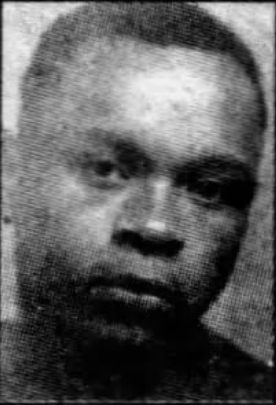
Leo Lancing Boatman: The Ocala National Forest Serial Killer
Overview
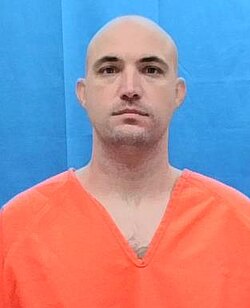
Leo Lancing Boatman is an American serial killer convicted of four murders across Florida between 2006 and 2019. His violent trajectory began just months after his release from juvenile detention when, at age 19, he murdered two college students camping in the Ocala National Forest. The randomness and brutality of these initial killings earned him his moniker and two life sentences. Undeterred by incarceration, Boatman continued his murderous path behind bars, killing two fellow inmates in separate, vicious attacks over the next decade. The final murder, a premeditated and collaborative act of extreme violence, resulted in a death sentence. Boatman's case presents a disturbing chronicle of a life defined by severe childhood trauma, systemic failures, and an unbroken chain of violence that left four families shattered.
A Childhood Lost to Abuse and the System
Leo Lancing Boatman's life began in crisis on July 20, 1986, in Largo, Florida. His mother, who had schizophrenia, gave birth to him inside a psychiatric hospital. With an unknown father and a mother unable to provide care, Boatman and his sister were placed for adoption. He was initially taken in by his grandmother, but this arrangement was reportedly unstable and abusive. From the ages of four to six, he lived with an aunt and uncle, a period that brought a profound trauma: he was sexually assaulted by an older cousin.
His mother eventually regained custody, but this only exposed him to new horrors. Her boyfriend subjected Boatman to physical abuse, creating a home environment devoid of safety. In 1995, when Boatman was nine years old, his mother drowned, a pivotal and tragic event that propelled him into Florida's foster care system. His journey through the system was a harrowing cycle of displacement and further abuse. He moved between numerous foster homes, never finding stability or solace.
By the age of 12, Boatman's life had spiraled into delinquency, and he entered the custody of the Florida Department of Juvenile Justice. His record grew to include charges of robbery, battery, and assault. He spent his teenage years moving through the state's juvenile facilities, culminating in a term at a high-security juvenile prison. In August 2005, at the age of 19, he was released, having spent most of his young life institutionalized. He was adrift, with little support and a history of profound trauma. Five months later, he would commit his first murders.
The Ocala National Forest Murders
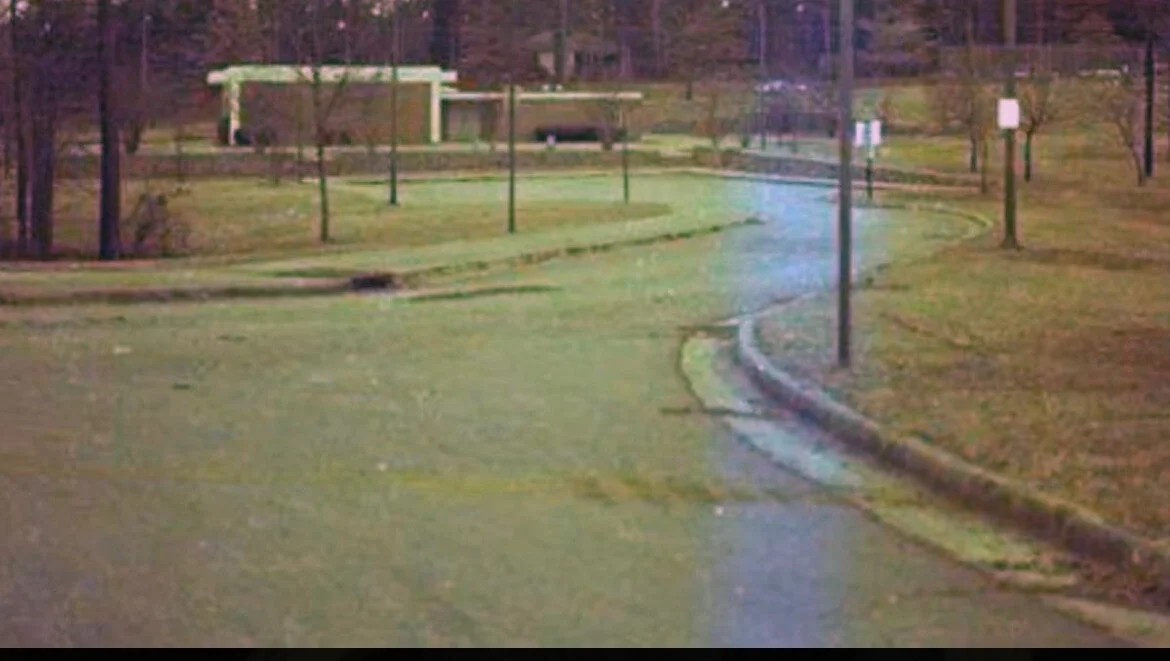
In early January 2006, Boatman acquired a stolen AK-47-style rifle. On January 4, he took a bus to the Ocala National Forest, a vast expanse of protected wilderness in central Florida. Near the Juniper Springs recreation area, he came across a campsite occupied by Amber Peck and John Parker. Both 26, they were students at Santa Fe Community College in Gainesville, taking a brief trip to enjoy the outdoors.
According to Boatman's later confession, the initial encounter was mundane. He approached the couple, and Parker gave him directions. But moments later, for reasons he never clearly articulated, Boatman's demeanor shifted. He raised the rifle and aimed it at the couple. As Peck and Parker turned and ran for their lives, Boatman pursued them, opening fire.
He shot them repeatedly as they fled. An autopsy would later show that Peck was struck in the arm, bicep, and head, while Parker sustained wounds to his shoulder, foot, bicep, and neck. In his confession, Boatman chillingly recounted that he fired the final, fatal shots at close range because he wanted to stop Amber Peck's screaming. After killing them, he dragged their bodies to a shallow, swampy pond nearby and attempted to submerge them, leaving the scene of a crime that would soon spark a massive search and widespread fear.
The Victims
- Amber Peck, 26 — Murdered on January 4, 2006, in the Ocala National Forest. A bright and compassionate student at Santa Fe Community College, she was studying to become a zoologist, a career that reflected her deep love for animals. Her parents remembered her as a person who was incredibly sensitive to all forms of life.
- John Parker, 26 — Murdered on January 4, 2006, in the Ocala National Forest. A former U.S. Marine, he was also a student at Santa Fe Community College and the devoted father of a young daughter. He was remembered for his love of the outdoors and his kind nature.
- Ricky A. Morris, 28 — Died on September 19, 2010, after being attacked by Boatman at Charlotte Correctional Institution. Morris was serving two life sentences for the 2005 murder of his parents. He was beaten into a coma by Boatman and died a month later.
- William Chapman, 32 — Murdered on July 5, 2019, at Florida State Prison. Chapman was serving a sentence for burglary and was just months away from his scheduled release in October 2019. He was described as a trusting individual who was looking forward to returning to his family.
Investigation and Capture
When Peck and Parker failed to return from their camping trip, their families grew deeply concerned. On January 6, 2006, two days after the murders, Amber Peck's father drove to the Ocala National Forest to search for them. He found his daughter's car parked near a trail, which led him and other family and friends to the couple's abandoned campsite. The scene was unsettling, and they immediately contacted the Marion County Sheriff's Office.
Deputies responding to the scene discovered the bodies of Peck and Parker partially submerged in the nearby pond. The brutal nature of the crime launched an intensive investigation. A critical breakthrough came from an unexpected source. A motorist contacted authorities to report that he had picked up a young man hitchhiking near the forest on the day of the murders. The hitchhiker, who was carrying a rifle case, seemed suspicious. The driver's description and information helped investigators identify Leo Boatman as a person of interest.
On January 10, 2006, a tactical team surrounded a mobile home in Largo belonging to Boatman's uncle. Boatman was arrested without incident. During initial questioning, he was uncooperative, but he eventually agreed to talk. In a videotaped confession, he provided a detailed and remorseless account of the murders, describing how he stalked and killed the young couple. His statements matched the evidence found at the crime scene precisely. Authorities were stunned by his lack of emotion, with the Marion County sheriff publicly labeling him a "would-be serial killer" whose capture had likely prevented more deaths.
Trial and Initial Sentencing
On January 27, 2006, a Marion County grand jury indicted Leo Boatman on two counts of first-degree murder. The state attorney announced his intention to seek the death penalty, citing the heinous and cold-blooded nature of the crimes. However, the legal process moved toward an unexpected resolution.
The families of Amber Peck and John Parker, faced with the prospect of a grueling trial and the endless appeals that often accompany death penalty cases, expressed a desire to find closure. Prosecutors entered into negotiations with Boatman's defense team. The result was a plea agreement: in exchange for pleading guilty, Boatman would be spared the death penalty and would instead receive two consecutive life sentences without the possibility of parole.
On July 30, 2007, Boatman formally pleaded guilty in a Marion County courtroom. The families of his victims delivered emotional impact statements, speaking of their profound loss. They also expressed their consent for the plea deal, stating their belief that a life spent in prison was a just punishment and that it would prevent them from being repeatedly traumatized by the legal process. Amber Peck's parents noted that their daughter, an opponent of the death penalty, might not have wanted her killer to be executed. The judge accepted the plea and imposed the agreed-upon sentence, sending Boatman to prison for the rest of his life.
Murders in Prison
Boatman's capacity for violence was not contained by prison walls. In August 2010, while incarcerated at the Charlotte Correctional Institution in Punta Gorda, he shared a cell with Ricky A. Morris, a 28-year-old inmate also serving a life sentence. Boatman attacked Morris, beating him so severely that he fell into a coma. Morris clung to life for a month before succumbing to his injuries on September 19, 2010. As a motive, Boatman later claimed he was angered by Morris's alleged prior assault on an elderly inmate. For this crime, a jury convicted Boatman not of first-degree murder but of the lesser charge of third-degree murder on August 15, 2013. He was given an additional 15-year sentence, a term that had little practical effect on his existing life sentences.
Nearly nine years later, Boatman committed his fourth and most calculated murder. On July 5, 2019, at Florida State Prison in Raiford, he and another inmate, William Edward Wells—a convicted serial killer himself—targeted 32-year-old William Chapman. The attack was meticulously planned. Boatman and Wells lured Chapman into a dayroom, positioning him in a blind spot of a security camera. For approximately twelve minutes, they strangled and stabbed him with makeshift weapons, including a ligature and sharpened pieces of metal. During the prolonged assault, Boatman acted as a lookout and physically blocked the dayroom door to prevent correctional officers from intervening. Chapman, who was nearing the end of his sentence, was killed just three months before his scheduled release. Boatman later told investigators they had decided to commit the murder out of frustration after being denied a transfer out of solitary confinement and that they chose Chapman because he had allegedly made unwanted sexual advances.
Second Trial and Death Sentence
The murder of William Chapman triggered a new capital case. On November 4, 2019, a Bradford County grand jury indicted both Boatman and William Wells for first-degree murder, and the state once again announced its intent to seek the death penalty.
The two inmates were tried separately. Wells's trial concluded first in 2021, ending with a murder conviction and a death sentence. Boatman's trial for Chapman's murder followed in 2022. The evidence against him was overwhelming, including security footage, physical evidence, and his own admissions. On August 29, 2022, the jury found him guilty of first-degree murder and constructive possession of contraband.
During the penalty phase, in a move that surprised the court, Boatman waived his right to have the jury hear mitigating evidence and make a sentencing recommendation. This left the decision solely in the hands of the judge. On November 10, 2022, Judge James M. Colaw formally sentenced Leo Boatman to death, citing the murder's cold, calculated, and premeditated nature and Boatman's extensive history of escalating violence.
Aftermath and Legacy
Leo Boatman resides on death row at the Union Correctional Institution in Raiford, Florida. His automatic appeal to the Florida Supreme Court was argued in 2024, with his attorneys challenging aspects of the trial. On October 17, 2024, the court unanimously rejected his appeal and affirmed his death sentence, leaving him one step closer to execution.
The life of Leo Boatman is a tragic and horrifying case study in the cycle of violence. His story highlights the devastating impact of childhood abuse and the potential failures of the juvenile and adult correctional systems to rehabilitate or contain a person so committed to violence. For the public, his name remains synonymous with the Ocala National Forest murders, a crime that violated a place of natural tranquility and served as a chilling reminder of the existence of random, motiveless evil. For the families of Amber Peck, John Parker, Ricky Morris, and William Chapman, his legacy is one of unending grief and loss.