The Skid Row Stabber: The Unsolved Murders of Eleven Men in Los Angeles
A Killer Preying on Skid Row
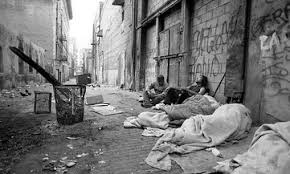
The Skid Row Stabber was the name given to an unidentified serial killer who murdered eleven men in and around the Skid Row district of downtown Los Angeles, California, between October 1978 and January 1979. Most of the victims were homeless, economically disadvantaged, or living on the streets. They were attacked in locations where vulnerable people commonly slept or gathered, including sidewalks, alleys, parking lots, and public benches.
The murders occurred during a concentrated period of violence that frightened residents of Skid Row and placed enormous pressure on the Los Angeles Police Department. The killer generally used a knife and appeared to choose victims who were isolated, sleeping, intoxicated, or otherwise unable to defend themselves. Several bodies were discovered within a relatively small section of downtown Los Angeles, creating the impression that the murderer knew the neighborhood and moved through it comfortably.
The case has sometimes been confused with the earlier crimes of Vaughn Orrin Greenwood, who was known as the Skid Row Slasher. Greenwood had murdered vulnerable men in Los Angeles during an earlier period and was already imprisoned when the Skid Row Stabber murders began. Although the two nicknames sound similar and both offenders targeted disadvantaged men, the crimes were separate series committed by different killers.
The Beginning of the Murder Series
The first recognized murder occurred on October 23, 1978, when 50-year-old Jessie Martinez was found stabbed to death in a parking lot in the Skid Row area. Five days later, 32-year-old Jose Cortez was killed. The rapid appearance of another victim suggested that Martinez's death had not been an isolated act of violence.
On October 30, 46-year-old Bruce Emmett Drake became the third known victim. Within little more than a week, three men had been killed in the same general part of Los Angeles. The victims had been attacked with a knife and left in public or semi-public locations where their bodies would eventually be discovered by residents, workers, or police officers.
The attacks continued into November. On November 4, 65-year-old J.P. Henderson was stabbed to death. Henderson was reportedly found on a sidewalk during the early morning hours. His age and vulnerable circumstances reinforced the growing belief that the murderer was deliberately selecting people who would be unlikely to resist or attract immediate attention.
The Murder of David Martin Jones
On November 9, 1978, 39-year-old David Martin Jones was fatally stabbed near the downtown Los Angeles public library. His killing became one of the most important cases in the investigation because several of his companions had encountered a suspicious man shortly before the attack.
The witnesses said the stranger approached them, spoke with them, and introduced himself as “Luther.” They described him as a Black man of approximately 30 years of age who spoke with an accent that sounded Spanish, Puerto Rican, or Caribbean. The man reportedly walked toward the place where Jones was resting. A short time later, Jones cried out that he had been stabbed and indicated that the person who had just left was responsible.
The witnesses' statements provided investigators with one of their few descriptions of a possible killer. However, their later inability to positively identify the man eventually became a serious weakness in the prosecution of the person accused of the murders.
The November Murders
Two days after Jones was killed, 57-year-old Francisco Perez Rodriguez was stabbed to death on November 11. The following day brought one of the most alarming moments in the series. On November 12, both 36-year-old Frank Floyd Reed and 49-year-old Augustine Luna were murdered. Their deaths demonstrated how quickly the killer could strike and suggested that he was moving freely through downtown Los Angeles without attracting lasting suspicion.
On November 17, 35-year-old Melford Fletcher, who was also known as Jimmy White Buffalo, was killed. Fletcher was another vulnerable man whose circumstances placed him within the population being targeted. By this point, the murders were clearly connected in the minds of investigators and the public. Men sleeping outside or spending their nights in Skid Row had reason to fear that they could be selected simply because they were alone and unprotected.
The next recognized victim was 45-year-old Frank Garcia. Garcia was found murdered on November 23 on or near a public bench outside Los Angeles City Hall. His body was discovered in a prominent downtown area rather than in a completely hidden location. The boldness of the crime suggested that the killer was willing to attack even where pedestrians, government employees, or police officers might pass nearby.
Investigators found a palm print on the bench associated with Garcia's murder scene. That print later became one of the central pieces of evidence used against Bobby Joe Maxwell. However, authorities could not establish exactly when the print had been placed there. Maxwell acknowledged that he frequented Skid Row and had previously sat on the bench, leaving open the possibility that the print was unrelated to Garcia's death.
Known and Suspected Victims
- Jessie Martinez, 50 — Killed on October 23, 1978. Martinez was found stabbed to death in a parking lot in the Skid Row district of Los Angeles, California.
- Jose Cortez, 32 — Killed on October 28, 1978. Cortez was stabbed in the downtown Los Angeles area, reportedly in or near an alley.
- Bruce Emmett Drake, 46 — Killed on October 30, 1978, in the Skid Row area of Los Angeles.
- J.P. Henderson, 65 — Killed on November 4, 1978. Henderson was found stabbed on a downtown Los Angeles sidewalk during the early morning hours.
- David Martin Jones, 39 — Fatally stabbed on November 9, 1978, near the downtown Los Angeles public library. Witnesses reported seeing a man calling himself “Luther” shortly before the attack.
- Francisco Perez Rodriguez, 57 — Killed on November 11, 1978, in downtown Los Angeles. His body was reportedly discovered in a parking area.
- Frank Floyd Reed, 36 — Killed on November 12, 1978, in the Skid Row area of Los Angeles.
- Augustine Luna, 49 — Killed on November 12, 1978, the same day as Frank Floyd Reed, in downtown Los Angeles.
- Melford Fletcher, 35 — Also known as Jimmy White Buffalo. Fletcher was killed on November 17, 1978, in the Los Angeles Skid Row district.
- Frank Garcia, 45 — Found murdered on November 23, 1978, on or near a bench outside Los Angeles City Hall. A palm print connected to Bobby Joe Maxwell was found on the bench, although investigators could not determine when it had been left.
- Luis Alvarez, 26 — Killed on January 21, 1979, in downtown Los Angeles. Alvarez was the final recognized victim in the Skid Row Stabber series.
The Mysterious “Luther” Message
In January 1979, investigators discovered a disturbing message written on a wall inside a restroom at the Los Angeles Greyhound bus terminal. The writer identified himself as “Luther” and claimed to kill impoverished alcoholics to put them out of their misery. The name was significant because the suspicious man seen near David Martin Jones had reportedly introduced himself as Luther.
Police treated the writing as a possible communication from the killer. A handwriting expert later claimed that Bobby Joe Maxwell had written the message, but the reliability of the handwriting comparison was disputed. The statement also raised the possibility that someone familiar with newspaper coverage of the murders had written it as a hoax.
The words reflected the dehumanizing attitude behind the attacks. The victims were apparently selected because the killer believed their homelessness, poverty, or alcohol dependence made their lives less valuable. This attitude allowed eleven individual men to be reduced in public discussion to members of a neglected population rather than remembered as people with names, histories, and families.
The Arrest of Bobby Joe Maxwell
Bobby Joe Maxwell was a Tennessee native who moved to Los Angeles during the 1970s and frequently spent time in Skid Row. In December 1978, police encountered him standing near an intoxicated man who was sleeping on a sidewalk. Officers searched Maxwell and discovered a double-edged knife. He pleaded guilty to carrying a concealed weapon and was sentenced to 60 days in jail.
The known murders temporarily stopped while Maxwell was incarcerated. He was released on January 18, 1979. Three days later, Luis Alvarez was stabbed to death. Investigators considered the timing suspicious and began examining Maxwell more closely.
Police eventually connected Maxwell's palm print to the bench near Frank Garcia's body. Officers arrested him on April 4, 1979, and searched property associated with him. They seized clothing, shoes, personal writings, a lighter, and other items. Prosecutors later portrayed passages in Maxwell's writings as evidence that he was interested in Satanism and argued that the murders had been committed as offerings to Satan.
The knife seized during Maxwell's earlier arrest was described as being consistent in size and shape with wounds suffered by several victims. Consistency, however, did not establish that it was the murder weapon. No victim's blood or other conclusive physical evidence connected the knife to the killings.
A Weak and Controversial Prosecution
Maxwell's trial did not begin until January 1984, nearly five years after his arrest. The original charge involving Jessie Martinez had been dismissed for insufficient evidence, leaving Maxwell to face accusations involving ten murders and several robberies.
The prosecution presented the palm print from the Garcia crime scene, disputed shoe-print comparisons, Maxwell's writings, the knife, and testimony concerning the man known as Luther. None of the surviving witnesses who had seen the suspicious man near David Martin Jones could positively identify Maxwell in a lineup. One reportedly indicated that none of the men in the lineup resembled the person he had seen.
A cigarette and blood evidence recovered near the Jones scene did not connect Maxwell to the murder. A common disposable lighter taken from Maxwell was said to resemble one belonging to Frank Garcia, but the object had no unique markings and Garcia's son could not identify it from among similar lighters.
The most damaging testimony came from jailhouse informant Sidney Storch. Storch claimed that Maxwell confessed while the two men shared a cell. He told jurors that Maxwell described the murders and said he had made a mistake by leaving a palm print. Storch represented himself as an inexperienced informant who had simply decided to report a confession.
On July 12, 1984, the jury convicted Maxwell of murdering and robbing David Martin Jones and of murdering Frank Garcia. He was acquitted of killing J.P. Henderson, Francisco Perez Rodriguez, and Melford Fletcher. Jurors could not reach unanimous verdicts in the cases of Jose Cortez, Bruce Emmett Drake, Frank Floyd Reed, Augustine Luna, and Luis Alvarez. Those charges ended in mistrials and were not immediately retried.
Prosecutors sought the death penalty, but the jury rejected that request. Maxwell was sentenced in September 1984 to life imprisonment without the possibility of parole.
The Jailhouse Informant Scandal
Years after Maxwell's conviction, Sidney Storch was exposed as a prolific and unreliable jailhouse informant. Evidence revealed that he had testified in numerous criminal cases and had learned how to obtain information about defendants from police reports, newspaper articles, and other sources. He would then claim that prisoners had personally confessed to him.
Storch also received benefits in his own criminal cases. At Maxwell's trial, the jury was not given a complete account of his history, motives, agreements with prosecutors, or previous activity as an informant. Records also contradicted his claim that he and Maxwell had shared a cell for approximately three weeks. Defense evidence indicated that they had been housed together for only four nights.
The informant scandal damaged the foundation of Maxwell's convictions. Without Storch's testimony, the prosecution was left with circumstantial and disputed evidence that did not conclusively prove Maxwell had committed either murder.
Convictions Overturned and Charges Dismissed
Maxwell continued to deny responsibility and pursued appeals for decades. In 2010, the United States Court of Appeals for the Ninth Circuit overturned his convictions and ordered that he receive a new trial. The court concluded that Storch had testified falsely and that prosecutors had failed to disclose important information about his agreements, history, and motivations.
The prosecution later obtained new indictments and announced plans to retry Maxwell for the murders of David Martin Jones and Frank Garcia, along with several additional killings that had previously ended in mistrials. The retrial never took place.
In December 2017, Maxwell suffered a massive heart attack and fell into a coma. Medical experts concluded that he was gravely ill and unlikely to recover. On August 10, 2018, prosecutors dismissed all remaining charges against him. Maxwell died in April 2019 without regaining consciousness and apparently never learned that the prosecution had been abandoned.
An Unidentified Serial Killer
Because Maxwell's convictions were overturned and all charges were dismissed, he cannot responsibly be identified as the proven Skid Row Stabber. The evidence against him was deeply compromised by false informant testimony, incomplete disclosures, uncertain forensic comparisons, and the inability of eyewitnesses to identify him.
It remains possible that Maxwell was involved in one or more of the murders, but the surviving evidence does not establish that conclusion. It is also possible that investigators focused so strongly on Maxwell that other suspects or investigative paths received insufficient attention. The individual who called himself Luther may have been the killer, an accomplice, or someone completely unrelated to the murders.
The true identity of the Skid Row Stabber remains unknown. No other person has been convicted of the eleven killings, and the case stands as both an unsolved serial-murder investigation and an example of how unreliable informants and overstated evidence can lead to a wrongful conviction.
The Victims' Legacy
The victims were targeted in part because they belonged to one of Los Angeles's most vulnerable populations. Their homelessness, poverty, age, alcohol dependence, or unstable living conditions made it easier for an attacker to approach them unnoticed and escape before help arrived. Those same circumstances also meant that some received limited public attention outside reports describing the murder series.
Jessie Martinez, Jose Cortez, Bruce Emmett Drake, J.P. Henderson, David Martin Jones, Francisco Perez Rodriguez, Frank Floyd Reed, Augustine Luna, Melford Fletcher, Frank Garcia, and Luis Alvarez were not merely entries in a serial killer's victim count. Each was an individual whose life ended violently in a public place where he should have been able to rest without being attacked.
The unresolved case continues to represent a failure of justice for the victims and their families. Bobby Joe Maxwell spent more than three decades imprisoned under convictions that were later overturned, while the person actually responsible for the complete series was never conclusively identified. The Skid Row Stabber murders therefore remain one of the most troubling unsolved chapters in the history of violent crime in Los Angeles.