Paul John Knowles: The Casanova Killer
Early Life and Criminal History
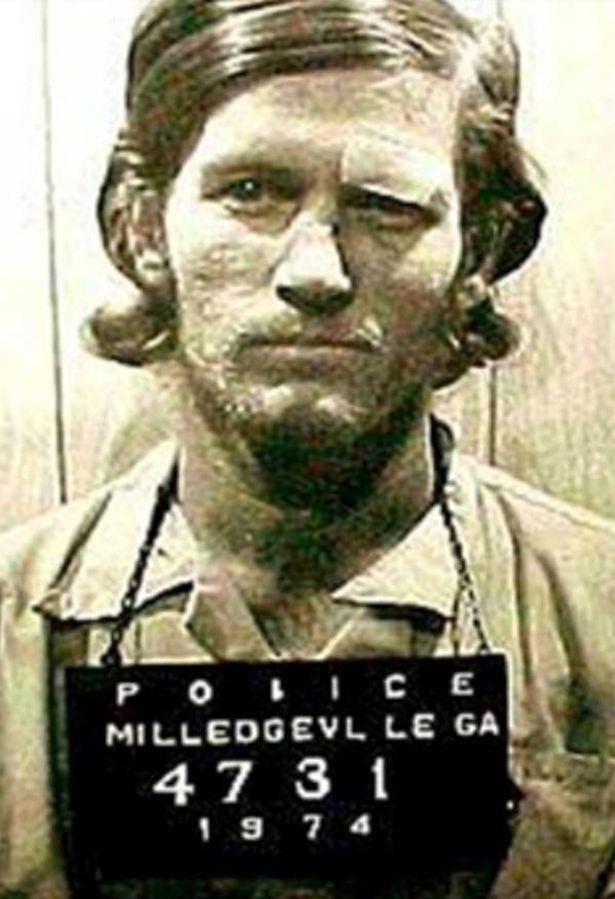
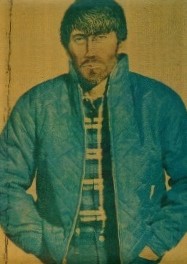
Paul John Knowles was an American serial killer whose violent journey across the United States in 1974 left at least 18 people dead. Nicknamed the “Casanova Killer” because of his appearance and ability to charm strangers, Knowles targeted men, women and children during a crime spree that crossed numerous state lines. He committed home invasions, robberies, sexual assaults, kidnappings and murders while continually stealing vehicles and changing his identity to avoid capture.
Knowles was born in Orlando, Florida, on April 25, 1946. His childhood was unstable, and he spent time in foster homes and reform institutions, including the Florida School for Boys. By the time he reached adulthood, he had accumulated a lengthy criminal record involving burglary, theft and other offenses. He repeatedly entered and left correctional institutions, gaining experience in deception, escape and survival outside the law.
In early 1974, while incarcerated in Florida, Knowles corresponded with a California woman named Angela Covic. The relationship became serious enough that marriage was discussed, and Covic helped him obtain legal assistance. After his release, Knowles traveled to California, but Covic ended the relationship after becoming frightened by his behavior. Knowles later claimed that he murdered three people in San Francisco following the rejection, although investigators were unable to verify that allegation.
Escape and the Beginning of the Murder Spree
Knowles returned to Florida and was arrested after a violent confrontation with a bartender. On July 26, 1974, he escaped from custody by picking the lock of his detention cell. That escape marked the beginning of a four-month crime spree extending from Florida to Ohio, Nevada, Texas, Alabama, Connecticut, Virginia and Georgia.
Knowles traveled primarily in stolen automobiles. He frequently robbed victims of money, credit cards and personal belongings before taking their vehicles. His methods varied according to opportunity. Some victims were strangled, others were shot or stabbed, and several were bound before being killed. Women were sometimes sexually assaulted. In other instances, Knowles appeared to murder simply because a witness could identify him or because he needed a vehicle.
Known and Suspected Victims
- Alice Henrietta Curtis — July 26, 1974, Jacksonville, Florida: Curtis, 65, was attacked in her home on the night Knowles escaped from custody. He bound and gagged her while stealing valuables and her automobile. Curtis suffocated after choking on the gag that had been forced into her mouth.
- Ima Jean Sanders — August 1, 1974, Warner Robins, Georgia: Sanders was 13 years old when she disappeared. Knowles later confessed on tape to murdering a girl he called “Alma.” Sanders’s skeletal remains were discovered in Houston County, Georgia, in April 1976. DNA testing decades later identified the remains, and investigators concluded that she was the young victim described by Knowles.
- Marjorie Howe — August 2, 1974, Atlantic Beach, Florida: Howe, 49, was murdered inside her residence. Knowles strangled her with a nylon stocking and stole property from the home, including a television.
- Unidentified female hitchhiker — early August 1974, location uncertain: Knowles claimed that he picked up a teenage hitchhiker, sexually assaulted her and strangled her. Her identity and the exact date and location of the alleged killing were never conclusively established.
- Kathie Pierce — August 23, 1974, Musella, Georgia: Pierce, 24, was strangled with a telephone cord inside her home. Her young son was present during the attack but was left alive. Knowles fled after stealing from the residence.
- William Vernon Bates — September 3, 1974, Lima, Ohio: Bates, 32, encountered Knowles at a tavern. Knowles strangled him, concealed his body in a wooded area east of Lima and stole his automobile, money and credit cards. Bates’s remains were not discovered until November 28, 1974.
- Emmett Alexander Johnson — September 18, 1974, near Ely, Nevada: Johnson, 62, was camping with his wife at a roadside recreation area when the couple encountered Knowles. Both were shot and killed before Knowles robbed them.
- Lois Mildred Johnson — September 18, 1974, near Ely, Nevada: Lois Johnson, 59, was murdered alongside her husband, Emmett. Their bodies were found at the isolated campsite after Knowles had fled the area.
- Ebon Charlynn Hicks — September 22, 1974, near Seguin, Texas: Hicks, 42, disappeared after experiencing trouble with her vehicle. Her body was found beside a roadway on September 25. She had been sexually assaulted and strangled. Evidence and Knowles’s movements connected him to the killing.
- Ann Jean Dawson — September 29, 1974, believed killed near the Mississippi River: Dawson, 49, was a beautician from Birmingham, Alabama. She apparently began traveling with Knowles after meeting him in Birmingham on September 23. Knowles claimed that he murdered her on September 29 and threw her body into the Mississippi River. Human remains discovered in Mississippi in 1977 were later associated with Dawson.
- Karen Wine — October 16, 1974, Marlborough, Connecticut: Wine, 35, was attacked inside her home with her teenage daughter. Knowles bound the victims and strangled them with nylon stockings. A tape recorder was taken from the residence.
- Dawn Marie Wine — October 16, 1974, Marlborough, Connecticut: Dawn, 16, was sexually assaulted and strangled during the invasion of her family’s home. Knowles used the stolen tape recorder to record an extensive account of his crimes.
- Doris Evelyn Bruce Hosey — October 18, 1974, Woodford, Virginia: Hosey, 53, was confronted in her home and forced to surrender money and her husband’s rifle. Knowles shot her with that rifle and left the weapon near her body after attempting to remove evidence of his presence.
- Edward Hilliard — November 2, 1974, Georgia: Hilliard, 23, was traveling with Debbie Griffin when the pair encountered Knowles. Their bodies were subsequently discovered in a wooded area. The two victims had been killed after accepting transportation or traveling in Knowles’s company.
- Debbie Griffin — November 2, 1974, Georgia: Griffin, 20, was murdered with Edward Hilliard. Knowles later provided details linking himself to the deaths. The couple’s disappearance and the recovery of their bodies became part of the multistate investigation into his movements.
- Carswell Carr — November 6, 1974, Milledgeville, Georgia: Carr, 45, met Knowles and invited him into his home. Knowles stabbed Carr repeatedly, reportedly inflicting approximately 25 wounds. He then turned his attention to Carr’s teenage daughter.
- Amanda Carr — November 6, 1974, Milledgeville, Georgia: Amanda, 15, was strangled inside the family residence after her father was stabbed. Knowles stole property and left the home before the victims were discovered.
- Charles Eugene Campbell — November 16, 1974, Pulaski County, Georgia: Campbell, 35, was a Florida Highway Patrol trooper who stopped Knowles while he was driving a stolen vehicle. Knowles gained control of Campbell’s weapon, took him hostage and forced him into the patrol car.
- James Meyer — November 16, 1974, Pulaski County, Georgia: Meyer, 29, was a Delaware businessman whose vehicle was stopped by Knowles using Campbell’s patrol car. Knowles took Meyer hostage along with the trooper. He handcuffed both men to a tree in a wooded area and shot each of them in the head.
Confessions and Claims of Additional Murders
Knowles claimed responsibility for as many as 35 murders. He described numerous killings in recorded statements prepared for his attorney, apparently hoping that the tapes would eventually become the foundation for a book or film. Authorities connected him to at least 18 deaths, while several additional confessions lacked enough information to identify a victim or locate remains.
Some of his claims may have been exaggerations intended to increase his notoriety. Others contained details suggesting that unknown victims may have existed. Investigators examined unsolved murders in states through which he traveled, but his constant movement, use of stolen cars and habit of targeting strangers made reconstruction difficult. Knowles also used false names and discarded evidence along highways, at campsites and in rural areas.
Two young Florida sisters, 11-year-old Lillian Annette Anderson and 7-year-old Mylette Josephine Anderson, were historically named as possible Knowles victims after he reportedly claimed to have strangled two girls who recognized him. However, uncertainties surrounding the identification, dates and available documentation have prevented their inclusion among the most consistently verified victims of his 1974 murder spree.
The Final Murders and Manhunt
The murders of Charles Campbell and James Meyer triggered an intensive search. Knowles fled in a stolen vehicle and later encountered a police roadblock in Henry County, Georgia. He attempted to force his way through the roadblock, crashed and escaped on foot. Armed officers, tracking dogs and helicopters searched the surrounding area as Knowles moved through the woods.
On November 17, 1974, a civilian named David Clark encountered Knowles outside the main police perimeter. Clark, a Vietnam veteran who was carrying a shotgun, held him at gunpoint until officers arrived. Knowles was arrested without being able to continue his escape. Investigators soon realized that the prisoner was connected to crimes committed across the country.
Death During Police Transport
Knowles never stood trial for the full series of murders. On December 18, 1974, Georgia Bureau of Investigation agent Ronnie Angel and Henry County Sheriff Earl Lee transported him along Interstate 20. The officers were taking Knowles to search for a handgun associated with the murders of Campbell and Meyer.
According to the official account, Knowles used a concealed metal object to free himself from his restraints. He reached for Sheriff Lee’s handgun and discharged it through the holster while struggling with the sheriff inside the moving vehicle. Agent Angel fired three shots into Knowles’s chest, killing him at the age of 28.
Legacy of the Casanova Killer
Paul John Knowles’s crimes were unusual in their speed, geographic range and variety. His recognized murder spree lasted less than four months, yet it crossed much of the United States and involved victims of widely different ages and backgrounds. He did not maintain a single victim type or method of attack. Instead, he killed during robberies, home invasions, sexual assaults and attempts to eliminate witnesses.
His outward confidence and social ease allowed him to approach strangers without immediately alarming them. That ability contributed to the “Casanova Killer” nickname, although many of his victims were not romantically involved with him. Some simply offered assistance, accepted a ride, invited him into their homes or encountered him while traveling.
Because Knowles was killed so soon after his arrest, prosecutors never had the opportunity to test the full body of evidence in court. His death also ended investigators’ ability to question him about unidentified victims and disputed confessions. Although at least 18 deaths have been attributed to him, the actual number of people murdered during his travels may never be known.