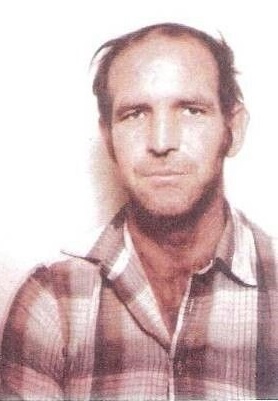
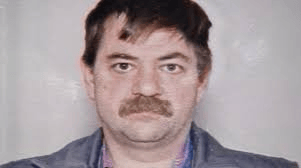
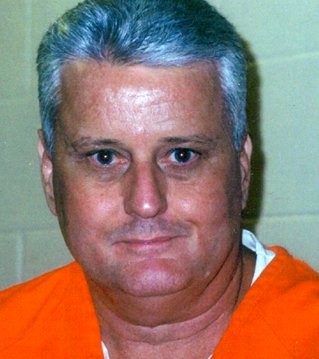
Richard Fran Biegenwald: The Jersey Shore "Thrill Killer"
Richard Fran Biegenwald was an American serial killer whose criminal history stretched across more than two decades, beginning with a fatal robbery in 1958 and culminating in a series of murders along the New Jersey shore during the early 1980s. Born on August 24, 1940, Biegenwald spent much of his adult life in prisons or under correctional supervision. He ultimately accumulated murder convictions involving six victims and was suspected by investigators in additional killings. His crimes became especially notorious because several were committed after he had already served approximately seventeen years of a life sentence for murder and had been released on parole.
Biegenwald became widely known as the "Thrill Killer," a description arising from prosecutors' contention that some of his later murders were committed without a conventional motive such as robbery or revenge. Investigators uncovered victims who had been shot or stabbed and then concealed in graves in New Jersey and at the Staten Island property of Biegenwald's mother. His arrest in January 1983 began an investigation that gradually exposed a much larger pattern of violence than police initially realized.
The 1958 Murder of Stephen Sladowski
Biegenwald's first known murder occurred when he was only eighteen years old. On December 18, 1958, he participated in a robbery at a small grocery or delicatessen in Bayonne, New Jersey. The victim was 47-year-old Stephen F. Sladowski, an attorney who also served as an assistant municipal prosecutor in Bayonne and helped operate the store.
During the robbery, Biegenwald shot Sladowski in the chest. He fled New Jersey with an accomplice but was captured in Maryland two days later following another violent confrontation with law enforcement. Biegenwald was returned to New Jersey, convicted of Sladowski's murder in 1959 and sentenced to life imprisonment.
Despite the life sentence, Biegenwald was eventually granted parole in 1975 after serving approximately seventeen years. His release would later become one of the most disturbing aspects of the case because he ultimately returned to murder. He experienced additional problems while on parole, including violations that resulted in further incarceration. By the early 1980s, he was living in the Asbury Park area and had developed a close association with another convicted criminal, Dherran Fitzgerald.
The Murders Resume
The murders attributed to Biegenwald during the early 1980s were primarily centered in Monmouth and Ocean counties and surrounding areas of the New Jersey shore. Several victims were teenage girls. Evidence eventually showed that victims were sometimes transported after death and concealed at locations far from where they had originally encountered Biegenwald.
One particularly important location in the investigation was the property belonging to Biegenwald's mother on Staten Island, New York. Investigators eventually discovered the remains of two teenage victims buried there. Other bodies were recovered from secluded locations in Tinton Falls, Neptune Township and Ocean Township, New Jersey.
Confirmed and Convicted Victims
The following victims are associated with murders for which Biegenwald was convicted or later entered guilty pleas. Where exact dates are available, the dates below follow the dates identified in New Jersey court records; some later secondary accounts differ by approximately one day on several of the 1981-1982 cases.
- Stephen F. Sladowski, 47 — December 18, 1958 — Bayonne, New Jersey: Sladowski was an attorney, assistant municipal prosecutor and store owner. Biegenwald shot him during a robbery at his grocery store or delicatessen in Bayonne. Biegenwald was captured in Maryland shortly afterward and was convicted of the murder in 1959. He received a life sentence but was paroled in 1975.
- Maria Ciallella, 17 — October 31, 1981 — New Jersey/Staten Island, New York: Ciallella, from the Brick Township area, disappeared around Halloween 1981. She had been shot twice in the head. Her remains were subsequently dismembered and buried at the Staten Island property belonging to Biegenwald's mother. Investigators recovered her remains there in April 1983. Biegenwald eventually pleaded guilty to her murder.
- Deborah Osborne, 17 — April 7, 1982 — New Jersey/Staten Island, New York: Osborne, of the Toms River area, was stabbed repeatedly in the chest and abdomen. Her remains were concealed at the same Staten Island property where Maria Ciallella had been buried. Investigators found Osborne's body in the grave area above or alongside Ciallella's remains. Biegenwald later pleaded guilty to Osborne's murder.
- Anna Marie Olesiewicz, 18 — August 27, 1982 — Asbury Park/Ocean Township, New Jersey: Olesiewicz, from Camden, traveled to the Jersey Shore with a friend. On the night of August 27, she and her friend were on the Asbury Park boardwalk when the friend briefly left her alone. When the friend returned, Anna was gone. Biegenwald encountered Olesiewicz and lured her away from the boardwalk. She was shot four times in the head. Her body was abandoned in a wooded lot behind a fast-food restaurant along Route 35 in Ocean Township. Her remains were discovered on January 14, 1983. Biegenwald was convicted of her murder on December 7, 1983.
- William J. Ward, 34 — September 21, 1982 — Asbury Park, New Jersey: Ward, of North Wildwood, had a business association with Biegenwald and was described by authorities as being involved in illegal activity. Prosecutors maintained that Ward went to Biegenwald's Asbury Park residence and that a confrontation developed. Ward was shot multiple times in the head in the rear yard of the property. His body was later buried in Neptune Township near Mount Calvary Cemetery. Investigators recovered his remains in April 1983. Biegenwald was convicted of Ward's murder on February 16, 1984.
- Betsy Bacon, 17 — November 20, 1982 — Sea Girt/Tinton Falls, New Jersey: Bacon was last seen at approximately 11:00 p.m. after telling her mother she was going to a convenience store on Route 71 to buy cigarettes. Authorities believed Biegenwald picked her up and killed her in his vehicle. She had been shot twice in the head. Investigators believed her body was temporarily kept at Biegenwald's Asbury Park residence before being buried in Tinton Falls. Her remains were recovered in April 1983. Biegenwald eventually pleaded guilty to Bacon's murder in 1993.
The Murder of Anna Olesiewicz and the Break in the Case
Anna Olesiewicz's murder became the case that finally brought Biegenwald under intense police scrutiny. On the evening of August 27, 1982, Olesiewicz and her friend Denise Hunter visited the Asbury Park boardwalk. Hunter briefly left Anna sitting on a bench. When she returned, Anna had vanished. A missing-person report was filed the following morning.
Nearly five months later, on January 14, 1983, children discovered skeletal remains in underbrush behind a restaurant in Ocean Township. Dental records identified the victim as Olesiewicz. Investigators found four bullet holes in her skull, and three bullets remained lodged inside it.
The discovery was followed by a critical development. Theresa Smith, a young woman who had previously lived with Biegenwald and his wife, approached police and provided information implicating him. During Biegenwald's trial, Smith described how he had encouraged her to prove that she was "tough" by killing someone. She also described events surrounding the night Olesiewicz disappeared that directed investigators toward Biegenwald.
Police moved against Biegenwald and his associates on January 22, 1983. Biegenwald and Dherran Fitzgerald were arrested, along with Biegenwald's wife Diane and Fitzgerald's girlfriend Jennifer Metz. Searches connected with the arrests uncovered an alarming collection of firearms, illegal weapons, explosives and drugs.
Dherran Fitzgerald and the Discovery of Additional Bodies
Dherran Fitzgerald became one of the most important witnesses in the investigation. Fitzgerald had known Biegenwald from prison and later associated with him after both men were back on the streets. After his arrest, Fitzgerald began cooperating with authorities and provided information that helped investigators locate the remains of several victims.
Fitzgerald directed investigators to burial locations in New Jersey and to Biegenwald's mother's property on Staten Island. The discoveries transformed what initially appeared to be the investigation of one murder into an examination of a series of killings.
In April 1983, investigators recovered the remains of Maria Ciallella and Deborah Osborne from the Staten Island property. Fitzgerald also supplied information that led police to Betsy Bacon's grave in Tinton Falls and William Ward's burial location in Neptune Township. Medical examinations established that Bacon had been shot twice in the head and Ward had suffered multiple gunshot wounds to the head.
Suspected Victims
Authorities also investigated Biegenwald in connection with murders for which he was never convicted. These cases should be distinguished from his confirmed convictions because the suspicions were never established in court.
- John P. Petrone, 57 — June 1978 — New Jersey: Petrone was a Brielle resident, former convict and sometime police informant. Authorities publicly accused Biegenwald of involvement in Petrone's killing. Petrone had been shot, and his remains were discovered on May 11, 1983, in a wooded area of Jackson Township. Other accounts connected the killing itself with an abandoned airfield or target-shooting area elsewhere in New Jersey. Biegenwald was suspected but was never convicted of Petrone's murder.
- Virginia Clayton, 17 — September 8, 1982 — New Jersey: Clayton was abducted and murdered on September 8, 1982. Her body was discovered three days later. Investigators noted that the location was only several miles from the area associated with the Petrone case. Clayton's age and appearance, together with other circumstances of the crime, led investigators to consider Biegenwald a suspect. He was never charged with her murder.
The William Ward Murder
The killing of William Ward provided prosecutors with another major case against Biegenwald. Ward arrived at Biegenwald's Asbury Park residence on September 21, 1982. According to testimony presented at trial, an argument and physical struggle developed involving Ward and Fitzgerald. Fitzgerald testified that Biegenwald appeared during the confrontation and shot Ward repeatedly in the head.
Ward disappeared following the encounter. His bloodstained automobile was eventually located in the Coney Island area of New York. After Fitzgerald began cooperating with investigators, he directed authorities to Ward's grave near a cemetery in Neptune Township. Biegenwald was tried separately for Ward's murder and was convicted on February 16, 1984. The jury did not impose another death sentence, and Biegenwald received a life sentence for the killing.
The Murder of Betsy Bacon
Betsy Bacon's case demonstrated how Biegenwald was able to conceal his crimes for months. The 17-year-old left her home late on November 20, 1982, saying that she planned to go to a nearby convenience store. She never returned.
Her disappearance remained unresolved until Fitzgerald's cooperation led investigators to a burial site in Tinton Falls in April 1983. Medical examination showed that Bacon had been shot twice in the head. Monmouth County prosecutors believed that Biegenwald had picked her up, murdered her inside his vehicle and brought her body to his Asbury Park residence. Authorities believed the body remained there temporarily before being taken to the Tinton Falls burial site.
Biegenwald was indicted for Bacon's murder along with the other killings uncovered during the investigation. Her case remained unresolved in court longer than several of the others, but Biegenwald eventually pleaded guilty to murdering Bacon in 1993.
Trials and Murder Convictions
Biegenwald's first major trial following the 1983 investigation concerned Anna Olesiewicz. The prosecution portrayed her death as a senseless killing rather than a murder arising from a personal dispute or conventional financial motive. On December 7, 1983, a jury convicted Biegenwald of murder. The following day, he was sentenced to death.
Two months later, a second jury convicted him of murdering William Ward. Biegenwald subsequently resolved additional murder cases through guilty pleas. In September 1984, he pleaded guilty to the murders of Maria Ciallella and Deborah Osborne and received additional prison sentences. Years later, he pleaded guilty to murdering Betsy Bacon.
Combined with his original 1959 conviction for murdering Stephen Sladowski, Biegenwald was therefore convicted or entered guilty pleas in connection with six killings: Sladowski, Ciallella, Osborne, Olesiewicz, Ward and Bacon.
The Death Penalty Appeals
The Olesiewicz case became an important part of New Jersey's modern death-penalty litigation. Biegenwald's original death sentence was overturned by the New Jersey Supreme Court in 1987 because of errors in instructions given to the jury during the sentencing phase. His murder conviction itself remained intact.
A second penalty proceeding again resulted in a death sentence in 1989. That sentence was also overturned by the New Jersey Supreme Court in 1991. Biegenwald ultimately remained imprisoned under lengthy sentences for his multiple murder convictions rather than being executed. New Jersey later abolished its death penalty entirely.
A Crime Series Hidden for Years
One of the most significant features of the Biegenwald investigation was how long individual murders remained disconnected from one another. Maria Ciallella disappeared in 1981. Deborah Osborne disappeared in 1982. Betsy Bacon vanished later that year. William Ward also disappeared without authorities immediately knowing what had happened to him. Anna Olesiewicz remained missing for months before her body was discovered.
Only after the Olesiewicz investigation focused on Biegenwald and witnesses began talking did police discover the burial sites and connect the victims to the same man. Fitzgerald's cooperation was particularly important because he possessed firsthand knowledge of bodies being moved and buried. Without information from people within Biegenwald's circle, some of the victims might have remained undiscovered for considerably longer.
Death of Richard Biegenwald
Richard Fran Biegenwald spent the remainder of his life incarcerated in New Jersey. He died on March 10, 2008, at St. Francis Medical Center in Trenton at the age of 67. His death was attributed to respiratory and kidney failure.
Biegenwald left behind a documented history of six murder convictions spanning from 1958 through 1982, along with additional killings in which investigators suspected his involvement but were unable to establish criminal responsibility in court. The discovery of hidden graves, his return to murder after release from a life sentence and the seemingly arbitrary selection of several young victims made his case one of the more disturbing serial-murder investigations associated with the New Jersey shore during the twentieth century.