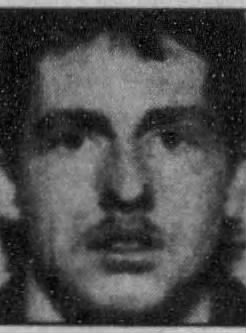
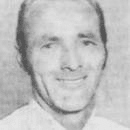
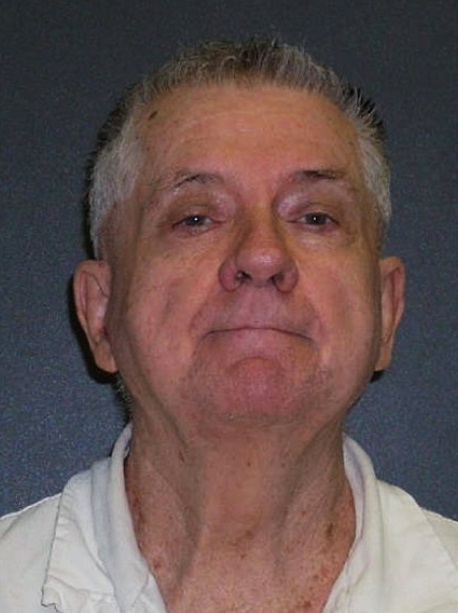
Michael Wayne Williams
Overview
Michael Wayne Williams was a convicted Virginia murderer whose crimes stretched across two brutal episodes in late 1992 and early 1993. His known victims included four men killed on Christmas Eve in Prince Edward County, Virginia, and a married couple murdered two months later in Cumberland County. The killings were marked by robbery, gunfire, and arson, with both crime scenes set on fire after the victims were shot. Williams was later convicted in the Cumberland County case and received death sentences for the murders of Morris C. Keller Jr. and Mary Elizabeth Keller. He also later pleaded guilty in connection with the four earlier killings.
The crimes attributed to Williams were not random in the sense of a stranger attacking in passing. They unfolded in private homes, where victims were overpowered, robbed, and killed. In both known incidents, the use of fire after the shootings suggested an effort to destroy evidence and delay discovery. The Cumberland County murders in particular became the central case against him, because of the detailed testimony of accomplice Jeffrey Alan Cruse and Williams’s own admissions at trial.
The Christmas Eve Quadruple Murder
On December 24, 1992, four men were killed inside the Atkinson home in Prince Edward County, Virginia, near Blackstone. The victims were George Atkinson Sr., his son George Atkinson Jr., Jeffrey Villalobos, and William B. Cutter. All four men were shot in the head, and the residence was set on fire afterward. The killings shocked the community not only because of the number of victims, but because the murders happened on Christmas Eve inside a family home.
Williams was later charged in connection with those deaths after being arrested in Georgia in March 1993. His brother, Johnny Williams, was also charged in the Christmas Eve case. Michael Wayne Williams eventually pleaded guilty to one count of capital murder and three counts of first-degree murder for the four Prince Edward County slayings, receiving life sentences for each killing. These murders established the first known episode in the sequence of six deaths attributed to him.
The Keller Murders
On the night of February 27, 1993, Williams and Jeffrey Alan Cruse went to a rural area of Cumberland County, Virginia, intending to rob Bear Creek Market. When they arrived and found the market closed, Williams suggested targeting a nearby home where he believed money could be found. That decision led them to the home of Morris C. Keller Jr. and Mary Elizabeth Keller.
When Morris Keller opened the door, Williams pointed a gun at him, and both Williams and Cruse entered the house. The Kellers were forced into a terrifying ordeal inside their own home. They were ordered to remove their clothing, tied up, placed in closets, and robbed while the men searched the residence for valuables. Mary Elizabeth Keller was raped during the attack. Afterward, Williams directed the couple to shower and put on clean clothes before telling them they were going to “take a walk.”
Williams and Cruse marched Morris and Mary Keller down a dirt road and into a wooded thicket near the home. Williams stood behind Morris Keller while Cruse stood behind Mary Keller. Williams counted to three and shot Morris Keller. When Cruse did not immediately shoot Mary Keller, Williams told him to do it because he did not want to leave witnesses. Cruse then shot Mary Keller. After Morris Keller moved again, Williams shot him a second time, and then additional shots were fired to make sure both victims were dead.
After the shootings, Williams and Cruse returned to the Keller home and loaded stolen property into the couple’s Jeep. Items taken included a television, microwave, stereo equipment, speakers, and a shotgun. The house was then set on fire. The stolen Jeep was driven to Fredericksburg, where some of the property was sold. Other stolen items and a firearm were thrown into the Rappahannock River, and the Jeep was also burned.
Victims
- George Atkinson Sr. — age 47; killed on December 24, 1992, inside the Atkinson home in Prince Edward County, Virginia, near Blackstone. He was shot in the head, and the home was set on fire after the killings.
- George Atkinson Jr. — age 24; killed on December 24, 1992, alongside his father and two friends in Prince Edward County, Virginia. He was one of the four Christmas Eve homicide victims found in the burned residence.
- Jeffrey Villalobos — age 31; killed on December 24, 1992, at the Atkinson home in Prince Edward County, Virginia. He was described as a friend of the Atkinsons and was shot in the head with the other victims.
- William B. Cutter — age 24; killed on December 24, 1992, at the Atkinson home in Prince Edward County, Virginia. He was from Blackstone and was one of the four men murdered in the Christmas Eve attack.
- Morris C. Keller Jr. — age 45; killed on February 27, 1993, in Cumberland County, Virginia. He was robbed, abducted from his home, marched into a wooded area, and shot by Michael Wayne Williams.
- Mary Elizabeth Keller — age 35; killed on February 27, 1993, in Cumberland County, Virginia. She was robbed, abducted, raped, taken into a wooded thicket, and shot during the same attack that killed her husband.
Investigation and Arrest
The investigation into the Keller murders began after the fire at the couple’s house drew attention. A woman who had driven Williams and Cruse near the area on the night of the crimes contacted police after learning about the fire. Investigators questioned Cruse, who eventually gave a detailed account of the attack after the bodies of Morris and Mary Keller were discovered.
Williams fled Virginia after the Keller murders. He was arrested in Kingsland, Georgia, in March 1993. At the time of his arrest, he was wanted in connection with the Keller murders and was then also charged in the four Christmas Eve killings. The two cases together gave authorities a picture of a violent offender connected to six murders across two Virginia counties within a span of just over two months.
Trial and Convictions
Williams was tried in January 1994 for the murders of Morris and Mary Keller. The charges against him included capital murder, robbery, rape, abduction, burglary, and arson. Prosecutors presented the Keller attack as a calculated series of crimes that began with a planned robbery and ended with the deliberate execution of two witnesses. Cruse testified against Williams, and Williams also took the stand in his own defense.
Williams admitted to parts of the crime, including that he suggested the robbery of Bear Creek Market, that he suggested setting fire to the Keller home, and that he shot Morris Keller in the head. He disputed other parts of the prosecution’s evidence, including claims about the rape and the additional gunshots. The jury convicted him of the capital murders and other related offenses. He was sentenced to death for the Keller murders.
In a separate resolution of the Christmas Eve case, Williams pleaded guilty to one count of capital murder and three counts of first-degree murder for the deaths of George Atkinson Sr., George Atkinson Jr., Jeffrey Villalobos, and William B. Cutter. He received life sentences for those four killings. Jeffrey Alan Cruse, his accomplice in the Keller murders, later pleaded guilty in connection with the deaths of Mary and Morris Keller and received life sentences.
Legacy of the Case
The Michael Wayne Williams case remains one of Virginia’s stark examples of a short but devastating murder sequence tied to robbery and witness elimination. In the Prince Edward County killings, four men were shot inside a home and the residence was burned. In Cumberland County, a married couple was terrorized, robbed, assaulted, marched away from their home, and killed before their property was stolen and their house set ablaze.
Across both cases, the same pattern stood out: victims attacked in a residence, gunshots to the head, stolen property, and fire used after the murders. The case became especially significant in later court history because Williams’s appeals reached the United States Supreme Court in Williams v. Taylor, a habeas corpus case connected to his capital convictions. Behind the legal record, however, were six victims whose deaths left two Virginia communities connected by one violent series of crimes.