Robert Reldan: The Bergen County Strangler
Background and Early Criminal Behavior
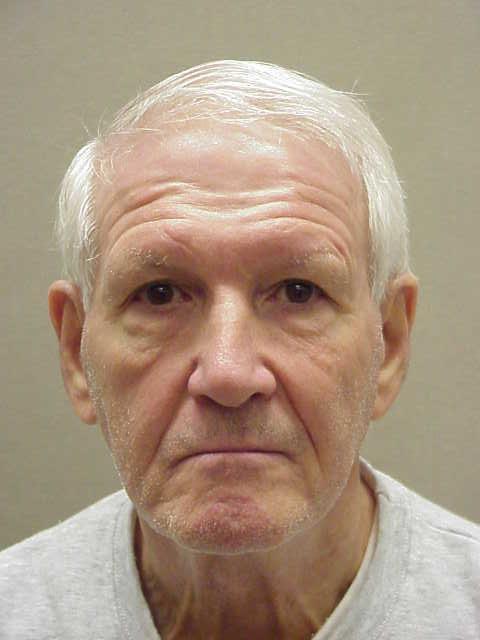
Robert Reldan was an American murderer, serial rapist and suspected serial killer whose crimes created fear throughout Bergen County, New Jersey, during the 1970s. Born Robert Nadler on June 2, 1940, in Brooklyn, New York, he moved with his family to Fort Lee, New Jersey, when he was approximately eleven years old. He was later known by his stepfather’s surname, Reldan. Intelligent, articulate and outwardly personable, he developed a reputation for appearing friendly and trustworthy. This ability to make others feel comfortable reportedly led to his nickname, “The Charmer.” Behind that carefully maintained image, however, was a long pattern of burglary, sexual violence, manipulation and murder.
Reldan’s violence against women began years before the murders for which he was ultimately convicted. As a young man, he entered homes and attacked women, sometimes selecting residences after observing the occupants or learning their routines. In one early attack, he entered the bedroom of a teenage girl during the night and sexually assaulted her. Additional women later described similar encounters in which Reldan used surprise, threats and physical force to overpower them.
During the 1960s, Reldan was convicted of violent sexual offenses and sent to prison. He was eventually transferred to a treatment institution for offenders considered to have compulsive sexual behavior. Despite the danger demonstrated by his previous crimes, he was released in the early 1970s. His freedom placed him back in the same suburban region where he knew the roads, residential neighborhoods and wooded areas well. Within a short time, women in northern New Jersey began disappearing under circumstances that investigators would later connect to him.
The 1975 “Susan” Murders
Reldan was convicted of murdering two young women in October 1975: Susan Heynes and Susan Reeve. Both lived in Bergen County, both disappeared close to their homes, and both were found nude in isolated areas of neighboring Rockland County, New York. Each woman had been strangled with a ligature made from pantyhose. The similarities were so striking that the crimes became known as the “Susan murders” or “Susan strangulations.”
- Susan Johnstone Heynes, age 26 — October 6, 1975 — Haworth, New Jersey: Heynes, whose surname was sometimes misspelled as Reynes in later accounts, disappeared from her Haworth home on October 6, 1975. Investigators concluded that she was abducted and killed shortly after she vanished. Her nude body was discovered on October 27, 1975, partially concealed beneath broken tree branches in a wooded section of Valley Cottage in Clarkstown, Rockland County, New York. The medical examiner determined that she had been murdered by ligature strangulation.
- Susan Reeve, age 22 — October 14, 1975 — Demarest, New Jersey: Reeve disappeared on the evening of October 14, 1975, while walking near her parents’ home in Demarest. A witness saw her beside a man near a station wagon and sensed that something was wrong. Her nude body was found on October 28, 1975, partially concealed by vegetation in Tallman Mountain State Park in Rockland County, New York. She had been sexually assaulted and strangled with pantyhose.
The two women disappeared only eight days apart. Their bodies were abandoned approximately thirteen miles from one another, suggesting that the killer was familiar with both Bergen County and the less populated areas across the New York state line. The method of concealment was also similar. Broken branches, reeds and other natural materials had been placed over the victims, but the bodies were not deeply buried. Investigators believed the offender wanted to delay discovery without performing the more time-consuming work of digging graves.
The Abduction and Murder of Susan Heynes
Susan Heynes was a nurse and married woman living in Haworth. On October 6, 1975, she failed to appear for her regular responsibilities and was reported missing. Her unexplained disappearance immediately concerned relatives and investigators because there was no indication that she intended to leave voluntarily. Police searched the surrounding area and began examining recently released sexual offenders who had ties to Bergen County.
Twenty-one days after she disappeared, Heynes was found in a secluded wooded area of Valley Cottage. Her body had been exposed to the elements and was hidden beneath tree branches. The medical examiner identified strangulation as the cause of death. Pantyhose had been used as the ligature, indicating a close and deliberate form of killing in which the murderer remained physically near the victim while tightening the material around her neck.
Investigators later used trained tracking dogs during the inquiry. The dogs detected Heynes’s scent inside Reldan’s vehicle, providing evidence that she had been in his car. Hair and fiber evidence was also examined. Although forensic testing in 1975 was far less advanced than modern DNA analysis, the physical evidence, Reldan’s history and the similarities between the two murders gradually made him the principal suspect.
The Abduction and Murder of Susan Reeve
Susan Reeve was a recent college graduate who was staying with her parents in Demarest. On October 14, 1975, she was walking near their residence when she encountered a man beside a station wagon. A passing witness later recalled seeing Reeve with the man and feeling that the situation appeared unusual. The witness’s description of the vehicle became important because the station wagon was subsequently identified as belonging to Reldan.
Reeve did not return home, and an extensive search followed. Her disappearance came while authorities were still trying to locate Susan Heynes, increasing fears that the same predator was operating in the area. On October 28, one day after Heynes’s body was recovered, searchers found Reeve in Tallman Mountain State Park. Her body had been placed in a marshy area and partially covered with reeds. She had been sexually assaulted and strangled.
Investigators discovered evidence indicating that Reeve had been taken to a vacant house associated with Reldan’s wealthy aunt, Lillian Booth. Reldan had access to the residence, giving him a private location where a victim could be held without immediately attracting attention. Evidence connected with Reeve was reportedly located there, although not every item uncovered during the investigation was ultimately presented to the jury.
Arrest and Murder Investigation
Reldan was arrested on October 31, 1975, after being caught during an attempted residential burglary. At first, the arrest was unrelated to the murders. However, investigators reviewing the recent release records of convicted sexual offenders found Reldan’s name. His previous attacks against women, his presence in Bergen County and the station wagon observed near Susan Reeve made him a person of intense interest.
A search of his vehicle produced hair and other trace evidence that prosecutors said connected him with the missing women. Tracking dogs reacted to scents associated with Heynes and Reeve inside the automobile. Witness testimony also placed a vehicle resembling Reldan’s near the scene of Reeve’s abduction. Investigators assembled a largely circumstantial case, but the combined evidence presented a consistent account of how the women were selected, abducted, sexually assaulted, strangled and transported across the state line.
While imprisoned for burglary, Reldan spoke with fellow inmates about the murders. Two prisoners later gave statements describing incriminating admissions he had allegedly made. According to their accounts, Reldan discussed his involvement in the deaths and revealed details that strengthened the prosecution’s case. Defense attorneys challenged the credibility of the inmates, arguing that prisoners might offer testimony in hopes of receiving favorable treatment. Nevertheless, their statements became part of the evidence considered during the lengthy legal proceedings.
Plot to Murder His Aunt
While confined, Reldan also became involved in a plot to kill his wealthy aunt, Lillian Booth, and possibly her female companion. Booth had provided him with financial assistance for many years and possessed jewelry and other valuable property. Reldan apparently believed that her death would allow him to receive a substantial inheritance while also giving accomplices an opportunity to steal valuables from her home.
Authorities learned of the plan and arranged for an undercover Bergen County detective to pose as a professional killer. The detective met Reldan in prison under an assumed identity, and their conversations were secretly recorded. Reldan discussed arrangements for the proposed killings and the division of the proceeds. The recordings gave prosecutors direct evidence of his willingness to organize murder for financial gain.
In June 1978, Reldan was convicted of conspiracy in connection with the plot and received a sentence of twenty to fifty years. The case demonstrated that his imprisonment had not ended his dangerous behavior. Even behind prison walls, he continued manipulating others and attempting to arrange violence against a relative who had supported him.
Murder Trials and Convictions
Reldan was indicted for the murders of Susan Heynes and Susan Reeve. His first murder trial ended in June 1979 when the jury was unable to reach a unanimous verdict. A mistrial was declared, forcing prosecutors to prepare the complex circumstantial case for a second proceeding.
At the retrial later in 1979, prosecutors presented evidence concerning the nearly identical circumstances of the two murders. They emphasized that both victims were young Bergen County women named Susan, that they disappeared within eight days of each other, and that both were taken from residential communities. Their bodies were left in Rockland County, and both women were found nude and strangled with pantyhose. The prosecution also introduced evidence connected with Reldan’s vehicle, witness observations and statements he allegedly made in prison.
The jury convicted Reldan of both murders. He received two life sentences, one for each victim. The murder sentences and the additional sentence for plotting to kill his aunt ensured that he faced the possibility of spending the rest of his life in prison. His convictions were repeatedly reviewed through appeals, but the central findings against him remained intact.
Other Murders Once Attributed to Reldan
Reldan was frequently suspected of additional killings because several young women and teenage girls were murdered in New Jersey during the period surrounding his release. Some older books and crime summaries attributed as many as six or eight victims to him. Later investigations, however, weakened or disproved several of those claims. Only Susan Heynes and Susan Reeve were legally established as Reldan’s murder victims.
- Mary Ann Pryor, age 17, and Lorraine Marie Kelly, age 16 — August 1974 — North Bergen and Montvale, New Jersey: The teenagers disappeared on August 9, 1974. Their bodies were found on August 14 in a wooded area of Montvale. Both had been assaulted, bound and suffocated or strangled. Reldan was named as a suspect in some early accounts, but later evidence connected convicted serial killer Richard Cottingham to their murders. They are no longer considered victims of Reldan.
- Doreen Ann Carlucci, age 14, and Joanne Delardo, age 15 — December 1974 — Woodbridge Township, New Jersey: The girls disappeared after attending a church dance on December 13, 1974. Their bodies were found four days later, on December 17, in a wooded area. Although Reldan was once mentioned as a possible suspect, investigators later focused on convicted murderer Robert Zarinsky. Reldan was never charged with their deaths.
- Denise Evans and Carolyn Hedgepeth, both age 15 — October 24, 1975 — Salem County, New Jersey: The two teenagers were found shot to death in southern New Jersey. Their murders occurred during the same general period as the Heynes and Reeve cases, leading some writers to include them among Reldan’s possible victims. No conclusive evidence established that he killed them, and he was never convicted or formally charged in connection with their deaths.
The uncertain history of these cases illustrates the danger of treating suspicion as proof. Reldan’s established record of sexual violence and murder made him a plausible suspect whenever young women were attacked in New Jersey, but proximity and behavioral similarities alone were not sufficient to establish responsibility. Subsequent forensic work and renewed cold-case investigations identified other offenders in several crimes once associated with him.
Life in Prison and Inheritance
Reldan remained imprisoned for decades, but his name returned to public attention after Lillian Booth died and left him access to a trust reportedly worth several million dollars. The inheritance outraged the relatives of Susan Reeve, who argued that a convicted murderer should not be allowed to enjoy a fortune while the families of his victims continued to suffer.
Arthur and Barbara Reeve, Susan’s parents, pursued civil action against Reldan. The legal battle produced a multimillion-dollar settlement intended to prevent him from using the inheritance to improve his chances of obtaining parole or to live comfortably following a possible release. The dispute became a notable example of a victim’s family using civil law to hold a convicted killer financially accountable long after the criminal trial had ended.
Reldan continued to maintain that he had not murdered the two women. He sought appeals, forensic testing and parole consideration, but officials repeatedly concluded that his release would present a serious risk. His history included rape, burglary, two murders and a murder-for-hire conspiracy planned from inside prison. The calculated nature of those offenses, combined with his manipulation of acquaintances and inmates, remained central to decisions keeping him confined.
Legacy of the Bergen County Strangler
Robert Reldan’s crimes shattered the feeling of safety that had existed in several quiet Bergen County communities. Susan Heynes and Susan Reeve disappeared from ordinary residential surroundings rather than obviously dangerous locations. Their killer used familiarity, deception and sudden violence, demonstrating that a predator could operate behind an appearance of charm and social respectability.
The investigation also revealed the limitations of forensic science during the 1970s. Prosecutors relied heavily on witness observations, hair comparisons, scent-tracking dogs, circumstantial evidence and statements made to fellow prisoners. Modern DNA techniques were unavailable when the murders occurred, and later legal attempts to test preserved evidence became part of Reldan’s continuing appeals.
Although Reldan was often described as a serial killer responsible for as many as eight deaths, the evidence supports a more careful conclusion. He was convicted of murdering Susan Heynes and Susan Reeve and was suspected, sometimes incorrectly, in several other cases. His confirmed crimes were accompanied by an extensive history of sexual assaults, burglaries and a conspiracy to have his aunt murdered. That combination established him as one of New Jersey’s most dangerous violent offenders and ensured that he remained imprisoned for the remainder of his life.