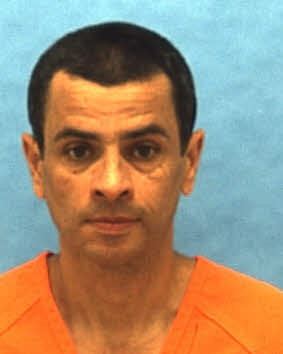
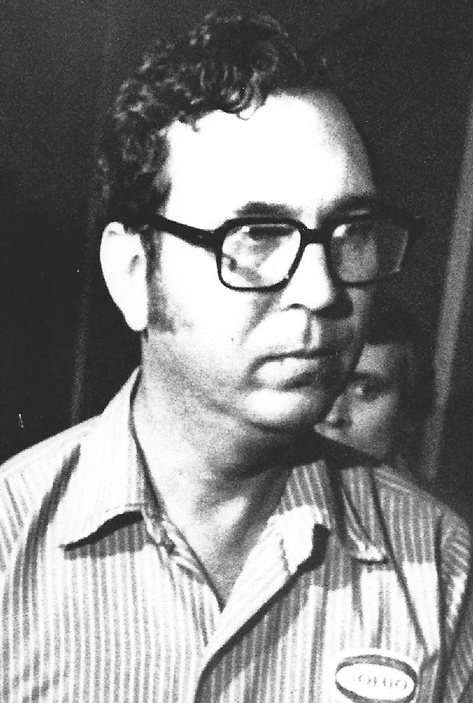
James B. Grinder: The Arkansas and Missouri Serial Killer
Background
James B. Grinder was an American serial killer and rapist whose known crimes stretched from Arkansas to Missouri between 1976 and 1984. Born in 1945, Grinder worked at various times as a woodcutter and spent years moving through ordinary communities while serious suspicions about him remained unresolved. He is known to have murdered four victims: three teenage girls who disappeared together from Russellville, Arkansas, in December 1976, and a 25-year-old Missouri woman killed in January 1984. More than two decades passed between the first murders and Grinder finally being held accountable.
The three Arkansas victims were Teresa Williams, Crystal Donita Parton, and Cynthia Mabry. All three disappeared on December 2, 1976. Teresa and Cynthia were 13 years old, while Crystal was 14. Although Grinder came to the attention of investigators early in the case, the girls were initially considered possible runaways. That assumption allowed an extraordinarily serious crime to remain unresolved for years.
The Russellville Triple Murder
On December 2, 1976, Teresa Williams, Crystal Donita Parton, and Cynthia Mabry disappeared from the Russellville, Arkansas, area. Grinder later admitted that he had picked up the girls and driven them away from Russellville. According to the account he eventually gave investigators, he drove to Morrilton, Arkansas, purchased alcohol, and then continued into the rural area around Brock Cemetery in northern Pope County.
Grinder confessed that Teresa Williams and Crystal Parton were sexually assaulted near the cemetery. He said he strangled the girls and then stabbed them in the neck, leaving their bodies concealed with brush near a dead-end road. Cynthia Mabry was initially kept alive. According to Grinder's confession, he drove Cynthia away from the cemetery and into another isolated area of the Ozark National Forest. There he sexually assaulted her and beat her to death. Grinder described first striking her with a bottle and then using a tire iron when the initial attack did not kill her.
Investigators did not know these details in 1976. Grinder acknowledged having encountered the girls but originally claimed that he had merely given them a ride and had dropped them near an interstate exit around Pottsville. With no bodies and little physical evidence, authorities initially treated the disappearances as a runaway case. Grinder therefore remained free.
The case changed dramatically in 1986, when skeletal remains were discovered near Brock Cemetery. They were identified as Teresa Williams and Crystal Parton. Examination of the remains established that both had suffered fatal wounds to the neck. Cynthia Mabry was not found with them. Despite extensive investigation and Grinder's later confession, Cynthia's remains have never been recovered.
The Murder of Julianne Helton
Grinder's next confirmed victim was 25-year-old Julianne "Julie" Helton in Missouri. Helton disappeared after attending a party in New Cambria on the night of January 7, 1984. Her death is recorded as January 8, 1984. Her vehicle was found near the Marceline junction in Macon County, and investigators believed the condition of the car indicated that it had been deliberately disabled rather than simply breaking down.
A search was organized across the surrounding area. On January 11, 1984, Helton's body was discovered in a field near railroad tracks in Macon County. She had been sexually assaulted, beaten, and stabbed. Her hands had been tied with baling twine, and investigators documented injuries consistent with an attempt to defend herself. An autopsy found stab wounds and blunt-force injuries.
Grinder became a significant suspect in Helton's murder, but investigators initially lacked enough evidence to successfully prosecute him. The case remained unresolved for approximately fifteen years. During that period Grinder gave differing and sometimes contradictory accounts of what had happened. Some of his statements placed him closer to the crime than others, creating suspicion but also making prosecutors cautious about relying on his word alone.
Known Victims
- Teresa Williams, age 13 — December 2, 1976 — Pope County, Arkansas. Williams disappeared from the Russellville area with Crystal Parton and Cynthia Mabry. Grinder later confessed that he took Teresa to the area around Brock Cemetery, sexually assaulted her, strangled her, and stabbed her in the neck. Her remains were discovered near a dead-end road by Brock Cemetery in 1986.
- Crystal Donita Parton, age 14 — December 2, 1976 — Pope County, Arkansas. Parton disappeared with Williams and Mabry. Grinder confessed to sexually assaulting Crystal near Brock Cemetery before strangling and stabbing her in the neck. Her skeletal remains were recovered with or near Teresa Williams's remains in the Brock Cemetery area in 1986.
- Cynthia Mabry, age 13 — December 2, 1976 — Ozark National Forest area, Arkansas. Cynthia disappeared with Teresa and Crystal. According to Grinder's confession, he drove her away from the site where the other two girls were killed, sexually assaulted her in an isolated forest location, and beat her to death. Cynthia's remains have never been found, so the precise location of her death and final resting place remains unknown.
- Julianne "Julie" Helton, age 25 — January 8, 1984 — Macon County, Missouri. Helton disappeared after attending a party in New Cambria. Her car was found near the Marceline junction, and her body was recovered on January 11 in a field near railroad tracks. She had been sexually assaulted, beaten, bound with baling twine, and stabbed. Grinder later pleaded guilty to her murder.
Confession and Arrest
The breakthrough came in March 1998, when Grinder was arrested in connection with an unrelated burglary. By that time, investigators had been aware of him for years. During questioning, Grinder confessed to killing Julianne Helton. His statements led investigators in Arkansas to question him again about the three Russellville girls.
Grinder eventually confessed to killing Teresa Williams, Crystal Parton, and Cynthia Mabry as well. His descriptions included details of where the girls had been taken and how they had been killed. Those statements were especially important in Cynthia's case because her body had never been recovered.
The Helton prosecution presented a particular problem because Grinder had changed his story several times and investigators had limited physical evidence directly connecting him to the murder. In 1999, Macon County authorities arranged for Grinder to undergo a procedure promoted at the time as "brain fingerprinting." The technique measured electrical brain responses while the subject was presented with information associated with a crime. Its developer reported that Grinder showed recognition of significant details concerning Helton's murder. The technique has remained scientifically and legally controversial and should not be confused with DNA identification or conventional fingerprint evidence.
Guilty Pleas and Sentences
On August 11, 1999, Grinder pleaded guilty to the first-degree murder of Julianne Helton. The plea allowed him to avoid a possible death sentence, and he received life imprisonment without the possibility of parole. Other individuals had at various points been accused in connection with the Helton case, but charges against them were dismissed after further investigation and DNA testing failed to support claims that they had participated in the crime.
Grinder was subsequently returned to Arkansas to face responsibility for the deaths of Teresa Williams, Crystal Parton, and Cynthia Mabry. He pleaded guilty in connection with the triple murder and received another life sentence. The Arkansas case had endured for more than twenty years from the girls' disappearance to Grinder's eventual admission and conviction.
Death and Legacy
James B. Grinder remained imprisoned for the rest of his life. He died of natural causes in prison in 2010, at approximately 64 or 65 years of age. His known victim count remained four.
The Grinder case is notable not only for the length of time he escaped prosecution, but also for the devastating consequences of the original assumption that three missing teenagers had simply run away. Teresa Williams and Crystal Parton remained undiscovered for a decade, while Cynthia Mabry has never been recovered at all. Julianne Helton's murder then remained unresolved for approximately fifteen years before Grinder finally pleaded guilty.
The four victims were separated by two states and eight years, but the eventual investigation established a common offender. Teresa Williams, Crystal Donita Parton, Cynthia Mabry, and Julianne Helton became the known victims of a killer who remained free for years after first attracting police attention. Grinder's eventual confessions and guilty pleas closed much of the legal case against him, although the absence of Cynthia Mabry's remains means that one important part of the 1976 tragedy remains unresolved.