Louis James Peoples: The 1997 Stockton Murder Spree
Background
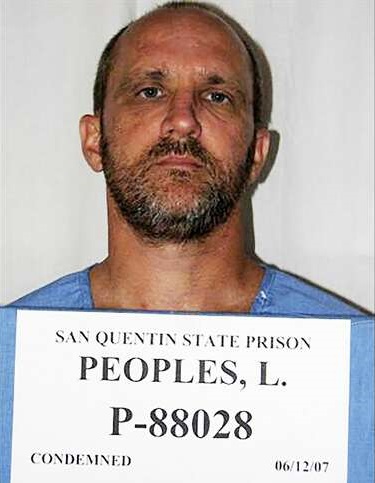
Louis James Peoples was a tow truck driver whose series of robberies, burglaries, shootings, and murders terrorized the Stockton, California, area during 1997. Over approximately five months, Peoples committed a widening pattern of crimes that began with the theft of a law enforcement officer's handgun and ended with four people dead at three separate crime scenes.
Peoples did not select all of his victims for the same reason. Some of his actions appeared motivated by revenge against former employers or coworkers, while others were committed during robberies. Evidence later recovered from him suggested that he viewed the violence as a planned crime spree rather than a series of unrelated incidents. His use of the same stolen firearm allowed investigators to connect the shootings through ballistic evidence.
The Stolen Sheriff's Pistol
On June 21, 1997, Peoples broke into a van belonging to off-duty Alameda County Deputy Sheriff Michael King while King and his family were attending a youth baseball game at Anderson Park in Stockton. Peoples stole King's fully loaded .40-caliber Glock service pistol, sheriff's badge, identification card, checkbooks, and other personal property.
The following day, King's family received telephone calls from a man who mockingly thanked the deputy for the stolen gun. The Glock became the central weapon in Peoples' subsequent crimes. He later damaged its serial number and sanded its breech face, apparently attempting to prevent investigators from tracing the weapon or matching it to shell casings.
Attack at California Spray Dry Company
Peoples had previously worked at the California Spray Dry Company, commonly called Cal Spray, on the outskirts of Stockton. He had experienced employment problems at the plant after failing to properly monitor equipment, causing damage to company products.
At approximately 3:30 a.m. on September 16, 1997, Peoples entered the company's secured parking lot after cutting an opening in a fence. Numerous vehicles were vandalized. When former coworkers Thomas Harrison and Timothy Steele arrived for their shifts, Harrison approached a truck that Peoples appeared to be burglarizing.
Peoples opened fire. Harrison was struck in the upper right leg and pelvic area and remained hospitalized for nine days. Peoples also fired toward Steele as he fled through the opening in the fence. Steele was not hit. Seven .40-caliber shell casings were recovered from the scene.
Hours before the attack, a caller familiar with the plant's procedures had falsely told another employee that there was a fire in one of the dryers. The next morning, a caller telephoned the plant and asked whether anyone had been killed in the shooting. These calls indicated that the attack had involved preparation and knowledge of the company's operations.
Bank of the West Robbery
On October 24, 1997, Peoples entered a Bank of the West branch in Stockton and handed a teller a note demanding money. He displayed and cocked the stolen Glock pistol while aiming it at the employee. The teller surrendered approximately $900, and Peoples escaped.
The robbery was captured on surveillance footage. Investigators later concluded that the person shown in the bank recording resembled the gunman recorded during one of the subsequent murders.
The Murder of James Loper
Peoples began working as a driver for Charter Way Tow in June 1997. On October 6, he was suspended for 30 days after testing positive for methamphetamine during a routine workplace drug screening. Witnesses said that he was upset about the suspension.
During the early morning hours of October 29, 1997, someone telephoned Charter Way Tow and made two carefully arranged service requests. The first caller, using the name “Doug Stone,” requested a type of tow truck that James Loper did not operate. This caused another driver to be sent to a distant location. Minutes later, a caller identifying himself as “Jason Lee” requested assistance on Eight Mile Road west of Interstate 5. Loper was dispatched to that call.
At approximately 3:45 a.m., San Joaquin County sheriff's deputies found Loper's tow truck parked on the side of Eight Mile Road in a rural area near Stockton. Its engine was running and its lights remained on. Loper's body was discovered beneath the truck.
Investigators found nine spent .40-caliber cartridges near the driver's side. The position of the shell casings indicated that the gunman continued firing after Loper attempted to take cover beneath the vehicle. An autopsy determined that Loper had suffered 10 gunshot wounds and died from wounds to his abdomen.
The day after the killing, Peoples telephoned Charter Way Tow, expressed sympathy over Loper's death, and asked whether the company wanted him to return early because it was now short of drivers. His request was refused.
The Murder of Stephen Chacko
At approximately 7:20 a.m. on November 4, 1997, Peoples entered Mayfair Liquors in Stockton. The store was owned and operated by Stephen Chacko and his wife. Security footage showed Chacko inside the store as the armed robber confronted him.
Peoples fired repeatedly inside the business. Chacko, although badly wounded, attempted to move outside and was later found in the parking lot. Police recovered 14 shell casings, numerous bullet fragments, and a live round from the store and surrounding area.
Chacko had been shot five times. A wound beneath his armpit proved fatal. Evidence showed that Peoples went behind the counter and opened the cash register during the attack. Ballistic examination connected the shell casings to the same .40-caliber Glock used to kill Loper.
Chacko had moved to the United States from India and was the father of two children. His wife was pregnant with their third child when he was murdered. Following his death, the family lost its financial support and eventually returned to India.
The Village Oaks Market Murders
On November 11, 1997, one week after Chacko's murder, Peoples entered the Village Oaks Market in Stockton. Besun Yu was operating the business with the assistance of her friend Jun Gao, who had recently immigrated from China.
At approximately 9:55 a.m., a San Joaquin County deputy responded to a report of gunfire and two injured people inside the market. Yu was found behind the cash register with a weak pulse. The deputy attempted CPR, but she could not be saved. Gao was found facedown nearby.
Yu had suffered three gunshot wounds. The fatal bullet severed her spinal cord. Gao had been shot once, with the bullet damaging major blood vessels in his neck. Investigators recovered five .40-caliber shell casings, bullets, and bullet fragments.
A cash register had been forcibly removed from the store. It was discovered several hours later along Highway 99, while the register drawer was found that evening outside Stockton. Witness information led detectives to search for a dark-gray Nissan Stanza associated with the robbery.
Confirmed Victims
- James Loper, 29 — Murdered on October 29, 1997, on Eight Mile Road west of Interstate 5 near Stockton, California. Loper was a Charter Way Tow driver who was lured to a fabricated service call and shot 10 times near and beneath his tow truck.
- Stephen Chacko, 39 — Murdered on November 4, 1997, during a robbery at Mayfair Liquors in Stockton, California. Chacko was shot five times inside his family's store and died after making his way into the parking lot.
- Besun Yu, 56 — Murdered on November 11, 1997, at the Village Oaks Market in Stockton, California. Yu was shot three times behind the store's cash register during a robbery.
- Jun Gao, 46 — Murdered on November 11, 1997, at the Village Oaks Market in Stockton, California. Gao was shot in the neck while helping Yu operate the market.
Investigation and Arrest
On November 12, 1997, police located a dark-gray Nissan Stanza matching the vehicle description connected to the Village Oaks Market murders. The car was parked at an apartment complex near several of the crime scenes and was registered to Peoples' wife, with Peoples listed as a possible owner.
Officers arrested Peoples at approximately 3:15 p.m. as he left the apartment complex. He was carrying a backpack containing disguises, gloves covered with duct tape, a police scanner, false identification, the stolen checkbooks, and a notebook listing police and fire radio frequencies. He also possessed Deputy King's stolen badge and identification card, on which the photograph appeared to have been replaced with a picture of Peoples.
Among the most damaging items was a folder labeled “Biography of a Crime Spree.” It contained newspaper articles about the crimes and handwritten comments describing revenge, financial motives, and Peoples' longstanding desire to kill someone. The writing also made a mocking reference to the shootings at Village Oaks Market.
A search of his apartment uncovered boots consistent with impressions found at the Loper murder scene, a map of Stockton with crime locations marked, burglary tools, and writings referring to Loper's death. Investigators also found evidence showing that Peoples had been following news coverage of the crimes.
Confession and Recovery of the Murder Weapon
Peoples initially denied involvement during a lengthy videotaped interrogation. Near the end of the questioning, however, he confessed to the murders and other crimes. He drew a diagram showing detectives where he had hidden the stolen Glock.
The pistol was recovered from a vacant lot approximately three blocks from his apartment. It was found inside a bag with hollow-point ammunition and a robbery note demanding large-denomination bills. The gun's serial number had been destroyed, and portions of the weapon had been sanded.
Firearms testing established that the shell casings collected during the Cal Spray shooting and at all three murder scenes had been fired from the recovered Glock. The physical evidence connected Peoples to every stage of the crime spree, from the theft of the weapon to the final double murder.
Trial and Conviction
Peoples was charged with four counts of first-degree murder, attempted murder, robbery, burglary, and receiving stolen property. Prosecutors also alleged special circumstances involving multiple murders, murder during robbery, and lying in wait.
A jury convicted him of all four murders, three robberies, two burglaries, and receiving stolen property. Jurors could not reach a verdict on the attempted-murder charge connected to the Cal Spray shooting, and a mistrial was declared on that count.
During the trial, the defense presented medical experts who testified that brain scans showed abnormalities possibly associated with methamphetamine abuse or earlier head trauma. The defense argued that these impairments affected Peoples' impulse control and ability to form criminal intent. Prosecutors countered that the carefully arranged calls, disguises, altered firearm, marked map, false identification, and efforts to separate Loper from other drivers demonstrated extensive planning.
The first penalty-phase jury was unable to agree on a sentence. A second jury returned a death verdict on June 6, 2000. On August 4, 2000, Peoples was formally sentenced to death. The California Supreme Court upheld his convictions and sentence in 2016.
Death in Prison
Peoples remained on death row at San Quentin State Prison for more than 20 years. On January 24, 2021, correctional officers found him unresponsive in his cell. He was pronounced dead at approximately 4:15 a.m. at the age of 58.
Legacy of the Case
The murders committed by Louis James Peoples were marked by a combination of retaliation, robbery, deception, and calculated preparation. He used false names to lure James Loper into an isolated area, attacked a former workplace, robbed businesses, altered the murder weapon, carried police equipment, and collected reports about his own crimes.
The four victims left behind spouses, children, relatives, and friends whose lives were permanently changed. James Loper was a husband and father of two young boys. Stephen Chacko was supporting a growing family. Besun Yu was described by her children as the central figure holding their family together. Jun Gao had only recently arrived in the United States when he was killed while helping his friend.
Peoples' crime spree ended only one day after the Village Oaks Market murders. His writings, confession, stolen property, clothing, maps, footwear impressions, surveillance recordings, and the recovered Glock created an extensive body of evidence. The case remains one of Stockton's most disturbing serial-murder investigations, involving four killings committed within a period of only 14 days.