Matthew Emmanuel Macon: The Lansing Serial Killer
Overview
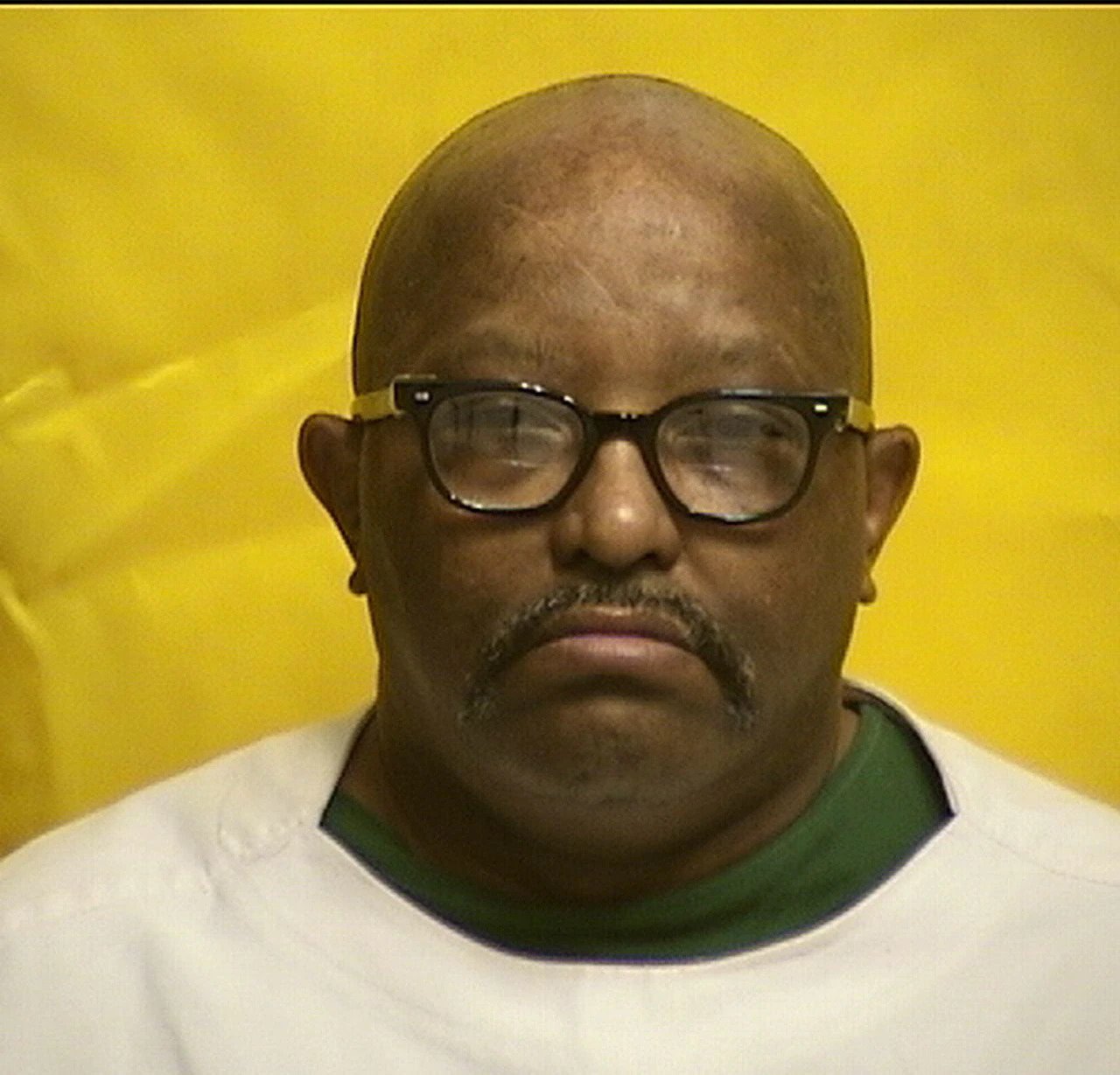
Matthew Emmanuel Macon, sometimes known by the nickname “Chilly,” is an American serial killer whose violent crimes terrorized Lansing, Michigan. During the summer of 2007, several women were found beaten or bludgeoned in homes and other locations near central Lansing. The victims differed in age and circumstances, but the concentrated timing, geographic proximity and similar violence led investigators to believe that one offender was responsible.
Macon was ultimately convicted of murdering Sandra Eichorn and Karen Delgado-Yates. He was also convicted of torturing Delgado-Yates and of violently attacking a woman who survived when her dog interrupted the assault. Authorities connected Macon to several additional killings, including the deaths of Ruth Hallman, Deborah Kaye Cooke and Debra Renfors. He also confessed to killing Lansing Community College professor Carolyn Kronenberg, whose murder had previously resulted in the wrongful conviction of another man.
Criminal History Before the Murders
Macon had a lengthy record of criminal and violent behavior before the 2007 killings. His juvenile history reportedly included sexual offenses, breaking and entering, larceny and automobile theft. As a young adult, he was convicted of stealing a woman’s purse after grabbing her by the throat. He received a prison sentence in 2001 and was released on parole in April 2003, only to be returned to custody after violating the terms of his release.
Macon was paroled again in September 2004. He later pleaded guilty to third-degree home invasion and resisting or obstructing a police officer in connection with a February 2005 incident. After another parole violation, he returned to prison in May 2006. Despite his history of violence and repeated failures under supervision, Macon was released on parole for a third time on June 26, 2007.
Only one month after that release, women in Lansing began to suffer a rapid succession of deadly attacks. Many of the victims were alone or otherwise vulnerable when they were confronted. Several were found inside residences, and severe blunt-force injuries became a disturbing feature of the cases.
Victims Connected to Matthew Macon
- Carolyn Kronenberg, 60 — January 23, 2005 — Lansing Community College, Lansing, Michigan: Kronenberg was a professor preparing to teach a Sunday morning class when she was attacked inside the college’s Student Personnel Services Building. She was beaten and stabbed to death shortly before her class was scheduled to begin. A student named Claude McCollum was wrongfully convicted of the murder despite the absence of physical evidence connecting him to the crime. Macon later confessed to killing Kronenberg, and fingerprint evidence from the scene was linked to him. McCollum’s conviction was overturned, and he was released from prison.
- Ruth Hallman, 76 — July 28, 2007 — West Lapeer Street, Lansing, Michigan: Hallman was a neighborhood activist known for confronting crime and drug activity in her community. She was found severely beaten inside her home on July 26, 2007. Hallman remained alive for two days but died from her injuries on July 28. Police identified Macon as the principal suspect, although he was not prosecuted for her murder.
- Deborah Kaye Cooke, 36 — August 7, 2007 — Hunter Park, Lansing, Michigan: Cooke’s partially unclothed body was discovered during the early morning in Hunter Park near Kalamazoo Street. She had been sexually assaulted and beaten about the head. The location differed from several of the residential crime scenes, but investigators believed that the nature and timing of the attack connected her death to Macon’s series of crimes.
- Debra Renfors, 46 — August 9, 2007 — 1017 North Washington Avenue, Lansing, Michigan: Renfors was found dead inside a residence in Lansing’s Old Town area after friends became concerned about her absence. Police linked Macon to her death, although he was never tried for the killing. The same residence had previously been associated with the unsolved 2004 death of Barbra Jean Tuttle, another woman Macon was investigated for possibly killing.
- Sandra Eichorn, 64 — August 27, 2007 — South Genesee Drive, Lansing, Michigan: Eichorn was a retired General Motors employee who lived alone. She was found beaten to death inside her home. Macon had reportedly approached her residence under the pretense of asking to use a telephone. DNA and other evidence tied him to the crime. Eichorn’s murder became one of the two killings for which Macon was convicted.
- Karen Delgado-Yates, 41 — August 29, 2007 — Hickory Street, Lansing, Michigan: Delgado-Yates was discovered critically injured inside a vacant house by people examining the property. She had been severely beaten and tortured but was still alive when found. She was transported to Sparrow Hospital, where she died later that day. DNA evidence linked Macon to the attack, and a jury convicted him of her murder and torture.
The Possible Murder of Barbra Jean Tuttle
Investigators also examined Macon as a suspect in the death of 45-year-old Barbra Jean Tuttle, who was found bludgeoned in Lansing during 2004. Contemporary reporting placed her killing in December 2004, while some later case databases give May 13, 2004. Because the available public records conflict regarding the precise date, an exact date cannot be stated with complete confidence.
Tuttle’s death attracted renewed attention because she was found in the same North Washington Avenue residence where Debra Renfors was discovered dead in August 2007. Macon was on parole during the period surrounding Tuttle’s death. Police considered the shared location, the blunt-force violence and Macon’s connections to later crimes significant, but he was not prosecuted for killing Tuttle.
The Attack That Broke the Case
On August 28, 2007, one day after Sandra Eichorn was found dead, Macon approached the home of Linda Jackson. After speaking with her through the back door, he forced his way inside and attacked her. Jackson’s dog confronted Macon and interrupted the assault, causing him to flee before he could inflict even more serious injuries.
Jackson survived and provided investigators with crucial information about her attacker. Her description helped police identify Macon and connect him to the recent wave of violence. Investigators arrested him while Karen Delgado-Yates was still being located and transported for emergency medical treatment.
The surviving victim’s ability to describe Macon gave detectives the breakthrough they desperately needed. Until then, the killings had caused widespread fear, particularly among women living alone in neighborhoods near downtown Lansing. The attacks occurred within a relatively compact area, yet Macon had managed to move between victims without being immediately identified.
Evidence and Prosecution
Although Macon was suspected in numerous deaths, prosecutors concentrated on the cases supported by the strongest physical evidence. He was brought to trial for the murders of Sandra Eichorn and Karen Delgado-Yates, as well as the attack on Linda Jackson.
DNA evidence collected from the murder scenes matched Macon’s genetic profile. Cellphone records and other evidence also helped establish his movements during the relevant periods. Linda Jackson identified him as the man who entered her home and attacked her. Prosecutors argued that the assault demonstrated the same pattern of deception, forced entry and violence seen in the fatal attacks.
The evidence concerning Delgado-Yates showed that she had endured an extended and exceptionally brutal assault before her death. Macon was therefore charged not only with murder but also with torture. Prosecutors described a series of deliberate actions rather than a sudden or accidental killing.
Macon denied responsibility at trial, and his defense attempted to challenge the DNA findings, witness identification and timeline evidence. The jury rejected those arguments and found him guilty of two counts of first-degree premeditated murder, assault with intent to murder, torture and first-degree home invasion.
Confession in the Carolyn Kronenberg Case
The investigation into Macon produced a major development in the previously closed murder case of Carolyn Kronenberg. Claude McCollum had been convicted of killing Kronenberg despite DNA evidence that did not match him and surveillance information indicating that he was in another building when the murder occurred.
While speaking with investigators, Macon confessed to Kronenberg’s killing and provided details about the crime. Authorities also connected fingerprint evidence from the murder scene to him. The new evidence demonstrated that McCollum had been wrongfully imprisoned.
McCollum’s conviction was overturned, and he was released after spending years behind bars for a murder he had not committed. Macon was not separately prosecuted for Kronenberg’s death because he had already received sentences guaranteeing that he would remain imprisoned for life. Nevertheless, his confession and the physical evidence caused authorities to identify him as Kronenberg’s actual killer.
Sentencing
On June 18, 2008, Matthew Emmanuel Macon was sentenced to two terms of life imprisonment without the possibility of parole for the murders of Sandra Eichorn and Karen Delgado-Yates. He received concurrent sentences of 75 to 125 years for assault with intent to murder and torture. He was also sentenced to between 26 years and eight months and 40 years for first-degree home invasion.
Macon appealed his convictions, arguing in part that he had received ineffective assistance from his trial attorney. The Michigan Court of Appeals rejected his arguments in January 2010. The court emphasized the overwhelming evidence against him, particularly the DNA evidence, and affirmed all of his convictions and sentences.
Confirmed Crimes and Suspected Killings
It is important to distinguish between the crimes established in court and those attributed to Macon through police investigations or his own statements. He was legally convicted of murdering Sandra Eichorn and Karen Delgado-Yates. He was also convicted of torturing Delgado-Yates and attempting to murder Linda Jackson.
Police publicly connected him to the deaths of Ruth Hallman, Deborah Kaye Cooke and Debra Renfors. He confessed to murdering Carolyn Kronenberg, and fingerprint evidence supported that confession. Authorities additionally investigated him for the death of Barbra Jean Tuttle. Because separate trials were never held for several of these cases, descriptions of Macon’s total number of victims vary among official accounts and historical profiles.
Legacy of the Lansing Murders
Macon’s crimes exposed serious failures in the supervision of a repeatedly violent offender. He had accumulated a lengthy record involving sexual offenses, theft, home invasion, violence and repeated parole violations, yet he was released again in June 2007. Within weeks, Lansing was experiencing one of the most frightening homicide series in its history.
The case also revealed the lasting consequences of wrongful conviction. While Claude McCollum remained imprisoned for Carolyn Kronenberg’s murder, the actual killer was free and eventually committed additional violent crimes. Suppressed or overlooked evidence, a questionable interrogation and the failure to properly evaluate physical evidence all contributed to the injustice.
The women connected to Macon’s crimes were not merely names in a criminal case. They were workers, relatives, educators, community activists and residents whose deaths devastated families and neighborhoods. Ruth Hallman had worked to improve her neighborhood. Carolyn Kronenberg was preparing to teach her students. Sandra Eichorn had retired after a working life at General Motors. Each victim left behind people forced to live with the consequences of Macon’s violence.
Matthew Emmanuel Macon remains imprisoned under sentences that provide no possibility of release. His convictions ended the immediate danger, but questions remain about the full number of people he attacked and killed. The unresolved or unprosecuted cases associated with him continue to illustrate the difference between strong investigative suspicion and a conviction established in court.