Harnoko Dewantoro: The Los Angeles Storage Locker Killer
Overview
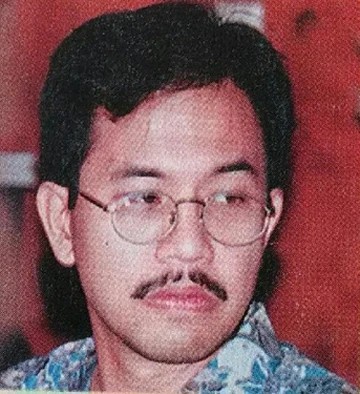
Harnoko "Oki" Dewantoro was an Indonesian national from a prominent family who committed a series of brutal murders in Los Angeles between 1991 and 1992. Driven by financial disputes and a need to cover his tracks, he killed two business associates and his own younger brother. The case became a global sensation for its brutality and the unique legal complexities that followed. After murdering his victims, Dewantoro hid their decomposing bodies in a San Fernando Valley storage locker, where they were discovered by chance nearly two years later. Having already fled the country, Dewantoro was arrested in his native Indonesia. Because no extradition treaty existed between the United States and Indonesia, he was tried and convicted in a Jakarta court for the murders he committed on American soil. Sentenced to death, he spent over two decades in prison before receiving a controversial grant of clemency and being released in 2019.
Early Life and Background
Born on November 3, 1964, into a wealthy and well-regarded Indonesian banking family, Harnoko Dewantoro enjoyed a privileged upbringing. Known to friends as "Oki," he was accustomed to a life of luxury and getting his way. In the late 1980s, seeking to experience the American dream, Dewantoro and his girlfriend moved to the United States on student visas. They initially settled in Kansas, where he attended school. After a brief period in Pennsylvania, the couple relocated to the burgeoning metropolis of Los Angeles, California.
Financially supported by his family, Dewantoro lived a comfortable life, residing in affluent neighborhoods including Westwood, North Hills, and Brentwood. He presented himself as a successful international student and entrepreneur, at one point purchasing and operating a dry-cleaning business in Woodland Hills. To outsiders, he was a charming and successful young man. However, beneath this polished exterior was a man prone to rage when his financial expectations were not met, a trait that would soon lead to a string of horrific crimes.
The Murders
The descent into violence began with a soured business deal. In January 1991, Dewantoro sold his dry-cleaning business to Suresh Gobid Mirchandani, a 40-year-old Indian businessman, for $100,000. The arrangement quickly fell apart. By August 1991, just seven months later, Mirchandani had abandoned the struggling business, still owing Dewantoro tens of thousands of dollars. Enraged by the financial loss and perceived disrespect, Dewantoro plotted his revenge. He lured Mirchandani into his car under the pretense of a drive. While on a Los Angeles freeway, Dewantoro pulled out a revolver and shot him dead. He then drove the body to a house he was renting in Northridge and buried it in the yard.
By the spring of 1992, Dewantoro's financial situation had become precarious after a falling out with his wealthy girlfriend. Desperate for money, he targeted Gina Sutan Aswar, a 30-year-old Indonesian student. He persuaded her to come to Los Angeles and invest $200,000 in what he claimed were lucrative business ventures. Aswar trusted him and traveled to the U.S. with the investment money. However, after a trip to Paris, she had a change of heart. On November 3, 1992—Dewantoro's 28th birthday—Aswar informed him that she was backing out of the deal. The loss of the significant investment sent Dewantoro into a violent fury. He lured her to a rented house in Brentwood, where he bludgeoned her to death. In a particularly gruesome act of mutilation, he also cut off her hands and nose.
A month later, in December 1992, Dewantoro killed for a third time, turning his violence on his own family. He murdered his 26-year-old brother, Eri Triharto Darmawan, in a West Los Angeles apartment. The motive was reportedly twofold: the two had a heated argument, but police also believe Dewantoro killed his brother to silence him, as Eri was aware of the previous two murders. Like Gina Aswar, Eri was bludgeoned to death.
The Victims
- Suresh Gobid Mirchandani, 40 — An Indian national who had spent much of his life in Kuwait, Mirchandani came to Los Angeles with his wife and two children in 1990 after the Iraqi invasion of Kuwait. He sought a safe haven and treatment for his daughter, who had leukemia. In an effort to support his family, he entered into the ill-fated business deal with Dewantoro. His sister later recalled her opposition to the purchase and her brother's fear after the business failed.
- Gina Sutan Aswar, 30 — An Indonesian student, Gina was lured to the United States by Dewantoro's false promises of a profitable business partnership. Trusting a fellow countryman, she arrived in Los Angeles with a significant sum of money to invest. Her decision to withdraw from the deal after a trip abroad cost her her life. Her family traveled from Indonesia to Los Angeles to claim her body after it was identified.
- Eri Triharto Darmawan, 26 — The younger brother of Harnoko Dewantoro, Eri was also in Los Angeles on a student visa. He was the final victim, killed just a month after Gina Aswar. His death was the result of a violent argument with his brother, who also sought to eliminate the only person who knew of his other monstrous crimes.
A Macabre Cover-Up
With three bodies buried or hidden in separate locations across Los Angeles, Dewantoro grew paranoid that his crimes would be discovered. In 1993, he undertook a grim and methodical effort to consolidate the evidence. He unearthed the decomposing remains of all three victims from their initial burial and hiding spots. He first moved the bodies to a storage facility in Sherman Oaks. The following year, he moved them again, using a hand truck to transport the corpses one by one into a 5-by-7-foot storage locker at a U-Haul facility in Northridge. Believing his secrets were safely hidden, Dewantoro fled the United States and returned to Jakarta, Indonesia. To prevent the locker's contents from being auctioned for non-payment, he continued to pay the monthly rent from overseas. He even deceived his own mother into sending one of the payments, telling her the money was for his brother Eri, who he claimed was still alive and using the unit.
Investigation and Capture
On August 10, 1994, the contents of the Northridge storage locker were opened, though sources differ on whether it was due to non-payment or other reasons. The manager, or in some accounts a man who bought the unit's contents at auction, was met with a horrific odor. Inside, authorities discovered the badly decomposed and mutilated bodies of Suresh Mirchandani, Gina Aswar, and Eri Darmawan.
The Los Angeles Police Department launched an intense investigation. The case's lead detective, Ted Ball, focused on the rental paperwork for the storage unit. He found two critical clues: one rental check mailed by Dewantoro's mother from her address in Jakarta, and a second check covered in Dewantoro's own fingerprints. With this information, LAPD detectives contacted Indonesian authorities via Interpol. In January 1995, Harnoko Dewantoro was arrested at a relative's home in Jakarta.
During interrogation by Indonesian police, with LAPD detectives Ball and Ed Ramirez present, Dewantoro confessed to the murders of Gina Aswar and his brother, Eri. However, he denied killing Suresh Mirchandani, attempting to pin the blame on his dead brother. Authorities did not believe his account.
An Unprecedented Trial
The case presented a significant jurisdictional challenge. The murders occurred in Los Angeles, but the suspect was an Indonesian citizen arrested in his home country. Critically, there was no extradition treaty between the United States and Indonesia. Despite a formal request from the U.S. Embassy, Indonesian authorities announced in February 1995 that Dewantoro would not be returned to Los Angeles. Instead, he would be tried in Indonesia under a law that allows for the prosecution of citizens for crimes committed abroad.
What followed was a remarkable instance of international legal cooperation. To ensure a just trial, LAPD detectives Ball and Ramirez, along with 14 other American witnesses, traveled more than 8,000 miles to Jakarta to testify. They brought with them crucial evidence from the Los Angeles investigation, including the murder weapon used to kill Mirchandani, bullets, and graphic crime scene photographs of the victims' bodies. The trial became a media sensation in both countries, often compared to the O.J. Simpson case in the U.S. for its high level of public interest.
On May 13, 1997, a panel of judges at the Central Jakarta District Court found Harnoko Dewantoro guilty of all three murders. He was sentenced to death by firing squad and sent to Indonesia's notorious Cipinang Penitentiary Institution to await his execution.
Aftermath and Controversial Release
For years, Dewantoro remained on death row. He filed two petitions for presidential clemency, both of which were initially denied due to the brutal nature of his crimes. His death sentence was reportedly commuted to life imprisonment around 2013.
Over the years, Dewantoro became a model prisoner. He taught English classes to fellow inmates and was noted for his good behavior. The prosecutor who originally handled his case, Muhammad Yusuf, later expressed support for leniency, pointing out that Dewantoro was the last surviving male in his immediate family and had shown remorse and rehabilitation during his long incarceration.
In a move that shocked many, on November 20, 2019, Indonesian President Joko Widodo granted Dewantoro executive clemency. After more than 24 years in prison, the man who had brutally murdered three people in Los Angeles was pardoned and released on conditional parole. The decision sparked outrage and debate, highlighting the stark contrast between his original death sentence and his eventual freedom. Harnoko Dewantoro, the once-notorious storage locker killer, walked free.