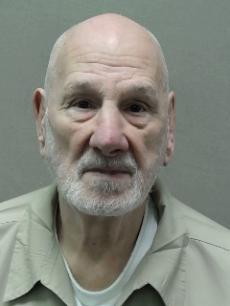
Elizabeth Wettlaufer: The Angel of Death
Overview
Elizabeth Wettlaufer is one of Canada's most prolific serial killers, a registered nurse who murdered eight elderly patients and attempted to kill or harm six others between 2007 and 2016. Working in long-term care homes in southwestern Ontario, she used insulin, a medication readily available to her, to commit her crimes. The deaths were initially believed to be from natural causes due to the victims' age and health, and the difficulty in detecting insulin overdoses post-mortem. Wettlaufer's crimes went undetected for nearly a decade until she confessed while seeking treatment for drug and alcohol addiction. Her guilty plea in 2017 to eight counts of first-degree murder, four counts of attempted murder, and two counts of aggravated assault sent shockwaves across the country, leading to a major public inquiry into the systemic failings of the long-term care system.
Early Life and Background
Elizabeth Tracey Mae Parker was born on June 10, 1967, and raised in a staunchly Baptist household near Woodstock, Ontario. After high school, she earned a bachelor's degree in religious education from London Baptist Bible College before pursuing a career in healthcare. She graduated from the nursing program at Conestoga College and became a registered nurse in 1995.
In 1997, she married Daniel Wettlaufer, a truck driver she met at church, but the marriage ended in 2007. Wettlaufer later stated that the stress from her divorce and general anger with her life contributed to her decision to start killing. Throughout her nursing career, she struggled with substance abuse, including alcohol and opioids, and entered rehabilitation programs on multiple occasions. Her professional record was marred by several suspensions for medication-related errors and accusations of being intoxicated at work. Despite these issues, she was able to continue finding employment in various nursing homes and private care settings.
The Murders
Wettlaufer began her killing spree in 2007, shortly after starting a job at Caressant Care, a long-term care facility in Woodstock, Ontario. She typically worked the night shift, where she had primary responsibility for administering medications. Her weapon of choice was insulin, which can be fatal in large doses and is difficult to trace after death.
Her first murder occurred on August 11, 2007, when she injected James Silcox, an 84-year-old World War II veteran. Later that year, on December 23, she murdered 84-year-old Maurice Granat.
After a period of several years, the killings resumed with a terrifying frequency in 2011. She murdered three residents at Caressant Care in a span of just over three weeks: Gladys Millard, 87, on October 14; Helen Matheson, 95, on October 26; and Mary Zurawinski, 96, on November 7.
Her next victim was 90-year-old Helen Young, whom she murdered on July 14, 2013. The final murder at Caressant Care was that of 79-year-old Maureen Pickering on March 28, 2014. Days after Pickering's death, Wettlaufer was fired from Caressant Care for a serious medication error.
After her termination, Wettlaufer worked in several other facilities. On August 31, 2014, she murdered her eighth and final victim, 75-year-old Arpad Horvath, at the Meadow Park care home in London, Ontario.
In her confession to police, Wettlaufer described feeling a "red surge" of anger before the killings and a "laughing feeling" or sense of euphoria afterward. She also claimed to believe that God was telling her to kill, though she also expressed doubt about this belief. In other instances, she stated she targeted patients who were difficult, "mean," or who she felt were no longer enjoying life.
Other Attacks
In addition to the eight murders, Wettlaufer was convicted of attempting to kill or harm six other patients. Her first attacks, between June and December 2007, were non-fatal insulin injections given to sisters Clotilde Adriano, 87, and Albina Demedeiros, 88. For these, she was convicted of aggravated assault.
She was also convicted of the attempted murders of Michael Priddle, 63, and Wayne Hedges, 57, at Caressant Care between 2008 and 2009. Her final two attacks occurred after she had left Caressant Care. In September 2015, she injected 77-year-old Sandra Towler at a retirement home in Paris, Ontario. In August 2016, she attacked her last victim, 68-year-old Beverly Bertram, at a private residence in Ingersoll. Bertram was the only one of Wettlaufer's 14 victims still alive at the time of her sentencing.
The Victims
The eight people murdered by Elizabeth Wettlaufer were vulnerable seniors placed in her care for their safety and well-being.
- James Silcox, 84 — August 11, 2007, Woodstock. A veteran of the Second World War and a married father of six, he was remembered by his family for his protective nature.
- Maurice Granat, 84 — December 23, 2007, Woodstock. Known as "Moe" to his friends, he was a father of two and a longtime mechanic in Tillsonburg.
- Gladys Millard, 87 — October 14, 2011, Woodstock. Her family expressed profound grief and disbelief upon learning she was the victim of a serial killer.
- Helen Matheson, 95 — October 26, 2011, Woodstock. A widowed mother of two, she was a longtime, active member of her local United Church.
- Mary Zurawinski, 96 — November 7, 2011, Woodstock. She was a resident at the Caressant Care nursing home at the time of her murder.
- Helen Young, 90 — July 14, 2013, Woodstock. Wettlaufer confessed to feeling guilt after Young suffered a seizure following multiple insulin injections.
- Maureen Pickering, 79 — March 28, 2014, Woodstock. A widow who had moved to Caressant Care after her husband's death, she was described as a "wonderful and beautiful lady."
- Arpad Horvath, 75 — August 31, 2014, London. His son stated that his father was not suffering and was a regular dementia patient, refuting any notion of a "mercy killing."
Investigation and Capture
For years, no one suspected that a serial killer was at work in Ontario's nursing homes. The investigation into Wettlaufer's crimes only began after she confessed. She had previously told several people about her actions, including a former boyfriend, a pastor, a lawyer, and an ex-girlfriend, but none of them reported her to the police.
The breakthrough came on September 16, 2016, when Wettlaufer checked herself into the Centre for Addiction and Mental Health (CAMH) in Toronto for drug treatment. While there, she confessed to staff that she had murdered and harmed patients in her care. CAMH staff notified the Toronto Police Service and the College of Nurses of Ontario. Wettlaufer subsequently provided a four-page handwritten confession and later a detailed, two-and-a-half-hour videotaped confession to the Woodstock police.
Police launched a multi-jurisdictional investigation, and on October 25, 2016, Elizabeth Wettlaufer, then 49, was arrested and charged with eight counts of first-degree murder. On January 13, 2017, additional charges were laid for four counts of attempted murder and two counts of aggravated assault.
Trial and Sentence
Because Elizabeth Wettlaufer confessed and chose to plead guilty, there was no lengthy trial. On June 1, 2017, she waived her right to a preliminary hearing and pleaded guilty to all 14 charges against her in an Ontario court.
A sentencing hearing was held on June 26, 2017, providing an opportunity for the victims' families and friends to present their impact statements. They spoke of grief, guilt, and a shattered sense of trust in the healthcare system. Wettlaufer addressed the court, stating, "I caused tremendous pain and suffering and death... Sorry is much too small a word. I am extremely sorry."
Superior Court Justice Bruce Thomas called her a "shadow of death" and sentenced her to eight concurrent life terms in prison with no possibility of parole for 25 years. While he could have imposed consecutive sentences, the judge noted that the public would likely never have known about her crimes if she had not confessed. He also sentenced her to 10 years for each attempted murder and seven years for each aggravated assault, to be served concurrently. Wettlaufer was imprisoned at the Vanier Centre for Women in Milton, Ontario.
Aftermath and Legacy
The Wettlaufer case exposed deep systemic flaws in Ontario's long-term care system. In response to the public outcry, the provincial government launched the Public Inquiry into the Safety and Security of Residents in the Long-Term Care Homes System. The inquiry, led by Commissioner Eileen Gillese, began in August 2017 and concluded in July 2019.
The final four-volume report made a chilling conclusion: had Wettlaufer not confessed, her crimes would likely have never been discovered. The report issued 91 recommendations aimed at preventing similar tragedies, focusing on issues such as medication management, staff hiring and disciplinary practices, and improving death investigation procedures. It highlighted how Wettlaufer's history of professional misconduct and substance abuse did not prevent her from continuing to work with vulnerable patients.
The College of Nurses of Ontario also held a disciplinary hearing and formally revoked Wettlaufer's nursing registration indefinitely, calling her conduct "disgraceful and dishonourable." The case remains a stark reminder of the vulnerability of the elderly in care and the devastating consequences of a betrayal of trust by a healthcare professional.