The Night Marauder: East Tennessee’s Unidentified Serial Killer
Introduction
The Night Marauder was the name given to an unidentified intruder who terrorized communities in East Tennessee during a prolonged series of nighttime break-ins, sexual assaults, shootings and murders between 1919 and 1926. His attacks were concentrated in Knoxville, Alcoa and Maryville, where residents began sleeping with weapons nearby, organizing neighborhood patrols and watching every unfamiliar person with suspicion. Historical research has connected him to dozens of home invasions, numerous assaults and as many as eight deaths, although the incomplete records and contradictory newspaper accounts of the period make it difficult to determine exactly which crimes were committed by the same person.
The offender entered modest homes during the darkest hours of the night, often taking advantage of unlocked doors or open windows during warm weather. Many of the houses he selected lacked electricity, leaving their occupants dependent upon oil lamps and matches. Once inside, he reportedly removed or concealed nearby matches, approached sleeping women and awakened them by touching their legs or bodies. He commonly carried a flashlight and pistol, using the light to blind and frighten victims while issuing threats. When husbands, relatives or other occupants attempted to intervene, he sometimes opened fire without warning.
Victims and Fatal Attacks
- Bertie Lindsey — August 30, 1919 — Knoxville, Tennessee: Lindsey was attacked in her home between approximately 2:00 and 3:00 in the morning. An intruder entered the residence, shot and killed her, threatened her cousin and escaped into the darkness. The crime was later recognized as closely resembling the Night Marauder’s subsequent attacks. Maurice Mays was arrested and convicted of Lindsey’s murder, but the weak and racially charged case against him has remained deeply disputed. Similar attacks continued while Mays was incarcerated, creating substantial doubt that he was the Night Marauder.
- Luther Wells — September 20, 1924 — Maryville, Tennessee: Wells was shot while attempting to protect his wife, Ada Wells, during a nighttime invasion of their home. The intruder had entered while the couple slept and turned his weapon on them when resistance developed. Luther survived the immediate attack but remained seriously disabled and suffered recurring medical problems from the gunshot wounds. He died on September 20, 1924, approximately nine months after the shooting, and contemporary newspapers described his death as the delayed result of the Marauder’s attack.
- Clyde Poe — December 17, 1924 — Alcoa, Tennessee: Twenty-one-year-old Clyde Poe was shot when an armed intruder entered the home he shared with his wife, Lora, and their infant son. The attacker’s primary interest appeared to be Lora, while Clyde was treated as an obstacle. After being shot, Clyde remained wounded on the cold floor while assistance was sought. He developed pneumonia but initially appeared likely to survive. On December 17, surgeons attempted to remove the bullet lodged near his spine. Clyde died during the operation, making the attack one of the most notorious crimes attributed to the Night Marauder.
- Sarah Mason — July 9, 1926 — Maryville, Tennessee: Sarah Mason, a 60-year-old widow, was killed after an intruder entered the home she shared with her recently divorced daughter at approximately 2:30 in the morning. The attack occurred after the principal suspect in earlier Night Marauder crimes had been acquitted and released. Mason’s death was widely reported as another appearance of the same nocturnal killer and renewed the fear that had gripped Maryville for years.
The Murder of Bertie Lindsey
The killing of Bertie Lindsey became one of the most consequential crimes in Knoxville history. During the early morning of August 30, 1919, an intruder entered the home where Lindsey was sleeping with a female cousin. Lindsey was fatally shot, while the surviving witness was threatened before the attacker fled. The circumstances contained elements that would later become associated with the Night Marauder: entry into a darkened home, a sleeping female target, the use of a firearm and a rapid escape through the surrounding neighborhood.
Police quickly focused on Maurice Mays, a Black businessman and political figure. Officers arrested him at his home, even though he appeared to have been asleep and reportedly had no mud on his clothing despite muddy ground along the intruder’s escape route. A pistol was found in his residence, but investigators did not recover the flashlight that witnesses associated with the killer. Mays was nevertheless convicted and ultimately executed after a series of unsuccessful appeals.
The arrest intensified racial hostility in Knoxville. A white mob gathered at the county jail seeking to seize Mays, contributing to the Knoxville Race Riot of 1919. The violence surrounding the case distracted attention from weaknesses in the evidence and from later crimes that followed the same pattern. Researchers have argued that the continuation of the attacks during Mays’ imprisonment provided powerful evidence that he had been wrongly blamed for Lindsey’s death.
A Pattern of Nighttime Terror
The Night Marauder did not follow the model of a killer whose only objective was immediate murder. His apparent focus was the domination and sexual assault of women sleeping in their homes. Fatal violence frequently occurred when another person interrupted him, resisted his commands or attempted to defend the intended victim. In some cases, the offender fled when confronted. In others, he fired at the person standing between him and the woman he had selected.
His preparation suggested patience and familiarity with his targets. Reports indicated that he sometimes examined homes in advance, removed sources of light and placed objects where occupants would have difficulty reaching them. He appeared to understand how families arranged their sleeping spaces and how to move through poorly illuminated homes without making enough noise to awaken everyone inside.
The crimes were especially frightening because they violated a place where people expected to be safe. Families could not simply avoid a dangerous street or business. The Marauder came directly into bedrooms, often while children and relatives slept only a few feet away. Residents began reinforcing doors, keeping firearms beside their beds and responding violently to ordinary noises. The atmosphere of panic occasionally resulted in innocent people being confronted or arrested because nervous residents believed almost any nighttime visitor might be the killer.
The Attacks on Luther and Ada Wells
The invasion of the Wells residence became central to the prosecution of the case’s most prominent suspect. During the attack, the intruder entered the couple’s home and confronted Ada Wells. Luther attempted to defend her and was shot. Ada was also wounded but survived, becoming an important witness in the investigation. Luther’s condition remained grave for months as he moved in and out of medical care.
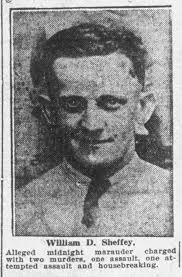
His death on September 20, 1924, transformed the shooting into a murder case. Prosecutors later argued that William D. “Will” Sheffey had been the man inside the Wells home. The state relied on identification testimony, circumstantial evidence and handwriting comparisons involving an anonymous letter supposedly written by the Night Marauder. The defense attacked the reliability of the identifications and emphasized inconsistencies among witnesses who had seen an intruder only briefly in darkness.
The Murder of Clyde Poe
The attack on Clyde and Lora Poe illustrated the Marauder’s willingness to shoot a husband in order to reach his wife. Clyde was struck by a bullet that caused a devastating spinal injury. Although he survived the initial shooting, the delay in obtaining assistance and his exposure to the cold worsened his condition. Pneumonia developed as he struggled to recover.
Doctors eventually attempted surgery on December 17, 1924, believing Clyde had improved enough for the bullet to be removed. He died during the procedure. The tragedy left Lora without her husband and their infant son without his father. Another man, Wright Saffle, was initially accused in connection with the attack, but suspicion later shifted toward Will Sheffey as authorities tried to connect several similar crimes to one offender.
Will Sheffey and the Three Trials
William D. Sheffey was the person most seriously investigated as the Night Marauder. He had lived in the region, worked for the Aluminum Company of America and possessed connections within the communities where the attacks occurred. His past also drew attention because he had previously been tried and acquitted in the 1915 murder of Dora Davis, a young woman he had known near Seymour, Tennessee.
In 1923, the Blount County sheriff received an anonymous and taunting letter claiming responsibility for the murders of Bertie Lindsey and Dora Davis. The writer mocked law enforcement and suggested that the killer believed he could not be captured. Investigators compared the handwriting with samples attributed to Sheffey. Some witnesses believed the writing was similar, while others disagreed, leaving the letter as suspicious but inconclusive evidence.
Sheffey was arrested on five counts involving the murders of Luther Wells and Clyde Poe, assaults on Ada Wells and Lora Poe, and another home invasion. Prosecutors first tried him for Luther Wells’ murder. The case became a major public spectacle, attracting packed courtrooms and extensive newspaper coverage. The first two trials ended without verdicts because the juries could not agree. A third trial concluded with Sheffey’s acquittal.
After the acquittal, the remaining charges were not successfully prosecuted. Sheffey eventually left Tennessee and moved to California. The Night Marauder attacks stopped at approximately the same time, which caused many investigators and residents to continue suspecting him. However, no court established that Sheffey was the killer, and the evidence remains circumstantial. The fact that Sarah Mason was murdered after his release also complicated attempts to construct a simple timeline of guilt.
Other Suspects
Several men were investigated during the years of violence. Maurice Mays was the first and most tragically consequential suspect. His conviction for Bertie Lindsey’s murder rested on contested evidence, and later research has strongly questioned his guilt. The continuation of similar attacks while he was imprisoned suggests that the actual Night Marauder remained free.
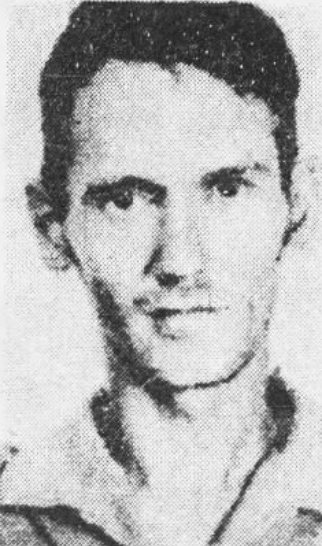
In 1922, mill worker John T. Honeycutt, who also used the name John Murray, was investigated and tried in connection with the attacks. Wright Saffle was arrested after the Poe shooting, but the case against him did not resolve the larger series. Robert Luther Jones, a troubled military veteran with a history of erratic behavior and property crimes, was examined as a possible suspect in 1926. An officer who had once chased a suspicious man through Alcoa neighborhoods reportedly concluded that Jones was not the same person.
None of these investigations produced a definitive identification. Witness descriptions differed, forensic methods were limited and many crime scenes had been contaminated before professional investigators arrived. The darkness in which the assaults occurred made visual identification particularly unreliable.
The Anonymous Letter
The alleged letter from the Night Marauder gave the investigation one of its most dramatic pieces of evidence. Its writer taunted the sheriff, claimed responsibility for murders and confidently predicted that authorities would never make an arrest. The message suggested an offender who followed newspaper coverage and enjoyed the fear generated by his crimes.
Handwriting became an important issue in Sheffey’s trials. People familiar with his writing offered conflicting opinions, and the scientific reliability of handwriting comparison was limited. The letter may have been genuine, a deliberate attempt to mislead investigators or the work of a person seeking attention. It remains one of the most intriguing but unresolved artifacts connected to the case.
Historical Uncertainty
Researchers have identified approximately 45 home invasions that may have belonged to the Night Marauder crime series. Historical summaries credit the attacker with assaulting at least eight women, shooting at least four people who resisted and causing as many as eight deaths. Not every incident can be conclusively linked to one offender, however. Some attacks may have been imitations, unrelated domestic crimes or offenses committed by different intruders.
The verified record is further complicated by inconsistent spelling of names, delayed deaths from gunshot injuries and sensationalized newspaper reporting. Some victims survived their attacks, while others died weeks or months later from wounds or medical complications. A number of women were identified only by married names, initials or the names of male relatives, reflecting the reporting customs of the period.
Dora Davis was named in the purported confession letter, but her 1915 murder occurred several years before the generally recognized Night Marauder series. Sheffey had already been tried and acquitted in her death. Although the letter linked her killing to the later crimes, the truthfulness of its writer was never established. Davis therefore remains associated with the investigation without being a conclusively confirmed victim of the same offender.
Legacy of an Unsolved Case
The Night Marauder case faded from public memory after the attacks stopped and Sheffey moved away. No person was convicted as the serial offender, and the region gradually turned its attention to newer events. Families of the victims were left without definitive answers, while Maurice Mays’ execution remained a lasting symbol of the racial injustice surrounding the investigation.
Modern historical research has reconstructed the crime wave through court records, newspaper archives, private investigative notes and family accounts. That work has revealed a case far larger than the few isolated murders remembered in local folklore. It has also demonstrated how prejudice, primitive forensic methods, unreliable eyewitness testimony and intense public pressure can distort a criminal investigation.
The true identity of the Night Marauder remains unknown. Will Sheffey continues to be viewed as a significant suspect because of the evidence presented at his trials, his alleged connection to the taunting letter and the apparent end of the crimes after his departure. Nevertheless, three trials failed to convict him, and alternative suspects were never conclusively eliminated. More than a century later, the murders of Bertie Lindsey, Luther Wells, Clyde Poe, Sarah Mason and the other possible victims remain part of one of East Tennessee’s most disturbing unsolved crime series.