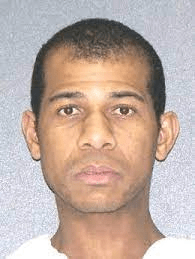
Edward Dean Kennedy: The Florida Fugitive Killer
Overview
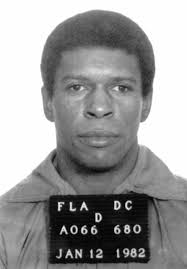
Edward Dean Kennedy’s criminal legacy is one of brutal opportunism and a desperate flight from justice that left a trail of death across Florida. Already serving a life sentence for the 1978 murder of a motel clerk in Miami, Kennedy etched his name into the annals of violent crime when he escaped from prison in 1981. In the frantic hours following his breakout, he murdered two more men, one of them a Florida Highway Patrol Trooper. His three-year span of violence was not that of a methodical predator, but of a man who killed to facilitate his crimes and evade capture. His final, deadly rampage led to a brief hostage crisis, his swift recapture, and ultimately, a date with Florida’s electric chair in 1992.
Early Life and Criminal Beginnings
Born in Boston, Massachusetts, on May 25, 1945, little is publicly known about Edward "Sonny" Kennedy's childhood. He was a self-taught saxophonist, a hint of a life that could have followed a different path. However, his early adulthood was marked by crime. Before his infamous crimes in Florida, Kennedy had been sentenced to serve time in the state prison in Walpole, Massachusetts, for robbery. This early conviction foreshadowed a life increasingly defined by violence and incarceration. By the time he arrived in Florida, he was already enmeshed in the criminal justice system.
The Murder of Robert Brown
On May 19, 1978, Kennedy and an accomplice, Oliver Cochran, targeted the Howard Johnson's motel in Miami for a robbery. During the crime, the motel's 33-year-old clerk, Robert Brown, was shot and killed. Kennedy and Cochran were soon apprehended. In a 1978 television news report, it was stated that Kennedy admitted to staging the robbery and personally shooting Brown with a .32 caliber pistol.
During his trial, Kennedy managed to persuade the judge to spare him from the death penalty. He argued that he wanted a chance to do something good for society. The plea was successful; both Kennedy and Cochran were sentenced to life in prison. Kennedy was sent to the Union Correctional Institution near Raiford, Florida, to serve his sentence, which carried a mandatory minimum of 25 years.
Escape and a Double Murder
Life behind bars did not hold Kennedy for long. In the pre-dawn hours of April 11, 1981, he and two other inmates escaped from the Union Correctional Institution. While his fellow escapees were quickly recaptured, Kennedy managed to elude the initial search parties and fled on foot. He traveled approximately 30 miles to the rural town of Baldwin in Duval County.
Seeking to change out of his prison clothes and arm himself, Kennedy broke into a mobile home. Inside, he found a change of clothes and, fatefully, a gun case containing a shotgun and a rifle. As he was preparing to leave, the owner of the home, Floyd H. Cone, Jr., returned. With him was his cousin, 35-year-old Robert Patrick McDermon, Sr., a Florida Highway Patrol Trooper who was on-duty and in uniform.
Accounts from court documents state that Trooper McDermon entered the home and confronted Kennedy. A gunfight erupted. Kennedy, armed with the weapons he had found in the trailer, fired at both men. Trooper McDermon and Floyd Cone were both shot and killed in the exchange.
Hostage Crisis and Capture
After murdering McDermon and Cone, Kennedy fled the mobile home, still armed. He ran to a neighboring trailer, where he took a woman and her six-month-old baby hostage. The area was quickly swarmed by law enforcement, who surrounded the residence. The standoff was brief but tense. Kennedy, in a strange turn, demanded that television news crews be brought to the scene to cover the events. After about an hour, and with the cameras rolling, he released the hostages unharmed and surrendered to the authorities. His short-lived and bloody taste of freedom was over.
The Victims
Three men lost their lives at the hands of Edward Dean Kennedy.
- Robert Brown, 33 — Murdered on May 19, 1978, in Miami, Florida. He was working as a motel clerk at a Howard Johnson's when Kennedy and an accomplice robbed the establishment. Brown was a working man whose life was cut short in a senseless act of violence.
- Robert Patrick McDermon, Sr., 35 — A dedicated Florida Highway Patrol Trooper, he was killed on April 11, 1981, in Baldwin, Florida. Trooper McDermon was an 11-year veteran of the force and a U.S. Army veteran. He had served in Miami, Ocala, and Jacksonville. At the time of his death, he was a respected officer and a family man, survived by his wife and two children. He was killed trying to apprehend a dangerous fugitive.
- Floyd H. Cone, Jr. — Murdered alongside his cousin on April 11, 1981, in his own home in Baldwin, Florida. He was the son of Floyd H. Cone, Sr., a decorated World War II veteran and a retired supervisor for the Florida Department of Transportation. The Cone family had deep roots in the Baldwin community. Floyd Jr.'s life was tragically ended when he and his cousin walked in on the escaped convict.
Trial and Sentence
For the murders of Trooper McDermon and Floyd Cone, Edward Dean Kennedy was charged with two counts of first-degree murder. Given his prior murder conviction and the fact that he was an escaped prisoner who had killed a law enforcement officer, the prosecution sought the death penalty. On December 4, 1981, a jury found him guilty.
Following the jury's recommendation, the judge sentenced Kennedy to death. The court found seven aggravating factors that justified the sentence, including that the murders were committed while under a sentence of imprisonment, that Kennedy had a prior capital felony conviction, and that the murders were committed to avoid arrest and hinder law enforcement.
Appeals and Execution
Kennedy spent the next decade on death row at Florida State Prison, appealing his conviction and sentence. His appeals raised numerous issues, including the argument that his confession should have been inadmissible because he was not properly informed of his right to remain silent. His attorneys also challenged jury instructions and the admissibility of certain evidence. Despite these efforts, his appeals were consistently denied by state and federal courts.
Kennedy survived three death warrants, with one stay of execution coming just two hours before he was scheduled to die in May 1992. However, his legal options eventually ran out.
On July 21, 1992, Edward Dean Kennedy was led into the execution chamber. His last words were, "Peace be with you all." He also spoke the phrase "Allah akbar," which is Arabic for "God is great." He was executed in Florida's electric chair and pronounced dead minutes later. He was 47 years old.
Aftermath and Legacy
The execution of Edward Dean Kennedy brought a final, somber end to a violent chapter in Florida's history. For the families of his victims, it was a long-awaited moment of justice. Floyd Cone, Sr., the father of Floyd Cone, Jr., was present at the execution. He had reportedly forgiven Kennedy but stated, "Justice has finally been carried out after a far too long delay." Richard Massey, Trooper McDermon's brother-in-law, also planned to witness the execution, saying, "There was no excuse for this murder. I don't feel any remorse for this man... We are both looking forward to this man getting his just due."
Kennedy's case, particularly the murder of a law enforcement officer following a prison escape, highlighted the dangers faced by police and the public from escaped convicts. It remains a stark reminder of the potential for explosive violence from individuals already convicted of heinous crimes. While some anti-death penalty advocates protested his execution, describing Kennedy as a changed man who had become an accomplished painter on death row, the brutality of his crimes left an indelible mark on the communities he terrorized and the families he shattered. His accomplice in the first murder, Oliver Cochran, remained in prison until his death in December 2021.