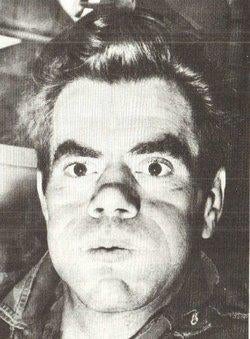
William George Bonin – The “Freeway Killer”
Overview
William George Bonin was an American serial killer who abducted, sexually assaulted, tortured, and murdered teenage boys and young men in Southern California during 1979 and 1980. He became known as the “Freeway Killer” because many of his victims were abandoned beside freeways, highway ramps, industrial roads, and other locations connected to Southern California's freeway system.
Bonin was ultimately convicted of 14 murders: ten in Los Angeles County and four in Orange County. His legally established victim count should therefore be listed as 14 confirmed by conviction. A larger group of deaths was attributed to him during the investigation, and Bonin made statements indicating responsibility for additional killings. Several of those cases, however, resulted in dismissed charges, acquittals, or no prosecution at all. For accuracy, those victims should be separated from the 14 murders for which Bonin was actually convicted.
Bonin usually approached boys and young men while driving his van. Some victims were hitchhiking or walking alone, while others were encountered near businesses, bus stops, or other public places. Once a victim was inside the vehicle, Bonin frequently restrained him and subjected him to physical and sexual violence. Ligature strangulation became the most consistent method of murder, although several victims suffered additional fatal injuries.
Early Criminal History
William George Bonin was born on January 8, 1947. His history of sexual violence began long before the murders that made him nationally infamous. During the late 1960s, he committed a series of sexual attacks against teenage boys and was convicted of crimes including kidnapping, sodomy, molestation, and forcible oral copulation. He was initially committed to Atascadero State Hospital as a mentally disordered sex offender before eventually being transferred to prison.
Bonin was released in the 1970s but soon committed another serious sexual assault against a 14-year-old boy. He was convicted again and returned to prison. After being paroled in 1978, his behavior escalated from sexual violence to murder. By the summer of 1979, boys and young men were beginning to disappear and turn up dead near Southern California highways.
The Freeway Murder Pattern
The crimes presented investigators with unusual difficulties because Bonin was highly mobile. A victim could be approached in one city, assaulted or killed in another location, and abandoned in a completely different jurisdiction. Police departments and sheriff's offices in Los Angeles, Orange, San Bernardino, Riverside, and Kern counties were dealing with similar killings at a time when more than one serial murderer was targeting young males in Southern California.
Many of Bonin's convicted victims showed a similar pattern of injuries. They had been restrained, beaten, and strangled. Investigators recovered unusual fibers from several bodies that were consistent with carpeting inside Bonin's van. Other forensic evidence included foreign hairs, biological evidence, and human blood staining found in Bonin's vehicle and residence.
Confirmed Victims – Murders for Which Bonin Was Convicted
The following 14 victims represent William Bonin's confirmed murder count based on criminal convictions. Where the medical evidence could establish only a range rather than a single date of death, that range is given rather than presenting the date a body was discovered as the date of death.
- Marcus Grabs, 17 – Killed August 5, 1979 – Newport Beach/Malibu Canyon, California: Grabs was a German teenager traveling in the United States. Bonin and Vernon Butts encountered him in Newport Beach. Grabs was restrained, beaten, and repeatedly stabbed. His body was discovered on August 6 in Malibu Canyon near Las Virgenes Canyon Road. Unlike most of Bonin's later victims, Grabs died from multiple stab wounds rather than primarily from ligature strangulation.
- Donald Hyden, 15 – Killed approximately August 25-26, 1979 – Los Angeles/Liberty Canyon, California: Hyden's body was discovered on August 27 in the Liberty Canyon area near the Ventura Freeway. The California Supreme Court record places his death at approximately August 25 or 26. He had suffered extensive physical violence and was killed by ligature strangulation.
- David Murillo, 17 – Killed approximately September 9-10, 1979 – La Mirada/Ventura Freeway area, California: Murillo disappeared after leaving his La Mirada home on a bicycle. His body was recovered on September 12 alongside the Ventura Freeway near the Lemon Grove overpass. He had been severely beaten and killed by ligature strangulation.
- Dennis Frank Fox, 17 – Killed approximately November 30, 1979 – Orange County, California: Fox was killed by ligature strangulation around November 30. His body was discovered on December 2 beside Ortega Highway in Caspers Regional Park in Orange County. Investigators later recovered distinctive fibers from his body that were consistent with carpeting from Bonin's van.
- Charles Miranda, 15 – Killed February 3, 1980 – Hollywood/Los Angeles, California: Bonin and Gregory Miley encountered Miranda in Hollywood during the early morning hours. Miranda was restrained and beaten before Bonin strangled him. His body was abandoned in an alley in downtown Los Angeles and discovered on February 3.
- James Macabe, 12 – Killed February 3, 1980 – Huntington Beach/Walnut, California: Macabe, whose surname also appears as McCabe in some records, was the youngest victim for whose murder Bonin was convicted. Bonin and Gregory Miley encountered him in Huntington Beach while the boy was traveling toward Disneyland. Macabe was restrained, beaten, robbed, and strangled. His fully clothed body was found on February 6 near Walnut Drive in Walnut, close to the Pomona Freeway.
- Ronald Gatlin, 19 – Killed approximately March 14-15, 1980 – Van Nuys/Duarte, California: Gatlin was picked up in the Van Nuys area on March 14. His body was discovered the following day near Central Avenue in Duarte. He had been beaten and restrained and died from ligature strangulation. Official California court records identify Gatlin as 19 years old.
- Harry Todd Turner, 14 – Killed sometime on or after March 20, 1980 – Hollywood/Los Angeles, California: Turner was a teenage runaway encountered while Bonin was accompanied by William Ray Pugh. His body was found on March 25 in an alley behind a Los Angeles business. Medical evidence established that Turner had been killed by ligature strangulation sometime on or after March 20, meaning March 25 should be treated as the body-discovery date rather than automatically as his date of death.
- Russell Rugh, 15 – Killed March 21 or 22, 1980 – Orange County, California: Rugh disappeared while traveling to work. His body was discovered on March 22 off Ortega Highway in the San Juan Campgrounds area of Orange County. He had been restrained, beaten, and killed by ligature strangulation.
- Glenn Barker, 14 – Killed March 21 or 22, 1980 – Orange County, California: Barker's body was discovered on March 22 in the same location as Russell Rugh. Investigators determined that Barker had also been killed by ligature strangulation on March 21 or 22. Similar fibers found on the victims became important evidence in Bonin's Orange County prosecution.
- Steven Wood, 16 – Killed April 10 or 11, 1980 – Long Beach, California: Wood's body was discovered on April 11 in an alley in Long Beach near Pacific Coast Highway. The medical evidence placed his death on April 10 or 11. Wood had been beaten, restrained, and killed by ligature strangulation.
- Darin Lee Kendrick, 19 – Killed April 29 or 30, 1980 – Stanton/Carson, California: Kendrick worked at a supermarket in Stanton and was approached while Bonin and Vernon Butts were in the area. His body was found on April 30 on Avalon Street in Carson near the Artesia Freeway. Kendrick had been restrained and severely assaulted. His death resulted from ligature strangulation combined with a penetrating injury to the upper cervical spinal cord.
- Lawrence Sharp, 17 – Killed May 17 or 18, 1980 – Westminster, California: Sharp's body was discovered on May 18 at a gasoline station at Westminster Boulevard and Bolsa Chica in Westminster. The California Supreme Court record determined that he was killed on May 17 or 18. He had been beaten, restrained, and killed by ligature strangulation. Fibers consistent with Bonin's van carpeting were recovered from his body.
- Steven Jay Wells, 18 – Killed June 2, 1980 – Downey/Huntington Beach, California: Wells became Bonin's final convicted murder victim. Bonin was accompanied by James Michael Munro when Wells was picked up on June 2. They eventually went to Bonin's residence in Downey, where Wells was restrained, beaten, robbed, and strangled. His body was transported from the residence and abandoned behind a gasoline station in Huntington Beach, where it was discovered on June 3.
Additional Attributed, Suspected, or Disputed Victims
Bonin was associated with additional killings beyond the 14 convictions. These cases should not be placed in the same category as his convicted murders. Some involved charges that were dismissed, two resulted in acquittals, and others were attributed to Bonin through investigative information, statements, accomplice evidence, or similarities to his established crimes.
- Thomas Glen Lundgren, 13 – May 28, 1979 – Reseda/Agoura area, California – Charged but Acquitted: Lundgren disappeared from Reseda on May 28 and was found dead later that day in the Agoura area. His murder was extremely violent. Bonin was formally charged with killing Lundgren but was acquitted. In testimony concerning a list of possible Freeway Killer victims, Bonin was also reported to have specifically denied killing Lundgren. For these reasons, Lundgren should be classified as a disputed or suspected victim rather than a confirmed Bonin victim.
- Mark Duane Shelton, 17 – Disappeared August 4, 1979; body found August 11, 1979 – Westminster/San Bernardino County, California – Suspected/Attributed: Shelton disappeared from Westminster on August 4. His body was found on August 11 in San Bernardino County and initially remained unidentified. His death was investigated as part of the Freeway Killer series. Bonin's principal accomplice, Vernon Butts, was later accused of participating in Shelton's murder. Bonin was considered connected to the case but was not convicted of Shelton's death.
- Robert Christopher Wirostek, 18 – September 1979 – Newport Beach/San Bernardino Freeway area, California – Charge Dismissed: Wirostek disappeared while attempting to travel from Newport Beach to his job. Contemporary reporting placed his disappearance in September 1979, with his body recovered later that month off the San Bernardino Freeway between Banning and Palm Springs. He had been strangled and suffered additional injuries. Bonin was formally charged with Wirostek's murder, but the charge was dismissed before trial. Vernon Butts was also charged in connection with Wirostek's death.
- Unidentified Kern County Male – Exact death date unknown; body found November 30, 1979 – Kern County, California – Charge Dismissed/Suspected: The unidentified victim was a young male whose remains were discovered in or near an irrigation area in Kern County near the Highway 99 corridor. Evidence indicated that he had died some time before his body was found, making November 30 a discovery date rather than a reliably established date of death. Bonin was charged in connection with an unidentified “John Doe” murder, but that count was dismissed before his Los Angeles trial. The unidentified Kern County victim has continued to be associated with Bonin's suspected murder series.
- John Frederick Kilpatrick, 15 – Early December 1979; body found December 13, 1979 – Long Beach/Rialto area, California – Attributed/Suspected: Kilpatrick disappeared after leaving his Long Beach home in early December. His body was found near Rialto on December 13 but was initially unidentified. He was later identified through investigative work. His murder has long been attributed to Bonin, although Bonin was never convicted of Kilpatrick's death. Because surviving records give conflicting dates for his disappearance, December 13 is best treated as the verified recovery date rather than an exact date of death.
- Michael Francis McDonald, 16 – Believed killed January 1, 1980 – Ontario/Chino area, California – Attributed/Suspected: McDonald disappeared on January 1. His body was discovered shortly afterward in San Bernardino County near the Highway 71 area, although he was not immediately identified. His death was attributed to the Freeway Killer investigation and subsequently to Bonin, but it was not among the 14 murders resulting in Bonin's convictions.
- Sean Paige King, 14 – Killed May 19, 1980 – Downey/Yucaipa, California – Charged but Acquitted: King disappeared from a bus stop in Downey on May 19. Bonin was charged with his murder. During the investigation, Bonin provided information that led authorities to King's remains in the Live Oak Canyon area near Yucaipa. King's body was not recovered until December 1980. At Bonin's trial, prosecutors were prohibited from using evidence concerning the discovery of King's body because police had obtained its location through statements covered by an agreement with Bonin. Bonin was ultimately acquitted of King's murder, so King should be described as strongly attributed to Bonin but not as a convicted victim.
The Importance of the 14 Versus 21 Victim Counts
Different sources give different totals for Bonin's victims because they are counting different categories. The most defensible confirmed total is 14 because those are the murders established by criminal convictions. Investigators connected Bonin to additional deaths, and accounts of his statements commonly describe him as admitting approximately 21 killings.
The California court record adds an important qualification. A reporter testified that he discussed a published list of 21 homicide victims with Bonin and asked whether Bonin had murdered the people on the list. According to that testimony, Bonin claimed responsibility for everyone on the list except Thomas Lundgren. That testimony supports a substantially larger murder total than the 14 convictions, but it does not transform every name on an investigative list into a judicially confirmed victim.
For that reason, the most accurate presentation is to identify the 14 convicted victims separately and then identify Lundgren, Shelton, Wirostek, the unidentified Kern County victim, Kilpatrick, McDonald, and King according to the actual status of each case.
Bonin's Accomplices
Another disturbing feature of the Bonin murders was his involvement of younger associates. Vernon Robert Butts was Bonin's closest alleged accomplice and was linked to a number of the murders. Butts was arrested and charged but died by suicide in the Los Angeles County Jail in January 1981 before he could be tried.
Gregory Matthew Miley assisted Bonin in the February 3 murders of Charles Miranda and James Macabe. Miley pleaded guilty to first-degree murder and agreed to testify against Bonin. His testimony provided jurors with a detailed account of events inside Bonin's van.
James Michael Munro participated in the June 2 murder of Steven Wells. Munro pleaded guilty to second-degree murder and testified for the prosecution. William Ray Pugh was involved in the events surrounding the murder of Harry Todd Turner and ultimately pleaded guilty to voluntary manslaughter.
The accomplice testimony was particularly important because it demonstrated that Bonin was generally the dominant participant. He selected victims, controlled the van, directed the violence, and repeatedly emphasized eliminating victims who might later identify him or his vehicle.
The Investigation
By 1980, law-enforcement agencies were recognizing similarities among a growing number of murdered boys and young men. Investigators compared body-recovery locations, ligature patterns, injuries, fibers, and information concerning vehicles seen near potential victims. The investigation became more focused as people acquainted with Bonin began providing information about him.
William Ray Pugh became one of the people who directed investigators toward Bonin. Bonin's earlier record of sexually assaulting teenage boys also drew scrutiny because the developing murder series showed similarities to his previous behavior.
Police placed Bonin under surveillance in June 1980. Investigators watched him drive through areas where young males gathered and observed him attempting to contact several youths.
Arrest on June 11, 1980
On June 11, 1980, officers followed Bonin's van into Hollywood. They watched as Bonin contacted several young males before a 15-year-old boy entered the vehicle. Bonin eventually drove to a vacant lot along Santa Monica Boulevard.
Police approached the van and discovered Bonin sexually assaulting the teenager. The boy survived. Officers arrested Bonin at the scene and recovered items from the van, including cord and knives. The arrest stopped a series of murders that had continued for roughly ten months.
Forensic Evidence
The prosecution's case eventually combined witness testimony, Bonin's own statements, accomplice testimony, and physical evidence. One particularly important category of evidence involved unusual triskelion-shaped fibers recovered from several victims. Experts determined that the fibers were consistent with carpeting inside Bonin's van.
Foreign hairs recovered from several victims were also consistent with Bonin. Biological evidence further connected him to individual cases, and investigators found human blood staining inside his van and residence. The repeated combination of ligature marks, restraints, similar disposal locations, forensic material, and accomplice accounts strengthened the argument that the murders were part of the same series.
Los Angeles County Trial
Bonin's Los Angeles County murder trial began in October 1981. He had originally been charged with a larger number of murders than the ten that ultimately resulted in convictions. Charges involving Robert Wirostek and an unidentified John Doe were dismissed before trial. Bonin went to trial for the remaining cases and was acquitted of murdering Thomas Lundgren and Sean King.
The jury convicted Bonin of murdering Marcus Grabs, Donald Hyden, David Murillo, Charles Miranda, James Macabe, Ronald Gatlin, Harry Todd Turner, Steven Wood, Darin Lee Kendrick, and Steven Wells. He received death sentences for the ten murders.
Orange County Trial
Bonin was prosecuted separately in Orange County for the murders of Dennis Frank Fox, Glenn Barker, Russell Rugh, and Lawrence Sharp. The prosecution relied heavily on physical similarities among the crimes, Bonin's statements, and forensic evidence connecting fibers on the victims with carpeting inside his van.
Bonin was convicted of first-degree murder and robbery in all four cases. He received four additional death sentences. Combined with his Los Angeles convictions, the Orange County verdict established his official total of 14 murder convictions.
Confessions and the Broader Murder Toll
After his arrest, Bonin made numerous statements concerning the murders. Investigators and reporters later described him as discussing killings beyond those eventually prosecuted. One particularly important episode involved Sean King. Bonin supplied information that allowed authorities to locate King's body months after the teenager disappeared.
Accounts frequently state that Bonin admitted approximately 21 murders and that investigators considered him a suspect in still more deaths. The broader number remains difficult to define because Southern California was experiencing multiple serial murder investigations involving young male victims during the same era. Patrick Kearney and Randy Steven Kraft were also active serial killers whose victims were sometimes abandoned near highways, creating the potential for early investigative overlap.
Consequently, deaths should not be added to Bonin's confirmed total solely because the victim was a young male found near a freeway during the same period. The 14 convictions remain the firmest historical measure of his confirmed murders, while additional cases should retain their individual legal or investigative classifications.
Death Row and Execution
Bonin remained on California's death row while his convictions and death sentences underwent years of appellate review. The California Supreme Court affirmed the Orange County judgment in 1988 and the Los Angeles County judgment in 1989. Further legal efforts to overturn his convictions or stop his execution were unsuccessful.
William George Bonin was executed at San Quentin State Prison on February 23, 1996. He was 49 years old. His execution was historically significant because he became the first California condemned prisoner executed by lethal injection.
Legacy of the Case
The William Bonin investigation remains one of the most notorious serial murder cases in California history. Bonin exploited mobility, jurisdictional boundaries, and the vulnerability of young victims while using Southern California's vast freeway system to move between abduction sites, crime scenes, and body-disposal locations.
The victims for whose deaths he was convicted ranged from 12 to 19 years old. They included students, workers, travelers, runaways, and teenagers simply moving through their normal daily lives. Fourteen murders were proven against Bonin in court, while several additional deaths were attributed to him with varying degrees of evidence.
Separating those categories is important. Marcus Grabs, Donald Hyden, David Murillo, Dennis Frank Fox, Charles Miranda, James Macabe, Ronald Gatlin, Harry Todd Turner, Russell Rugh, Glenn Barker, Steven Wood, Darin Lee Kendrick, Lawrence Sharp, and Steven Jay Wells are the 14 victims whose murders resulted in convictions against William Bonin. Thomas Lundgren, Mark Shelton, Robert Wirostek, the unidentified Kern County victim, John Kilpatrick, Michael McDonald, and Sean King belong in a separate attributed, suspected, dismissed, or acquitted category rather than being presented as additional convicted victims.