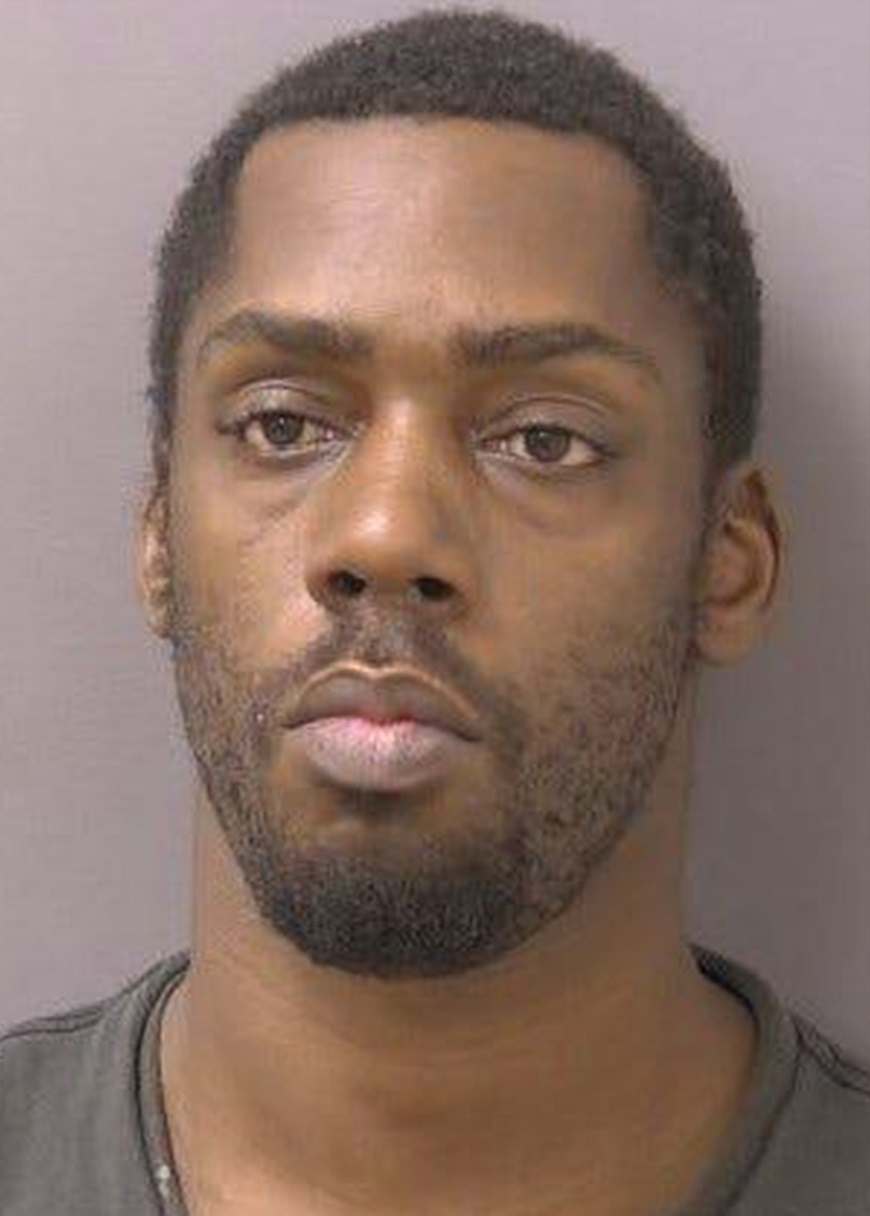
Nicholas Lee Wiley: The Syracuse Serial Killer
Overview
Nicholas Lee Wiley is an American serial killer and violent sex offender who murdered three women in Syracuse, New York, during the spring of 2004. The killings occurred within months of his release from prison, despite his classification as a Level 3 sex offender considered to present a high risk of committing additional offenses. Wiley later claimed responsibility for seven murders, but investigators were able to substantiate only the deaths of Tammy Sue Lynn Passineau, Lottie Mae Thompson and Hannah Finnerty.
The three known victims were killed between April and the end of May 2004. Two were found in or near the West Onondaga Street apartment building where Wiley lived and worked as a handyman. The third victim disappeared after being seen in downtown Syracuse, and her remains have never been recovered. Wiley's statements, physical evidence and the similarities among the crimes eventually resulted in his conviction for all three murders.
Early Life and Criminal History
Nicholas Lee Wiley was born on July 17, 1962, in Syracuse, New York. His criminal record began while he was still a teenager and developed into a long pattern of sexual violence, robbery and serious physical attacks. Much of his adult life was spent in correctional institutions, but previous convictions were reduced or overturned on appeal, allowing him to return to the community on several occasions.
In 1979, Wiley was convicted in connection with the sexual assault and stabbing of a 25-year-old woman. He served approximately four years in prison. His behavior after his release showed that the violence had not ended.
In 1983, Wiley attacked an older woman inside her Syracuse home. The woman, identified in court records as Doris Lando, was struck repeatedly in the head with a claw hammer during a robbery. Her telephone lines were cut, and property and money were taken from the residence. Wiley was convicted, but the conviction was later overturned after an appellate court determined that he had not received effective legal representation. He eventually received a reduced sentence.
Wiley was again imprisoned following a 1991 case involving the beating and sexual assault of a 16-year-old girl. He received a lengthy prison sentence, although legal proceedings once again resulted in a reduction. He remained incarcerated until January 22, 2004, when he was released and returned to Syracuse.
After his release, Wiley was registered as a Level 3 sex offender. This was New York's highest risk classification and indicated that authorities believed he presented a substantial danger of committing further sexual offenses. He took up residence in an apartment building on West Onondaga Street and reportedly performed maintenance or handyman work around the property. Less than three months later, Tammy Passineau disappeared.
Confirmed Victims
- Tammy Sue Lynn Passineau: Passineau was 18 years old when she disappeared on April 11, 2004. She was last seen in the area of the 100 block of West Water Street in Syracuse, New York. Wiley was convicted of murdering her, but her body has never been found. April 11 is treated as the date of her disappearance and presumed murder, although an independently confirmed time of death is unavailable.
- Lottie Mae Thompson: Thompson was 31 years old and the mother of three children. She was found stabbed to death inside her apartment in the West Onondaga Street building where Wiley lived. Her body was discovered on May 31, 2004, after concerns were raised about an odor coming from the apartment. Evidence indicated that she had been dead for a period of time before she was found, so the precise date of her murder was not publicly established.
- Hannah Finnerty: Finnerty was 22 years old and approximately five months pregnant. She was killed by multiple stab wounds. Her body was found on June 1, 2004, inside a trash container outside the West Onondaga Street apartment building. Investigators concluded that she had been murdered before her body was discovered, with the series of killings officially described as ending by May 31, 2004.
The Disappearance and Murder of Tammy Passineau
Tammy Sue Lynn Passineau was a young mother who was last seen on April 11, 2004. She had red or auburn hair and was known to move between residences, which initially made it difficult for relatives and acquaintances to recognize that something was wrong. Her family did not report her missing until the following month. Concerns intensified when she failed to collect financial assistance, refill necessary prescriptions or contact those close to her.
After Wiley was taken into custody in connection with the Thompson and Finnerty murders, he made statements about killing a young red-haired woman named Tammy. The description and approximate time of the killing closely corresponded with Passineau's disappearance. Investigators searched Wiley's residence and recovered a box cutter bearing blood. Scientific testing connected the blood to Passineau through DNA evidence.
According to Wiley's statements, he and Passineau discussed his background, prison and sexual predators. Wiley claimed that the conversation angered him and that he attacked her by cutting her throat. Prosecutors argued that he then disposed of her body in a trash container outside the apartment building. Authorities believed the container may have been emptied and its contents transported to a waste facility before investigators knew she had been killed.
Although Passineau's remains were never recovered, prosecutors built a circumstantial and forensic case around Wiley's confession, the blood evidence and his knowledge of details associated with her disappearance. In December 2004, he was formally charged with her murder. A jury later determined that the evidence proved beyond a reasonable doubt that Wiley had killed her.
The Murder of Lottie Mae Thompson
Lottie Mae Thompson lived in an apartment in the same West Onondaga Street building where Wiley was residing. She was a 31-year-old mother of three. Her proximity to Wiley gave him access to her and placed him near the scene before and after her death.
On May 31, 2004, a building manager entered Thompson's apartment after being alerted to a strong odor. Her body was discovered inside. She had suffered fatal stab wounds and had apparently been dead for several days. Wiley reportedly played a role in directing attention toward the odor, an action that brought the manager to the apartment and led to the discovery.
During questioning, Wiley admitted killing Thompson. He said the two had been engaged in sexual activity when he became angry during an argument. According to his account, he seized a knife and cut her throat. The attack was not an accidental or impulsive single injury; the evidence showed a deliberate assault involving a deadly weapon and severe violence.
Thompson's death was initially investigated as an individual homicide. The discovery of another victim outside the same building the following day, however, immediately raised the possibility that one offender was responsible for multiple killings.
The Murder of Hannah Finnerty
On June 1, 2004, investigators searching the area around the West Onondaga Street building discovered the body of Hannah Finnerty inside a trash container. She had been stabbed repeatedly. Authorities later confirmed that Finnerty was approximately five months pregnant when she was killed, meaning the attack ended both her life and her pregnancy.
Wiley confessed that he had killed Finnerty following a disagreement involving crack cocaine. He claimed that she attempted to negotiate for additional drugs and that he became angry. He then attacked her with a knife and placed her body in the trash container outside the building.
The disposal method was significant. Finnerty's body was hidden in the same type of container investigators believed Wiley had used to dispose of Passineau. Both Finnerty and Thompson had been stabbed, and each crime was directly connected to the apartment building where Wiley lived. These similarities later became central to the prosecution's argument that the three murders were committed in a comparable manner as part of a serial pattern.
Arrest and Confessions
Wiley was arrested on June 2, 2004, following the discoveries of Thompson and Finnerty. During extensive questioning, he admitted killing both women and began describing other alleged victims. He claimed that he had murdered seven people between April and May 2004, including four women, two men and a teenage gang member.
Investigators took the claims seriously and searched missing-person reports, unsolved homicides and locations described by Wiley. Despite the breadth of his statements, police could not find physical evidence confirming four of the additional alleged murders. Some of the accounts contained inconsistencies, and authorities eventually concluded that the uncorroborated claims could not support further charges.
His statements regarding Passineau were different. Wiley knew her first name, described her red hair and placed the killing during the period in which she vanished. Most importantly, investigators recovered Passineau's blood from a cutting instrument associated with Wiley. The forensic evidence transformed his statement from an unsupported confession into a prosecutable murder case.
Wiley made disturbing remarks while describing the killings. He compared his movements during the attacks to those of a ninja, suggesting that he viewed the violence through a detached and self-dramatizing lens. Prosecutors used his detailed descriptions to show that he possessed knowledge consistent with the physical evidence and the circumstances surrounding each victim.
Trial
Wiley's murder trial began in Onondaga County in 2006. Prosecutors presented the three killings as a connected series rather than unrelated acts of violence. They emphasized Wiley's use of knives, his personal contact with the victims and his efforts to conceal or distance himself from their bodies.
The case involving Passineau was particularly important because there was no recovered body. Prosecutors relied on Wiley's statements, the DNA evidence found on the box cutter and the complete cessation of Passineau's normal activities after April 11, 2004. The prosecution argued that there was no reasonable explanation for her blood being present on Wiley's weapon other than a violent encounter ending in her death.
The defense portrayed Wiley as mentally disturbed and claimed that police had psychologically pressured him into confessing. His attorneys argued that his statements were unreliable and that detectives had encouraged him to provide sensational accounts. They also challenged the prosecution's attempt to treat the killings as sufficiently similar to qualify for a first-degree murder charge under New York law.
The jury rejected the defense arguments. Wiley was found guilty of one count of first-degree murder covering the serial nature of the crimes, three counts of second-degree murder and three counts of criminal possession of a weapon. Some contemporary reports summarized the result as convictions on three first-degree and three second-degree murder charges, but the later appellate decision formally described the judgment as one first-degree murder count and three individual second-degree murder counts.
Sentencing
In October 2006, Nicholas Wiley was sentenced to life imprisonment without the possibility of parole. The sentence guaranteed that he could never again be released into the community. During the sentencing proceedings, the judge condemned Wiley as an exceptionally destructive individual who had repeatedly brought suffering and death to others.
The sentence also marked the end of a decades-long cycle in which Wiley committed a violent crime, entered prison and later obtained release after appeals or reduced sentences. By the time of the murder trial, prosecutors were able to present his three confirmed killings as part of a unified course of conduct, allowing the court to impose the harshest available punishment short of death.
Appeal
Wiley appealed his convictions, arguing that the evidence was insufficient, that his statements to police had been coerced and that the murders were not similar enough to support the first-degree murder charge. On November 13, 2009, the New York Supreme Court's Appellate Division upheld the murder convictions.
The appellate judges concluded that the evidence established that Wiley committed three murders in a similar fashion. The court also rejected his claim of psychological coercion and determined that police interrogation tactics had not created a substantial risk of a false confession. The court made a limited modification involving fines connected to the weapon charges, but Wiley's convictions and life-without-parole sentence remained intact.
Unsubstantiated Claims of Additional Victims
Wiley's assertion that he killed seven people has never been proven. Detectives investigated his descriptions of additional victims, including two men and a teenage gang member, but did not locate sufficient evidence to connect him to four more deaths. No additional murder convictions resulted from those statements.
His unsupported confessions have led to continuing questions about whether he exaggerated his crimes, mixed fact with fantasy or disclosed genuine killings that investigators were unable to identify. Officially, Wiley is responsible for three confirmed victims. Any suggestion that he killed more must remain unverified unless new evidence emerges.
Legacy of the Case
The Nicholas Wiley case caused anger and alarm in Syracuse because the murders occurred so soon after the release of a man already known for severe sexual and physical violence. His Level 3 classification meant authorities had recognized that he posed a high risk, yet the legal system had no basis to continue holding him after the completion of his sentence.
The murders renewed public debate about the supervision of violent sex offenders, post-release monitoring and the consequences of reduced or overturned convictions. Wiley had repeatedly demonstrated a willingness to attack women, but earlier appellate victories had shortened his periods of incarceration. Within months of his final release, three women were dead.
Tammy Passineau, Lottie Thompson and Hannah Finnerty were individuals with families and lives extending far beyond their association with Wiley. Passineau left behind a young child and has never been recovered. Thompson was the mother of three children. Finnerty was pregnant when she was killed. Their deaths remain the central reality of a case often discussed in terms of criminal classifications, confessions and failures in supervision.
Nicholas Lee Wiley remains imprisoned under a sentence of life without parole. Although he claimed as many as seven victims, the evidence and convictions establish three murders committed in Syracuse during a concentrated period in 2004. His crimes ended only after the discovery of two bodies at the apartment building where he lived exposed the pattern of violence and led investigators to connect him to a third victim whose remains were never found.