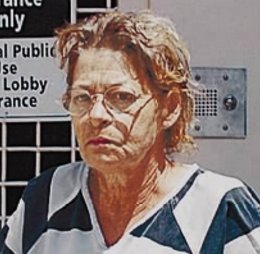
Barbara Ann Evans: The Iredell County Double-Homicide Case
Overview
Barbara Ann Evans became the central suspect in one of the most disturbing murder investigations in Iredell County, North Carolina, after two older married couples were shot to death in their homes during 2005. The killings occurred nearly eight months apart and initially appeared to be separate crimes. Investigators eventually concluded that the two cases were connected, and in July 2006 Evans, then 65, was arrested and charged with four counts of first-degree murder.
Evans is sometimes described as a suspected serial killer because authorities accused her of killing four people in two separate attacks. That description requires an important qualification: Evans was never convicted of any of the murders. She maintained her innocence, and the criminal case against her never reached a trial. Several years after her arrest, prosecutors dismissed the charges after a judge determined that Evans suffered from dementia, was incapable of standing trial, and was unlikely to regain competency. The allegations against her therefore were never tested before a jury.
The Murders of James and Delet Powell
The first double homicide occurred in January 2005 in the rural Union Grove area of Iredell County. James Powell and his wife, Delet Reid Powell, lived in a brick home on West Memorial Highway. James was a former convenience-store owner who was well known in the community and enjoyed restoring old automobiles, particularly vintage Fords.
The Powells were last known to be alive on the evening of Thursday, January 20. At approximately 9:30 the following morning, January 21, their daughter stopped at the house to check on them. She discovered both of her parents inside the kitchen. Investigators initially released few details while the deaths were examined, but autopsies performed the next morning established that James and Delet had both been shot.
Investigators found firearms belonging to the Powells inside the residence, but authorities said those weapons were not believed to have been used in the murders. Detectives began interviewing relatives, friends and acquaintances and attempted to reconstruct the hours between the couple's last known contact Thursday evening and the discovery of their bodies Friday morning. Officers later established a roadblock on N.C. 901 to locate motorists who might have noticed suspicious vehicles or activity around the Powell residence.
The lack of an obvious explanation for the murders troubled investigators. James and Delet were regarded by friends and neighbors as helpful, well-liked people, and Sheriff Phil Redmond publicly said he knew of no serious problems the couple had with anyone. The investigation continued for months without an arrest.
The Murders of Don and Sue Barker
Nearly eight months later, another married couple was found shot to death less than two miles from a business familiar to many local residents. Don Allen Barker Sr., 62, owned Barker's Grocery on Turnersburg Highway. His wife, Sue Jenkins Barker, 63, was a retired teacher. They lived on White's Farm Road north of Statesville.
Don Barker normally arrived at his grocery store early in the morning. When he failed to appear to open the business at approximately 6:00 a.m. on Friday, September 16, 2005, employee George Moore became concerned. Moore went to the Barker residence but found the house dark and received no response. After contacting family members and returning to the property, he was able to see Don inside and called 911 shortly before 7:00 a.m.
Deputies discovered both Don and Sue Barker dead in the residence. Early investigative information indicated that each had been shot, apparently with a handgun. Don had last been seen at approximately 9:30 p.m. Thursday, September 15, when he left Barker's Grocery for home. Sue had also been seen Thursday while helping at Rose Chapel United Methodist Church. Contemporary reporting therefore placed the shootings sometime between Thursday night and early Friday morning. Later police, arrest and court reporting consistently identified September 16, 2005, as the date associated with their deaths.
The Barker crime scene attracted investigators' attention because of similarities to the Powell murders. There was no obvious forced entry, and investigators did not initially see evidence suggesting that the residence had simply been ransacked by an unknown burglar. As in the Powell case, the victims were an older married couple with strong connections to their local community.
The Two Cases Are Connected
By October 2005, the Iredell County Sheriff's Office publicly announced that investigators believed the Powell and Barker murders were related. Both attacks appeared to have taken place on Thursday nights or during the early hours immediately afterward. There were also similarities in the backgrounds of the male victims: both James Powell and Don Barker had been involved in operating convenience-style stores.
The most important connection, however, came from forensic evidence. Ballistic examination determined that the same firearm had been used in all four shootings. What had begun as investigations of two separate double homicides was now treated as a connected four-victim murder investigation.
Investigators began closely examining anyone who had meaningful connections to both couples. According to Sheriff Redmond, Barbara Ann Evans had already appeared among the many acquaintances examined during the Powell investigation because her late husband had known James Powell. Evans was also familiar with the Barkers and was a regular customer at Barker's Grocery. Don Barker reportedly cashed checks for her, and Evans continued visiting the store even after Don and Sue were killed.
Authorities ultimately said Evans was the one person among the hundreds interviewed whom investigators could connect to all four victims. That connection did not by itself prove that she committed the murders, but it caused detectives to examine her more closely as other people were eliminated from consideration.
The Investigation Focuses on Barbara Ann Evans
The investigation became exceptionally large for the Iredell County Sheriff's Office. Detectives conducted more than 700 interviews, reviewed financial records and other documents, investigated tips, and assembled thousands of pages of reports and evidence. The North Carolina State Bureau of Investigation assisted, and investigators also obtained expertise from outside agencies as they attempted to construct a profile of whoever committed the killings.
Authorities eventually searched Evans's residence on Jennings Road. Sheriff Redmond later announced that investigators had recovered a weapon from the home that forensic testing linked to the four murders. According to law-enforcement statements at the time, the firearm recovered during the search was determined to be the weapon used to kill both the Powells and the Barkers.
The firearm evidence dramatically changed the investigation. After months of surveillance, interviews and forensic testing, detectives presented their findings to prosecutors. Evans was arrested on July 25, 2006, with the arrest publicly announced as the investigation became national news. She was accused of murdering James and Delet Powell and Don and Sue Barker and was initially held without bond.
Arrest and Murder Charges
Evans's arrest surprised many residents because she was a 65-year-old woman with no publicly reported history of violent crime. Her attorney, Mark Rabil, emphasized that unusual background and stated that Evans denied committing the murders. The defense maintained her innocence throughout the criminal proceedings.
An Iredell County grand jury subsequently indicted Evans on four counts of first-degree murder. Prosecutors considered whether the circumstances would permit them to seek the death penalty. The investigation produced an enormous case file reportedly containing more than 5,000 pages of interviews, investigative reports, laboratory findings, photographs and other material.
No publicly established motive ever provided a simple explanation for why the two couples were killed. Authorities established connections between Evans and the victims and claimed strong forensic evidence tied a gun found at her residence to the shootings, but many details that might have been presented during a trial remained undisclosed or unresolved.
Victims
- James Powell, 74 — Died January 21, 2005, at his residence on West Memorial Highway in Union Grove, Iredell County, North Carolina. James and his wife were discovered in their kitchen at approximately 9:30 a.m. An autopsy determined that he had been shot. He had previously owned and operated convenience stores and was known locally for restoring antique automobiles.
- Ruth Delet Reid Powell, 71 — Died January 21, 2005, at the Powell residence in Union Grove, Iredell County, North Carolina. She was discovered with her husband in their kitchen. Autopsy findings established that she also died from gunshot wounds.
- Don Allen Barker Sr., 62 — Associated death date September 16, 2005, at his home on White's Farm Road near Statesville, Iredell County, North Carolina. Contemporary investigators said the shooting could have occurred sometime after he left his grocery store at approximately 9:30 p.m. September 15 and before his body was discovered the following morning. Later police and court reporting identified September 16 as the date of death. Don was the longtime owner of Barker's Grocery.
- Sue Jenkins Barker, 63 — Associated death date September 16, 2005, at the Barker residence on White's Farm Road near Statesville, Iredell County, North Carolina. Like her husband, she was shot inside the home during the overnight period between September 15 and the morning of September 16. Sue was a retired teacher and had been helping prepare for a church yard sale shortly before her death.
Competency Proceedings and Dismissal of the Charges
Although the arrest appeared to move the case toward a major murder trial, Evans's mental condition eventually became the decisive legal issue. Questions arose about whether she was competent to understand the criminal proceedings and assist her attorney in preparing a defense. A defendant cannot constitutionally be tried when unable to understand the nature of the proceedings or meaningfully participate in the defense.
A judge ultimately determined that Evans suffered from dementia and was incapable of standing trial. Her condition was described as progressive, with little expectation that she would improve enough to become legally competent. Approximately three years after she was charged, prosecutors dismissed the murder charges as a consequence of that ruling.
The dismissal was not an acquittal, nor was it a finding that Evans committed the murders. It meant the prosecution could not lawfully proceed to trial under the circumstances. Because there was never a trial, no jury heard the complete evidence from both the prosecution and defense, and Evans was never convicted of killing James and Delet Powell or Don and Sue Barker.
A Case Without a Trial
The Barbara Ann Evans case remains unusual because investigators believed they had connected two seemingly separate double homicides through ballistics, relationships between the victims and suspect, and a firearm recovered from Evans's residence, yet the resulting prosecution ended without a verdict. For the victims' relatives and friends, the dismissal meant that years of investigation would never culminate in a courtroom determination of guilt or innocence.
The killings also deeply affected the communities surrounding Union Grove and Statesville. Both couples were well known. James Powell was remembered for his businesses and interest in restoring automobiles, while Delet was remembered by friends and neighbors as a caring member of the community. Don Barker's grocery store had long served as a neighborhood gathering place, and Sue Barker had spent years teaching local students. Their deaths caused residents accustomed to a quiet rural environment to become more cautious and suspicious until an arrest was finally announced.
Legacy of the Investigation
Barbara Ann Evans is therefore most accurately described as a suspected serial murderer or accused multiple murderer rather than a convicted serial killer. Authorities charged her with four first-degree murders committed during two separate shooting episodes in 2005, and investigators publicly stated that forensic testing connected the same firearm to all four victims. Nevertheless, the criminal justice system never reached a verdict because Evans was found mentally incompetent to stand trial and the charges were dismissed.
The unresolved legal ending distinguishes the case from those of convicted serial killers. What is firmly established is that James Powell, Delet Powell, Don Barker and Sue Barker were murdered in two closely spaced Iredell County communities during 2005; investigators linked their deaths through ballistic evidence; Barbara Ann Evans was arrested and indicted for all four murders in 2006; she denied responsibility; and the accusations against her were never adjudicated at trial.