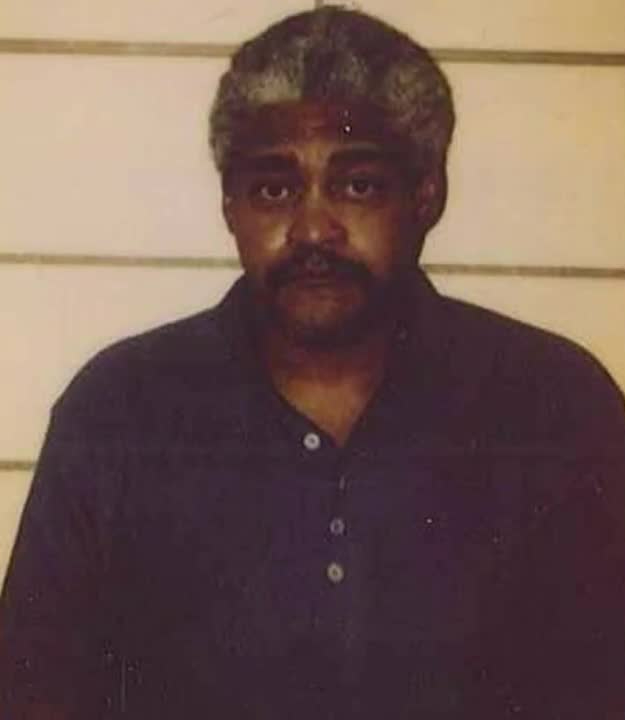
John Charles Bolsinger: The Serial Killer Identified Decades After His Death
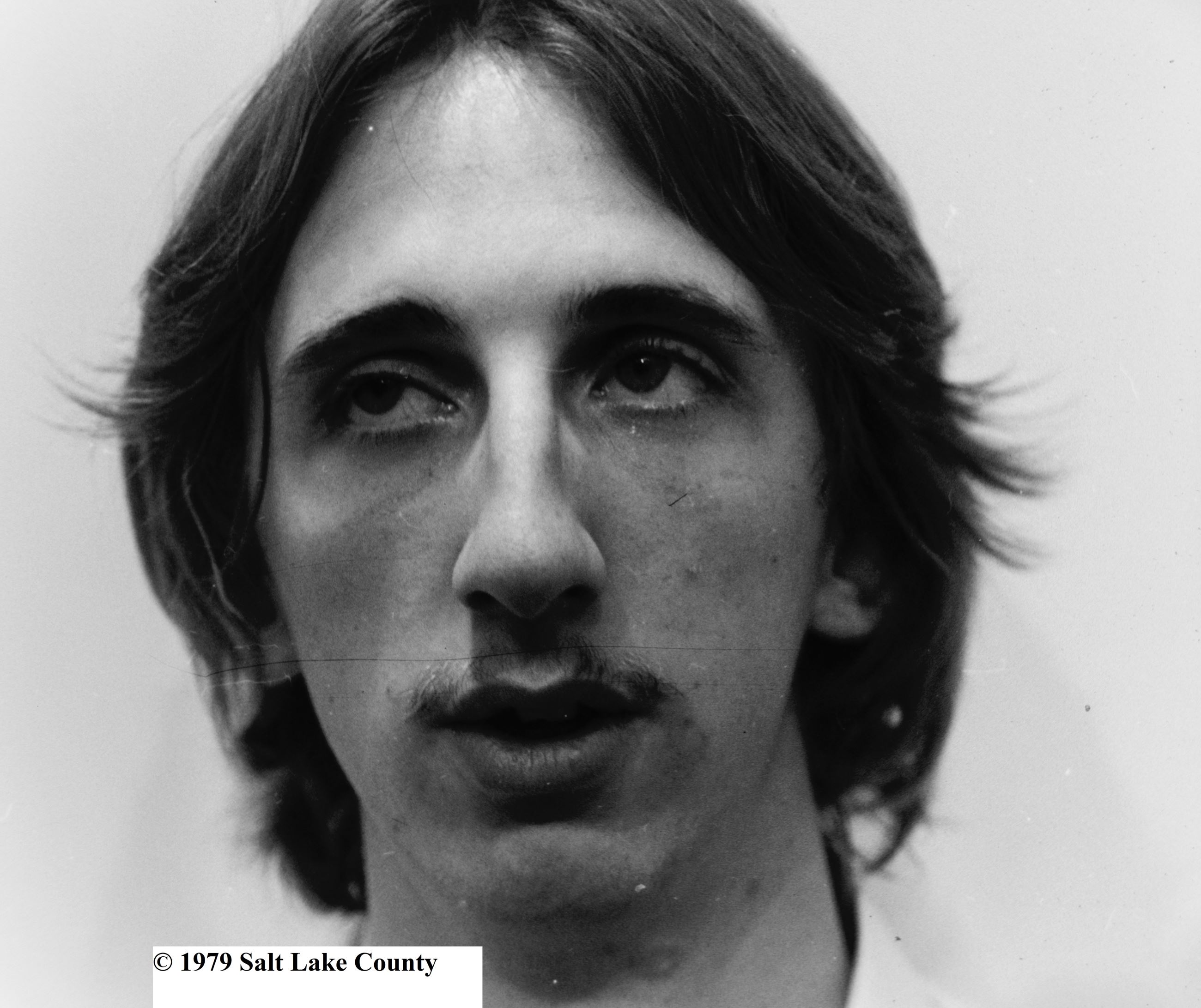
John Charles Bolsinger was an American killer whose crimes stretched from Utah to Oregon between 1980 and 1988. During his lifetime, he was convicted in connection with the strangulation death of a woman in Utah, but authorities did not discover that he was responsible for a series of unsolved murders in Eugene, Oregon, until decades after his death. Advances in DNA analysis and investigative genetic genealogy eventually allowed detectives to identify Bolsinger as the man who killed three women in Eugene during the 1980s.
Bolsinger's known history is particularly disturbing because two of the Oregon murders occurred only months after his release from prison for the Utah killing. After he was imprisoned again for breaking into another woman's home, the killings apparently stopped. When he was released a second time, another woman was murdered within several months. Bolsinger died by suicide shortly afterward, never knowing that biological evidence preserved from the crime scenes would eventually identify him.
The Death of Kaysie Sorensen
Bolsinger's first known fatal attack occurred in Utah in March 1980. He was 22 years old when he encountered 33-year-old Kaysie Sorensen at Bill's Lounge in Magna, Utah. Sorensen was last seen at the bar on the evening of March 28, 1980. Court records established that she left the lounge with Bolsinger shortly before 10:00 p.m.
The two eventually went to an apartment belonging to Sorensen's boyfriend, Mark Anger, who was away working a 24-hour shift as a firefighter. Bolsinger and Sorensen drank alcohol, listened to music and later went into the bedroom. What happened afterward became the central issue in Bolsinger's criminal trial.
Sorensen died from ligature strangulation involving the electrical cord from a clock radio. After her death, Bolsinger emptied the contents of her purse onto the floor, covered her body with a sheet and took a stereo from the apartment before leaving. Anger returned on March 29, 1980, and discovered Sorensen dead in the bedroom.
Bolsinger initially attempted to distance himself from Sorensen's death but ultimately admitted that he had caused the fatal strangulation. His statements concerning exactly how and why it happened changed. In one account, he admitted placing the cord around Sorensen's neck and pulling it. At trial, he offered a different explanation that portrayed the strangulation as occurring during consensual sexual activity and without an intention to kill her.
A jury convicted Bolsinger of second-degree murder in 1981, and he received a sentence of five years to life in prison. Bolsinger appealed. In 1985, the Utah Supreme Court concluded that the evidence was insufficient to establish the mental state required for second-degree murder but sufficient to support the lesser offense of manslaughter. His conviction was therefore reduced to manslaughter.
Release from Prison and Return to Oregon
Bolsinger was eventually paroled and returned to the Eugene-Springfield area of Oregon. Eugene Police later reconstructed his movements and determined that he was paroled to Springfield on March 7, 1986. Only about three months later, the first of the Eugene murders later attributed to him occurred.
The timing would become extremely significant when cold-case investigators looked at Bolsinger's life decades later. His periods of freedom closely corresponded with the periods in which the Eugene murders occurred, while periods when he was incarcerated coincided with long interruptions in the killings.
The Murder of Gladys May Hensley
Gladys May Hensley was 62 years old and lived at Parkview Terrace, a residential complex at 255 High Street in Eugene. Friends and apartment employees became concerned after Hensley had not been seen for several days. During a welfare check on June 5, 1986, an employee entered her apartment and discovered her dead.
Investigators determined that Hensley had been murdered and believed that she was most likely killed during the early morning hours of June 4, 1986. Evidence indicated that the killer had entered the apartment through a window. The circumstances surrounding the attack suggested a violent intruder rather than someone who had simply entered the residence for a conventional burglary.
At the time, police had no suspect who could be conclusively connected to the killing. The evidence collected from Hensley's apartment was nevertheless preserved. That decision eventually became critically important because biological evidence from the case would later help connect her murder with additional killings.
The Murder of Janice Marie Dickinson
Only about two weeks after Hensley's murder, another woman was killed in Eugene. On June 19, 1986, 33-year-old Janice Marie Dickinson was discovered in a grassy area behind a car dealership at 20 Coburg Road. A mechanic working nearby noticed her body beneath a tree behind the dealership.
Dickinson had been sexually assaulted and killed through what police described as brutal homicidal violence. Investigators determined that she appeared to have been attacked at or near the location where her body was found. Detectives quickly noticed similarities between Dickinson's death and the earlier murder of Gladys Hensley.
The two crime scenes were relatively close to one another, and investigators began considering the possibility that the same offender was responsible. Despite extensive investigative efforts, however, police were unable to identify the killer. The murders of Hensley and Dickinson remained unsolved.
The Springfield Burglary and a Survivor
Three months after Dickinson's murder, Bolsinger was arrested for a crime that would later provide investigators with another disturbing glimpse into his behavior. During the early morning hours of September 26, 1986, a woman at a residence in Springfield heard her dog behaving strangely in the kitchen. When she went to investigate, she saw a man looking through her kitchen window.
The intruder removed a brace securing the window and entered the residence. The woman fled toward the living room and called 911. As she remained on the telephone with the emergency dispatcher, the intruder approached her and attempted to take the telephone away.
The woman fought back, striking him with the telephone and a flashlight. The resistance caused the intruder to retreat and escape through the kitchen window. He left behind items that included a down vest and a paring knife. Police officers responded, and a police dog helped track down Bolsinger nearby.
Bolsinger was arrested and ultimately convicted of burglary. He received another five-year prison sentence. His incarceration also corresponded with a sudden halt in the series of Eugene murders.
Release and the Murder of Geraldine Spencer Toohey
Bolsinger was eventually transferred to the Utah State Prison because of a parole violation. He remained there until December 8, 1987, when he was released. Three days later, on December 11, he enrolled at Lane Community College for the 1988 winter term and returned to life in the Eugene-Springfield area.
Less than three months later, 73-year-old Geraldine Spencer Toohey was killed at her residence in the 5400 block of Franklin Boulevard in Eugene.
Toohey had been speaking with her sister by telephone on the night of February 27, 1988, when the connection suddenly went dead. The following morning, February 28, her sister arrived to take her to church. When Toohey did not answer the door, her sister looked inside and saw her lying on the floor.
Investigators discovered evidence that someone had forcibly entered Toohey's residence. Her telephone line had been cut, and she had been sexually assaulted. The attack involved strangulation and sharp-force injuries. Investigators recognized similarities between Toohey's murder and the earlier Eugene killings, although they still lacked the evidence necessary to identify the offender.
The case received considerable publicity. On March 5, 1988, Oregon State Police released a composite sketch of the suspected killer and appealed for information from the public.
Bolsinger's Death
Less than three weeks after the suspect sketch was released, John Charles Bolsinger was found dead in his Springfield apartment on March 23, 1988. His death was ruled a suicide. He was 30 years old.
At the time of his death, investigators had not identified Bolsinger as the killer of Gladys Hensley, Janice Dickinson or Geraldine Toohey. Consequently, his death did not immediately bring an end to the investigation. The three murders continued to trouble detectives and the victims' families for decades.
Known Victims
- Kaysie Sorensen, 33 — March 29, 1980 — Magna, Utah: Sorensen left Bill's Lounge with Bolsinger late on March 28 and was found dead on March 29 in her boyfriend's apartment. She died from ligature strangulation involving the cord of a clock radio. Bolsinger admitted causing her death and was originally convicted of second-degree murder. The conviction was later reduced to manslaughter by the Utah Supreme Court.
- Gladys May Hensley, 62 — June 4, 1986 — Eugene, Oregon: Hensley was killed inside her apartment at Parkview Terrace on High Street. Police determined that she was most likely murdered during the early morning hours of June 4. She was discovered during a welfare check on June 5 after she had not been seen for several days. Evidence from her case was eventually connected to the other Eugene murders.
- Janice Marie Dickinson, 33 — June 19, 1986 — Eugene, Oregon: Dickinson was murdered in a grassy area behind a car dealership near 20 Coburg Road. Her body was discovered beneath a tree by an employee of the dealership. She had been sexually assaulted, and investigators immediately noticed similarities between her killing and Hensley's murder two weeks earlier.
- Geraldine Spencer Toohey, 73 — February 28, 1988 — Eugene, Oregon: Toohey was murdered inside her home in the 5400 block of Franklin Boulevard. She had been speaking with her sister the previous night when the telephone connection abruptly ended. Her body was discovered the following morning. Investigators found evidence of forced entry, sexual assault, strangulation and sharp-force injuries.
The DNA Connection
Although investigators suspected that some of the Eugene murders might be related, proving the connection took years. In August 2000, DNA testing provided an important breakthrough by establishing that the same unidentified male offender was connected to the murders of Hensley, Dickinson and Toohey.
The result confirmed that investigators were dealing with a serial offender, but there was still no name attached to the DNA. Potential suspects were investigated and eliminated through DNA comparison and other evidence. The killer remained unidentified.
Detectives continued to preserve and periodically reexamine the evidence as forensic science improved. Beginning in 2016, investigators turned to newer DNA technology capable of predicting certain physical characteristics of an unknown person from genetic material. A forensic DNA-based reconstruction of the suspect was produced, and police continued developing and eliminating possible suspects.
Investigative Genetic Genealogy Identifies Bolsinger
The most important breakthrough came with the development of investigative genetic genealogy. Detectives used the unknown killer's genetic information to search for familial connections and construct family relationships that could lead to the offender's identity.
Investigators eventually narrowed their attention to several possible individuals. They then compared the genetic-genealogy findings with traditional investigative evidence, including Bolsinger's criminal history, fingerprints, footwear evidence and his documented movements between Oregon and Utah.
The timeline was striking. Bolsinger had been released from prison in March 1986. Hensley was killed approximately three months later, followed by Dickinson two weeks afterward. Bolsinger was incarcerated again after the September 1986 Springfield burglary, and the murders stopped. After his December 1987 release, Toohey was murdered in February 1988. Bolsinger died less than a month later, after which the series permanently ended.
After extensive additional investigation and analysis, authorities identified John Charles Bolsinger as the man responsible for the three Eugene murders. On February 2, 2022, the Eugene Police Department publicly announced that the decades-old serial murder investigation had been solved.
A Killer Identified Too Late for Prosecution
Bolsinger could never be prosecuted for the murders of Hensley, Dickinson and Toohey because he had been dead for nearly 34 years by the time investigators identified him. Nevertheless, solving the cases provided long-awaited answers to the victims' families and officially connected crimes that had haunted the Eugene community since the 1980s.
The case also demonstrated the importance of preserving evidence from unsolved murders. Investigators in 1986 and 1988 could not have anticipated the forensic tools that would exist more than three decades later. Evidence that once produced no identifiable suspect eventually became capable of revealing family relationships and directing investigators toward a specific individual.
Legacy of the Investigation
John Charles Bolsinger is now associated with four known deaths spanning eight years. The first, Kaysie Sorensen's death in Utah, resulted in a manslaughter conviction after his original murder conviction was reduced on appeal. The other three murders were not attributed to him until long after his death.
The chronology of his crimes shows repeated periods of violence interrupted by incarceration. His release in 1986 was followed rapidly by the murders of Gladys Hensley and Janice Dickinson. His arrest for the Springfield burglary removed him from the community, and the killings ceased. His release in December 1987 was followed by Geraldine Toohey's murder in February 1988. Bolsinger's suicide the following month ended any possibility of another arrest or trial.
For decades, Gladys May Hensley, Janice Marie Dickinson and Geraldine Spencer Toohey were remembered as victims of an unidentified serial killer. The 2022 identification of Bolsinger finally gave that killer a name. Although justice through the courts was no longer possible, the resolution established who was responsible and closed three of Oregon's longest-running serial murder investigations.