Charles Louman Meach: Five Murders in Anchorage, Alaska
Early Life and Troubled History
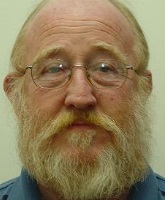
Charles Louman Meach III was born on October 1, 1947, in Traverse City, Michigan. He experienced an unstable childhood and began drifting away from home while still a teenager. By the age of sixteen, Meach had left Michigan and begun traveling, accumulating a record of arrests and minor offenses as he moved through different parts of the country. His behavior became increasingly erratic, and he was eventually diagnosed with severe mental illness.
Meach later settled in Anchorage, Alaska, where he became responsible for five murders committed during two separate episodes nearly nine years apart. His case became one of the most controversial criminal cases in Alaska because he committed his final four murders after previously being found not guilty of murder by reason of insanity and while still under psychiatric supervision.
The Murder of Robert Johnson
Meach committed his first known murder in Anchorage in 1973. His victim was Robert Johnson, a 22-year-old grocery-store clerk. Johnson was attacked in Earthquake Park, a wooded public recreation area overlooking Cook Inlet. Meach beat Johnson to death in a violent assault. Available historical accounts consistently place the killing in 1973, although a reliable exact month and day are not widely reported.
Meach was arrested and charged with Johnson’s murder. During the resulting criminal proceedings, psychiatrists evaluated his mental condition. The court ultimately found him not guilty by reason of insanity. Instead of being sent to prison, he was committed to a psychiatric institution for treatment.
Meach was initially sent to Atascadero State Hospital in California. Doctors later concluded that his mental illness was in remission, and he was returned to Alaska in 1980. He came under the supervision of the Alaska Psychiatric Institute in Anchorage. By 1981, he was participating in activities outside the hospital, holding several jobs and attending classes at the University of Alaska. Although he remained connected to the psychiatric system, he was allowed increasing freedom within the community.
The Russian Jack Springs Park Murders
On May 3, 1982, Meach entered Russian Jack Springs Park in Anchorage while armed with revolvers. Four teenagers were spending the evening together near a campsite in the park. The group consisted of Joseph Dean Kimler, Vern Jay Sylvester, Sabrina Lynn Imlach and Rebecca Dawn “Becca” Phillips.
Accounts of the crime indicate that Meach approached or entered the teenagers’ campsite intending to steal property, including cassette tapes. When members of the group discovered him going through the campsite, Meach responded with deadly violence. He drew a firearm and shot the teenagers, killing all four in the park.
The murders stunned Anchorage. The victims were two 19-year-old young men and two teenage girls. They had been enjoying an ordinary evening together when they encountered Meach. The attack was sudden, and none of the four survived.
Confirmed Victims
- Robert Johnson, 22 — Beaten to death in 1973 at Earthquake Park in Anchorage, Alaska. Johnson was employed as a grocery-store clerk. A reliable exact day and month of his death are not consistently available in published accounts.
- Joseph Dean Kimler, 19 — Shot and killed on May 3, 1982, at Russian Jack Springs Park in Anchorage, Alaska.
- Vern Jay Sylvester, 19 — Shot and killed on May 3, 1982, at Russian Jack Springs Park in Anchorage, Alaska.
- Sabrina Lynn Imlach, 16 — Shot and killed on May 3, 1982, at Russian Jack Springs Park in Anchorage, Alaska. She was approaching her seventeenth birthday.
- Rebecca Dawn “Becca” Phillips, 16 — Shot and killed on May 3, 1982, at Russian Jack Springs Park in Anchorage, Alaska.
The Investigation and Confession
Investigators began searching for anyone who had been seen in or around the park. A witness reportedly remembered seeing a recently acquired blue bicycle in the area, and that information helped direct attention toward Meach. Police interviewed him at the Alaska Psychiatric Institute on May 6, 1982, three days after the murders.
When confronted, Meach admitted that he had entered the campsite to steal cassette tapes and had shot the teenagers after being discovered. His confession established his responsibility for the four killings. He was arrested and charged with four counts of first-degree murder.
The revelation that Meach had previously killed Robert Johnson and had been released from secure psychiatric confinement caused widespread anger. Members of the public questioned how a person found responsible for a brutal killing could have been permitted to return to the community with limited supervision. The murders also produced intense debate about psychiatric treatment, patient confidentiality and the legal standards governing insanity defenses.
Trial and Insanity Defense
Meach again entered a plea of not guilty by reason of insanity. His defense argued that his mental illness prevented him from being held criminally responsible. Prosecutors maintained that Meach understood his actions and had demonstrated purposeful behavior before, during and after the murders.
The jury rejected his insanity defense and convicted him of four counts of first-degree murder. Unlike the outcome of the Robert Johnson case, Meach was held criminally responsible for the deaths of Kimler, Sylvester, Imlach and Phillips.
A 396-Year Prison Sentence
In 1983, Meach was sentenced to a combined term of 396 years in prison without the possibility of parole. The extraordinary sentence was intended to guarantee that he would never again be released into the community. At the time, it was described as the longest prison sentence imposed in Alaska’s history.
The court imposed consecutive terms for the four murders, reflecting the separate life taken in each offense. Meach remained incarcerated for the rest of his life. Although he had avoided a prison sentence for Robert Johnson’s murder because of the earlier insanity verdict, the four convictions from the Russian Jack Springs Park massacre permanently ended any possibility of his freedom.
Changes to Alaska Law
The Meach case became an important part of Alaska’s debate over criminal responsibility and mental illness. Public concern intensified because psychiatrists had previously considered his condition sufficiently improved to permit greater freedom. The deaths of four teenagers demonstrated the potentially devastating consequences of an incorrect assessment.
Alaska lawmakers revised the state’s approach to mentally ill defendants. The state created a “guilty but mentally ill” verdict, under which a person could receive psychiatric treatment while remaining legally responsible for a crime. Once considered stable enough to leave psychiatric care, the offender could be transferred to prison to complete the sentence rather than being released.
The state also tightened portions of its insanity-defense standards. These changes were intended to make it more difficult for dangerous offenders to avoid criminal punishment solely because they had a diagnosed mental illness. Although the revisions did not determine the outcome of Meach’s own trial, his crimes strongly influenced the political and public pressure that produced them.
Death in Custody
Charles Louman Meach remained imprisoned in Alaska for more than two decades following his convictions. On December 9, 2004, he was found dead in his cell at the Cook Inlet jail in Anchorage. He was 57 years old. Authorities reported that his death appeared to have resulted from natural causes.
Meach’s death closed the life of an offender whose crimes had permanently affected five families and changed Alaska’s legal system. Robert Johnson’s killing in 1973 revealed Meach’s capacity for extreme violence, but the insanity verdict prevented a traditional criminal sentence. Nine years later, Joseph Kimler, Vern Sylvester, Sabrina Imlach and Rebecca Phillips were murdered during an ordinary evening in a public park. Their deaths exposed serious weaknesses in the way dangerous psychiatric patients were evaluated, supervised and returned to society.
Legacy of the Case
Charles Meach is generally classified as a serial killer because he murdered five people during two separate events divided by a period of nearly nine years. The 1982 killings can also be classified as a mass murder because four victims were killed during a single incident at the same location.
His case remains particularly disturbing because the later murders occurred after authorities already knew that he had killed before. The controversy surrounding his release and supervision transformed the case from a local criminal investigation into a statewide examination of psychiatric responsibility, public safety and the insanity defense.
The five victims remain the central human cost of the case. Robert Johnson was a young working man killed in an Anchorage park. Joseph Dean Kimler, Vern Jay Sylvester, Sabrina Lynn Imlach and Rebecca Dawn Phillips were teenagers and young adults whose evening together ended in an unprovoked act of violence. The legal reforms that followed could not restore their lives, but their deaths forced Alaska to reconsider how its courts and institutions handled violent offenders suffering from serious mental illness.