Cleophus Cooksey: The 2017 Phoenix-Area Killing Spree
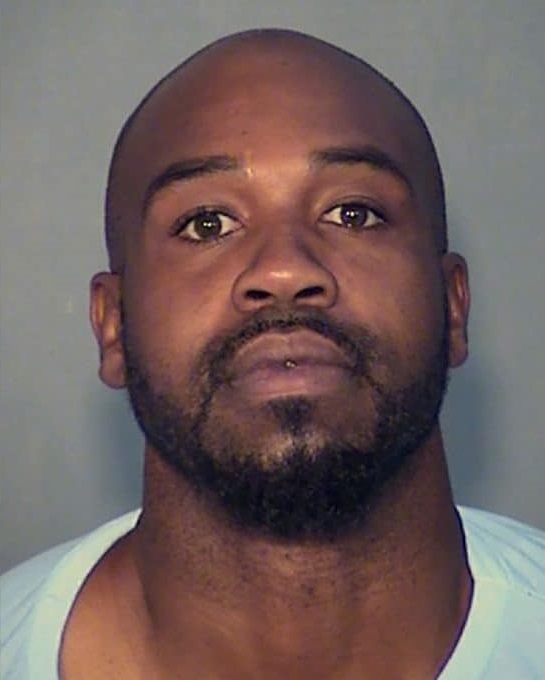
Cleophus Emmanuel Cooksey Jr. is an American serial killer whose three-week murder spree terrorized the Phoenix metropolitan area of Arizona in late 2017. Between November 27 and December 17, 2017, Cooksey killed people in Phoenix and Glendale, with investigators also linking him to a ninth homicide in Avondale. His victims included strangers, acquaintances, a man connected to his former girlfriend, and ultimately Cooksey's own mother and stepfather. The murders appeared to have no single motive, and authorities struggled to understand why such different people had been targeted.
Cooksey was eventually prosecuted for eight murders. In September 2025, after a lengthy trial, a jury convicted him of eight counts of first-degree murder along with armed robbery, kidnapping, and attempted sexual assault charges. He was sentenced to death for six of the murders in December 2025. Police also linked Cooksey to the December 11, 2017 murder of Jesus Real, but prosecutors did not include Real's death among the eight murders taken to trial because they determined there was insufficient evidence to prove that case beyond a reasonable doubt.
Background and Release From Prison
Cooksey was born on March 25, 1982. Long before the 2017 murders, he had accumulated a serious criminal history. He had been imprisoned following convictions connected to a 2001 armed robbery in which one of his accomplices was killed. Cooksey was convicted of manslaughter and armed robbery offenses and spent years in the Arizona prison system.
He was released from prison in 2017, approximately four months before the first murders in the later killing spree. Cooksey also pursued music and performed under names that included "King Playbola" and "Playboy." Nothing publicly established during the murder trial revealed a coherent motive for the violence that began in November 2017.
The Beginning of the Murders
The first known killings occurred on November 27, 2017. Andrew Remillard and Parker Smith were together in a parked vehicle in Phoenix when both men were shot in the head. Investigators found no obvious motive connecting the two victims to their killer, and at the time there was little reason for detectives to suspect that their deaths were the opening crimes of a much larger series.
Five days later, Salim Richards was killed in west Phoenix. Richards, a private security guard, was walking near his girlfriend's apartment when he was shot. His 9mm Glock handgun and a gold necklace were taken. The theft of Richards's firearm became one of the most important developments in the investigation because authorities later connected the weapon to several of the murders that followed.
Violence Spreads Across the Phoenix Area
On December 11, 2017, Jesus Real was found shot to death inside his Avondale residence. Real was the brother of a woman who had been involved in a relationship with Cooksey. Police ultimately identified Cooksey as their suspect in Real's murder and included Real when they publicly announced that Cooksey had been linked to nine killings. Prosecutors, however, did not charge Cooksey with Real's murder when the larger case proceeded to trial.
Two days later, on December 13, Latorrie Beckford was killed at the Urban 55 apartment complex in Glendale. Beckford suffered two gunshot wounds to the head. Witness information and other evidence helped investigators place Cooksey in connection with the apartment complex, and Beckford's death became one of the eight murders for which Cooksey was ultimately convicted.
The violence accelerated again on December 15. Kristopher Cameron went to a Glendale apartment complex for what investigators described as a planned drug transaction involving Cooksey. Cameron was shot in the neck and abdomen. He survived long enough to be transported to a hospital but died from his injuries on December 16, 2017.
The Kidnapping and Murder of Maria Villanueva
Maria Griselda Villanueva, 43, encountered Cooksey on the night of December 15, 2017, after she arrived at an apartment complex in Glendale to visit her longtime boyfriend. Surveillance evidence showed Cooksey moving through the complex and approaching Villanueva after she parked her Kia Sportage. The two subsequently left in Villanueva's vehicle, with Cooksey driving.
During the early morning hours of December 16, Villanueva's vehicle traveled through several parts of the Phoenix metropolitan area. Police later reconstructed portions of the vehicle's movements using surveillance footage, law-enforcement encounters, cellphone information, and other evidence.
Later that morning, Maria Villanueva's body was discovered in an alley in south Phoenix. She had been shot multiple times, including wounds to her neck, face, and chest. Evidence showed that she had also been subjected to a sexual attack. DNA recovered during the investigation connected Cooksey to Villanueva, and evidence associated with both Cooksey and Kristopher Cameron was later discovered inside Villanueva's vehicle.
The Final Murders
The killing spree ended on December 17, 2017, inside the Phoenix home of Cooksey's mother, Rene Cooksey, and her husband, Edward Nunn. Police were dispatched to the residence after reports of gunfire. Cleophus Cooksey answered the door when officers arrived and initially claimed that no one else was inside.
Officers noticed blood and attempted to detain him. After a confrontation, Cooksey was taken into custody. Police then entered the residence and discovered Rene Cooksey and Edward Nunn dead from gunshot wounds. The scene immediately placed Cooksey at the center of a double-homicide investigation, but evidence discovered during the subsequent inquiry soon connected him with a much wider chain of murders.
Victims Cooksey Was Convicted of Murdering
- Andrew Remillard, 27 - November 27, 2017 - Phoenix, Arizona: Remillard was sitting in a parked vehicle with Parker Smith when both men were fatally shot in the head. Investigators never established a clear motive for the double murder.
- Parker Smith, 21 - November 27, 2017 - Phoenix, Arizona: Smith was killed alongside Andrew Remillard while the two men were inside a parked vehicle. He suffered a fatal gunshot wound to the head.
- Salim Richards, 35 - December 2, 2017 - Phoenix, Arizona: Richards, a private security guard, was shot in the chest near the Cove at 44th apartment complex in west Phoenix. His 9mm Glock handgun and gold necklace were stolen. Some later reports listed Richards as 31, while detailed local reporting identified him as 35.
- Latorrie Beckford, 29 - December 13, 2017 - Glendale, Arizona: Beckford was found at the Urban 55 apartment complex after being shot twice in the head. Investigators developed witness evidence connecting Cooksey with the location.
- Kristopher Cameron, 21 - December 16, 2017 - Glendale/Phoenix area, Arizona: Cameron was shot in Glendale on December 15 after arranging what authorities described as a drug transaction with Cooksey. He was struck in the neck and abdomen and was transported to a hospital, where he died the following day, December 16.
- Maria Griselda Villanueva, 43 - December 16, 2017 - Phoenix, Arizona: Villanueva was abducted after arriving at a Glendale apartment complex on the night of December 15. Her body was discovered the following morning in a Phoenix alley. She had been shot multiple times, and forensic evidence connected Cooksey to the sexual attack against her.
- Rene Cooksey, 56 - December 17, 2017 - Phoenix, Arizona: Rene was Cleophus Cooksey's mother. Police discovered her shot to death inside her residence after responding to reports of gunfire. Cooksey was taken into custody at the scene.
- Edward Nunn, 54 - December 17, 2017 - Phoenix, Arizona: Nunn, the husband of Rene Cooksey and Cooksey's stepfather, was found shot to death in the same residence. His murder and Rene's murder brought Cooksey into immediate police custody and led investigators to connect him with the earlier killings.
Police-Linked Ninth Victim
- Jesus Real, 25 - December 11, 2017 - Avondale, Arizona: Real was found shot to death inside his Avondale residence. He had been shot twice in the face at close range while lying down. Real was the brother of Cooksey's former girlfriend, and investigators believed Cooksey killed him only hours after the relationship between Cooksey and Real's sister had deteriorated. Phoenix-area authorities publicly included Real among nine killings linked to Cooksey. Prosecutors later chose not to charge Cooksey with Real's murder because they believed the available evidence was insufficient to prove the case beyond a reasonable doubt. Cooksey therefore was never convicted of Real's death.
The Evidence Connecting the Murders
What initially appeared to be unrelated shootings began to form a pattern as detectives compared firearms evidence, witness accounts, stolen property, DNA, cellphone information, and surveillance footage. One of the most important pieces of evidence was the 9mm Glock stolen from Salim Richards after his December 2 murder. Investigators linked that firearm to later shootings, helping connect crime scenes that had initially been investigated separately.
Cooksey's possession of property belonging to victims provided additional evidence. When he was arrested, authorities said he was wearing a gold necklace associated with Richards. Investigators also recovered keys belonging to Maria Villanueva's vehicle. Evidence from Villanueva's Kia included material connected to Cooksey and blood evidence associated with Kristopher Cameron.
Ballistic examinations connected shell casings and bullets from multiple murder scenes. DNA evidence proved especially significant in the Villanueva case. Investigators also used surveillance recordings and cellphone data to reconstruct Cooksey's movements and establish links between him, the victims, their vehicles, and the locations where the killings occurred.
Arrest and the Discovery of a Serial Murder Case
Cooksey was initially arrested following the December 17 murders of his mother and stepfather. Police did not immediately announce that they believed they had captured a serial killer. Instead, detectives continued examining the evidence surrounding the double homicide and began recognizing connections to other unsolved shootings.
By January 2018, authorities publicly announced that Cooksey had been linked to nine killings committed between November 27 and December 17. The announcement revealed that investigators believed one person had been responsible for an extraordinary concentration of violence across Phoenix, Glendale, and Avondale during a period of only three weeks.
The victims did not fit a single obvious profile. Some had connections to Cooksey, while others appeared to have been selected with little or no prior relationship to him. Some crimes involved robbery, another involved an apparent drug transaction, one involved Cooksey's former girlfriend's family, and Maria Villanueva was kidnapped and sexually attacked. The last two victims were members of Cooksey's own family. Authorities have never announced a single motive capable of explaining the entire series.
Charges and Years of Legal Proceedings
Prosecutors ultimately pursued eight murder counts rather than all nine killings originally attributed to Cooksey by police. The criminal case became exceptionally large, involving evidence from numerous crime scenes, extensive forensic testing, many witnesses, and allegations carrying the possibility of capital punishment.
The case remained pending for years, with proceedings delayed in part by the COVID-19 pandemic and by the complexity of preparing a multi-victim death-penalty trial. Cooksey continued to deny responsibility for the murders.
Conviction
Cooksey's murder trial began in 2025 in Maricopa County Superior Court. Prosecutors presented the killings not merely as a collection of unrelated homicide cases but as a chain tied together by firearms, stolen possessions, DNA, surveillance evidence, and Cooksey's movements during the three-week period.
On September 25, 2025, a jury found Cleophus Cooksey guilty of all eight murders submitted for its consideration. He was convicted of eight counts of first-degree murder. Jurors also found him guilty of three counts of armed robbery, two counts of kidnapping, and one count of attempted sexual assault.
The convictions legally established Cooksey as the murderer of Andrew Remillard, Parker Smith, Salim Richards, Latorrie Beckford, Kristopher Cameron, Maria Villanueva, Rene Cooksey, and Edward Nunn. The verdict did not include Jesus Real because Cooksey had not been charged with that killing.
Death Sentences
The case then entered an extended capital-sentencing phase. On December 18, 2025, jurors imposed the death penalty for six of the eight murders. The jury was unable to reach a unanimous punishment verdict for the murders of Rene Cooksey and Edward Nunn.
Maricopa County prosecutors initially had the option of seeking another penalty proceeding in an attempt to obtain death sentences for the murders of Cooksey's mother and stepfather. In January 2026, Maricopa County Attorney Rachel Mitchell announced that her office would not pursue another death-penalty trial for those two counts. She stated that Cooksey would instead receive natural-life sentences for the murders of Rene Cooksey and Edward Nunn.
The death sentences imposed for the other six murders remain subject to Arizona's mandatory appellate review. Cooksey's capital appeal was filed with the Arizona Supreme Court in December 2025 and remained active during 2026.
Legacy of the Case
The Cleophus Cooksey case stands out because of the speed and apparent randomness of much of the violence. In only three weeks, eight people were murdered in crimes that ultimately resulted in convictions, while a ninth death was officially linked to Cooksey by investigators. The murders moved from strangers sitting in a car, to a security guard walking toward an apartment, to residents of Glendale apartment complexes, to a kidnapped woman, and finally to Cooksey's own family.
The case also demonstrated how evidence from separate homicide investigations can eventually reveal a single offender. A stolen handgun, ballistic comparisons, stolen jewelry, vehicle keys, DNA, cellphone records, surveillance footage, and witness testimony gradually transformed what appeared to be isolated murders into one interconnected investigation.
Despite the years of investigation and the eventual convictions, one major question has never been fully answered: why Cooksey killed so many different people. Prosecutors proved who committed eight of the murders, but authorities never identified a single motive explaining the entire series. That absence of a clear motive remains one of the most disturbing aspects of Cleophus Cooksey's three-week killing spree.