Joseph Michael Nissensohn: A Trail of Murder Across California and Washington
Overview
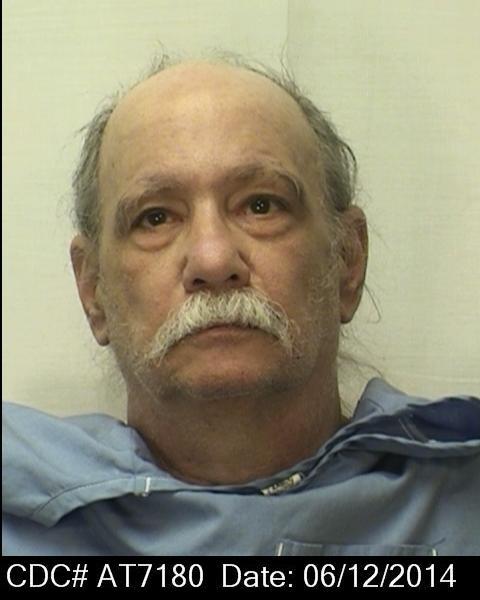
Joseph Michael Nissensohn is an American serial killer convicted of murdering four females, including three vulnerable teenage girls, in California and Washington. His known crimes occurred between 1981 and 1989, although investigators examined allegations that he may have committed additional killings while traveling through other states. Nissensohn worked as a truck driver and moved frequently, allowing him to cross jurisdictions and disappear from communities after violent crimes. His victims included two teenage foster children, a 46-year-old woman in Washington, and a 15-year-old runaway from South Lake Tahoe.
The murders remained separated by geography and time for many years. Nissensohn was first brought to justice for the Washington killing, but evidence and witness testimony later connected him to three unresolved California murders. The California prosecution did not begin until decades after the deaths of the victims, demonstrating how information preserved by investigators can eventually unite cases that initially appear unrelated.
The 1981 Murders of Tammy Lynn Jarschke and Tanya Jones
Thirteen-year-old Tammy Lynn Jarschke and 14-year-old Tanya Jones were living in a foster home in Seaside, California, when they ran away together on June 25, 1981. The two girls were last seen near a Denny’s restaurant in the Monterey area. Prosecutors later established that Nissensohn and his associate, Jesse Prieto, encountered the teenagers shortly after they left the foster home.
According to testimony attributed to Prieto, the girls were given alcohol and drugs before Nissensohn took them to an isolated wooded area in Carmel Valley. The prosecution maintained that both teenagers were sexually assaulted and killed during the night of June 25, 1981. Their bodies were concealed in the forest, far from the public roads and businesses where they had last been seen alive.
On September 9, 1981, loggers working in the wooded area discovered the badly decomposed body of Tanya Jones. She had been bound to a tree with electrical wire. A search of the surrounding terrain led investigators to the skeletal remains of Tammy Jarschke nearby. The conditions of the bodies and the passage of time made the investigation extremely difficult. Although authorities recognized that the girls had likely been killed together, the case remained unsolved for decades.
Prieto eventually gave investigators an account implicating Nissensohn in the murders. By the time the California case reached trial, Prieto had died, but portions of his earlier sworn testimony were admitted as evidence. Prosecutors used that testimony, along with evidence concerning Nissensohn’s other crimes, to argue that he deliberately preyed upon young girls whose unstable living situations made them especially vulnerable.
The Murder of Sally Jo Tsaggaris
On May 3, 1989, Nissensohn encountered 46-year-old Sally Jo Tsaggaris in the Tillicum area near Tacoma, Washington. Tsaggaris was brought to a van or truck connected to Nissensohn. Testimony later presented in court described an encounter involving methamphetamine use, sexual activity and restraints. The situation became violent, and Nissensohn attacked Tsaggaris with a knife.
Tsaggaris was stabbed and killed before her body was abandoned in a brush-covered area near the Tacoma Country and Golf Club. Her body was discovered on May 5, 1989. Nissensohn left Washington and traveled south, but the case followed him. His wife, Cheryl Rose, eventually provided investigators with information about the killing and described her knowledge of the disposal of Tsaggaris’s body.
Nissensohn was arrested at an Atlanta, Georgia, motel on September 5, 1990. He was returned to Washington and prosecuted for the murder. On October 17, 1991, a jury convicted him in connection with Tsaggaris’s death. He received a 25-year prison sentence, a conviction that later became an important part of the California proceedings against him.
The Murder of Kathy Graves
After leaving Washington in 1989, Nissensohn traveled to the South Lake Tahoe area of California. There he became acquainted with 15-year-old Kathy Graves, a runaway who was living in unstable circumstances. Witness testimony indicated that Nissensohn provided Kathy with alcohol and drugs and maintained an exploitative sexual relationship with her.
On August 10, 1989, Nissensohn drove Kathy and Cheryl Rose into a wooded area near the Mount Tallac trailhead and Camp Concord. According to Rose’s testimony, Nissensohn sexually assaulted and murdered Kathy in the forest. He then left her body hidden in the isolated terrain before fleeing the region.
Kathy remained missing for approximately a year. On August 22, 1990, a human skull was discovered near the Mount Tallac trailhead. Additional bones were recovered during searches of the surrounding area, and the remains were identified as Kathy’s. The location and condition of the remains supported the allegation that she had been killed shortly after she was last seen alive in August 1989.
The murder remained unresolved while Nissensohn served his Washington sentence. As his release approached, investigators and prosecutors in California renewed their efforts. On January 29, 2008, the El Dorado County District Attorney’s Office filed a murder charge against him for Kathy’s death, preventing his release from custody.
Confirmed Victims
- Tammy Lynn Jarschke, age 13 — Believed murdered on June 25, 1981, after running away from a foster home in Seaside, California. Her skeletal remains were discovered on September 9, 1981, in a wooded area of Carmel Valley in Monterey County.
- Tanya Jones, age 14 — Believed murdered on June 25, 1981, after leaving the same Seaside foster home with Tammy. Her body was discovered on September 9, 1981, in Carmel Valley, where she had been bound to a tree with electrical wire.
- Sally Jo Tsaggaris, age 46 — Murdered on May 3, 1989, in the Tillicum area near Tacoma, Washington. She was stabbed during a violent encounter, and her body was found on May 5 near the Tacoma Country and Golf Club.
- Kathy Graves, age 15 — Murdered on August 10, 1989, near South Lake Tahoe, California. Her remains were discovered on August 22, 1990, near the Mount Tallac trailhead and Camp Concord.
Allegations of Additional Victims
During the investigation, Cheryl Rose reportedly told authorities that Nissensohn had spoken about or committed other murders, including two in Oklahoma and one in Nevada. Investigators considered the possibility that his work as a truck driver and his frequent interstate travel had given him access to additional victims. However, those allegations did not result in murder convictions and the identities of any possible victims were not conclusively established in court.
Nissensohn’s confirmed crimes displayed repeated elements. He targeted women and girls in vulnerable circumstances, introduced drugs or alcohol into his encounters with them, used isolated vehicles or wooded locations, and traveled away from the crime scenes. The long distances between Washington, Lake Tahoe and Monterey County complicated efforts to recognize the killings as the work of the same offender.
The California Prosecution
After California charged Nissensohn with Kathy Graves’s murder, Monterey County prosecutors added charges for the murders of Tammy Jarschke and Tanya Jones. The cases were consolidated so that one jury could hear evidence concerning all three California victims. Much of the prosecution depended upon testimony that had been recorded years earlier because two major witnesses, Jesse Prieto and Cheryl Rose, had died before the trial began.
The defense challenged the reliability of the deceased witnesses and argued that their accounts contained contradictions. Nissensohn denied murdering the three California teenagers. In the Graves case, he attempted to shift responsibility to Rose, claiming that she had killed Kathy while he was elsewhere. Prosecutors countered that the testimony, circumstances of the disappearances and evidence of Nissensohn’s behavior formed a consistent account of three intentional murders.
In October 2013, an El Dorado County jury found Nissensohn guilty of three counts of first-degree murder for killing Tammy Lynn Jarschke, Tanya Jones and Kathy Graves. The jurors also considered special circumstances, including multiple murders and Nissensohn’s previous Washington murder conviction. During the penalty phase, the prosecution portrayed the killings as calculated acts against victims who were young, isolated or otherwise vulnerable.
Death Sentence
On December 11, 2013, Nissensohn was sentenced to death for the three California murders. The sentence came more than 32 years after the deaths of Tammy and Tanya and more than 24 years after Kathy was killed. His Washington conviction for murdering Sally Tsaggaris had kept him imprisoned long enough for California investigators to rebuild the older cases and bring them before a jury.
The prosecution marked the conclusion of an unusually prolonged effort involving law-enforcement agencies in several states. The murders of Tammy and Tanya had remained unsolved since 1981, while Kathy’s identity and connection to Nissensohn were not developed into a criminal charge until many years after her remains were found. Witness statements, preserved testimony and renewed examination of the cold cases ultimately produced the convictions.
Legacy of the Cases
Joseph Michael Nissensohn’s crimes left four families separated from daughters, relatives and loved ones. Tammy Jarschke and Tanya Jones were children living within the foster-care system when they disappeared. Kathy Graves was a teenage runaway whose circumstances placed her in the path of an older predator. Sally Jo Tsaggaris was killed during an encounter that Nissensohn transformed into an act of lethal violence.
The case also illustrates the challenges created when an offender moves between jurisdictions. For years, the deaths in Monterey County, South Lake Tahoe and Washington were treated as separate investigations. Only after witnesses disclosed what they knew and agencies compared information did the broader pattern become visible. Nissensohn’s convictions established him as the person legally responsible for four murders committed over an eight-year period, while suspicions that he may have left other victims behind during his interstate travels have never been conclusively resolved.