Ronald James Ward: A Cross-Country Serial Killer
Overview
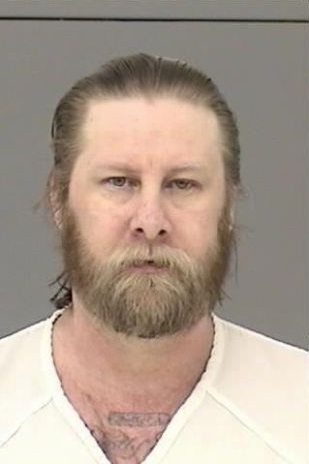
Ronald James Ward Jr. was an American serial killer whose known crimes unfolded across Arkansas, Montana and California during a violent five-month period in 2000. A transient who frequently traveled between states, Ward preyed on people he encountered at highway rest areas, homeless shelters, temporary lodging and recreational areas. His mobility initially prevented investigators from recognizing that several seemingly unrelated murders were connected.
Ward was convicted of murdering four people: Kristin Laurite, Craig Sheldon Petrich, Jacqueline “Jackie” Travis and Shela Polly. The victims included three women and one man, and the killings involved a combination of stabbing, strangulation, beating and shooting. DNA evidence eventually exposed the connection between Ward and the murders committed in Arkansas and California, transforming what had appeared to be separate local cases into a multistate serial-murder investigation.
Background and Transient Lifestyle
Ronald James Ward Jr. was born on September 28, 1966, in Hood River, Oregon, and was raised in the Eugene and Springfield areas. He left school at a young age and later worked a variety of temporary or physically demanding jobs, including construction, truck driving and commercial fishing. His adult life was marked by unstable employment, substance abuse and frequent relocation.
Ward spent considerable time traveling around the United States. He stayed in shelters, campgrounds, recreational vehicle parks and other temporary residences, often associating with people who were homeless or financially vulnerable. This transient existence allowed him to move quickly between jurisdictions and placed him in contact with strangers whose disappearances might not immediately be connected to him.
During 2000, Ward traveled through several states while using alcohol and illegal drugs. Investigators later concluded that his movements closely followed the locations and dates of the four confirmed murders. Although Ward sometimes blamed intoxication or claimed to have little memory of particular crimes, the physical evidence and his guilty pleas established his responsibility.
Confirmed Victims
- Kristin Laurite, 25 — August 25, 2000 — near Morrilton, Arkansas: Laurite, a resident of Scotch Plains, New Jersey, was driving across the country to begin a new life and employment in California. She stopped at an Interstate 40 rest area near Morrilton after her Volkswagen bus began overheating. Laurite let her two dogs out near a pond and was attacked at the isolated location. She was sexually assaulted and stabbed repeatedly in the neck. Her body was left near the pond, and her dogs later helped lead authorities to the area. DNA recovered during the investigation was eventually matched to Ward.
- Craig Sheldon Petrich, 43 — October 16, 2000 — Sapphire Mountains near Hamilton, Montana: Petrich encountered Ward while attempting to sell a motor home at an RV park near Hamilton. The two men traveled into the Sapphire Mountains, where Petrich was beaten and shot three times in the chest. His body was concealed among rocks near the Soft Rock recreational area. Ward later admitted shooting Petrich, although he offered a disputed explanation in which he claimed Petrich had previously assaulted Ward’s girlfriend.
- Jacqueline Faye “Jackie” Travis, 49 — December 7, 2000 — Merced, California: Travis had recently moved to Merced and had experienced periods of homelessness. She had a prosthetic right leg resulting from an earlier automobile accident. Ward apparently knew her through the local homeless community and had reportedly visited her apartment. Travis was beaten, stabbed and strangled inside her east Merced residence. Her body was discovered by a former roommate on December 8. DNA evidence later connected Ward to her murder.
- Shela La Rae Polly, 33 — December 30, 2000 — Modesto, California: Polly was a mother of three who had been staying at the Modesto Gospel Mission while attempting to rebuild her life. Witnesses saw her speaking with Ward on the morning of her death. She was sexually assaulted, beaten, stabbed and strangled. Her body was abandoned near Dry Creek in Modesto and covered with leaves and debris. Evidence from her murder ultimately linked Ward to the other killings.
The Murder of Kristin Laurite
Kristin Laurite left New Jersey in August 2000 and headed west in a yellow-and-white Volkswagen bus. She was traveling with her two dogs and planned to take a job in Northern California. On August 25, her vehicle experienced mechanical trouble as she passed through Arkansas. She stopped at a remote rest area along Interstate 40 outside Morrilton.
Laurite was last known to be alive while allowing her dogs to exercise near a cattle pond. At some point during the stop, Ward approached and attacked her. She was sexually assaulted and stabbed at least ten times in the neck. Her body was dragged or carried several hundred yards from the parking area and left near the water.
The following day, truck drivers noticed one of Laurite’s dogs wandering unattended. A telephone number on the animal’s identification tag led them to Laurite’s mother. The dogs eventually guided searchers toward the pond, where Laurite’s body was located. Investigators collected biological evidence from the crime scene, but Ward was not immediately identified.
The case remained unresolved for several years. Laurite’s family maintained public attention through media appearances and a roadside billboard asking for information about her killer. A comparison of DNA profiles eventually linked the Arkansas crime scene to evidence collected from the California murder of Jackie Travis. Ward’s DNA was then identified as the common profile.
The Murder of Craig Sheldon Petrich
By October 2000, Ward was living with his girlfriend at an RV park near Hamilton, Montana. There he met Craig Sheldon Petrich, who was offering a motor home for sale. Petrich disappeared after spending time with Ward, and suspicion intensified when Ward left Montana shortly afterward.
Petrich’s body was found approximately two weeks after his disappearance in the Soft Rock recreational area of the Sapphire Mountains. He had suffered a beating and three gunshot wounds to the chest. His remains had been placed in a rocky crevice in an apparent attempt to prevent or delay their discovery.
Ward later admitted that he had shot Petrich. He claimed that he acted in anger because Petrich had assaulted his girlfriend during a night of drinking. Prosecutors disputed important portions of that account and argued that Ward had taken Petrich into the mountains, attacked him with a rock and then shot him. Ward’s effort to flee the state with Petrich’s property further undermined his attempt to portray the shooting as an impulsive act of revenge.
Montana authorities issued a warrant, and Ward was eventually located in California. He was returned to Montana, convicted of deliberate homicide and sentenced to 100 years in prison. At the time, the full extent of his crimes had not yet been established.
The Murder of Jackie Travis
After leaving Montana, Ward traveled to Merced, California. Jacqueline “Jackie” Travis was living in an apartment in the eastern section of the city. She had recently endured homelessness and was physically vulnerable because her right leg had been partially amputated.
Travis and Ward apparently moved within some of the same shelter and transient communities. Witness information indicated that Ward had been inside or near her residence. On December 7, 2000, Travis was violently assaulted in her apartment. She was beaten and stabbed before being strangled.
A former roommate found Travis lying on a mattress on the bedroom floor the following day. A quilt had been placed over her body. Investigators recovered DNA evidence, but the killer was not immediately identified. The biological profile was later found to match evidence from Laurite’s murder in Arkansas, demonstrating that one offender had committed both crimes.
The Murder of Shela Polly
Shela Polly was staying at the Modesto Gospel Mission in December 2000. She had three children and had been making plans to obtain work and improve her circumstances. On the morning of December 30, witnesses saw Polly speaking with Ward near the mission and a temporary employment business.
Polly disappeared after the encounter. Her body was later found near Dry Creek in Modesto. The killer had attempted to conceal her beneath leaves and other natural debris. The investigation determined that she had been assaulted, beaten, stabbed and strangled.
Ward became a suspect because he was one of the last people seen with Polly and was already wanted in Montana for Petrich’s murder. He was arrested in California in January 2001. Evidence developed over the following years conclusively connected him to Polly, Travis and Laurite.
DNA and the Multistate Investigation
The decisive breakthrough came through forensic DNA comparison. Biological material recovered from the Laurite and Travis crime scenes produced matching profiles, showing investigators that the same unidentified man had killed women in Arkansas and California. The geographic distance between the crimes suggested that the offender was highly mobile.
Investigators compared the crime-scene profile with Ward’s DNA after learning of his movements and his conviction in Montana. The results identified him as the source of the evidence. Additional investigative work connected him to Shela Polly, who had been seen with him only hours before her death.
The DNA findings demonstrated a pattern of escalating and repetitive violence. Ward encountered victims while traveling or while living within transient communities, attacked them in locations where he believed interruption was unlikely and quickly moved to another jurisdiction. The similarities between the female victims’ injuries also indicated that the murders were not isolated acts committed during unrelated disputes.
Convictions and Sentences
Ward’s first major conviction arose from the murder of Craig Petrich. A Montana court found him guilty of deliberate homicide and imposed a 100-year prison sentence. His admission that he shot Petrich helped establish his direct involvement, although prosecutors rejected his attempt to justify the killing.
In June 2007, Ward entered a no-contest plea in Arkansas to the murder of Kristin Laurite. He claimed that he could not remember killing her but acknowledged that the DNA evidence proved his responsibility. He received a life sentence to be served consecutively to his Montana sentence.
On September 23, 2008, Ward pleaded guilty to the California murders of Jackie Travis and Shela Polly. He was given two additional life sentences. The proceedings formally established him as the killer in all four confirmed cases and ensured that he would never be released from prison.
Possibility of Additional Victims
Investigators and criminal profilers questioned whether Ward’s known crimes represented the complete extent of his violence. He had traveled extensively throughout the United States, worked temporary jobs and moved among shelters, fishing communities, campgrounds and truck stops. His victims came from different backgrounds and were killed hundreds or thousands of miles apart.
The four confirmed murders occurred between August and December 2000, demonstrating that Ward was capable of killing repeatedly within relatively short intervals. Because he spent years moving between states before his arrest, authorities considered the possibility that he had committed earlier assaults or murders that remained unconnected to him.
No additional homicide convictions were obtained. Consequently, Laurite, Petrich, Travis and Polly remain Ward’s four officially confirmed victims. The broader scope of his criminal activity, particularly during his years of interstate travel, may never be known.
Death in Prison
Ronald James Ward Jr. remained incarcerated at Montana State Prison in Deer Lodge after receiving multiple sentences that guaranteed he would spend the remainder of his life behind bars. On April 11, 2014, correctional officers found him unresponsive in his high-security cell.
Ward was transported for medical treatment and pronounced dead at the age of 47. Authorities did not publicly disclose a specific medical cause of death, but officials stated that there was no indication of foul play.
Legacy of the Case
Ward’s case illustrates the challenges investigators faced when a mobile offender committed crimes in several jurisdictions. The murders were initially investigated by separate local and state agencies, and there was little outward reason to connect a traveler killed at an Arkansas rest stop with victims in Montana and California.
DNA technology ultimately provided the link that geography had concealed. It allowed investigators to compare evidence from distant crime scenes, identify a common offender and secure convictions years after the murders. Ward’s capture and prosecution brought legal resolution to four families, although questions remain about whether other victims encountered him during his years on the road.
The confirmed record portrays Ward as an opportunistic and highly dangerous predator. He targeted people whose circumstances left them isolated, used extreme violence and attempted to escape accountability by moving rapidly from one state to another. His multistate series ended only after the murder of Shela Polly, when his connection to Craig Petrich led authorities to track him to California and place him under arrest.