The Texarkana Phantom Killer
A Community Terrorized by an Unknown Assailant
The Texarkana Phantom Killer was an unidentified serial murderer associated with a series of nighttime attacks committed near Texarkana, a border community divided between northeastern Texas and southwestern Arkansas. The crimes, commonly called the Texarkana Moonlight Murders, occurred during a ten-week period between February and May 1946. Eight people were attacked in four separate incidents, and five of them were killed.
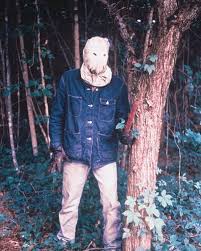
The assailant primarily targeted young couples who had driven to secluded roads or lovers’ lanes after dark. According to the survivors of the first attack, the man concealed his face beneath a white cloth hood with openings cut for his eyes and mouth. Newspapers began calling him the “Phantom Killer” after investigators repeatedly failed to identify or capture him.
The attacks created intense fear throughout Texarkana. Residents purchased firearms, installed stronger locks, covered their windows and avoided traveling at night. Law-enforcement officers patrolled residential streets and isolated roads, while armed citizens guarded their homes. Despite an extensive investigation involving local police, county authorities, Texas Rangers and other agencies, no one was ever convicted of the murders.
The Attack on Jimmy Hollis and Mary Jeanne Larey
The first known attack occurred shortly before midnight on February 22, 1946. Jimmy Hollis, 25, and Mary Jeanne Larey, 19, had attended a movie and then parked on a secluded road near Texarkana, Texas. Approximately ten minutes later, a man approached the driver’s side of their vehicle and shined a flashlight through the window.
The intruder wore what Larey described as a white cloth mask resembling a pillowcase. He ordered the couple out of the automobile and forced Hollis to remove some of his clothing. The attacker then struck Hollis in the head with a handgun so violently that Hollis suffered serious skull fractures.
Larey was ordered to run toward the road. When she initially attempted to escape in another direction, the masked man chased her, knocked her down and sexually assaulted her with the barrel of his firearm. Larey eventually escaped and reached a nearby house, where she obtained help. Hollis also survived, although he remained hospitalized for several days. Their descriptions gave investigators their only detailed eyewitness account of the presumed Phantom Killer.
The Murders of Richard Griffin and Polly Ann Moore
The first fatal attack attributed to the Phantom occurred during the early morning hours of March 24, 1946. Richard Griffin, 29, and Polly Ann Moore, 17, had been dating for several weeks. Their bodies were discovered inside Griffin’s parked automobile on a secluded lovers’ lane near U.S. Highway 67 west of Texarkana in Bowie County, Texas.
Both victims had been shot in the back of the head with a .32-caliber firearm. Griffin was found in the front seat of the vehicle, while Moore’s body was positioned nearby inside the car. Investigators found blood and other evidence outside the automobile, suggesting that at least part of the confrontation may have occurred outside before the bodies were placed or repositioned.
The isolated location, nighttime circumstances and use of a handgun caused investigators to examine the earlier assault on Hollis and Larey for possible connections. The murders of Griffin and Moore marked the beginning of the lethal phase of the Phantom’s crime series.
The Murders of Paul Martin and Betty Jo Booker
Three weeks later, another young couple disappeared after leaving a social event in Texarkana. During the early morning hours of April 14, 1946, Paul Martin, 16, picked up 15-year-old Betty Jo Booker after she finished playing saxophone with a band at the local Veterans of Foreign Wars club.
Martin’s body was discovered at approximately 6:30 that morning along North Park Road in Bowie County. He had been shot four times. Evidence indicated that he had been struck in the face, neck, hand and back. His automobile was later found elsewhere, increasing investigators’ belief that the killer had controlled the couple and moved between multiple locations.
Booker was missing from the first scene. A search involving officers and local residents continued for several hours before her body was found nearly two miles from Martin. She was lying behind a tree and remained fully clothed. Booker had been shot twice, once in the chest and once in the face.
The separation of the bodies and the movement of Martin’s automobile suggested that the attacker may have forced the teenagers from place to place before killing them. The murders received widespread attention and intensified the fear already spreading through Texarkana. It was after this double homicide that the unknown assailant became widely known as the Phantom Killer.
The Attack on Virgil and Katie Starks
The final attack commonly associated with the Phantom occurred on the night of May 3, 1946, at an isolated farmhouse in Miller County, Arkansas. Unlike the earlier incidents, the victims were not sitting in a parked automobile. Virgil Starks, 37, was inside his home reading a newspaper while his wife, Katie, rested nearby.
An attacker outside the house fired a .22-caliber weapon through a closed window. Virgil was struck twice in the back of the head and died almost immediately. When Katie heard the glass break, she entered the room and saw her husband collapse. She attempted to telephone for help, but additional gunfire came through another window.
Katie was shot twice in the face. One bullet entered her cheek and exited near the opposite side of her face, while another damaged her jaw and teeth. Although severely wounded and bleeding heavily, she escaped from the house and ran to a nearby residence for assistance. She survived after receiving emergency medical treatment.
The Starks attack differed from the previous crimes in several important respects. It occurred inside a private residence in Arkansas, and the weapon was a .22-caliber firearm rather than the .32-caliber handgun associated with the two earlier double murders. Some investigators believed the same killer was responsible, while others questioned whether the farmhouse shooting was part of the Phantom series. The crime nevertheless became permanently linked to the Texarkana Moonlight Murders in public memory.
Known Victims and Attack Dates
- Jimmy Hollis, 25 — Attacked and seriously injured on February 22, 1946, on a secluded road near Texarkana, Texas. He suffered severe skull fractures after being struck with a firearm.
- Mary Jeanne Larey, 19 — Attacked and sexually assaulted on February 22, 1946, near Texarkana, Texas. She escaped and provided investigators with a description of the masked assailant.
- Richard Griffin, 29 — Murdered on March 24, 1946, on a lovers’ lane near U.S. Highway 67 west of Texarkana in Bowie County, Texas. He was shot in the back of the head.
- Polly Ann Moore, 17 — Murdered on March 24, 1946, alongside Richard Griffin near U.S. Highway 67 in Bowie County, Texas. She was shot in the back of the head.
- Paul Martin, 16 — Murdered on April 14, 1946, near North Park Road in Bowie County, Texas. His body was found beside the road with four gunshot wounds.
- Betty Jo Booker, 15 — Murdered on April 14, 1946, in Bowie County, Texas. Her body was found behind a tree nearly two miles from the location where Martin was discovered. She had been shot twice.
- Virgil Starks, 37 — Murdered on May 3, 1946, inside his farmhouse in Miller County, Arkansas. He was shot through a window while sitting in his living room.
- Katie Starks — Shot twice in the face on May 3, 1946, at her home in Miller County, Arkansas. She escaped to a neighboring residence and survived.
The Investigation
The investigation became one of the largest criminal manhunts in the region’s history. Local police officers, Bowie County deputies, Arkansas authorities and Texas Rangers questioned hundreds of people. Roadblocks were established, suspicious vehicles were stopped and officers patrolled areas where couples commonly parked.
Texas Ranger Manuel T. “Lone Wolf” Gonzaullas became one of the most prominent investigators assigned to the case. Authorities collected ammunition evidence, examined firearms and followed numerous reports concerning masked men, prowlers and suspicious strangers. Rewards were offered for information leading to the killer’s arrest, but the publicity generated false confessions, unreliable tips and rumors that complicated the investigation.
The weapons evidence provided only limited assistance. The Griffin-Moore and Martin-Booker murders were linked to a .32-caliber firearm, although investigators never recovered the murder weapon. The Starks shooting involved .22-caliber ammunition, creating doubt about whether it was committed by the same person. Forensic science in 1946 could compare bullets and cartridge markings, but investigators did not have access to modern DNA analysis or computerized evidence databases.
Youell Lee Swinney
One of the most frequently discussed suspects was Youell Lee Swinney, a repeat offender known for automobile theft and other crimes. Investigators became interested in Swinney after his wife reportedly made statements suggesting that he had committed the Phantom attacks. Her accounts, however, changed repeatedly, and she later refused to provide testimony that could be used against him.
Authorities did not possess enough admissible physical evidence to charge Swinney with any of the murders. Instead, he was prosecuted as a habitual automobile thief and received a lengthy prison sentence. Some investigators remained convinced that he was the Phantom, while others believed the evidence was too circumstantial and inconsistent to establish his guilt.
Additional suspects were examined over the years, including violent offenders, military veterans and local men accused by acquaintances or relatives. None could be conclusively connected to all of the crimes. Because the killer was never identified, it also remains possible that some of the attacks were committed by different individuals.
Fear Across Texarkana
The murders dramatically changed everyday life in Texarkana. Stores sold out of firearms, ammunition, window locks and other security equipment. Residents who had previously slept with their windows open during warm weather began securing their homes tightly. Families stayed indoors after sunset, and young couples avoided the isolated roads that had once served as private meeting places.
Rumors spread rapidly whenever an unfamiliar person was seen near a house or parked automobile. Some residents organized armed watches, while law-enforcement officers responded to large numbers of prowler reports and accidental alarms. The killer’s apparent ability to strike on both sides of the state line contributed to the perception that he could appear anywhere and disappear without leaving a trace.
An Unsolved Series of Murders
No attack conclusively attributed to the Phantom Killer occurred after the shooting of Virgil and Katie Starks. The sudden end of the crimes produced numerous theories. The killer may have been arrested for an unrelated offense, entered the military, moved away, died or deliberately stopped after realizing the region was heavily guarded. It is also possible that the person responsible continued committing violence elsewhere without being recognized.
The murders of Richard Griffin, Polly Ann Moore, Paul Martin, Betty Jo Booker and Virgil Starks remain officially unsolved. The uncertainty surrounding the Starks attack and the absence of definitive evidence against any suspect have prevented investigators from establishing the Phantom Killer’s identity. Decades later, the case remains one of the most enduring unsolved serial-murder mysteries in American criminal history.