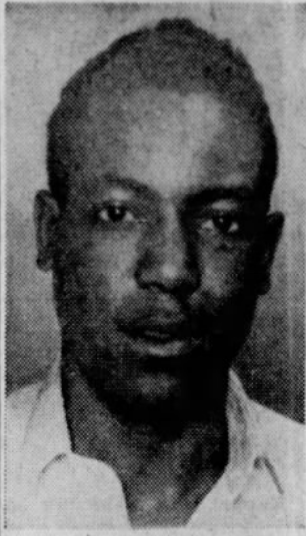
Richard Steeves: Murders Across Maine, New Hampshire, and Ohio
Background and Early Life
Richard Edward Steeves was born on February 1, 1942, in Waterville, Maine. His childhood was marked by instability and abandonment. When Steeves was approximately five years old, his father died by suicide. His mother subsequently placed him in an orphanage. Steeves later alleged that he was sexually abused during his childhood and claimed that these experiences contributed to his violent and destructive behavior.
Steeves left school after the eighth grade and began committing property crimes and other offenses. He spent time in a juvenile reformatory and continued to move through jails and correctional institutions as an adult. Accounts of his incarceration described him as hostile and threatening. He reportedly made repeated statements about killing guards and fellow prisoners. He was released from custody in early 1965, only months before the beginning of a series of fatal attacks.
The 1965 Murders in Maine and New Hampshire
Steeves primarily targeted elderly or otherwise vulnerable men who were alone in their homes. His first known fatal attack occurred in North Berwick, Maine, on June 13, 1965. The victim, Harry Staples, was an elderly man who used a cane. Steeves assaulted Staples with that cane, inflicting severe head injuries. Staples survived the initial attack and was hospitalized, but he died on June 28, 1965.
Only six days after attacking Staples, Steeves entered the rural Rochester, New Hampshire, home of Ralph Mace. Steeves was armed with a knife and stabbed Mace six times. He left believing that the victim was dead. Mace was discovered alive but died from his wounds later on June 19, 1965.
On August 14, 1965, Steeves entered the Augusta, Maine, cabin of Lorenzo D. Troyer. Troyer was struck in the head with a blunt object and left unconscious. A friend, Thomas Landrey, discovered the badly injured man and obtained help from a nearby residence. Troyer was transported to a hospital in Augusta, where he died on August 15, 1965.
The Gephart Double Murder in Ohio
In January 1966, Steeves traveled outside New England and reached Ohio. After experiencing automobile trouble, he encountered 84-year-old Lewis Gephart Sr. and Gephart's 35-year-old son, Francis Eugene Gephart. The two men offered assistance and allowed Steeves into their home near West Lafayette in Coshocton County.
On January 3, 1966, Steeves attacked both men inside the residence. Lewis and Francis Gephart were beaten to death with a blunt object. After killing them, Steeves stole Francis Gephart's automobile and used it to travel back toward New Hampshire. The stolen vehicle would become an important link between Steeves and the Ohio homicides.
Victims
- Harry Peter Staples, 82 or 83: Attacked on June 13, 1965, in North Berwick, Maine. Steeves beat Staples with the elderly man's cane. Staples died from his injuries on June 28, 1965, at a hospital in Portland, Maine.
- Ralph Mace, 70: Stabbed six times during a home invasion on June 19, 1965, in rural Rochester, New Hampshire. Mace was found alive but died later that same day.
- Lorenzo D. Troyer, 73: Attacked with a blunt object inside his cabin in Augusta, Maine, on August 14, 1965. Troyer died at an Augusta hospital on August 15, 1965.
- Lewis Gephart Sr., 84: Bludgeoned to death on January 3, 1966, at his home near West Lafayette in Coshocton County, Ohio.
- Francis Eugene Gephart, 35: Killed alongside his father on January 3, 1966, near West Lafayette, Ohio. After the murders, Steeves stole Francis Gephart's automobile.
- Russell F. Bailey, 69: Fatally beaten with a blunt object inside his mobile home in Wells, Maine, during April 1985. His body was discovered by a relative on April 29, 1985. Available accounts do not establish a more precise date of death.
Arrest and Insanity Proceedings
Steeves was arrested in Manchester, New Hampshire, on January 5, 1966. Police connected him to the automobile stolen from Francis Gephart, and investigators began examining his possible involvement in the killings in Ohio, New Hampshire, and Maine. Steeves reportedly made statements admitting responsibility for several of the deaths.
Steeves was prosecuted in New Hampshire for the murder of Ralph Mace. His defense centered on his mental condition, and he was ultimately found not guilty by reason of insanity. Rather than being released, he was committed to the New Hampshire State Hospital in Concord. The insanity finding complicated efforts by authorities in Maine and Ohio to place him on trial for the remaining killings.
Maine indicted Steeves for the murder of Lorenzo Troyer in February 1966. However, the prosecution remained unresolved while Steeves was confined in New Hampshire. Years later, the Maine Supreme Judicial Court determined that the extraordinary delay had violated his right to a speedy trial and ordered the Troyer indictment dismissed.
Steeves requested extradition to Ohio in an attempt to resolve the Gephart murder charges. He was transported to Ohio in December 1971 and underwent psychiatric examinations, but the case did not proceed to a completed murder trial. He was eventually returned to New Hampshire. In 1983, Ohio authorities decided against prosecuting him for the Gephart killings, citing the age and circumstances of the case.
Gradual Release from Confinement
During the late 1970s and early 1980s, hospital staff concluded that Steeves had improved sufficiently to receive greater freedom. By 1980, he was permitted to leave hospital grounds without an escort. Although he had been linked to five killings, the insanity verdict and unresolved prosecutions meant that he had not received a conventional life sentence for those deaths.
Steeves eventually entered an agreement under which he served a prison term of three to seven years. In 1984, he was paroled and returned to Maine, where he lived with his brother in Unity. Authorities and mental-health professionals believed that years of institutional treatment had reduced the danger he presented. That judgment was followed by another killing less than a year later.
The Murder of Russell Bailey
Russell F. Bailey was a 69-year-old gift-shop owner who lived in a mobile home in Wells, Maine. During April 1985, Bailey was attacked inside his residence and struck repeatedly in the head with a blunt instrument, possibly a club. His body was discovered by a relative on April 29 after family members had been unable to contact him for several days.
Witnesses reported seeing Steeves's pickup truck near Bailey's home around the time of the killing. Steeves was questioned and gave a series of contradictory explanations. He claimed that Bailey had provided him with money in exchange for sexual activity, suggested that another person had committed the murder, and also described what he characterized as a dreamlike memory of killing Bailey himself.
Steeves was arrested and charged with Bailey's murder. Maine authorities also attempted to revive the case involving Harry Staples, but the Bailey prosecution became the central case against him. Unlike his earlier New Hampshire proceedings, Steeves did not present an insanity defense at the Bailey trial. His attorney argued that another man had killed Bailey and that Steeves had been wrongly accused.
Conviction and Life Sentence
A jury rejected the defense and found Steeves guilty of murdering Russell Bailey. He was sentenced to life imprisonment. This conviction was the only murder conviction imposed on Steeves, although he was officially linked to five earlier killings and had admitted responsibility for multiple deaths during the earlier investigations.
Steeves later sought a new trial. His attorney argued that excluded testimony might have supported the claim that another person was responsible for Bailey's death and contended that the evidence presented at trial was insufficient. The conviction nevertheless remained in place.
Clemency Efforts and Legacy
In 2017, at the age of 75, Steeves appeared before Maine's Governor's Board on Executive Clemency and requested release. By that time, he had served approximately three decades of his life sentence and was suffering from Parkinson's disease and other physical limitations. He maintained that he had changed, cited his work assisting terminally ill prisoners, and argued that he no longer posed a danger.
His request drew renewed attention to the decisions that had allowed him to return to society after the first five killings. The case demonstrated the legal and public-safety difficulties created when a person found not guilty by reason of insanity is later considered sufficiently recovered for release. Steeves's freedom in 1984 was followed by Bailey's murder in 1985, making the consequences of that decision central to discussions of his case.
Richard Steeves is associated with six deaths committed across Maine, New Hampshire, and Ohio between 1965 and 1985. His criminal history included home invasions, knife violence, and repeated beatings with blunt objects. Although mental illness shaped the early legal proceedings against him, the murder of Russell Bailey resulted in a conventional conviction and a life sentence.