Belle Gunness: The Murderer of the La Porte Farm
Early Life and the Beginning of a Dark Reputation
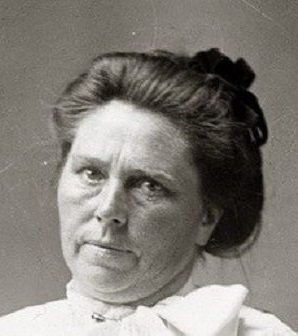
Belle Gunness was a Norwegian-American serial killer whose crimes became one of the most notorious murder cases of the early twentieth century. Born Brynhild Paulsdatter Størseth on November 11, 1859, in Selbu, Norway, she immigrated to the United States in 1881 and eventually settled in the Chicago area. She later became known as Belle Sorenson and then Belle Gunness through her marriages. Although the exact number of people she killed remains uncertain, investigators discovered the remains of numerous victims on her farm near La Porte, Indiana, in 1908. At least fourteen deaths have been associated with her, while much higher estimates have appeared in later accounts.
Gunness appeared outwardly to be a hardworking widow and farm owner, but a remarkable series of deaths, disappearances, fires, and insurance payments surrounded her. Some deaths connected to her were officially attributed to illness or accidents at the time and were never legally proven to be murders. Other victims were later found buried on her property. For that reason, it is important to separate documented deaths and identified remains from accusations that could never be conclusively proved.
Deaths in the Sorenson Household
Belle married Mads Ditlev Anton Sorenson in Chicago in 1884. During their marriage, their home and later their confectionery business were damaged or destroyed by fires, resulting in insurance payments. Death also repeatedly entered the household. Two young foster children, Caroline and Alex, died while in Belle's care. Caroline died in 1896 and Alex in 1898. Their reported cause of death was colitis, although later suspicion centered on the possibility that poisoning could have produced similar symptoms. No murder conviction resulted from either death.
Mads Sorenson died in Chicago on July 30, 1900. The timing immediately attracted attention because two life-insurance policies reportedly overlapped on that particular day. His recorded death involved a cerebral hemorrhage, but relatives and later investigators questioned whether he might have been poisoned. Belle received insurance money after his death. With her financial situation improved, she moved with her children to a farm outside La Porte, Indiana, in November 1901.
The Death of Peter Gunness
Belle married Norwegian immigrant Peter Gunness on April 1, 1902, in La Porte. Peter was a widower with children from his earlier marriage. Soon afterward, one of his young daughters died while under Belle's care. The surviving records and later accounts do not establish that Belle murdered the child, but the death became suspicious when investigators later examined the extraordinary number of deaths surrounding her.
Peter Gunness himself died on December 16, 1902, at the Gunness property in La Porte County. He suffered a fatal skull fracture. Belle said that part of a heavy sausage-grinding machine had fallen from a shelf and struck him on the head. Authorities considered the circumstances suspicious enough to hold an inquiry, but Belle was not prosecuted. Peter's death was recorded as accidental, and Belle received life-insurance money. After the discovery of the bodies on her property years later, Peter's death was widely reconsidered as a possible murder.
The Lonely-Hearts Scheme
After Peter's death, Belle began corresponding with men through matrimonial advertisements, particularly in Norwegian-language newspapers serving Scandinavian immigrants in the Midwest. She presented herself as a prosperous widow who owned a valuable Indiana farm and wanted to meet a financially secure man for marriage or partnership.
Her letters encouraged prospective suitors to come to La Porte and, in several documented cases, to bring large amounts of money. Men traveled from other states expecting marriage or a business opportunity. Some converted property or savings into cash before making the trip. After arriving at the Gunness farm, a number of them disappeared. Their relatives frequently received explanations from Belle claiming the men had suddenly departed for other destinations. When the farm was searched in 1908, human remains and possessions linked to missing men provided much stronger evidence of what had happened.
Jennie Olsen
One of the most disturbing identified victims was Jennie Olsen, Belle's foster daughter. Jennie had lived with Belle for years and was a teenager when she disappeared. Belle told people that Jennie had gone away to school, reportedly in California. In reality, Jennie's remains were later discovered buried on the Gunness property.
Jennie's death is generally dated to December 1906, with some records giving December 20, 1906. Because her body was not discovered until 1908, the precise circumstances of her death could not be reconstructed with certainty. Her presence among the buried victims demonstrated that Gunness's suspected killings were not limited to wealthy male suitors.
Andrew Helgelien and the Crime That Exposed the Farm
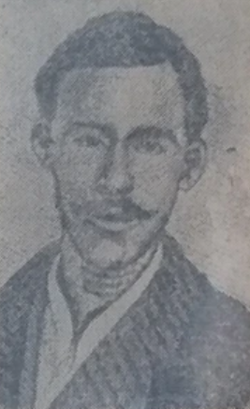
Andrew Helgelien, a Norwegian-born farmer living near Aberdeen, South Dakota, began corresponding with Gunness in late 1907. Belle encouraged him to come to Indiana and indicated that they could build a life together. Helgelien arrived in La Porte in January 1908. He had access to thousands of dollars, an enormous sum for the period, and withdrew a large amount after reaching Indiana.
Andrew disappeared almost immediately afterward. His death has been recorded as January 14, 1908, in La Porte County. Belle claimed that he had left the area, but Andrew's brother, Asle Helgelien, did not accept her explanation. He continued questioning Belle and investigating Andrew's movements. His persistence eventually became one of the major reasons authorities searched the Gunness property after the farmhouse fire.
The Fire of April 28, 1908
In the early morning of April 28, 1908, the Gunness farmhouse near La Porte burned. Farmhand Joe Maxson discovered the fire and attempted to alert the family. When investigators examined the ruins, they found the bodies of Belle's three children and the headless body of an adult woman.
The three children were Myrtle Sorenson, Lucy Sorenson, and Philip Gunness. All three died on April 28, 1908, at the farm. The adult body was initially declared to be Belle, but doubts immediately developed because witnesses believed its size did not match hers and its missing head prevented straightforward identification. The uncertainty created a mystery that has never been completely resolved: Belle Gunness may have died in the fire, or she may have used another woman's body to stage her own death and escape.
The Bodies Beneath the Farm
After the fire, Asle Helgelien came to La Porte looking for his brother. He and others began examining areas of disturbed ground on the property. Human remains were soon uncovered, including those identified as Andrew Helgelien. Authorities expanded the excavation and discovered multiple burial sites around the farm, particularly near the hog lot and other areas where Belle could dig without attracting attention.
Many of the remains had been separated into pieces before burial, making identification extremely difficult with the forensic methods available in 1908. Investigators ultimately found the remains of numerous adults and children. Some were linked to missing people through personal belongings, relatives, dental information, or other evidence, while several remained unidentified. The discoveries transformed what had initially appeared to be a suspicious farmhouse fire into an investigation of a suspected serial murderer.
Known and Suspected Victims
- Caroline: A foster child in the Sorenson household. She died in 1896 in the Chicago area while under Belle's care. The reported illness was colitis. Her death later became suspicious, but murder was never proved.
- Alex: Another foster child in Belle's care. He died in 1898 in the Chicago area, also reportedly from colitis. Investigators later considered the possibility of poisoning, although no definitive proof established that Belle killed him.
- Mads Ditlev Anton Sorenson: Belle's first husband. He died on July 30, 1900, in Chicago, Illinois. His death occurred on the day when two life-insurance policies reportedly overlapped. Belle collected insurance money, and poisoning was later suspected, but his death was not proved to be murder.
- Peter Gunness: Belle's second husband. He died on December 16, 1902, at the Gunness property in La Porte County, Indiana. His skull was fractured. Belle claimed a heavy part of a sausage grinder had accidentally fallen and struck him. The death was investigated but did not result in a murder charge.
- Jennie Olsen: Belle's foster daughter. She disappeared in December 1906 after Belle claimed she had been sent away to school. Her death is commonly recorded as December 20, 1906, in La Porte County, Indiana. Her remains were discovered buried on the Gunness farm in 1908.
- John O. Moe: A man from Minnesota who corresponded with Belle and traveled to La Porte after answering her matrimonial approach. His death has been recorded as December 26, 1906, in La Porte County. Personal property associated with Moe was later connected to the Gunness investigation, and remains recovered from the property were associated with him.
- Ole O. Budsberg: A widowed farmer from Wisconsin who traveled to La Porte after corresponding with Belle. His death has been recorded as April 6, 1907, in La Porte County, Indiana. Remains recovered from the Gunness property were associated with him.
- Andrew Helgelien: A farmer from Aberdeen, South Dakota, who traveled to Belle's farm with a large amount of money. His death is recorded as January 14, 1908, in La Porte County, Indiana. His remains were discovered on the Gunness farm after his brother Asle came to investigate his disappearance.
- Myrtle Adolphine Sorenson: Belle's daughter, approximately eleven years old. She died on April 28, 1908, at the Gunness farmhouse near La Porte, Indiana. Her body was found in the ruins following the fire.
- Lucy Bergliot Sorenson: Belle's daughter, approximately nine years old. She died on April 28, 1908, at the Gunness farmhouse near La Porte, Indiana. Her remains were recovered from the burned house.
- Philip Alexander Gunness: Belle's young son, approximately five years old. He died on April 28, 1908, at the Gunness farmhouse near La Porte, Indiana. His body was discovered with those of Myrtle and Lucy after the fire.
- Unidentified victims: Investigators found additional human remains buried around the Gunness farm in La Porte County in 1908. Contemporary investigators could not establish the identities or exact death dates of several individuals, so reliable names and dates cannot be given for them.
How the Victims Were Believed to Have Been Killed
No single method can be established for every victim. Contemporary investigators and later researchers concluded that Gunness probably used several methods. Poisoning was suspected in some earlier deaths, particularly because symptoms attributed to illnesses could resemble poisoning. Other victims appear to have suffered violent injuries. The bodies buried at the farm had often been divided before burial, apparently to make them easier to conceal.
The financial pattern was much clearer than the exact method of every killing. Insurance money followed the deaths of people close to Belle, while several male visitors arrived carrying substantial savings before disappearing. This pattern led investigators to believe that financial gain was one of Gunness's principal motives. Her matrimonial correspondence gave her a steady way to locate isolated men with money, persuade them to travel voluntarily to her farm, and explain their presence to neighbors without immediately creating suspicion.
Ray Lamphere and the Investigation
Ray Lamphere, a former hired man who had been involved personally with Belle, became an immediate suspect after the April 1908 fire. Belle had dismissed him earlier that year, and their relationship had become hostile. He was arrested and accused of responsibility for the fire and deaths.
At his trial in November 1908, Lamphere was convicted of arson but not murder. Later accounts attributed statements or confessions to him concerning Belle's methods and the events surrounding the fire. Those stories contributed to the theory that Belle had planned her disappearance. However, conflicting versions of Lamphere's statements make it difficult to treat every detail attributed to him as established fact.
Did Belle Gunness Die in the Fire?
The greatest unanswered question in the case concerns Belle herself. The headless adult woman recovered from the burned farmhouse was initially identified as Belle Gunness, and April 28, 1908, was officially associated with her presumed death. Yet the missing head and reported differences between the corpse and Belle's known physical size caused widespread doubt.
Rumors of Belle being seen alive appeared for years afterward. Investigators considered the possibility that she had murdered another woman, placed the body in the house, killed her own children, arranged the fire, and escaped. Other researchers believe the simplest explanation is that Belle genuinely died in the blaze. A later attempt to resolve the mystery through DNA testing was inconclusive, leaving her ultimate fate uncertain.
Legacy of the Gunness Murders
The Belle Gunness case became a national sensation because it combined mass murder, financial fraud, matrimonial deception, unidentified victims, and the possibility that the killer escaped. Crowds traveled to the La Porte farm while investigators were still excavating it. Newspapers across the country published stories about the bodies, the missing suitors, the mysterious fire, and the search for Belle.
More than a century later, the precise victim count remains impossible to establish. Some people historically listed as victims are supported by strong evidence, while others are based mainly on disappearance reports or later speculation. What is certain is that numerous human remains were found on Belle Gunness's property and that several identified people connected to her had vanished after bringing money to the farm. The unresolved identity of some remains, combined with the uncertainty surrounding Belle's own death, has ensured that the La Porte murders remain one of the most enduring mysteries in American criminal history.